
Mrs South Africa unveils 2026 semi-finalists after nationwide castings
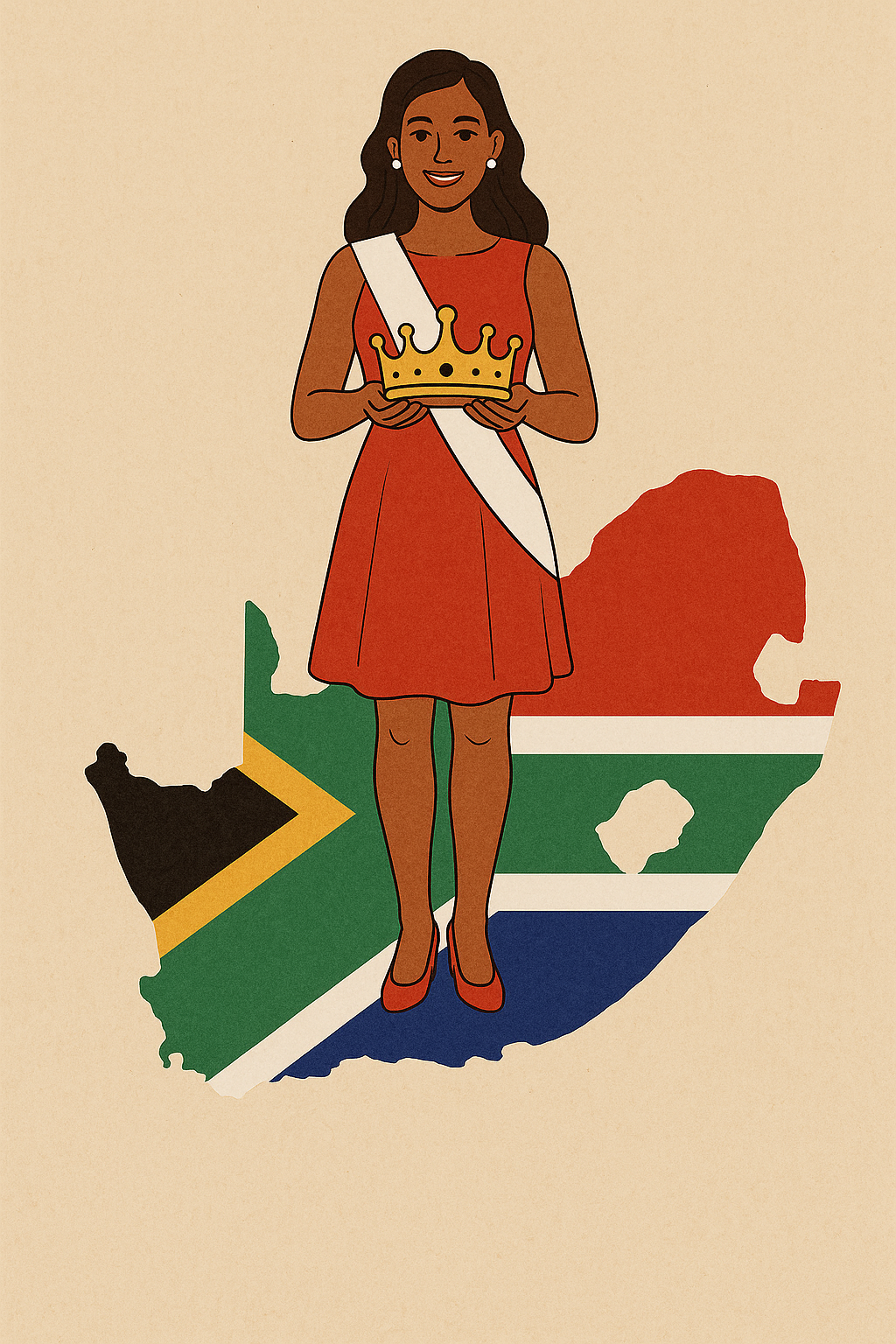
Mrs South Africa 2026 ignites a national movement, showcasing diverse women impacting communities and innovating beyond beauty.
The Mrs South Africa 2026 pageant is like an "MBA of life." It's a tough, year-long program that mixes beauty with important work. Women from all over South Africa, with different jobs and stories, learn to be strong leaders. They do community work, business classes, and even get health check-ups. This pageant is more than just pretty faces; it's a practice ground for powerful women who want to change the world.
What is Mrs South Africa 2026?
Mrs South Africa 2026 is a year-long program, dubbed the "MBA of life," that transforms semi-finalists through rigorous challenges including community service, business courses, and thought leadership. It blends glamour with impactful social enterprise, using technology to track progress and foster resilience, culminating in a national rehearsal for power and influence.
Get Cape Town news in your inbox
Stay updated with the latest stories from the Mother City.
Velvet Ropes, Velvet Revolutions
The calendar still said January, yet Sandton’s convention corridor already smelled like September finals - lacquer, coffee, and something electric. On two back-to-back casting days the 2026 Mrs South Africa cycle dropped its first 88 names, every announcement detonating cheers loud enough to rattle champagne flutes in the adjoining hotel bar. CEO Joani Jacobs calls the year-long programme “the MBA of life,” and the ballroom operated like an admissions committee on adrenaline: judges - CEOs, surgeons, former queens - interviewed in rapid rotation while iME’s 360° rigs live-streamed to village taverns and high-rise boardrooms alike. No one waited politely; contestants traded lip-liner, elevator pitches and hugs at the same speed, proving sisterhood can be sprint-paced. Between flashes, the mantra rang out: only one woman will wear the crown, yet every finalist can leave richer - mentally, socially, financially - than she arrived.
Growth Spurts & History Highs
Applications slammed shut at 23:59 on 26 January with a 312 % climb over 2025. Two photographs lit the fuse: Tshego Gaelae clutching the nation’s first Mrs World sword for a Black South African, and Marelize Steyn Earle wrapping the Mrs Classique Globe sash around her shoulders minutes later. WhatsApp groups exploded with teachers, drone pilots, boilermakers and full-time moms asking the once-in-a-lifetime question: “Why shouldn’t that be me?” The result is the most regionally scattered semi-finalist roster the pageant has ever seen - 88 women, ages 23 to 54, fluent in all eleven official languages, armed with seventeen different post-school credentials. Among them you’ll meet a Kruger anti-poaching pilot who maps rhino routes from the sky, a forensic number-cruncher whose evidence helped jail a R200 million fraud syndicate, and a Setswana spoken-word artist whose TEDx on “soft power in stilettos” has already cracked a million views. Diversity is no longer a bullet-point in a media release; it is the asset register.
Boot-camps in Ballrooms
Each casting city doubles as a pop-up finishing academy. Cape Town’s Hotel Sky turned its 35th-floor sky deck into a sunrise breath-work dojo, then swapped yoga mats for microphones when contestants stepped into glass-walled boardrooms to grill venture capitalists on their social projects. In Johannesburg, iME founder Nivi Grogor live-streamed every interview in immersive 360°, letting rural moms twist a smartphone and sit front-row - a continental first for any African preliminary. Dr Mpho Phalatse ran an on-site cervical-cancer screening station, because, as the programme insists, “queenhood starts with health sovereignty.” By dusk, the corridor smelled less of hairspray and more of sea-salt spray; women exited wearing confidence instead of cosmetics.
36 Hours That Taste Like a Year
National Semi-Finalist Conference compressed twelve months of syllabus into a day-and-a-half. Neuro-Leadership Institute coaches opened with “bias decoding,” teaching delegates to drag impostor syndrome onto a digital dashboard and delete it like spam. Absa’s head of women-in-wealth followed with a wallet-friendly masterclass: how to build a share portfolio with only R200 a month and compound nerves of steel. After-hours, former Public Protector Thuli Madonsela arrived for a closed-door fireside on “courageous inconvenience,” signing pocket-sized Constitutions in silver marker before handing them out like secret handshakes. Nobody checked Instagram; the room was too busy rewiring mindsets.
Morning two pivoted from policy to pixels. Instagram’s Nairobi-based strategic-partnerships lead tore the algorithm apart, proving that one authentic post beats five scheduled ones if micro-communities feel seen. Contestants then sprinted into a pop-up TV studio to film 30-second climate-action monologues; the strongest will air on SABC 3’s “Expresso” during the finals build-up. Before dispersing, the cohort drafted a “Sisterhood Accord” - a living Google Doc that logs everything from kelp reforestation to reusable-pad drives - complete with QR codes so any citizen can audit progress. At last count, 3,400 strangers had already cosigned, turning accountability into a team sport.
Yellow Cards, Green Cheques & Electric MINIs
Behind the glamour lies a ruthlessly benchmarked scorecard. Between February and October each semi-finalist must clock 240 verified community-service hours, crush a 12-module Regenesys Business School course, crawl through a 5 km Special Olympics mud run, and publish a 2,000-word thought-leadership piece plus a 60-second reel that hits 10,000 views. An SDG-aligned impact metric is non-negotiable. Miss any target and QueenTech flashes a yellow card; collect three and you’re out. Jacobs frames it plainly: “We’re not hunting perfection; we’re stress-testing adaptability under klieg lights - exactly what boardrooms and global stages demand.” Corporate South Africa answered with an open wallet. The 2026 prize pot already tops R3 million: half-a-million seed cash from iME, a year-long Deloitte mentorship, an American Swiss jewellery suite, an electric MINI Cooper for charity road-tours, and a global speaking circuit brokered by the Nelson Mandela Foundation. Sponsors, in return, step inside a talent pipeline whose combined social reach (6.8 million followers) outperforms most prime-time TV slots.
Township Boardrooms & Kelp Farms
Regional diversity is quietly rewriting economic storylines. Aleche Landman, 32, left World Bank consultancies to develop drought-proof sorghum for female smallholders in Lichtenburg; her maths could claw back a chunk of the R7 billion North-West loses to climate-driven grain shrinkage every year. Kefentse Valisi, 41, an eMalahleni chemical engineer, has already up-cycled 19 tons of coal dust into eco-brick school desks - turning pollution into classroom hope. Their inclusion reframes the pageant as a launchpad for scalable social enterprise rather than evening-gown spectacle. Durban’s upcoming casting stop on 6 February is expected to be the most emotional yet; memories of last year’s civil unrest still smoke. Organisers will offer on-site trauma-counselling booths, and eThekwini Municipality will fast-track business licences for any semi-finalist opening a factory or store in township corridors. KwaZulu-Natal has never crowned a Mrs South Africa winner; bookies have slashed odds on 28-year-old marine-biology PhD candidate Nontobeko Hlope, who is busy cultivating carbon-sucking kelp forests and artisanal fishery jobs along the South Coast.
Algorithms, Likes & Therapy Dogs
Technology underpins the spectacle. iME engineers built “QueenTech,” an AI dashboard that reads heart-rate variability, sleep debt and social-sentiment scores in real time. Data is anonymised, colour-coded and returned as daily briefings so coaches can pre-empt burnout or PR potholes. During November trials the algorithm spiked cortisol in a 2025 semi-finalist; intervention arrived as a surprise rest-day and a therapy-dog session, staving off mid-season withdrawal. Wearables and bio-hacking will be standard kit for global pageants within twenty-four months; South Africa simply crossed the finish line first. Public hunger keeps pace. #YourTimeIsNow trended number one on X for nineteen straight hours after the reveal, turbo-charged by memes: contestants in hard-hats spliced beside ballroom gowns, TikTok dances that marry Zulu footwork with catwalk pivots, LinkedIn threads calculating each woman’s “personal EBITDA.” Radio stations now run a daily “Mrs SA Minute,” and satellite channels scramble for docu-reality rights. The official WhatsApp channel crashed after gaining 42,000 weekend subscribers; an emergency cloud migration kept the love alive.
Passport Stamps & Ripple Effects
Global pageant powerbrokers are taking notes. Julia Morley, chair of Miss World, will land in Johannesburg in September for “knowledge transfer” talks on plugging impact-investment modules into other national preliminaries. Mrs Universe HQ in Sofia requested a white paper on how South Africa gamified community service without trivialising it. Mrs Globe in Panama has already booked three 2026 semi-finalists - regardless of final placement - for its “Women of Impact” summit, paying USD appearance fees. A UCT Graduate School of Business projection puts the potential influencer-economy injection at R1.2 billion over the next eighteen months, more than some provinces allocate to tourism. Back home, the women are bracing for a February-to-October gauntlet that will test marriages, stretch maternity leave, redraw friendship circles. Cameras will follow them into crèches, corporate boards, even ICU wards where they read to sick kids. QueenTech will log every heartbeat, every tear converting to authenticity points, every public failure deftly flipped into a masterclass on resilience marketing. The paradox: vulnerability itself has become currency.
So the caravan rolls on - next stop Durban, then Gqeberha, likely Bloemfontein and Polokwane. At every mall, community hall or casino theatre the ritual repeats: heels clicking on temporary runways, husbands juggling toddlers, grandmothers ululating as satin sashes drop over winter coats. Somewhere in that queue a future Mrs World might be rehearsing her 60-second interview, pulse hammering, palms damp, repeating the mantra printed on the lanyard that bounces against her chest: “Your time is now.”
[{"question": "
What is Mrs South Africa 2026?
", "answer": "Mrs South Africa 2026 is a year-long program, dubbed the \"MBA of life,\" that transforms semi-finalists through rigorous challenges including community service, business courses, and thought leadership. It blends glamour with impactful social enterprise, using technology to track progress and foster resilience, culminating in a national rehearsal for power and influence. This year's program saw a 312% increase in applications over 2025, attracting a diverse group of women from various professions and backgrounds."}, {"question": "How demanding is the Mrs South Africa 2026 program?
", "answer": "The program is incredibly demanding and is designed as a \"national rehearsal for power.\" Semi-finalists must complete 240 verified community-service hours, a 12-module Regenesys Business School course, a 5 km Special Olympics mud run, and publish a 2,000-word thought-leadership piece and a 60-second video reel with 10,000 views. They are also measured against SDG-aligned impact metrics. Falling short on targets can lead to \"yellow cards,\" and three can result in elimination, emphasizing adaptability and resilience under pressure."}, {"question": "What kind of women participate in Mrs South Africa 2026?
", "answer": "The 2026 semi-finalist roster is the most diverse in the pageant's history, featuring 88 women aged 23 to 54, fluent in all eleven official languages, and armed with seventeen different post-school credentials. Participants include a Kruger anti-poaching pilot, a forensic number-cruncher, a Setswana spoken-word artist, teachers, drone pilots, boilermakers, and full-time moms. The program actively celebrates and cultivates this diversity as a key asset."}, {"question": "How does technology play a role in Mrs South Africa 2026?
", "answer": "Technology is central to Mrs South Africa 2026. iME engineers developed \"QueenTech,\" an AI dashboard that monitors heart-rate variability, sleep debt, and social-sentiment scores in real time to prevent burnout and manage PR. Live-streaming in 360\u00b0 from casting events allows wider access, and the program utilizes platforms like Instagram for strategic partnerships and for contestants to film climate-action monologues. A collaborative \"Sisterhood Accord\" is maintained as a living Google Doc with QR codes for public auditing of progress."}, {"question": "What is the prize for Mrs South Africa 2026 and what impact does the program have?
", "answer": "The 2026 prize pot exceeds R3 million, including half-a-million seed cash from iME, a year-long Deloitte mentorship, an American Swiss jewellery suite, an electric MINI Cooper for charity road-tours, and a global speaking circuit brokered by the Nelson Mandela Foundation. The program is projected to inject R1.2 billion into the influencer economy over eighteen months. Beyond monetary rewards, it aims to empower women to become influential leaders and social entrepreneurs, as exemplified by contestants developing drought-proof sorghum or up-cycling coal dust into school desks."}, {"question": "How is Mrs South Africa 2026 gaining international recognition?
", "answer": "Global pageant powerbrokers are closely observing the Mrs South Africa 2026 program. Julia Morley, chair of Miss World, is visiting for \"knowledge transfer\" talks on integrating impact-investment modules. Mrs Universe HQ requested a white paper on how community service is gamified, and Mrs Globe has already booked three 2026 semi-finalists for its \"Women of Impact\" summit. This international interest highlights the pageant's innovative approach to combining beauty, leadership development, and social impact."}]
Oliver Daniels is a Cape Town journalist who chronicles the intersection of food, migration and identity in South Africa's kitchens—from wood-fired Gugulethu braai spots to Constantia vineyards. Born and raised on the slopes of Devil’s Peak, he still starts each week with a dawn walk across Table Mountain to catch the first Atlantic light before filing copy.
View all articles →