
New runway and improved aircraft operations
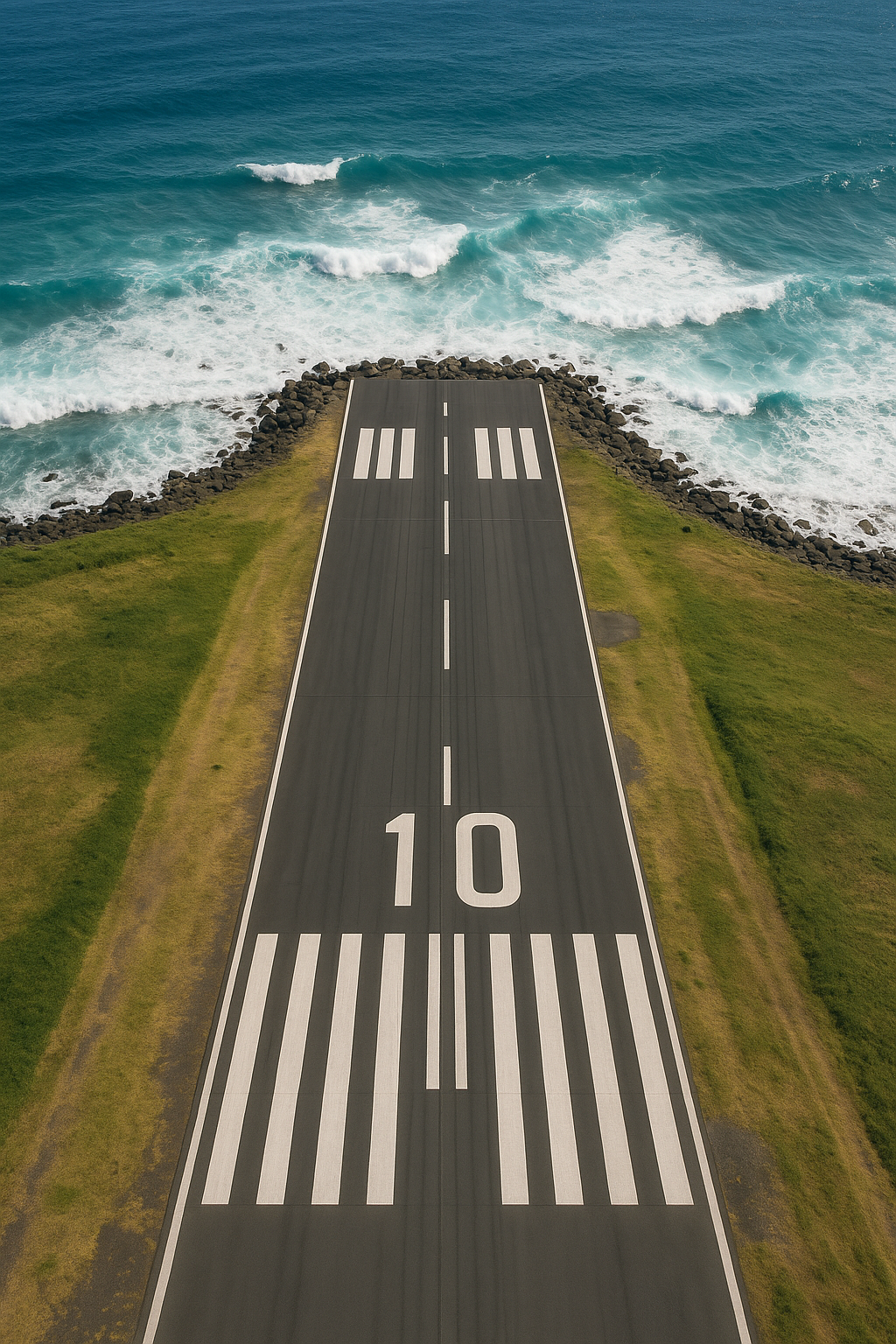
Cape Town International Airport's new runway and terminal redefines modern air travel with cutting-edge tech, sustainability, and efficiency.
Cape Town's new airport runway is a marvel of modern engineering, designed to conquer nature's challenges. It's bigger, better, and smarter, using recycled materials and high-tech sensors. This amazing runway will make flying safer, more efficient, and even help the environment, showing how clever design can make a big difference.
What are the key improvements to Cape Town International Airport's new runway?
Cape Town International Airport's new 3.75 km runway will be repositioned to reduce cross-wind peaks, decreasing weather diversions by 1,400 annually. It features a 1.8m crushed freeway base to limit CO₂ emissions, smart ceramic pebbles for real-time monitoring, and rapid-turn taxiways to increase aircraft movements from 36 to 48 per hour.
Get Cape Town news in your inbox
Stay updated with the latest stories from the Mother City.
1. A Spine of Asphalt on the Edge of the World
Cape Town International has always landed planes where the Atlantic curls onto the continent.
The present 3.3 km strip looks from the cockpit like a grey lizard stretched along the beach; on scorching December mornings the heat haze makes an A350 appear to touch down on molten metal. By 2030 that mirage disappears. A fresh 3.75 km slab will lie 300 m closer to the mountain, two metres higher, bracketed by high-speed exits that flick jets off the concrete in half the present time.
The shift is not aesthetic. It is the mathematical reply to three stubborn partners: Table Mountain’s 1 086 m wall, the dawn jet-stream that spills over it, and the equations that decide whether an A380 can ever visit. Since 1954, when the first SAA Skymaster wobbled into Wingfield, those three voices have fixed every take-off weight. The new alignment simply lets the mountain shield arriving jets for nine extra seconds, trimming cross-wind peaks above 20 knots by more than a quarter.
That small mercy translates into 1 400 fewer weather diversions each year and 6.2 million litres of jet fuel no longer wasted in holding loops over False Bay. The saving is invisible to passengers, but it pays for a third of the earthworks bill before the first bag is scanned.
2. Concrete That Thinks and Taxiways That Breathe
Pouring a Code F+ pavement is only the start. Beneath the future 777-9 tyres lies a 1.8 m cushion of crushed 1970s freeway, stabilised with lime and fly-ash and knitted together by geogrid. The recipe let designers shave 22 cm of thickness, keeping 42 000 m³ of virgin rock in the quarry and 9 100 t of CO₂ out of the sky.
Inside the mix, 5 000 ceramic “pebbles” the size of a R5 coin now chatter every fifteen minutes about strain, moisture and heat. Drones with millimetre-wave radar read them like a WhatsApp group, ending the annual coring ritual that used to cost R1.2 m per kilometre. Early data already showed a 3 °C temperature tilt across the slab at 14:00; the response is to shrink the number of expansion joints from 116 to 88, squeezing out the cracks where stones later appear.
The exits are equally talkative. Two rapid-turn pads at 3 000 m and two right-angle escapes at 1 800 m will pop aircraft off the runway in seven seconds instead of fifteen. In-pavement LED strings drag pilots along a living stop-light strip, cutting average occupancy by 55 seconds. Peak movements climb from 36 to 48 per hour, a bump worth R1.4 billion in extra airline cash over the coming decade, according to IATA bean-counters.
3. Saving Seeds, Swapping Fairways and Paying with Noise
Steel and sensors are only half the negotiation. The new Instrument Landing System glideslope wants to park its antenna inside the Mowbray Golf Club 14th fairway. ACSA traded a R45 million clubhouse revamp and three relocated tee-boxes for a 99-year lease of 2.3 ha - cheaper than expropriation and friendlier to weekend hackers.
Downslope, a pocket of Cape Flats sand fynbos hosts Aristea africana, a metallic-blue reed whose seeds wake only after fire. Biologists bagged 1 200 kg of topsoil, chilled it, and will return it after construction, followed by a prescribed burn in 2028 to wake the sleeping colony. The price tag is R3.2 million, cheap insurance against an ESG headline that reads “Airport erases endangered ecosystem.”
Noise itself has become a currency. DLR’s open-source model lets residents watch the 55 dB(A) contour drift like a jellyfish across the suburbs in real time. Airlines that whisper - continuous descent, low-thrust climb - earn credits redeemable against landing fees. SAA’s A330s cashed in 1 300 such coupons last year, saving R2.8 million and teaching swallows to shift their winter roost 400 m east on trial-run days, a twist now logged in the Journal of Avian Biology.
4. Sunlight, Seawater and the Economy of the Invisible
Above the check-in hall, 4 MW of photovoltaic panels already harvest daylight. Coupled to 2 MWh of lithium-iron-phosphate batteries buried beneath the baggage belts, the airport can island itself for 52 minutes during Stage 6 black-outs, long enough for a 1 MW hydrogen farm to hum. The gas is brewed 8 km away at Athlone sewage works; spare oxygen feeds the plant’s own bioreactors, winning the 2023 Water Institute prize for circular thinking.
Retail turns watts into rands. Concession rent is now revenue-share minus energy score: keep your lights below 300 lux and you keep an extra 4 % of gross. One coffee bar grows oyster mushrooms on spent grounds in the basement, supplies its own kitchen and slashes food-miles by 94 %.
Down in the 26 000 m² multi-level cold-chain cathedral, autonomous forklifts stack blueberries nine metres high in aisles 1.9 m wide. Every pallet air-freighted to Dubai nets a farm R28 000; the new shed can push 400 pallets a day, pumping R4.5 billion into rural pockets over ten years. Water, once the enemy, is filtered from black effluent to ISO-standard clear beneath the long-stay car park. Lufthansa bought 2.3 million litres of “water tokens” in 2023, declaring the route “Water-Neutral to the Cape.”
When the last LED bar is bolted in and the first “Cleared to land, runway 06” crackles across the flight deck, no headline will mention the swallowed fynbos seeds, the seawater-chilled beams, or the heart-rate-monitored artisans sleeping in 3D-printed barracks. The mountain will still cast its dawn shadow, the breakers will still curl at the runway’s end, and another A350 will rise into the trade winds, carrying with it the quiet algebra of mountain, wind and mathematics that makes leaving the southern tip of Africa just a little more possible.
What are the key improvements to Cape Town International Airport's new runway?
Cape Town International Airport's new 3.75 km runway will be repositioned to reduce cross-wind peaks, decreasing weather diversions by 1,400 annually. It features a 1.8m crushed freeway base to limit CO₂ emissions, smart ceramic pebbles for real-time monitoring, and rapid-turn taxiways to increase aircraft movements from 36 to 48 per hour.
How does the new runway design mitigate environmental impact and promote sustainability?
The new runway integrates several sustainable practices. It utilizes a 1.8m base made of crushed 1970s freeway, stabilised with lime and fly-ash, reducing the need for virgin rock and cutting 9,100 tons of CO₂ emissions. The airport also employs 4 MW of photovoltaic panels and 2 MWh of lithium-iron-phosphate batteries for energy independence, and a hydrogen farm for fuel. Furthermore, it implements a system for filtering black effluent to produce ISO-standard clear water, even selling "water tokens" to airlines.
What advanced technologies are incorporated into the runway's construction and operation?
The runway features 5,000 smart ceramic pebbles embedded in the concrete that monitor strain, moisture, and heat every fifteen minutes, with data collected by drones using millimetre-wave radar. This eliminates the need for traditional annual coring. The rapid-turn taxiways use in-pavement LED strings to guide pilots, significantly reducing runway occupancy times.
How will the new runway impact flight efficiency and capacity at Cape Town International Airport?
The new 3.75 km runway's repositioning will shield arriving jets from cross-winds for an additional nine seconds, reducing cross-wind peaks by over 25%. This translates to 1,400 fewer weather diversions per year and a saving of 6.2 million litres of jet fuel. The rapid-turn taxiways and efficient guidance systems will increase aircraft movements from 36 to 48 per hour, boosting the airport's capacity and generating an estimated R1.4 billion in extra airline revenue over the next decade.
What unique ecological and community considerations were made during the project?
The project involved relocating 2.3 hectares of the Mowbray Golf Club's 14th fairway, including a R45 million clubhouse revamp, for the Instrument Landing System antenna. Ecologically, 1,200 kg of topsoil containing seeds of the endangered Aristea africana fynbos species were collected, chilled, and will be returned post-construction with a prescribed burn to stimulate growth. The airport also uses a noise-as-currency system, crediting airlines for quieter operations, and even observes swallows shifting roosts due to trial-run days.
How does the airport promote energy efficiency and sustainable business practices among its tenants?
Concession rent for retail tenants is now tied to an energy score, where maintaining lights below 300 lux earns an extra 4% of gross revenue. This incentivizes energy-efficient operations. An example includes a coffee bar growing oyster mushrooms on spent grounds in the basement, supplying its own kitchen and drastically cutting food-miles, showcasing a commitment to circular economy principles within the airport's ecosystem.

Aiden Abrahams is a Cape Town-based journalist who chronicles the city’s shifting political landscape for the Weekend Argus and Daily Maverick. Whether tracking parliamentary debates or tracing the legacy of District Six through his family’s own displacement, he roots every story in the voices that braid the Peninsula’s many cultures. Off deadline you’ll find him pacing the Sea Point promenade, debating Kaapse klopse rhythms with anyone who’ll listen.
View all articles →