
NUTS AND SOUTH AFRICA’S EXPORT MARKETS
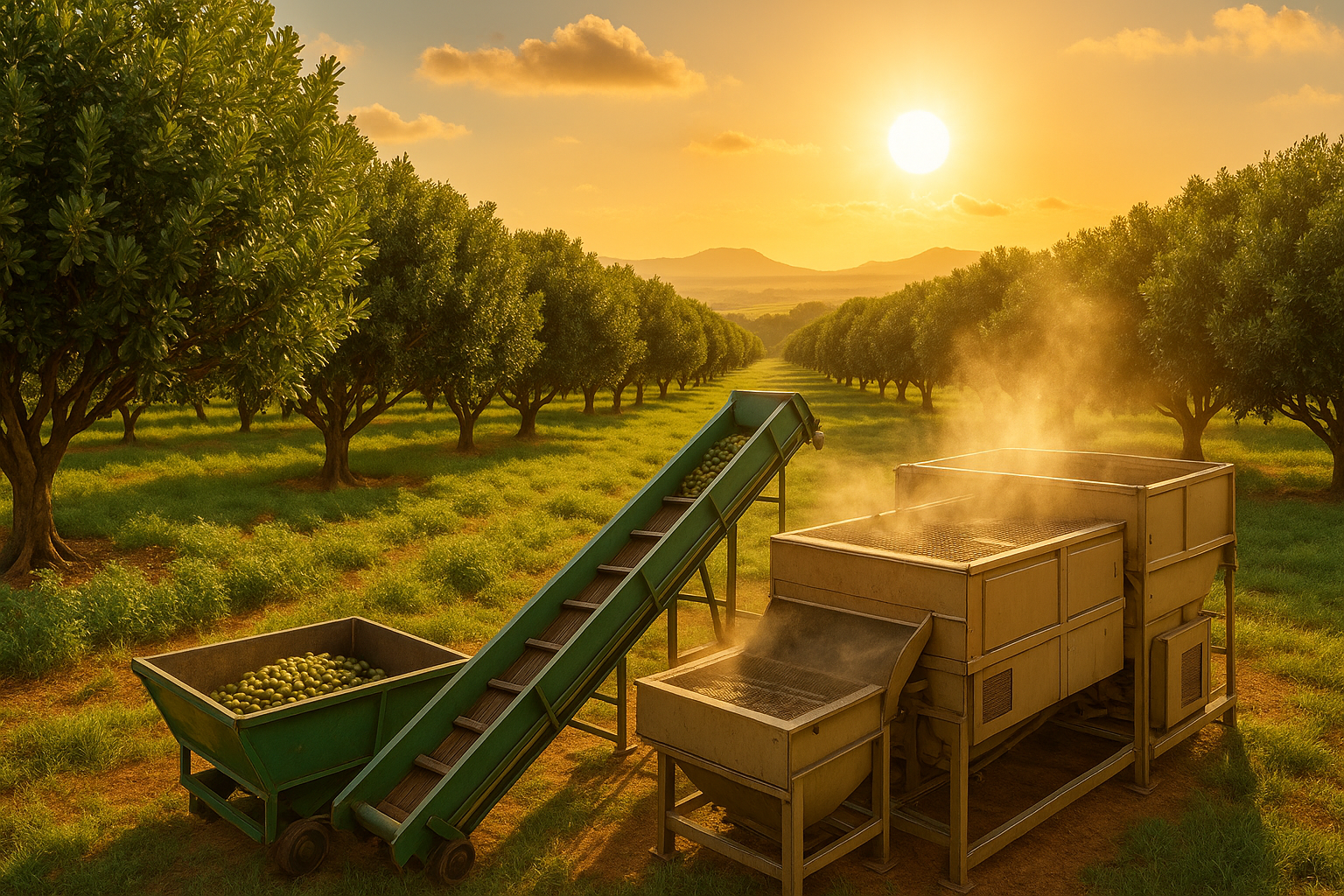
South Africa's macadamia industry is rapidly expanding, becoming a global powerhouse with advanced processing, sustainable practices, and new markets.
South Africa's nut industry is exploding! Farmers are planting tons of new macadamia trees, even on old tobacco fields. Factories are super smart, using cool tech to process nuts fast and ship them quickly across the world. They're also making sure everything is traceable and sustainable, using less water and energy. This nut boom is creating jobs and turning even wild seeds into valuable snacks.
What is driving the growth of South Africa's nut industry?
South Africa's nut industry is booming due to a rapid expansion of macadamia orchards, innovative processing and logistics, and a strong focus on sustainability and traceability. The sector is converting former agricultural lands, implementing advanced factory technologies, and developing efficient shipping routes to meet global demand for high-quality nuts, including macadamias, pecans, and groundnuts.
Get Cape Town news in your inbox
Stay updated with the latest stories from the Mother City.
1. From Curiosity to Canopy: The Orchard Boom Redrawing the Map
Drive the R536 between Kiepersol and Kirkwood at dawn and you will hear it first: a low, metallic pulse - de-huskers spinning, crack-lines rattling, optical sorters chirping like robotic crickets. Those sounds mark the front line of a land-grab that has doubled the national macadamia footprint since 2018. Forty-two thousand hectares now wear the evergreen crown, each block drilled with 312 trees spaced eight metres apart so the winter sun can reach every bud that will burst into flower. Satellite eyes at UKZN confirm the canopy alone now casts more shade than all local papaya, litchi and avocado trees combined, nudging macadamias into third place among permanent horticultural exports, behind only citrus and table grapes.
Speed is the hidden engine. A seedling needs seven winters before it pays its way, yet every grafted infant that will leave a nursery bench between now and 2028 already has a farmer’s name on it. Former tobacco, cotton and even sugar fields are flipping to a sixty-year bet on fatty kernels. Banks have ripped up old risk spreadsheets: the Land Bank pencils in R550 000–R780 000 per hectare for bearing orchards, triple the collateral they will lend on mangoes or pecans. IDC is road-testing a “macadamia green bond” that quietly trims interest if the grower can prove every litre of water used is returned to the same catchment.
Up in Levubu, new plantings ride the subtropical escarpment like green terraces. The maths is brutal but simple - global commodity chaos versus a tree that can outlive its planter. Where sugar once stood, irrigation pipes now snake toward macadamia rows that will still be earning rent for a farmer’s granddaughter. It is a wager on longevity, and South Africa is doubling down faster than any rival producer on earth.
2. Factories, Freight and the 19-Day Sprint to Seoul
Follow the sound inland and you reach Coega’s hangar city. Inside one cavern, Danish stainless steel extrudes 9 000 t of pale macadamia butter annually at temperatures low enough to keep keto labels happy on German discount shelves. Two doors away, retooled abalone retorts hiss out vacuum bags of chilli-lime kernels timed to land on Chinese phones just before Singles’ Day swipe-storms. Logistics has reinvented itself to keep up: MSC’s “nut express” departs Durban every tenth day, a refrigerated arrow that reaches Busan in nineteen instead of twenty-eight, meaning a nut shelled on Monday can be roasted in Seoul the following Friday.
Pecans are racing to catch the same boat. American-bred Wichita and Western Schley cultivars, grafted onto ARC rootstocks that sip water like misers, have turned Vaalharts into a 12 000-hectare pecan belt. South African crews wield Argentine hand-held pneumatic poles rather than trunk-shaking behemoths, dropping blemish rates to three per cent, half the US norm. That purity wins a 10–15 % Christmas premium in British supermarkets where glossy in-shell nuts double as edible ornaments.
Groundnuts, the country’s oldest oilseed child, are quietly swapping overalls for a tuxedo. Colour-sorting cameras firing 220 near-infra-red decisions per second now lift 68 % of the 2025 crop into “Edible Fancy” territory, up from 45 % half a decade ago. Calbee’s wasabi-coated packs specify the Red Natal cultivar and pay a futures-linked forward price discovered on the JSE’s groundnut curve, an instrument that already dwarfs cottonseed turnover. A rotation crop has become a high-identity ingredient, and the world is noticing.
3. Proof of Origin, Port Floods and the 8 400-Litre Question
European shoppers want more than taste; they want coordinates. Berlin millennials refill 320 g kraft pouches at zero-waste stores while Dutch retirees pocket 45 g sachets promising healthy hearts, both demanding satellite proof that the nuts did not drain a river. From February 2026 the EU will fine any importer who cannot GIS-trace every orchard that contributed to a batch. South African exporters answer with blockchain pilots: scan a Berlin QR code and you can watch the evapotranspiration tick of the exact Prieska block that birthed your pecans, time-stamped with the diesel litres spent at the shelling plant. Early numbers say the sticker adds 6 % to shelf price but lifts repeat purchases by 19 % - a margin growers will fight to keep.
Durban’s April 2025 flood chaos erased US$37 million of nut invoices in three soggy days. The industry riposte is a proposed inland dry-port at Harrismith able to pre-cool 1 200 reefer boxes daily, fed by an 80 km/h “nut corridor” rail lash from Polokwane that could prune road costs and carbon by 18 % and 24 % respectively. Cold-chain discipline is non-negotitive: every hour above 4 °C steals six days of shelf-life. Pooled grower capital is therefore buying 400 genset reefers that will moonlight for wine or berries off-season, keeping utilisation above 85 %.
Water itself is the final boardroom topic. A mature macadamia breathes out 8 400 m³ per hectare per year, a thirst one-third juicier than citrus. The sector has pledged net-zero basin impact by 2035. Trials in KwaZulu-Natal already impose mild stress at nut-fill, trimming 22 % of usage while keeping tonnage steady, while counter-current dryers recirculate 70 % of exhaust, saving 35 % of energy and preventing the scorched批次 that cost a US$8 million Baltic contract in 2022. Every litre saved is a licence to plant another row.
4. Jobs, Genes and the Marula Wild-Card
Mechanisation threatens 40 pickers per harvester, but the price tag - R2.3 million - scares most 40-hectare black-owned farms. A lease-to-own scheme financed by commercial banks and development agency NAMC turns that monster into a pay-as-you-pick cost, capped at 8 % of farm-gate price. Meanwhile crack-plants hire 60 % women for quality-control cabins, piece-work rates rewarding sharp eyes with R280 an hour, a ticket into formal wages previously guarded by orchard ladders.
In laboratories, the moat grows deeper. Limpopo’s genomics unit will release “Maluma-MAC 18” within two seasons, a cultivar that flowers under 30 % less winter chill, unlocking Lowveld hectares once written off as too hot. ARC-Animal Production found 8 % macadamia press-cake in broiler feed boosts omega-7 in chicken breast, a discovery that could swallow 22 000 t of residual meal and lift orchard profit 4–6 % after the oil is squeezed out. Currency swings are being tamed with rand-invoiced EU contracts indexed to the Bloomberg nut dollar price, neatly shunting forex risk onto buyers.
Even the word “nut” is stretching. Marula kernels, once discarded during beer brews, are steam-de-bittered and air-freighted to Belgian craft-chocolatiers at US$18 per kilogram. Baobab seeds, roasted and spiced, sold out 1 200 Woolworths outlets in three weeks and now await a Whole Foods shelf in America. Both crops ride existing trees, needing no extra land or irrigation, turning wild abundance into hard currency. From the rail-side cracking plants to the glow of Shanghai e-commerce carts, South Africa is wiring sunlight, science and sheer crunch into a circuit that shows no sign of overload.
[{"question": "What is driving the rapid expansion of South Africa's nut industry?", "answer": "South Africa's nut industry is experiencing explosive growth, primarily driven by a significant increase in macadamia tree plantings, often on former tobacco, cotton, and sugar fields. This expansion is supported by advanced factory technologies for processing, efficient shipping logistics, and a strong emphasis on traceability and sustainability. Financial institutions are also contributing by offering favorable lending terms for nut orchards and exploring 'macadamia green bonds' for environmentally conscious growers."}, {"question": "How are South African nut producers innovating in processing and logistics?", "answer": "Producers are utilizing cutting-edge factory technologies, such as Danish stainless steel equipment for macadamia butter and re-tooled abalone retorts for vacuum-sealed kernels. Logistics have been optimized with dedicated 'nut express' shipping routes, significantly reducing transit times to key markets like Asia. Even traditional crops like groundnuts are benefiting from advanced color-sorting cameras, elevating their quality to 'Edible Fancy' status, while pecans are processed with specialized pneumatic poles to reduce blemishes."}, {"question": "What steps are being taken to ensure traceability and sustainability in the nut industry?", "answer": "To meet increasing consumer and regulatory demands, especially from the EU, South African exporters are implementing blockchain technology for GIS-tracing every orchard block. This allows consumers to verify the origin and environmental impact (e.g., water usage) of their nuts. For sustainability, the sector aims for net-zero basin impact by 2035, employing strategies like mild stress irrigation to reduce water usage and counter-current dryers to save energy. The industry is also investing in cold-chain infrastructure like dry-ports and reefer containers to maintain product quality and reduce carbon footprints."}, {"question": "How is the nut industry contributing to job creation and economic development?", "answer": "While mechanization is present, the industry is creating jobs through various initiatives. Lease-to-own schemes for harvesters are making advanced equipment accessible to smaller, black-owned farms. Processing plants hire a significant number of women, particularly for quality control, offering formal wages. The sector also boosts the value of existing agricultural by-products, such as macadamia press-cake being used in broiler feed, and is exploring new markets for wild seeds like marula and baobab, turning them into valuable snack products."}, {"question": "What new nut varieties and products are emerging from South Africa?", "answer": "Beyond macadamias, pecans are gaining traction, with American cultivars adapted to South African conditions and superior processing methods leading to premium products. Groundnuts are being upgraded to 'Edible Fancy' with advanced sorting and are recognized for specific cultivars like Red Natal. The industry is also expanding into 'wild-card' nuts, transforming previously discarded marula kernels into artisanal chocolate ingredients and roasted baobab seeds into popular snacks, leveraging existing natural resources without additional land or irrigation."}, {"question": "How is South Africa addressing challenges like climate change and market volatility in its nut sector?", "answer": "The industry is proactively addressing climate challenges by developing new cultivars, such as 'Maluma-MAC 18,' which can thrive in warmer conditions, opening up previously unsuitable planting areas. Water conservation efforts, including targeted irrigation and energy-efficient drying methods, are crucial for long-term sustainability. To mitigate market volatility and currency risks, growers are utilizing financial instruments like rand-invoiced EU contracts indexed to international nut prices, shifting forex risk to buyers and ensuring more stable returns.", "add_info": "The South African nut industry, particularly macadamias, has seen significant investment from banks, with the Land Bank offering substantial collateral for bearing orchards. The Industrial Development Corporation (IDC) is even exploring 'macadamia green bonds' to incentivize sustainable farming practices. This financial backing underscores the confidence in the sector's long-term viability and growth.", "comment": "The industry is investing heavily in research and development, including genomics, to create more resilient and productive nut varieties. This scientific approach helps in adapting to changing climatic conditions and improving overall yield and quality.", "additional_info": "The industry is also leveraging advanced data analytics and satellite imagery, as mentioned by UKZN, to monitor and optimize orchard health and growth across the country.", "meta_info": "The rapid adoption of new technologies and sustainable practices positions South Africa as a leading innovator in the global nut market.", "extra_detail": "The focus on 'nut corridors' via rail from Polokwane to inland dry-ports like Harrismith highlights a strategic shift towards more efficient and environmentally friendly transportation methods, reducing reliance on road transport and its associated costs and carbon emissions."}]

Kagiso Petersen is a Cape Town journalist who reports on the city’s evolving food culture—tracking everything from township braai innovators to Sea Point bistros signed up to the Ocean Wise pledge. Raised in Bo-Kaap and now cycling daily along the Atlantic Seaboard, he brings a palpable love for the city’s layered flavours and even more layered stories to every assignment.
View all articles →