
Paarl Mall sets the stage for a R270m retail reinvention
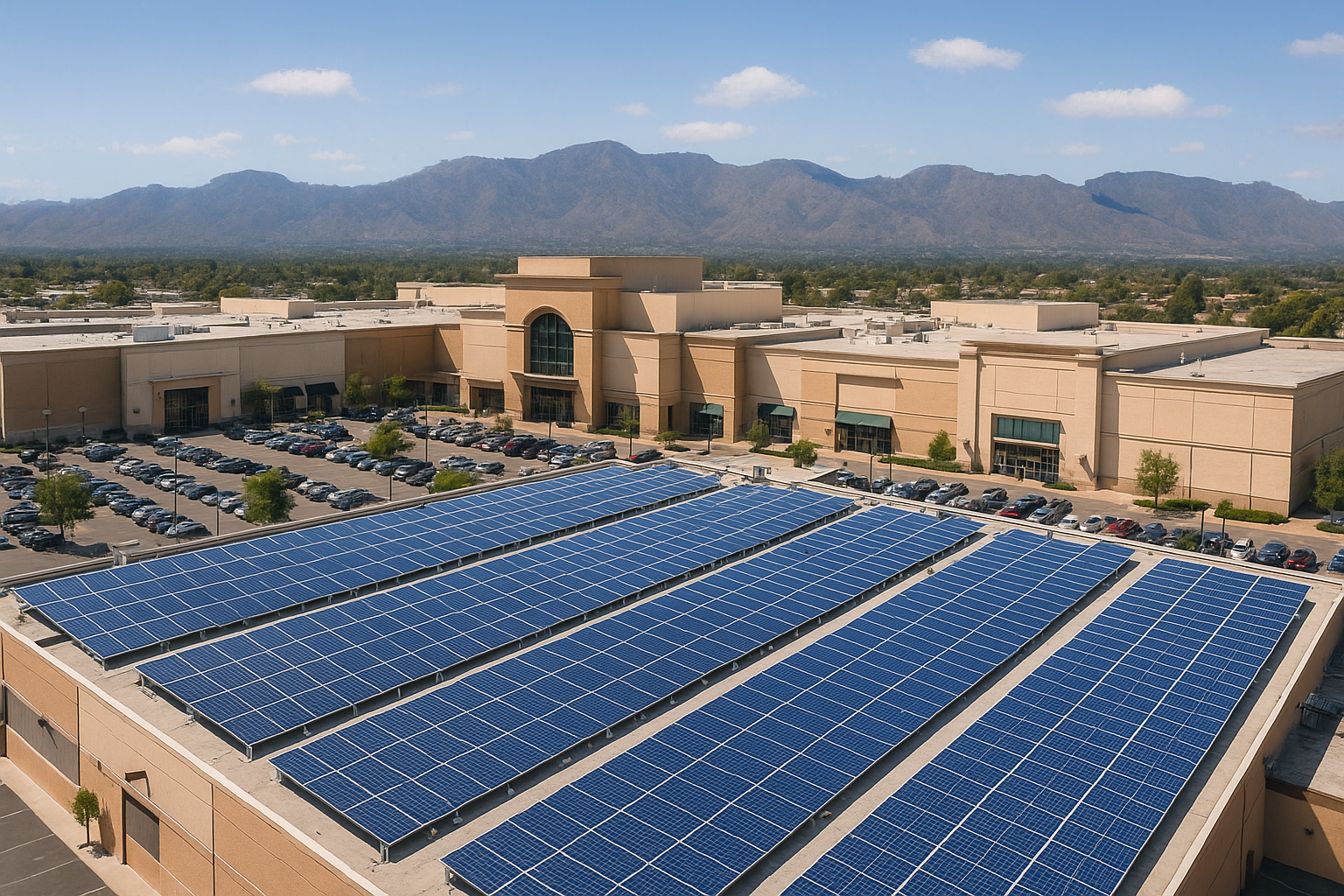
Paarl Mall's massive R270M upgrade: solar power, smart tech, local focus, and a new food experience. Experience the future of retail!
Paarl Mall is becoming a super cool, eco-friendly shopping spot! They're using tons of solar power and smart tech to save energy and water, even collecting rainwater. They're also making sure local businesses and people get jobs, and they're creating fun, comfy spaces like a "Boland stoep" so you'll want to hang out longer. It's like open-heart surgery on a jogging patient, always improving while staying busy and vibrant.
What is Paarl Mall's strategy for retail reinvention?
Paarl Mall's reinvention strategy focuses on sustainability, community, and an enhanced shopper experience. Key initiatives include a 1.2 MW rooftop solar array, smart energy management, leveraging local businesses and labor, advanced data analytics to optimize operations, and creating engaging spaces like the "Boland stoep" to attract and retain visitors.
Get Cape Town news in your inbox
Stay updated with the latest stories from the Mother City.
Dawn on the Drakenstein: Where Vineyards Meet Volts
The first Coca-Cola rig rolls in at 06:15, headlights brushing frost from the vines. By the time the winter sun edges over the mountain, a lone bakkie stacked with wire-mesh dollies from a family bakery slips in behind it. Paarl Mall is already awake, its new 1,2 MW rooftop array pushing 950 kWh into the grid while most of the town is still hitting the snooze button. Three white shipping containers - actually inverter housings - hum like minimalist sculptures against the granite backdrop. Security guards blow on chilled fingers; vacuum cleaners suck yesterday’s glitter from 20-year-old terrazzo soon to be cloaked in stone strips that mimic the quartz seams of Paarl Rock. No roller-doors are shut, no pause button pressed; renovation happens in real time, with shoppers due in ninety minutes.
Growthpoint’s balance sheet talks in billions, yet the site narrative is microscopic. Every Saturday night the crew rolls 30 m of blush-pink hoarding one bay east, redirects the familiar tang of Mrs Ball’s Chutney away from drywall dust, then retiles the old ATM alcove so flawlessly that Monday regulars assume they dreamed the mess. The company calls the process “open-heart surgery on a jogging patient,” and the metaphor sticks: foot-counters keep logging 1,2 million visits a month, pulse never wavering. Phase One gutted the 5 400 m² Game court - once a cathedral of microwaves and bulk toilet paper - then craned the roof 1,8 m higher to make room for a double-volume fashion gallery. Engineers kept every kilogram of salvageable steel, preventing 1 100 t of embodied carbon, the yearly electricity of 240 local homes.
Sunlight now slices through 42 m of clerestory glass set at 32° west of north - the identical angle Paarl fruit packers use so apples don’t bake. Stripes of light hit the floor like zebra crossings, steering shoppers toward a 14-screen digital veil that will later flash everything from mango specials to Eskom’s latest stage. Between two new escalators and a relocated Dis-Chem, a 420 m² “breathing space” refuses to behave like a typical mall court. Instead, it masquerades as a Boland stoep: sandstone chunks, fynbos boxes irrigated by dribble from air-handler condensate, and a 9 m river-in-flood mural painted by local artist Anelisa Mangcu. QR codes embedded in the brush-strokes play river sounds, because, she says, “this valley is heard as much as it is seen.”
Flavours, Kilowatts and Data Rivers
Food is the quickest lever for change. Research shows 62 % of visitors rock up after 16:00 and want dinner decided in under four minutes. The existing 14-lane food court will stretch into a 22-unit “flavour spine” that runs from Checkers to a new northern exit. Local start-ups get 30 % of the lettable area at a discounted rent for two years, flipping the mall into a micro-incubator. First in line is Nomfumaneko Mpayipheli, who will stuff amagwinya with Cape Malay curry, channelling the dawn traders who once fed vineyard labourers outside the old station. Beside her, a Pretoria outfit will fire boerewerk-sliders under a vertical garden fed by grey-water. Oversized grease traps will supply a 40 kW generator that pushes extra electrons into the battery bank just when evening demand spikes.
Parking grows by 350 bays, yet the bigger story hides beneath the slab. Inductive loops chat with an app built by Stellenbosch grads, forecasting bay availability 15 minutes out, then tempting laptop nomads to arrive after 11:00 with the promise of free coffee. EV chargers jump from 8 to 64, and load-flow models show the rooftop array can satisfy 85 % of weekday top-ups without begging the municipality for a sip. Conduits are already stubbed for 22 kW bi-directional units, earmarking the mall as a 4 MWh shock-absorber for the City-Drakenstein grid when regulations allow. Up in the roof void, 20-year-old ducting is scraped and coated with anti-microbial epoxy after a Stellenbosch University study proved the treatment cuts airborne viral load by 38 %. Fresh-air rates rise from 8 to 12 litres per second per person, yet clever CO₂ sensors and a glycol heat-recovery loop shave 17 % off HVAC energy.
Data slithers through the centre like an invisible river. Over 600 sensors - stereo cameras, humidity probes, smart meters - spill 1,8 GB daily into Growthpoint’s cloud. Algorithms notice that sneaker sales peak at Saturday 14:30, that grant-day Monday triggers a 22 % jump in prepaid electricity purchases, and that vanilla should give way to grapefruit scent when outside humidity breaches 75 %. The building becomes a living Gantt chart: if Woolworths’ queue tops nine people for four minutes, an unmanned lane opens and the first three waiting phones ping with a free-croissant voucher, hauling them back into the aisles instead of out the exit.
Community, Carbon and the Circular Drop
Tenants negotiate in kilowatts as much as rands. Truworths secured 35 % more space but signed a green lease: hit sub-180 kWh/m² for the whole mall by 2027 and they split the savings fifty-fifty with the landlord. Cielo, a first-time Western Cape player, demanded - and got - a six-metre glass façade toward the N1’s 103 000 daily cars, claiming the passing audience beats any Instagram ad. Their double-glazed cavity will be pumped with CO₂ captured from L’Ormarins winery, an experimental buffer that trims peak heat gain by 2,4 kW and frees up 18 m² of selling space otherwise lost to bulkier HVAC boxes.
Jobs are measured out with the same precision. The builder must hit 62 % local labour and 70 % local spend; already 147 Paarl residents pour concrete, weld steel, pull 75 km of data wire. Every Friday a pop-up skills booth prints certificates: how to lay 600 × 600 mm porcelain without lippage, how to crimp an RJ45, how to ace a store interview once the site wraps. Since February, 312 cards have landed in eager hands. Charné February, 24, swapped a cashier apron for an assistant-quantity-surveyor hard hat after shadowing the clerk of works; her new salary matches what her parents earn in a year on their Mbekweni smallholding, and she’s now enrolled at Boland TVET for a construction diploma.
Water behaves like a battery. An 180 kl rain tank, buried beneath the new loading dock, will feed mall toilets and a rooftop herb garden that flavours the food court. Excess glides through a modular reed-bed of indigenous restio; chlorinated outflow tops up cooling towers and should slash municipal demand by 11 million litres a year - enough for 115 average Paarl households. When Day Zero fears gripped the Winelands in 2023, the centre stayed open for nine days on stored and recycled water; the upgraded cycle stretches that buffer to 17 days, insulating tenants from most provincial supply hiccups.
From Playlist to Plate: Engineering Experience
Security drops the muscle, ups the smarts. Licence-plate cameras at every boom gate ping SAPS hot-lists within 1,3 seconds; a positive match triggers silent lockdown before the driver reaches Pick n Pay. Behaviour-analytics domes flag anyone lingering 90 seconds outside jewellery shops after 19:00 - usually love-struck teens, occasionally something darker. Body-cams live-stream to an encrypted vault, cutting investigation time when receipts wander. Result: incident rates already sit 38 % below the national shopping-centre average; the upgrade targets 50 %.
Behind Clicks, a 2 000 m² micro-fulfilment hub - essentially a dark store - will service click-and-collect for every tenant plus external clients like Takealot and Checkers Sixty60. Automated shuttles on 5G beacons can fish out a pair of Levi’s 511s in 96 seconds, all powered by the same solar-battery marriage, so load-shedding never stalls a waiting driver. Growthpoint predicts 18 % of mall revenue will flow through this nerve centre by 2028, snaring the “I-want-it-tonight” economy without adding a single square metre to the building line.
Even the soundtrack is science. A December trial piped 72 bpm lo-fi into Edgars at 10:00, then leapt to 112 bpm Afropop after the school bell; basket value climbed 7 %. The new PA grid zones 122 speakers to ±1 dB, so the kid buying Fortnite cards at CNA never hears the Pavarotti drifting into @home. Royalty payments are automated; playlists rotate every 48 hours, curated by UCT musicologists who align key signatures to circadian cortisol dips and peaks. Shoppers rarely notice, yet dwell time inches up 4,3 % - retail gold.
Finally, heritage is not pickled; it’s remixed. Ceiling baffles wear geometries lifted from Paarl’s Victorian gables; wayfinding fonts echo the lead lettering of the 1872 synagogue. Parking decks are colour-coded to wine cultivars - Chenin Blanc for Basement 1, Pinotage for Rooftop - so locals navigate by terroir memory. When the dust settles, the centre’s old photographs will be printed on the flip side of new loyalty cards: nostalgia in your wallet, tomorrow at the turnstile. And still the mountain watches, granite catching the last sun while motion-sensor LEDs dim to 10 % for the night shift, saving 1 400 kWh a month - enough to power 38 township homes. Cleaner Selvin Fortuin, on staff since opening day 2005, wipes Mangcu’s painted river until his reflection floats on blue water. He points at the fresh lights overhead: “New bulbs, same sky.” Then he wheels his trolley east, where tomorrow another wall disappears and Paarl Mall keeps on becoming.
What makes Paarl Mall an eco-friendly shopping destination?
Paarl Mall is committed to being an eco-friendly shopping destination through various initiatives. It utilizes a 1.2 MW rooftop solar array, which generates 950 kWh of electricity for the grid during the day. The mall also employs smart energy management systems, including CO2 sensors and a glycol heat-recovery loop for HVAC, to reduce energy consumption. Water conservation is another key focus, with an 180 kl rainwater harvesting tank, modular reed-bed systems for greywater recycling, and plans to cut municipal water demand by 11 million liters annually. Additionally, they've salvaged 1,100 tons of steel during renovations, preventing significant embodied carbon emissions.
How does Paarl Mall support local businesses and employment?
Paarl Mall actively supports local businesses and employment through several strategies. They dedicate 30% of their new food court's lettable area to local start-ups, offering discounted rent for two years to act as a "micro-incubator." In terms of employment, the construction phase requires the builder to meet targets of 62% local labor and 70% local spend. They also run a pop-up skills booth every Friday, offering certifications in various trades to upskill local residents for job opportunities within the mall and beyond. This has already seen 312 individuals receive certifications, with success stories like Charné February transitioning from a cashier to an assistant quantity surveyor.
What innovative technologies are being used at Paarl Mall to enhance the shopper experience and operations?
Paarl Mall is integrating numerous innovative technologies. For parking, inductive loops communicate with a Stellenbosch-developed app to forecast bay availability and offer incentives for off-peak arrivals. EV charging infrastructure is being expanded from 8 to 64 units, with conduits for future bi-directional units to act as a 4 MWh shock-absorber for the local grid. Inside, over 600 sensors (stereo cameras, humidity probes, smart meters) collect 1.8 GB of daily data, feeding algorithms that optimize everything from sneaker sales to scent profiles. They also use automated shuttles in a 2,000 m² micro-fulfillment hub for click-and-collect services and a sophisticated PA system that zones 122 speakers, playing curated music based on psychological research to enhance dwell time.
How is Paarl Mall addressing sustainability beyond energy and water conservation?
Beyond energy and water, Paarl Mall's sustainability efforts include waste reduction and circular economy principles. During renovations, they meticulously salvaged 1,100 tons of steel from the old Game court, significantly reducing embodied carbon. They also plan to use oversized grease traps to supply a 40 kW generator, converting organic waste into energy. Furthermore, a unique experimental buffer for a tenant's double-glazed facade will use CO2 captured from a local winery, showcasing an innovative approach to thermal regulation and industrial symbiosis. The mall's green leases encourage tenants like Truworths to meet specific energy consumption targets, splitting savings as an incentive.
What is the "Boland stoep" and how does it contribute to the mall's appeal?
The "Boland stoep" is a 420 m² "breathing space" within the mall designed to evoke the relaxed, welcoming atmosphere of a traditional Cape Dutch veranda. It features sandstone chunks, fynbos boxes irrigated by air-handler condensate, and a 9-meter river-in-flood mural by local artist Anelisa Mangcu, complete with QR codes that play river sounds. This space intentionally deviates from a typical mall court, offering shoppers a comfortable, aesthetically pleasing area to relax and linger, making the mall a more inviting and community-centric destination.
How does Paarl Mall ensure safety and security for its visitors?
Paarl Mall implements advanced security measures to ensure visitor safety. License plate recognition cameras at boom gates are linked to SAPS hot-lists, triggering silent lockdowns if a match is found. Behavior analytics domes identify unusual lingering patterns outside high-value stores, while body-cams livestream to encrypted vaults to aid investigations. These proactive measures have already led to a 38% reduction in incident rates compared to the national average for shopping centers, with a target of 50%. The comprehensive data collection and smart monitoring systems allow for a more efficient and less intrusive security presence.

Emma Botha is a Cape Town-based journalist who chronicles the city’s shifting social-justice landscape for the Mail & Guardian, tracing stories from Parliament floor to Khayelitsha kitchen tables. Born and raised on the slopes of Devil’s Peak, she still hikes Lion’s Head before deadline days to remind herself why the mountain and the Mother City will always be her compass.
View all articles →