
Paralympic star Natalie du Toit grapples with R1 million tax debt
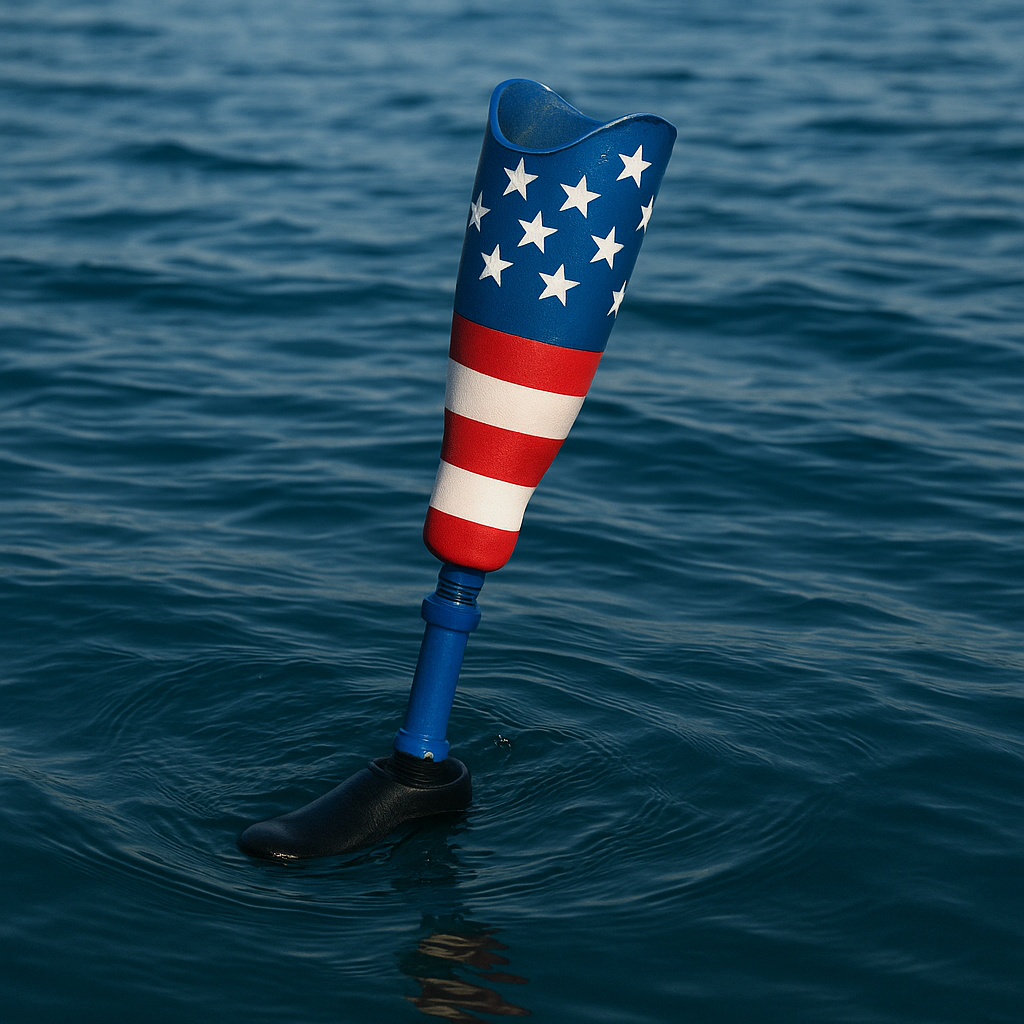
Paralympic legend Natalie du Toit faces a R1 million tax bill from SARS, sparking debate on athlete finances and the reach of AI-driven audits.
From Yellow Sea Glory to SARS Drag: Natalie du Toit’s Million-Rand Tax Wake-Up
Natalie du Toit, a famous swimmer, is in big trouble with SARS, the tax people. They say she owes R1.02 million for money she earned after swimming, like for talks and online courses. SARS found this out because of hidden income and a car allowance that changed. Now, Natalie has to act fast to pay or lose her home, showing even heroes must pay their taxes.
What is the main issue Natalie du Toit is facing with SARS?
Natalie du Toit is facing a R1.02 million tax claim from SARS for nine tax years (2013-2021). This liability stems from undeclared income streams like corporate speaking fees, royalties from an online course, and a re-classified company car allowance, compounded by penalties and interest, after her competitive swimming career.
Get Cape Town news in your inbox
Stay updated with the latest stories from the Mother City.
Section 1 – When the Water Stops Forgiving
The country still pictures a black-suited silhouette knifing through surf, one palm cracking the surface while the opposite thigh ends in a clean, disciplined stump. That mental postcard - Natalie du Toit powering past able-bodied rivals in Beijing’s 10 km open-water marathon - once served as South Africa’s shorthand for resilience. Between Athens 2004 and London 2012 she harvested thirteen Paralympic golds, carted home an Olympic certificate of merit and tucked the United Nations Laureus trophy under her arm. Then the starting pistol fell silent. What followed was a second, less-public reinvention: university lectures in sports management, keynote circuits in Dubai and Singapore, board seats at two NGOs, equity in a township baby-swim franchise and a glossy monthly column on corporate wellness.
Those post-pool pay cheques are now the centre of a cold, bureaucratic tug-of-war. SARS has consolidated assessments for the nine tax years spanning 2013 to 2021 at R1.02 million, a figure swollen by understatement penalties and compounding interest. In other words, the very seasons she spent converting legend into livelihood have become the evidence docket in a revenue shortfall claim.
The liability notice, dropped at her thatched Noordhoek cottage on 14 February, gave her twenty-one working days to pay in full, sign a confession and negotiate, or lodge a formal objection. Miss the deadline and the Sheriff can attach her house, list it on the Pretoria auction floor and hand the proceeds north within forty-five days. It is the same digital guillotine that has, over the past eighteen months, chopped 40 % more high-value cars than before, signalling that sports heroes are no longer bullet-proof.
Section 2 – How a Story Becomes a Taxable Product
SARS has not published the line-by-line spreadsheet, but insiders say three new income veins triggered the red flags once sponsorship retainers dried up. First, appearance money on the corporate-talk circuit; second, royalties from a two-module online “mind-set mastery” course launched in 2017; third, a company-car allowance later re-classified as private use after e-toll pings showed the vehicle sleeping 312 nights outside her Cape Town address.
Du Toit’s advisers argued that many speeches were delivered offshore, fees landing in a Dubai account and therefore shielded by the UAE double-tax treaty. The revenue service counters that the intellectual property - the deck, the catch-phrases, the emotional arc - was forged while she remained South African tax resident, so the cash is domestically sourced. On the car, third-party data feeds automatically matched licence discs to toll gantries; once the algorithm decided the Toyota was mainly a grocery runner, the allowance flipped into personal income and the deduction vanished.
Add automatic late-registration penalties for provisional tax and interest clocking 10 % a year, and what began as scattered side gigs snowballed into a seven-digit demand. The 2019 Instagram geo-tag that placed her at a paid Cayman Islands training camp and an undeclared R465 000 dividend from her private company further lifted her risk score, nudging her file into the “fast-track recovery” queue that Commissioner Edward Kiesworter’s dashboard tracks in real time.
Section 3 – Balance Sheets, Echoes and Hard Choices
Du Toit’s balance sheet is surprisingly modest. Competition savings of roughly R2.4 million sit in an institutional unit-trust portfolio. She owns 70 % of a close corporation that franchises heated baby-swim pools in Khayelitsha and Gugulethu; profits stay inside to buy more portable heaters. Her only property - the Noordhoek house bought with Olympic incentive money in 2010 - was re-financed in 2021 to release equity for an adaptive-sport NGO she helped launch, leaving little liquidity and a fresh bond.
What caught her off guard, advisers admit, was the assumption that goodwill income - autographs, Zoom pep talks, autograph walls - was too intermittent to count as “trade”. SARS disagreed, invoking a 2018 celebrity-chef precedent where undeclared demo-day fees attracted heavy penalties. Once the income stream was re-labelled gross revenue, registration as a provisional taxpayer became obligatory retroactively, and the clock on compound interest began to tick louder than any starting beep she ever heard.
She has now engaged two specialist firms: a boutique tax-litigation practice to argue the technical merits and a reputation-management outfit that counts Oscar-winning South Africans among its clients. A Section 200 compromise - paying at least 20 % up-front in exchange for a reduced settlement - is possible but requires cash she does not have on call. A voluntary disclosure programme could waive criminal prosecution, yet counsel warn that the AI dragnet already amounts to an automated audit, so the VDP door may be closed.
Section 4 – Parables, Precedents and the Next Generation
Radio call-ins waver between indignation - “The same state that once made her sell raffle tickets to reach Athens now wants her roof!” - and stern reminders that every rand dodged is a rand unavailable to disability grants. The rugby World Cup winner whose house was attached in 2021 settled within seventy-two hours, but the optics never fully healed; Paralympic athletes, wrapped in school-civics folklore, face a harsher emotional fall if the fairy-tale cracks.
International parallels flicker through local commentary: Bradley Wiggins channelled image-rights through a Channel Islands structure and settled a £1 million claim; Michael Phelps deducted training costs but survived an IRS probe because American law carves out performance-related sponsorships. South Africa offers no such grey zones - residence-based taxation captures worldwide income and dumps the proof burden on the taxpayer. What makes this clash singular is the collision between a uniquely emotive icon and a revenue authority rebuilding credibility after the state-capture era, a body whose commissioner has pledged that legends carry zero weight against data trails.
At the Danie Malan pool in Bellville, coach Marlon van der Merwe still hands out kickboards to a ten-year-old with a prosthetic leg painted Protea green. Asked whether the tax drama alters his hero lesson, he shrugs: streamline your body off every wall, streamline your paperwork on land - minimise drag. Du Toit has not yet set a court date; administrative objections could stretch eighteen to thirty months while interest keeps swimming. Whether the girl who once dropped the able-bodied field in the Yellow Sea’s chop can outsprint a spreadsheet that never tires is now her most important race, and the clock is still ticking.
What is the main issue Natalie du Toit is facing with SARS?
Natalie du Toit is facing a R1.02 million tax claim from the South African Revenue Service (SARS) covering nine tax years, from 2013 to 2021. This substantial liability primarily stems from undeclared income earned after her competitive swimming career, including corporate speaking fees, royalties from an online 'mind-set mastery' course, and a re-classified company car allowance. The total amount is further inflated by understatement penalties and compounding interest.
How did SARS identify Natalie du Toit's undeclared income?
SARS, without publishing a line-by-line spreadsheet, identified three main sources of undeclared income. These include appearance money from her corporate-talk circuit engagements, royalties generated from her online 'mind-set mastery' course launched in 2017, and a company car allowance that was re-classified as private use. The re-classification of the car allowance was based on e-toll data showing the vehicle frequently parked at her Cape Town residence, indicating personal rather than business use. Additionally, an Instagram geo-tag placing her at a paid Cayman Islands training camp and an undeclared R465,000 dividend from her private company also contributed to her high-risk score.
What arguments did Natalie du Toit's advisors make regarding the offshore income?
Natalie du Toit's advisors argued that many of her speeches were delivered offshore, with fees being paid into a Dubai account. They contended that these earnings should be shielded from South African tax by the UAE double-tax treaty. However, SARS countered this by asserting that the intellectual property, such as the content, catch-phrases, and emotional arc of her talks, was developed while she was a South African tax resident. Therefore, SARS considers the cash to be domestically sourced and thus taxable in South Africa.
What are the potential consequences if Natalie du Toit fails to pay the tax liability?
If Natalie du Toit fails to pay the R1.02 million tax liability within the stipulated twenty-one working days, or fails to negotiate a settlement, the consequences could be severe. The Sheriff can attach her Noordhoek cottage, which was bought with Olympic incentive money and re-financed for an adaptive-sport NGO. This property could then be listed for auction in Pretoria, with the proceeds used to settle her debt. This scenario highlights SARS's increased enforcement, demonstrating that even public figures are not exempt from tax obligations.
What options does Natalie du Toit have to resolve her tax dispute with SARS?
Natalie du Toit has engaged two specialist firms: a boutique tax-litigation practice to argue the technical merits of her case and a reputation-management outfit. Potential options include lodging a formal objection to the assessment, which could extend the process for eighteen to thirty months while interest continues to accrue. A Section 200 compromise, which involves paying at least 20% of the debt upfront for a reduced settlement, is also a possibility, though she currently lacks the immediate cash. A voluntary disclosure programme (VDP) could waive criminal prosecution, but counsel warn that SARS's advanced AI systems might already consider her case an automated audit, potentially closing the VDP door.
Why is Natalie du Toit's case significant for other sports heroes and public figures in South Africa?
Natalie du Toit's case is highly significant as it underscores SARS's commitment to enforce tax compliance across all sectors, including high-profile individuals. It signals that sports heroes and public figures are no longer

Liam Fortuin is a Cape Town journalist whose reporting on the city’s evolving food culture—from township kitchens to wine-land farms—captures the flavours and stories of South Africa’s many kitchens. Raised in Bo-Kaap, he still starts Saturday mornings hunting koesisters at family stalls on Wale Street, a ritual that feeds both his palate and his notebook.
View all articles →