
Patrice Motsepe move sparks ANC leadership speculation
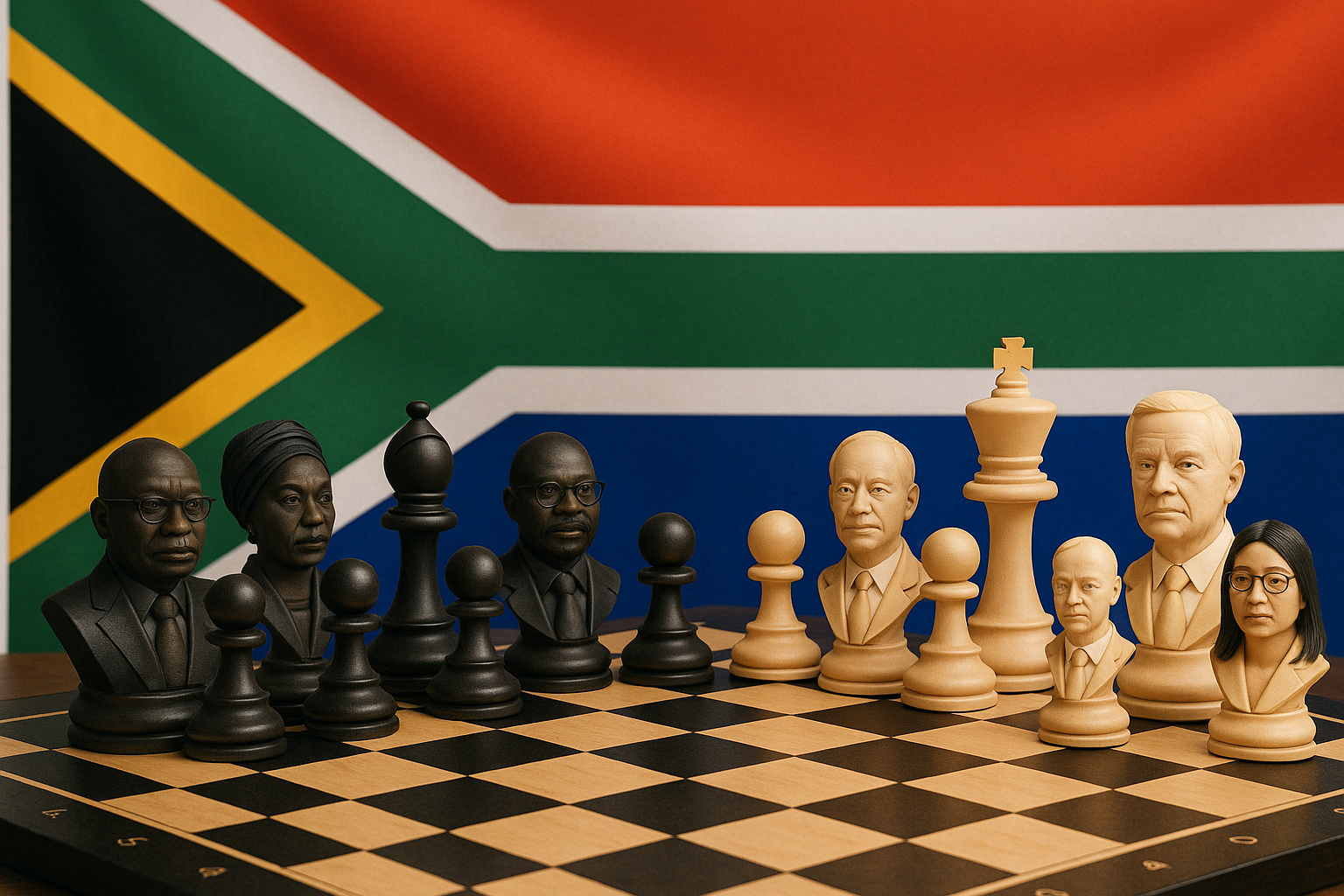
Explore Patrice Motsepe's political rise: wealth, sport, and strategic moves shaping South Africa’s future. Will he run for office?
Patrice Motsepe, a super-rich businessman, is quietly working to change South Africa's future. He stepped down from his main job, giving himself lots of free time. He uses his money and love for sports to get people to like him, just like a politician. He's building a huge network and even has a special app to connect with many people. He might even become a minister or president, especially with a secret metal that could end power cuts.
How is Patrice Motsepe re-engineering South Africa's future?
Patrice Motsepe is re-engineering South Africa's future through strategic calendar management, leveraging his vast business network, engaging in philanthropy and sports ownership to build public favorability, and potentially pursuing political office. His recent shift to a non-executive role at African Rainbow Minerals grants him significant time to focus on these endeavors, backed by substantial personal wealth and innovative digital outreach.
Get Cape Town news in your inbox
Stay updated with the latest stories from the Mother City.
- Four windows into how one man’s calendar is quietly re-engineering South Africa’s future*
1. The Memo That Bought Him 305 Free Days
At 9 a.m. on a gust-sharpened Monday in Johannesburg, Motsepe put ink to a single-page notice that struck the word “executive” from his chairman’s letterhead at African Rainbow Minerals.
The page itself was sleep-inducing compliance-speak, the final sigh of the JSE’s eighteen-month “Simplification Project” that now forbids a board chair from also drawing an executive salary.
Within minutes the share ticker flicked down 0.8 %, #Motsepe2027 out-trended Eskom’s outage chart, and three Cape Town betting houses chopped the odds of “any ARM director sworn into cabinet before 2029” from 18-1 to 7-1.
Markets despise murky narratives more than they fear politicians; politicians, on the other hand, feast on the empty squares of a news cycle.
The new rule matters because it rewrites the power balance inside every family-controlled conglomerate on the JSE.
Founders surrender daily operational levers yet walk away with something political campaigns covet: spare days.
A non-executive chair is officially expected to give the board roughly sixty mornings a year; the remaining 305 belong to him.
Motsepe can now spend those mornings opening soccer academies in rural villages, courting donors in Davos, or shaking branch chairmen’s hands outside Polokwane voting stations without missing a single audit-committee meeting.
The calendar flip is seismic.
He drops direct authority over 22 000 workers and R 47 billion in yearly turnover, but gains the elasticity to be everywhere politics happens.
In a country where face-to-face still beats Twitter threads, 305 blank days is the most formidable campaign war-chest any prospect has carried into the arena.
2. From Boardroom Graphs to Stadium Chants – The Network Nobody Prints
Picture three concentric maps.
Inner ring: ARM, African Rainbow Capital, Sanlam, Remgro and Harmony Gold – 24 boards, 83 directorships, R 620 billion in assets all told.
Middle ring: Mamelodi Sundowns, Blue Bulls Company (51 % Motsepe wallet), Royal Bafokeng Stadium and a foundation that has paid out R 250 million in bursaries since 2020.
Outer ring: president of CAF since 2021, FIFA Council member since 2018, guest at the White House Africa summit, dinner partner of Sheikh Mansour and Gianni Infantino.
The nodes seldom surface on the same press release, yet one whisper – say, that CAF’s TV arm might shift from Paris to Cape Town – can lift ARM’s share price and ANC Western Cape branch morale in the same heartbeat.
Network theorists call the overlap “multiplexity”: one actor carries several identities that never meet on a single spreadsheet, but whose combined echo multiplies influence.
Money, sport and philanthropy are not separate playgrounds; they are amplifiers feeding the same loudspeaker.
Sundowns’ six PSL trophies since 2016 give Motsepe weekly, colour-rich footage beamed into taverns that double as voting districts.
The Blue Bulls provide Afrikaner sporting pride, a constituency historically wary of ANC royalty.
CAF stationery furnishes him diplomatic number-plates in 54 African capitals, a Rolodex no South African cabinet minister can rival.
Pollsters see the payoff.
AskAfrica’s November 2025 survey put Motsepe’s national favourability at 61 %, with only 11 % negative – numbers Cyril Ramaphosa or Helen Zille have never touched simultaneously.
Among 1 800 African football followers across Accra, Lagos, Nairobi and Cairo, 64 % translated “Motsepe” as “competent.”
Warm feelings are not ballots, but they are the glue future coalitions are made of.
3. Ramaphosa’s Script, Bigger Budget – And the Minister of Electricity Door
When Ramaphosa quit MTN and Shanduka in 2012, he issued a 47-page ethics booklet and marched toward the Union Buildings in measured steps.
Motsepe is retracing that choreography, only with a larger purse and a tighter deadline.
Foundation-funded school kitchens, closed-door COSATU sit-downs at Nasrec, 150 unpublicised minibus donations to taxi cooperatives that happen to own election-day fleets – all echo the Ramaphosa playbook, but at Ramaphosa-plus scale.
Bloomberg values Motsepe’s family trust near R 35 billion, enough to self-fund a national campaign without dialling a single external donor.
The prize could be a ministry invented precisely for this moment: Electricity.
Eskom’s debt mountain stands at R 455 billion, yet its break-up is carving procurement doors no career politician can walk through.
ARM already feeds 2 200 MW of coal-stockpile management to Medupi and Kusile through a joint venture with Norinco.
African Rainbow Energy is piloting 100 MW of sun in the Northern Cape and has planted three 450 MW proposals into bid window 7.
A hypothetical Minister Motsepe would sit simultaneously as referee, client and supplier; governance panels would scream, while households cheering restored power might forgive the paradox.
The calendar sharpens the dilemma.
CAF’s presidential vote is scheduled for Rabat in July 2027, exactly when ANC branches crystallise leadership slates back home.
Each race demands six months of shuttle diplomacy, patronage lists and red-eye flights.
Analysts regard the overlap as the clearest proof that a binary choice is looming: Union Buildings or FIFA headquarters.
4. The Veto Hands, Digital Ground Game and Metal Nobody Mentions
Not everyone applauds.
Zuma-loyal RET blocs still equate Motsepe with “white monopoly capital” because Sanlam anchors ARM’s BEE deal; they control roughly 1 100 of 4 000 ANC delegates.
EFF and MK have vowed to prosecute “oligarch candidates” should they hold the balance of power in 2029.
European journalists, meanwhile, are sitting on dossiers about CAF’s Gabon broadcast contract, ammunition ready if he eyes FIFA’s top chair in 2027.
His ground troops are, increasingly, invisible.
A low-key December launch of “Motsi,” an app that doles out data vouchers for watching five-minute money-literacy clips, scooped 1.3 million sign-ups in six weeks, 72 % outside metros.
Challenges nudge users to register ten neighbours to vote; no party logo appears, yet the behavioural data pool is already larger than the ANC’s membership file.
The IEC is probing whether a data-bribe counts as an undeclared political donation; lawyers insist it is “civic education.”
Whatever the ruling, Motsepe now owns a direct push-alert channel into 1.3 million pockets.
Then there is the sleeper asset buried on page 188 of ARM’s 2025 annual report: a R 400 million option premium paid to the IDC for 30 % of the planet’s richest vanadium deposit, tucked inside Limpopo.
Vanadium is the heart of redox batteries that can store solar power at grid scale for 25 years.
Should Eskom open the promised battery-storage bid window in 2027, the holder of that option becomes the gatekeeper of load-shedding’s most elegant antidote.
The option vests in September 2026 – three months before ANC branches lock leadership slates.
No headline has yet welded the metal to the political clock, but the fuse is already lit.
The arithmetic of ambition is simple: 305 discretionary days, R 35 billion in family capital, a data-harvesting app, a metal that can kill load-shedding, plus favourability ratings most brands would kill for.
Whether those ingredients bake into a presidential loaf or a Zurich passport depends on choices he must make before the winter of 2027.
Either way, South Africa’s storyboard for the next decade is being sketched on Patrice Motsepe’s personal calendar – and the ink is already drying.
[{"question": "
Who is Patrice Motsepe and what is he doing in South Africa?
Patrice Motsepe is a super-rich South African businessman and mining magnate. He is actively working to re-engineer South Africa's future by leveraging his wealth, business network, and influence in sports and philanthropy. He recently stepped down from his main executive role at African Rainbow Minerals (ARM), giving him significant free time to pursue these efforts, which may include a move into politics.
", "answer": null}, {"question": "How did Patrice Motsepe free up time for his new endeavors?
Patrice Motsepe freed up significant time by transitioning from an executive chairman role to a non-executive chairman at African Rainbow Minerals. This change, driven by JSE regulations, means he is officially only required to dedicate about 60 days a year to the board, leaving him with an additional 305 days to focus on his strategic initiatives, public engagement, and potential political aspirations.
", "answer": null}, {"question": "What is Patrice Motsepe's "network" and how is he using it?
Patrice Motsepe's network is vast and multi-layered. It includes his business empire (ARM, African Rainbow Capital, Sanlam, Remgro, Harmony Gold), his sports ventures (owner of Mamelodi Sundowns football club, 51% owner of Blue Bulls Company, president of CAF, FIFA Council member), and his philanthropic foundation. He uses this complex web of connections to build public favorability, influence various sectors, and establish diplomatic ties across Africa, all of which amplify his overall influence and potentially pave the way for political advancement.
", "answer": null}, {"question": "How does Patrice Motsepe's approach compare to Cyril Ramaphosa's path to power?
Patrice Motsepe is described as retracing Cyril Ramaphosa's choreography when Ramaphosa left his business roles to enter politics. However, Motsepe is doing so with a significantly larger personal fortune (estimated at R 35 billion), allowing him to self-fund a national campaign if he chooses. He is implementing similar strategies, such as funding school kitchens and making donations, but on a larger scale and potentially with a tighter timeline.
", "answer": null}, {"question": "What is the significance of the "secret metal" mentioned in relation to Patrice Motsepe?
The "secret metal" refers to vanadium, which Patrice Motsepe's African Rainbow Minerals (ARM) holds a 30% option on the planet's richest deposit in Limpopo. Vanadium is crucial for redox flow batteries, which can store solar power at a grid scale for decades, offering a potential solution to South Africa's persistent power cuts (load-shedding). This gives Motsepe a strategic advantage, particularly if he were to become a Minister of Electricity, as he would be in a position to control a key resource for energy solutions.
", "answer": null}, {"question": "What is the "Motsi" app and how is Patrice Motsepe using it?
"Motsi" is a digital app launched by Patrice Motsepe that gained 1.3 million sign-ups in six weeks. It incentivizes users with data vouchers for watching short money-literacy clips. Crucially, the app also encourages users to register ten neighbors to vote. While it does not display party logos, it effectively serves as a direct communication channel, allowing Motsepe to gather behavioral data and send push alerts to a large audience, potentially building a significant digital ground game for future political endeavors.
"}]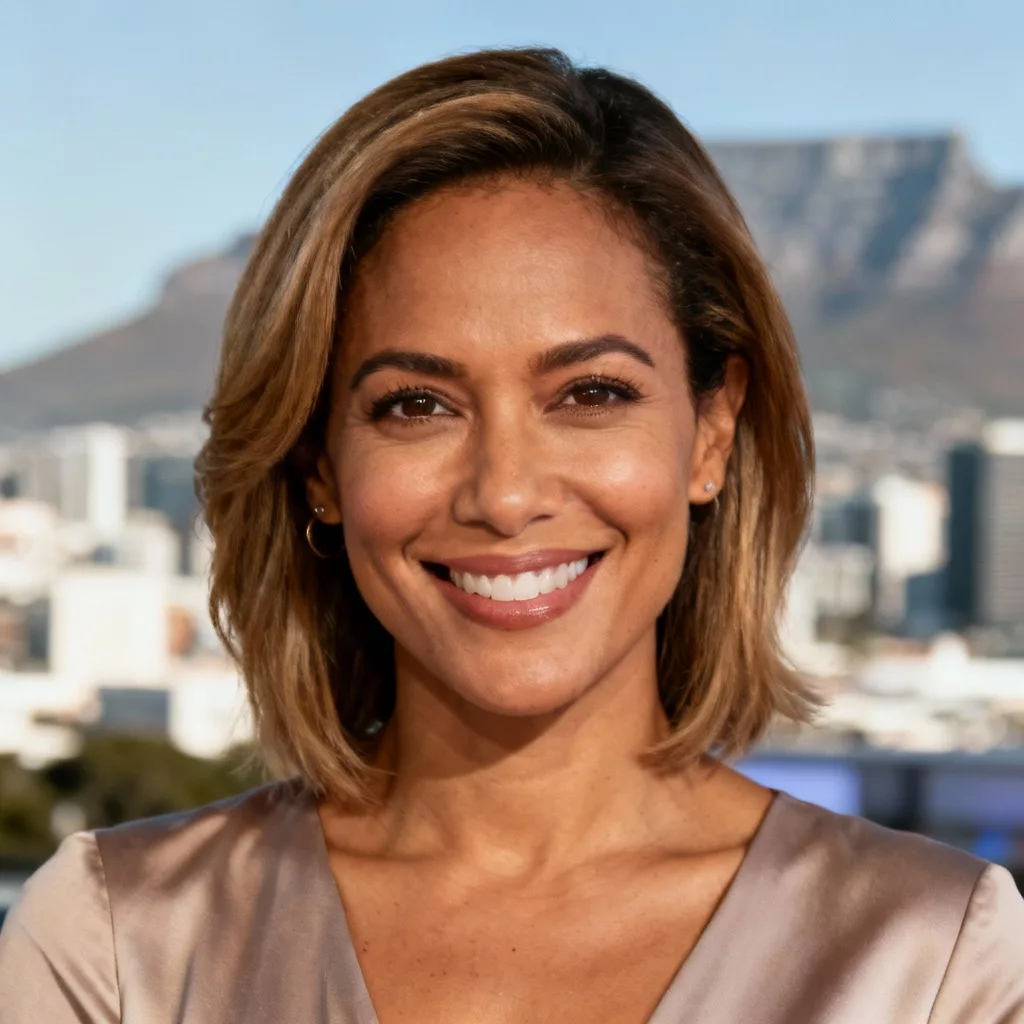
Sarah Kendricks is a Cape Town journalist who covers the city’s vibrant food scene, from township kitchens reinventing heritage dishes to sustainable fine-dining at the foot of Table Mountain. Raised between Bo-Kaap spice stalls and her grandmother’s kitchen in Khayelitsha, she brings a lived intimacy to every story, tracing how a plate of food carries the politics, migrations and memories of the Cape.
View all articles →