
Petrol price surge as Hormuz disruption threatens pumps
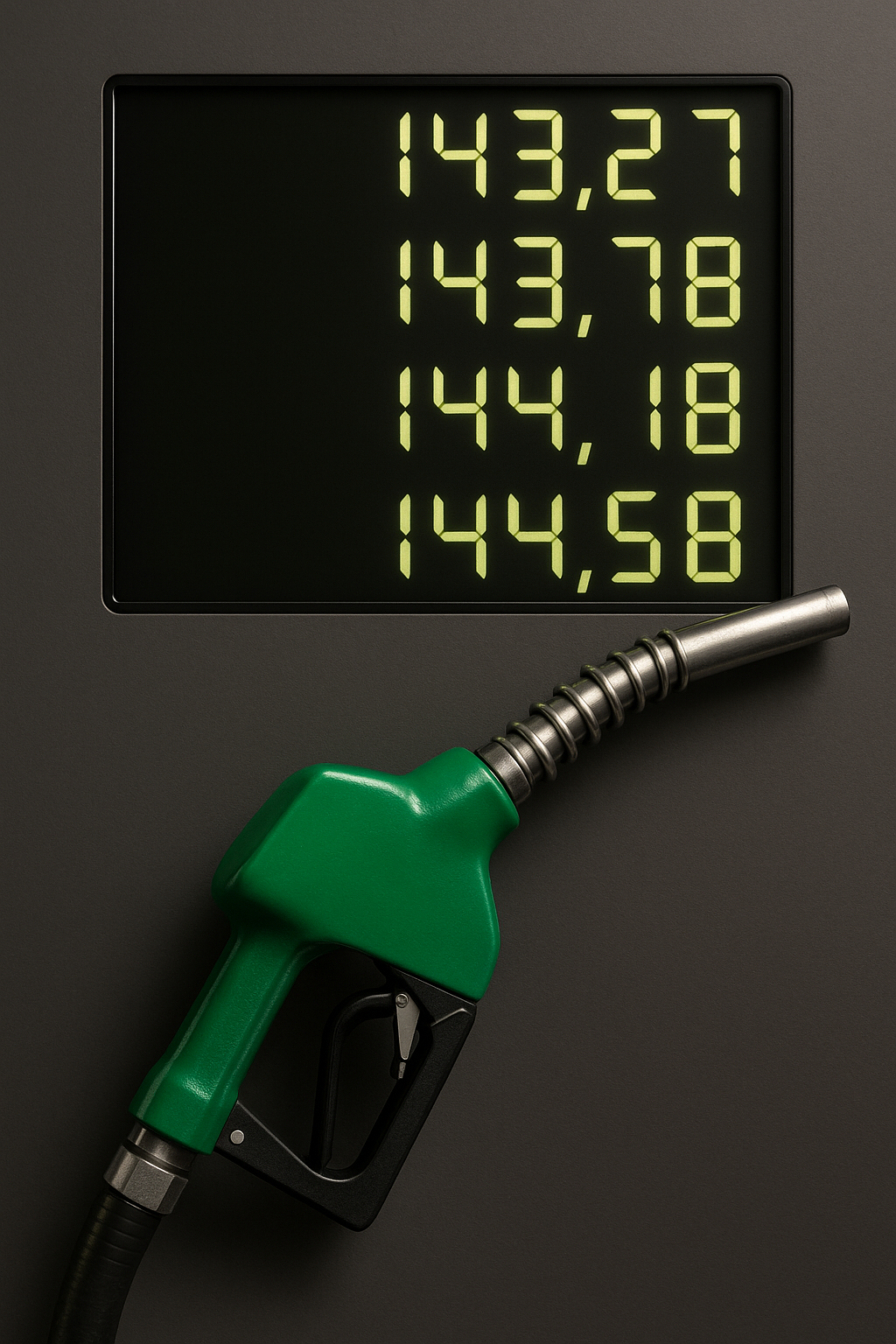
Fuel price hike: Strait of Hormuz tensions, SA's import reliance, and rising levies push pump prices and logistics costs higher.
A tiny strip of water, the Strait of Hormuz, is causing big problems for South Africa's fuel prices. When trouble brews there, oil tanker insurance shoots up, making crude oil and refined fuel much more expensive. South Africa, which buys most of its fuel from other countries, feels this hit right away at the pump. This means everything from groceries to taxi rides costs more, impacting everyone's wallets.
How does the Strait of Hormuz impact South Africa's fuel prices?
One-fifth of the world's seaborne oil passes through the Strait of Hormuz. When this critical chokepoint faces geopolitical risks, insurance costs for oil tankers skyrocket. This directly increases the cost of crude oil and refined fuel, which South Africa, importing 70% of its refined fuel, experiences almost immediately through higher pump prices.
Get Cape Town news in your inbox
Stay updated with the latest stories from the Mother City.
The Choke-Point That Sets the Price You Pay
Cape Town’s harbour espresso bars and Gauteng’s long-haul truck stops may be 1 400 km apart, but the worry steaming from every cappuccino and diesel pump is identical: how much further can the price per litre stretch? February closed with Brent crude nudging $73, yet within the first March trading window the benchmark sprinted to $80. The spark was not an OPEC quota surprise or a United States inventory dip; it was a 39-kilometre ribbon of sea that squeezes Iran against the Arabian Peninsula - the Strait of Hormuz.
One fifth of all seaborne oil on Earth squeezes through that slit. When Lloyd’s Market Association slapped the strait on its “Listed Areas” for marine war risk, insurance for a routine Suezmax voyage leapt from below $50 000 to well over $300 000. Shipowners ran the numbers: at today’s freight tariffs that surcharge can wipe out the margin on a full cargo. Satellite trackers now show at least fourteen very-large-crude-carriers idling east of the Indian Ocean, waiting for diplomacy or richer freight rates before they dare the passage.
South Africa, which ships in roughly 70 % of its refined fuel, feels the jolt almost instantly. Each extra dollar on a barrel feeds about seven cents a litre into the Basic Fuel Price formula. With the rand locked near R18.60 to the greenback, there is no currency cushion. Traders at the Durban Mercantile Exchange whisper that if Brent tags $90, the petrol under-recovery could top 35 cents a litre by mid-April - before the Treasury even tacks on its scheduled tax hikes.
Inside the Formula That Turns Cents Into Billions
South Africa’s pump price is no guesswork. The Department of Mineral Resources & Energy snaps a weekly picture of refining margins in Singapore, the Mediterranean and the United States Gulf, then layers on freight, insurance, ocean loss and assorted levies. When war-risk premiums explode, the insurance slice - usually a forgettable 0.5 cent per litre - swells to almost 2 cents. Multiply that by the 12 billion litres of petrol and diesel the country guzzles each year and the treasury forks out an extra R240 million before a single drop hisses through the Durban–Johannesburg pipeline.
April brings its own sting. The general fuel levy climbs 9 cents, nudging petrol to R3.96 a litre and diesel to R3.83. The Road Accident Fund levy piles on another 17 cents, lifting its take to R2.46. The carbon fuel levy, born in 2019, adds a penny to both grades, landing at 10 and 11 cents respectively. By the time the nozzle clicks, 47 % of what you pay is tax. A 50-litre fill at R23.50 this winter will send R552.50 straight to the fiscus - enough to buy a budget smartphone every time you top up.
Retailers and hauliers cannot absorb that tide. A refrigerated truck pounding 1 200 km from Durban to Johannesburg gulps 450 litres of diesel. At today’s R20.05 wholesale price the trip costs R9 022 in fuel alone; a R1.50 national hike slaps on an extra R675. A supermarket fleet running 400 trucks daily watches almost R100 million evaporate over a year. Growers in the Free State who hedged diesel at R19.20 through June are suddenly underwater, reopening silos they had sealed for spring delivery, praying a rand-per-tonne uptick will offset pricier haulage.
Ripples on the Road, in the Air and on the Shelf
Airports re-price faster than highways. OR Tambo recalibrates international jet-fuel quotes every Wednesday; a single-dollar uptick in the Mean of Platts Arab-Gulf index equals 1.3 cents at the hydrant, and airlines recoup 80 % within a fortnight. Domestic carriers already added R45 to the Cape Town–Johannesburg ticket last Friday, blaming “unprecedented landed-fuel volatility.” Regional operators that normally refuel in Walvis Bay now overfly to subsidised Luanda, gladly burning 35 extra minutes to save thousands of dollars.
Taxi ranks feel the heat sooner than boardrooms. A 15-seat Toyota Quantum clocking 450 km a day slurps 55 litres; at Gauteng’s R22.89 for 93-octane the daily fuel tab is R1 259. A R1.50 pump jump pushes that to R1 342, gnawing into the R3 500 weekly surplus owners use to pay drivers and replace tyres. Associations in Soweto and Umlazi have tabled a 50-cent fare rise to R14.50 per hop, yet even that leaves a gap once pricier parts and insurance bite. Metered-taxi apps are trialling “surge-plus” pricing between 06:00 and 08:00, arguing cold-start engines run richest when commuters are most desperate.
Bakeries reveal the hidden cost of crust. A Sasko industrial oven burning 180 litres of diesel daily for steam now faces R21.55 for the 40 % it did not hedge, up from R20.05. That 1.50 gap lifts the fuel share per loaf by 0.7 cent, nudging the 700 g white bread to R17.49 on shelf by May. Retail giants already squeezed on margin will pass it on, feeding the next food-inflation headline before the winter even sets in.
Escape Routes: New Crude, New Wheels, New Habits
Sasol, which imports 3 % of national petrol to balance its synfuels, told investors that every $10 Brent leap demands an extra R600 million in working capital, financed at prime plus. Insurers widen the “breach area” to the whole Arabian Gulf, forcing tankers to post armed guards at $12 000 a transit and file detailed security plans. Those dollars pool into the cost of every barrel landed in Durban.
Desperate for alternatives, officials have nudged PetroSA to revive a 2018 memorandum with Equatorial Guinea’s GEPetrol that would swap 30 000 barrels a day of West African crude for South African products. The Luba-to-Durban route skips both Hormuz and Suez, trimming 5 500 km. The hitch: Equatoguinean crude is heavy and sour, demanding a R3.8 billion refit of Mossel Bay’s 45 000 bbl/day plant that has lain cold since 2020 - cash the Treasury will not release before October’s medium-term budget.
Fleet bosses are not waiting for new oil; they are squeezing more kilometres from the diesel they already burn. Mr Price Group’s 490 trucks now carry 4G fuel probes; early figures show a 6 % drop in litres per tonne-kilometre, cancelling a third of the feared R1.50 hike. Side-skirted, boat-tailed interlinks promise another 3 % drag cut, worth R18 million a year if rolled out nationwide. Consumers, meanwhile, downloaded the Carpool-CPT app 220 % more the week Hormuz hit the headlines; 18 000 users claim to have yanked 2 100 cars off the N1 at peak, saving 14 000 litres of petrol every week.
Two-wheelers race ahead of four. Electric scooter sales leapt 64 % in 2023 to 3 800 units. A R38 000 Chinese e-scooter pays for itself in 14 months at R23 a litre, especially now Uber-Eats offers 90-second battery swaps for R35 - roughly the cost of 1.5 litres of petrol yet good for 110 city kilometres. If one in ten national bikes went electric, analysts reckon demand would drop 180 million litres a year, a 1.4 % slice off current consumption.
Unlike the shocks of 1973 or 2008, this price spike lands in an age of cheap data. Firms that track every litre through GPS probes and AI routing shield themselves faster than spreadsheet dinosaurs. Government will launch a fortnightly “transport cost monitor” on 15 March, projecting pump prices three weeks ahead - transparency borrowed from India’s petroleum planning cell. By then, refiners must decide whether to dare Hormuz again or sail the 12-day detour around the Cape of Good Hope, chaining another 2 800 km and fresh cost to the tankers that keep South Africa’s engines idling.
[{"question": "
How does the Strait of Hormuz impact South Africa's fuel prices?
", "answer": "The Strait of Hormuz is a critical chokepoint through which one-fifth of the world's seaborne oil passes. When geopolitical risks arise in this region, the insurance costs for oil tankers transporting crude oil and refined fuel skyrocket. South Africa, which imports approximately 70% of its refined fuel, directly experiences these increased costs, leading to higher prices at the pump for consumers. Each extra dollar on a barrel of Brent crude can add about seven cents per litre to South Africa's Basic Fuel Price formula."}, {"question": "What are the 'choke-points' affecting South Africa's fuel prices, and why are they significant?
", "answer": "The primary 'choke-point' is the Strait of Hormuz. Its significance lies in its strategic location as a narrow passage for a substantial portion of global oil shipments. When the Strait is designated as a 'Listed Area' for marine war risk by bodies like Lloyd’s Market Association, insurance premiums for tanker voyages dramatically increase. This surcharge can eliminate profit margins for shipowners, leading to higher freight rates and ultimately, higher fuel costs for importing nations like South Africa. Other chokepoints, though not explicitly detailed here, can also impact global oil supply and prices."}, {"question": "How is the pump price of fuel calculated in South Africa, and what are the contributing factors?
", "answer": "South Africa's pump price is determined by a formula that considers various factors. The Department of Mineral Resources & Energy assesses weekly refining margins from regions like Singapore, the Mediterranean, and the United States Gulf. On top of this, costs for freight, insurance (which can swell significantly due to war-risk premiums), ocean loss, and assorted levies are added. Taxes also form a substantial part of the price, including the general fuel levy, the Road Accident Fund levy, and the carbon fuel levy. Together, these components make up the final price consumers pay at the pump, with nearly half of the cost being taxes."}, {"question": "How do increased fuel prices impact various sectors in South Africa?
", "answer": "Increased fuel prices create a ripple effect across multiple sectors. \n\nTransportation: Long-haul trucking companies face significantly higher operating costs, which are passed on to consumers through increased prices for goods. Public transport, such as taxis, also sees their daily fuel expenses rise, often leading to fare increases. \n\nAviation: Airlines quickly adjust jet-fuel quotes, translating into higher ticket prices for domestic and international flights. \n\nManufacturing & Agriculture: Industries reliant on diesel, like bakeries for industrial ovens or farmers for machinery, incur higher production costs, leading to increased prices for essential goods like bread. \n\nConsumers: Ultimately, these increases in transportation and production costs lead to higher prices for groceries, taxi rides, and everyday goods, impacting everyone's wallets and contributing to overall inflation."}, {"question": "What alternatives is South Africa exploring to mitigate fuel price shocks?
", "answer": "South Africa is exploring several strategies: \n\n Diversifying Crude Sources: Officials are considering reviving an agreement with Equatorial Guinea's GEPetrol to swap West African crude, which would bypass the Strait of Hormuz and Suez Canal. However, this requires significant investment in refining capabilities for the different crude type. \n Fuel Efficiency: Fleet operators are implementing technologies like 4G fuel probes and aerodynamic modifications (side-skirted, boat-tailed interlinks) to improve fuel efficiency and reduce consumption. \n Promoting Carpooling and Alternative Transport: Initiatives like carpooling apps are gaining traction, and there's a significant surge in electric scooter sales, indicating a shift towards more fuel-efficient or electric personal transport options to reduce reliance on traditional fuels."}, {"question": "How can individuals and businesses adapt to rising fuel costs?
", "answer": "Individuals and businesses can adapt in several ways: \n\nIndividuals: \n Carpooling: Utilizing carpooling apps and sharing rides can significantly reduce individual fuel consumption. \n Public Transport: Opting for public transport where available can cut down on personal driving costs. \n Fuel-Efficient Vehicles: Considering electric scooters or more fuel-efficient cars for new purchases can lead to long-term savings. \n Consolidate Trips: Planning routes and combining errands to minimize driving distances. \n\nBusinesses: \n Fleet Optimization: Investing in fuel-efficient technologies, AI routing for deliveries, and driver training to reduce fuel wastage. \n Hedging: Large businesses might consider hedging fuel prices to lock in rates and protect against volatility. \n Supply Chain Review: Optimizing supply chains to reduce transport distances and improve logistics efficiency. \n Transparent Monitoring:* Utilizing tools like the government's 'transport cost monitor' to project prices and make informed operational decisions."}]
Amanda Wilson is a Cape Town-born journalist who covers the city’s evolving food scene for national and international outlets, tracing stories from Bo-Kaap spice shops to Khayelitsha micro-breweries. Raised on her grandmother’s Karoo lamb potjie and weekend hikes up Lion’s Head, she brings equal parts palate and pride to every assignment. Colleagues know her for the quiet warmth that turns interviews into friendships and fact-checks into shared laughter.
View all articles →