
Quota bungle: Small-scale fishers battle to survive
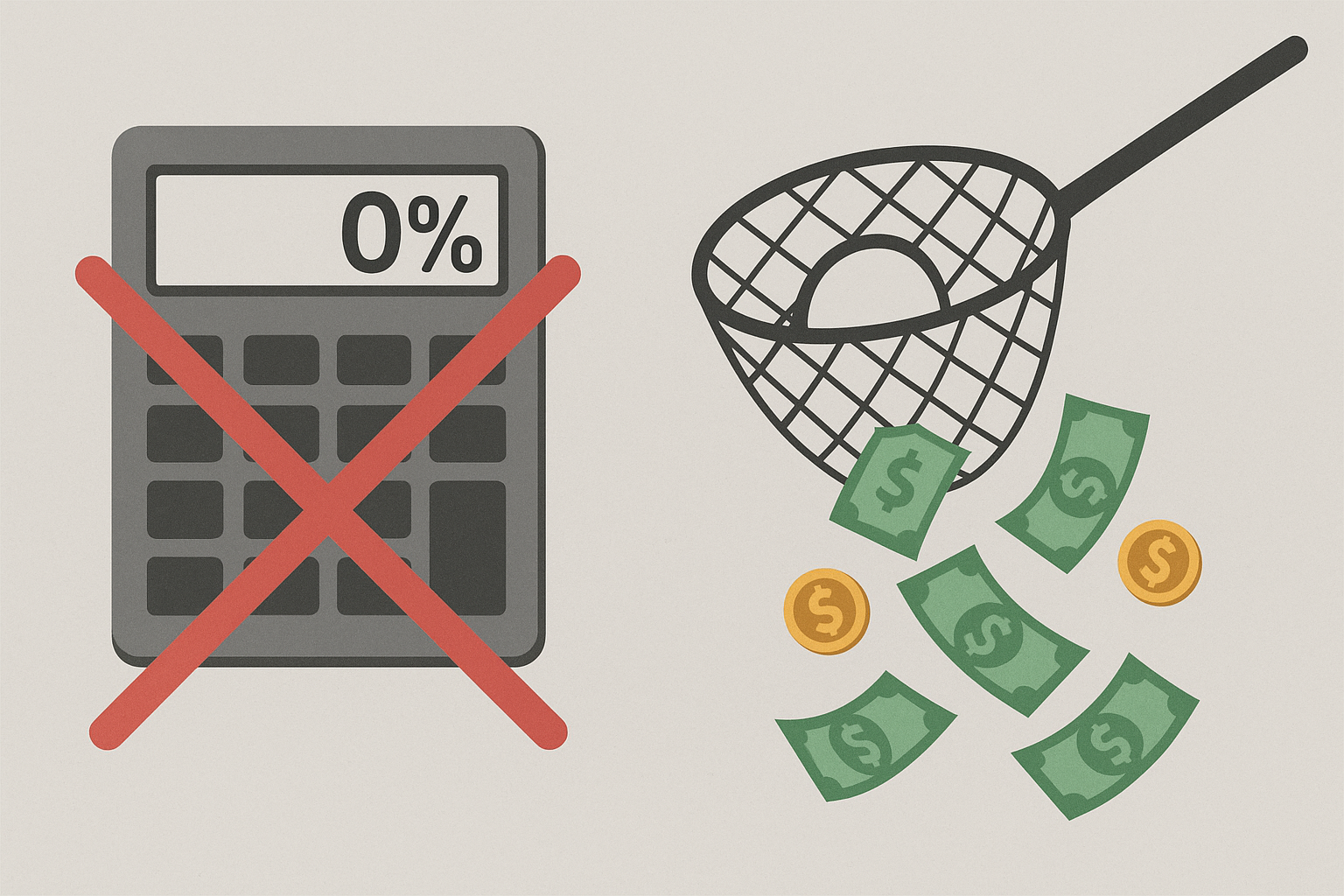
Spreadsheet glitches and hidden algorithms are devastating West Coast fishing quotas, enriching poachers, and threatening small-scale fishers' livelihoods.
West Coast crayfish fishers are in big trouble. The government said their fishing quotas went way up, but sneaky rules and hidden formulas meant they barely got any extra crayfish. A secret computer program, which no one can see, decides who gets to fish and even punishes communities for unemployment. This has led to many fishers not being able to make a living, driving them to illegal fishing just to survive, while big companies seem to benefit. Now, a court case hopes to make the secret fishing rules fair and open for everyone.
What is causing the decline in West Coast crayfish quotas and artisanal fisher livelihoods?
South Africa's West Coast crayfish quotas are shrinking due to a combination of factors: an opaque allocation algorithm (
Get Cape Town news in your inbox
Stay updated with the latest stories from the Mother City.
1. The 58 % Headline That Shrunk to 12 % Before the Ink Dried
When Minister Willie Aucamp faced the cameras in December, he brandished a single sexy number: quota up 58 %. Roughly 1 600 artisanal fishers from Alexander Bay to Cape Point pictured new school shoes and repaired boat engines. The global catch ceiling had indeed jumped from 400 t to 632 t, but two invisible siphons were welded to the pipe before a single crate reached the beach.
First, 86 t was quietly marked “research & by-catch offset,” a line that did not exist the year before. Next, 94 t was funnelled into a “commercial re-allocation pool” so that three conglomerates, fined in 2022 for over-fishing, could buy back their suspended rights with “biomass credits.” Once those twin leaks are tallied, the festive 58 % evaporates to a meagre 12 % of extra crustaceans that a cooperative skipper can actually unload at the harbour.
Journalists never received the full workbook; the department’s site crashed four hours after the notice went live, conveniently blocking downloads. By the time the spreadsheet resurfaced, the news cycle had moved on and the festive narrative was cemented in the public mind.
2. A Black-Box Formula Decides Who Gets Supper
South Africa’s 17 recognised small-scale cooperatives are supposed to be fed by a transparent 2016 recipe: (Historic Catch × Effort Index × Conservation Multiplier) ÷ Number of Registered Fishers. Instead, officials feed the numbers into an unlisted macro called “version 4.2” that slips in two extra levers nobody voted on.
The first knob, labelled “area-risk factor,” dents your allocation if your grounds neighbour a marine protected area. The second, the “poaching-pressure discount,” shaves off more if scans of night-time vessel traffic look suspicious. Values for both are refreshed by a private firm, Marine Resource Auditors (MRA), whose tender expired in 2021 yet keeps being rolled over on a monthly handshake.
Hilda Adams, chair of a Hondeklip cooperative, spotted MRA’s watermark on her quota letter and lodged a Promotion of Access to Information Act request. The reply: the algorithm is “proprietary intellectual property.” An equation that determines whether 300 Doringbaai children taste protein or maize pap is guarded like a nuclear code.
3. The Appeal Trap: How 1.25 Minus 18 % Can Equal Less Than One
Forty-three appeals landed in Pretoria by the 15 January deadline. In March the minister triumphantly announced that every complaint had been upheld and numbers would be recalculated. What happened next was bureaucratic shadow-play rather than maths.
Staff simply multiplied each cooperative’s prior allocation by 1.25, then lopped off a flat 18 % “seasonal variance buffer.” Because the 18 % was subtracted after the uplift, eight groups received fewer tonnes than the figure they had originally protested. The Legal Resources Centre (LRC) reverse-engineered the sheet and discovered a cascade of circular references in cells F79:F92 that occasionally spat out negative tonnage; those cells were later hard-coded to zero, erasing two entire cooperatives from the ledger.
Recipients were e-mailed read-only copies, so they could see the final kilogram count but not the hidden formulas. By the time the mistake surfaced, boats had already been beached for six weeks, missing the prime February–April migration when lobsters shuffle inshore and pot-pulls are cheapest.
4. From Spreadsheet to Surf: Why Delay Breeds Poaching
Rock lobsters exit the intertidal after the first big April swell; every lost week trims catchability by roughly 7 %. While officials argued about cells and amnesty clauses, the department’s new online permit portal - coded, of course, by MRA - went live in mid-March, buckled under 2 300 simultaneous log-ins from Port Nolloth alone, and stayed down for ten days.
A blanket exemption allowed landings to continue, but any crate above the (still secret) revised quota was branded illegal and subject to seizure. Some skippers therefore stayed home, unwilling to risk patrol boats; others slipped offshore at night, off-loaded on unmonitored beaches and sold to runners at half the legal beach price. The very glitch that cut legal supply thus widened the black market the department claims to fight.
A legally handled crayfish brings about R220 per kilogram on the pier, R380 by the time it reaches a Cape Town plate. The same animal, if landed without paperwork, is snapped up on the sand for R110, yet can fly out of Dubai at US $55 (≈ R1 000) per kilogram. When the state’s own system shrinks the first channel, the second channel blooms: SANParks confiscated 27 t of illicit tails in Q1-2024, double the prior year, but market trackers say that is barely 8 % of true illicit volumes.
5. Village Ledger: How 200 kg Means School Fees or a SASSA Queue
Visit Steenberg’s Cove near St Helena Bay and you will find thirty permit holders sharing one 7.2 m ski-boat with a clattering 90 hp Yamaha. Their monthly overhead before anyone splashes a toe looks like this:
- Fuel for idling and fishing: R4 500
- Ice and sardine-head bait: R3 900
- Slipway levy and insurance: R3 900
Total: R12 300, and the engine is not yet warm. Under current beach prices, a 200 kg cooperative quota yields about 111 pot pulls, or 18 working days. After 5 % die in the live-well, 3 % are down-graded for soft shell, and 10 % disappears in side-payments to the waiting truck, the net pool is roughly R32 000. Split thirty ways, each fisher banks R1 067 - barely half the national minimum wage. Trim that quota by another 50 kg in the unseen algorithm, and the entire venture sinks below the breadline; boats are winched onto the sand and owners trade oilskins for SASSA queues.
6. Ghost in the Code: The Icelandic Skeleton Inside MRA’s Model
Few South Africans know that their lobster formula has an Icelandic ancestor. In 2007 consultancy CapLog - today absorbed by MRA’s parent - built an “effort-risk model” for the collapsed Nordic red-king-crab fishery. It was open-source, taxpayer-funded, but when MRA ported the code southwards they grafted on a hidden multiplier called “k4.”
K4 is the inverse of the local unemployment rate: the fewer the jobs, the heavier the algorithm clobbers legal quotas, on the assumption that idle youth will raid pots. Thus, a conservation tool silently doubles as a poverty-punishment device. Reykjavik scrapped the model in 2014 after a parliamentary probe found it breached equal-access clauses; Pretoria adopted it the same year without public debate, and it still lurks inside version 4.2.
Meanwhile, citizen science is filling the vacuum. Since 2018 artisanal crews have measured every tenth lobster with PVC callipers, logging carapace length, sex and egg status on cellphones. The University of Cape Town archive now holds 37 000 records. Average size has slid from 96 mm to 83 mm; 62 % of animals are below the legal 80 mm limit, and berried females have jumped from 14 % to 31 % of landings - classic signs of growth overfishing. Recreational head-lamp fishers are estimated to vacuum an extra 180 t a year, equal to 42 % of the official small-scale allowance, yet no enforcement agency claims ownership of the problem.
7. Court Clash: Can a Judge Open the Black Box?
On 3 April the Legal Resources Centre dragged the matter to the High Court, asking three blunt reliefs:
- Suspend use of MRA’s algorithm until its guts are published for public comment.
- Grant amnesty to fishers who landed under exemption if they can back every crate with GPS co-ordinates and date-stamped photos.
- Declare that computational errors undermining subsistence quotas violate the constitutional right to food and lawful trade, echoing the 2007 Kalk Bay judgment.
The department’s answering papers, due 24 May, are expected to plead judicial over-reach, arguing that “complex bio-economic models” should not be second-guessed by benches lacking marine-science credentials. The LRC counters with Ghanaian fisheries-economist Prof. Emmanuel Asimilah, who helped Namibia write its transparent small-scale algorithm and who will testify that MRA’s version double-counts risk discounts, breaching the precautionary principle.
If the court agrees, the ripple could reach far beyond lobster: hake, sardine and abalone allocations all rely on similarly shielded spreadsheets. A win for the cooperatives would not only re-open 2024 season quotas but force the state to prove, cell by cell, that its arithmetic serves the people who actually cast the pots, not the firms that freeze and fly them.
[{"question": "What is causing the decline in West Coast crayfish quotas and artisanal fisher livelihoods?", "answer": "West Coast crayfish quotas are shrinking due to a combination of factors, including: an opaque allocation algorithm, the diversion of significant portions of the increased global catch ceiling to 'research & by-catch offset' and a 'commercial re-allocation pool' benefiting large conglomerates, and a black-box formula that punishes communities based on 'area-risk factor' and 'poaching-pressure discount'. These factors, coupled with bureaucratic mismanagement and delays, lead to reduced quotas for artisanal fishers, making it difficult for them to earn a living and pushing some towards illegal fishing."}, {"question": "How did the promised 58% increase in fishing quotas shrink so dramatically for artisanal fishers?", "answer": "While the global catch ceiling for West Coast crayfish did increase by 58% (from 400 t to 632 t), two significant deductions occurred before the quotas reached artisanal fishers. First, 86 t were allocated for 'research & by-catch offset'. Second, 94 t were channeled into a 'commercial re-allocation pool' for three conglomerates fined in 2022. After these diversions, the actual increase in crustaceans available to cooperative skippers was a mere 12% of the initial 58% headline figure."}, {"question": "What is the 'black-box formula' and how does it affect quota allocations?", "answer": "The 'black-box formula' is an unlisted computer program, version 4.2, used by officials to determine fishing quotas. It incorporates two unapproved levers: an 'area-risk factor' which reduces allocations for areas near marine protected zones, and a 'poaching-pressure discount' which further cuts quotas if night-time vessel traffic appears suspicious. This proprietary algorithm, maintained by Marine Resource Auditors (MRA), is not transparent and its calculations are hidden from fishers, making it impossible for them to understand or challenge their allocations."}, {"question": "Why are artisanal fishers being driven to illegal poaching?", "answer": "Artisanal fishers are being driven to illegal poaching due to several systemic issues. The drastically reduced effective quotas make it impossible for them to sustain their livelihoods, often falling below the national minimum wage. Delays in permit processing, an unreliable online portal, and the risk of legal catches being deemed illegal under confusing exemption rules further exacerbate the problem. When legal channels fail, and given the significant price difference between legally landed and illicitly sold crayfish (R220/kg legally vs. R110/kg illicitly at the beach, but up to R1000/kg in Dubai), some fishers resort to illegal means to survive."}, {"question": "What is the 'k4' multiplier and how does it relate to unemployment?", "answer": "The 'k4' multiplier is a hidden component within MRA's proprietary allocation algorithm (version 4.2), which was adopted from a 2007 Icelandic 'effort-risk model' for crab fishing. K4 is the inverse of the local unemployment rate; meaning, the higher the unemployment in a community, the more severely the algorithm reduces legal fishing quotas. This effectively transforms a conservation tool into a 'poverty-punishment device', assuming that idle youth will engage in poaching. The Icelandic model was scrapped in 2014 due to breaching equal-access clauses, but it remains active in South Africa's system."}, {"question": "What is the Legal Resources Centre (LRC) hoping to achieve with its court case?", "answer": "The Legal Resources Centre (LRC) has taken the matter to the High Court with three main objectives: 1) To suspend the use of MRA's algorithm until its internal workings are made public for comment. 2) To grant amnesty to fishers who landed crayfish under exemption, provided they can verify their catches with GPS coordinates and date-stamped photos. 3) To declare that the computational errors undermining subsistence quotas violate constitutional rights to food and lawful trade. A successful outcome could force transparency in all fisheries allocation models in South Africa and ensure the system serves the fishers rather than corporate interests."}]

Lerato Mokena is a Cape Town-based journalist who covers the city’s vibrant arts and culture scene with a focus on emerging voices from Khayelitsha to the Bo-Kaap. Born and raised at the foot of Table Mountain, she brings an insider’s eye to how creativity shapes—and is shaped by—South Africa’s complex social landscape. When she’s not chasing stories, Lerato can be found surfing Muizenberg’s gentle waves or debating politics over rooibos in her grandmother’s Gugulethu kitchen.
View all articles →