
Ramaphosa steps in to break Eskom’s grip
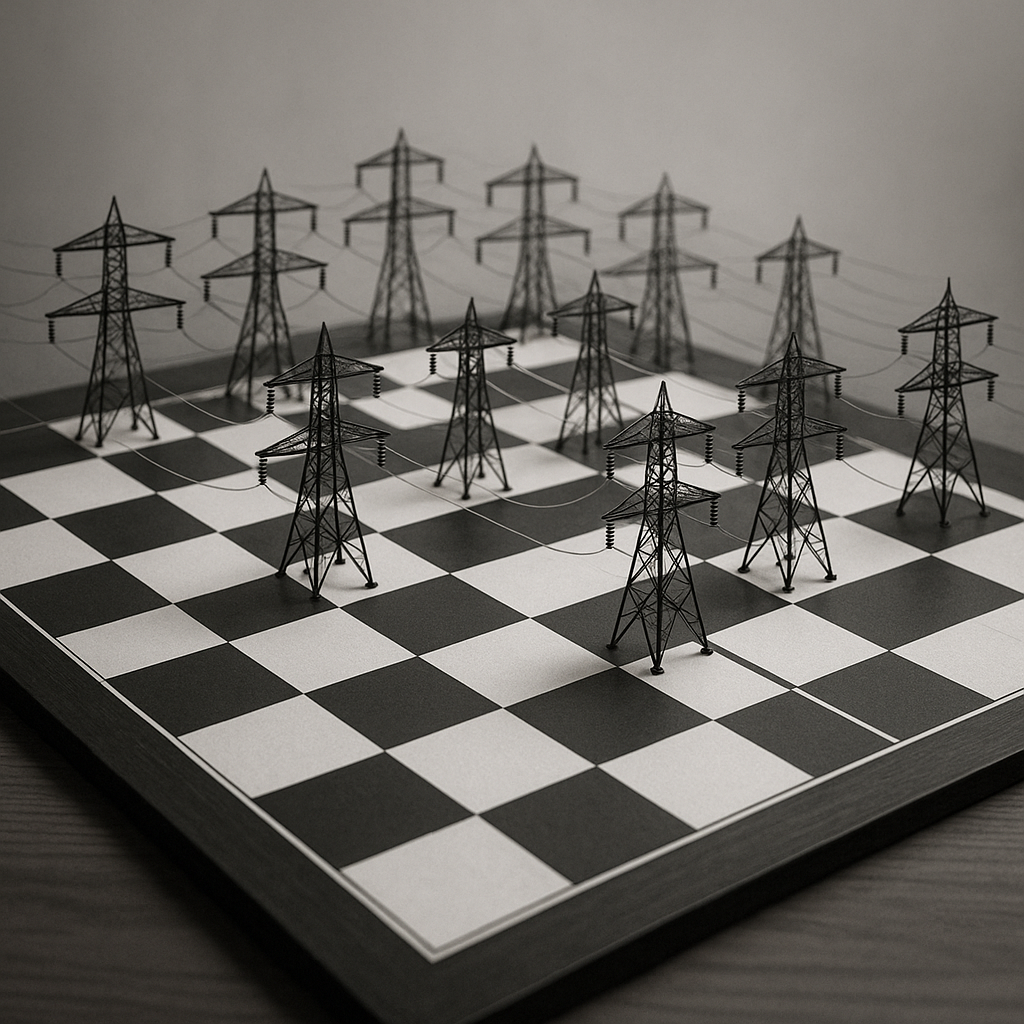
Ramaphosa's 2026 gambit for SA's power grid: A decade-long battle over Eskom's unbundling, transmission, and the future of electricity.
South Africa is trying to fix its broken electricity system, run by Eskom. The big plan is to split Eskom's power lines into a new, independent company called NTCSA. This is super hard because of huge debts, angry workers, and the need to connect sunny areas far from big cities. A big blackout in 2025 showed everyone how bad things were, pushing President Ramaphosa to promise big changes by 2026. This new company needs to be truly separate so that new energy projects can connect fairly and cheaply, but getting it done means dealing with old debts, worried lenders, and demands from unions, all while a big global loan hangs in the balance.
What is the main challenge in South Africa's electricity grid reform?
South Africa's electricity grid reform faces significant challenges, primarily the need to unbundle Eskom's transmission assets into an independent entity, the NTCSA. This involves navigating complex debt structures, securing lender consent, addressing labor demands, and bridging a 1,000 km gap between generation and demand centers while overcoming political and financial hurdles.
Get Cape Town news in your inbox
Stay updated with the latest stories from the Mother City.
The Night the Grid Froze: February 2025’s 41-Hour Wake-Up Call
At 19:43 on 7 February 2025 a single 765 kV line linking Mpumalanga to Gauteng snapped. Reserve margin had already shrunk to 0.8 % after a wild-cat strike at Tutuka and an unseasonal 2 300 MW air-conditioning spike. Six minutes later the cascade slammed into Koeberg, islanding Cape Town for the first time since 2008. For forty-one hours the continent’s most industrialised province limped along on 1 200 MW of diesel peakers and the 200 MW Gourikwa open-cycle turbine that had never been pushed beyond 60 % plate-load. When the last breaker reclosed, the damage was counted in rand, ounces and reputation: R14.6 billion in lost output, 31 000 oz of gold never poured, and the final shred of credibility for the notion that Eskom can forever act as owner, operator, financier and referee of South Africa’s electrons.
The blackout re-ordered national priorities overnight. Business lobbies dumped years of cautious language and demanded “an impartial wires company, nothing less”. Ratings agencies warned that another systemic collapse would trigger a one-notch sovereign downgrade regardless of fiscal metrics. Inside the Union Buildings, insiders admit, the President stared at the satellite night-shot of a dark Cape peninsula and concluded that the slow-motion unbundling theatrics had run out of runway. That image, more than any spreadsheet, set the clock for the February 2026 announcement that now dominates headlines.
Yet the trauma also armed opponents of reform. NUM shop stewards point to the same incident as proof that “the grid is too fragile to experiment on”, while Eskom’s coal faction argues any hasty divorce will starve the utility of cash just when it needs to refire neglected plants. Both camps brandished the 2025 outage in the opening round of the Transmission Resolution Task Team talks, turning a technical discussion into a morality play about who can keep the lights on.
Eight SONAs, Eight Promises: The Decade-Long Road to “This Time We Mean It”
Cyril Ramaphosa’s February 2026 speech marked his eighth attempt to turn the annual State-of-the-Nation podium into an electricity pulpit. Each year the choreography is identical: headline-grabbing pledge, bureaucratic retreat, crisis escalation, louder pledge. The cadence is so predictable that Johannesburg traders run a drinking game keyed to the word “unbundling”. Still, the incremental record matters because investors, insurers and development banks time their chequebooks to these milestones.
2019 kicked things off with the classic three-way split promise - generation, transmission, distribution - nested under a state holding company. 2020’s “road-map” quietly smuggled shared services back into the utility, blurring the very lines meant to be sharpened. 2021 lifted the licensing cap to 100 MW and inserted the throw-away that the transmission desk would be “legally separate by December”. 2022 removed the cap altogether, flooding the connection queue with 17 000 MW of private schemes while the transmission entity remained a PowerPoint icon. 2023 produced Eskom’s own confession that it needed 14 000 km of new high-voltage lines by 2032 but had no balance-sheet left to fund them. 2024 finally codified the Electricity Regulation Amendment Act, clause 18(2) ordering “full ownership unbundling of the system operator within five years”. 2025 saw the minerals & energy minister reinterpret that clause to mean “an Eskom-appointed board is fine”, sending the rand into a two-day 2.3 % tail-spin. 2026 brought Ramaphosa back to the microphone to swear the yet-to-be-born National Transmission Company of South Africa (NTCSA) will sit completely outside Eskom’s group structure.
The cumulative effect is reform fatigue among stakeholders who once cheered every line. Yet fatigue is not indifference: each loop widened the coalition that now has vested interest in closure. Private developers have sunk application fees, labour has accumulated wage concessions linked to future equity, and lenders have re-priced existing Eskom facilities against the day cash-flows migrate. In game-theory terms the exit cost keeps rising, making a definitive leap more likely than another fake dash.
Why the Wires Matter: Geography, Market Power and the 1 000 km Void
Generation can be cloned; transmission cannot. A 100 MW solar park outside Upington is replicable in the Free State, but the 400 kV corridor that ferries electrons east is a single controllable spine. Whoever owns those wires decides who dispatches, who pays, and who gets shut out when the system creaks. Without an impartial grid parent, the long-promised 2026 Wholesale Electricity Market risks turning into a Russian-doll auction - competitive on the surface, rigged underneath by a player-referee.
The asymmetry is brutal. Two-thirds of 2025 peak demand squeezes into Gauteng and the KwaZulu-Natal coast, while four-fifths of the country’s prime wind and solar atlas sprawls west of 25 °E longitude. Bridging that 1 000 km gap means threading power through lines already sweating at 92 % of their thermal limit. Any renewable financier therefore confronts one make-or-break query: “Will my competitor Eskom upgrade the corridor I need, and will the tariff it charges leave my project bankable?” The December 2025 subsidiary fudge failed that test; Ramaphosa’s 2026 vow is meant to supply an unequivocal yes.
Ownership of the natural monopoly also determines who captures the green rents. Nodal prices along the constrained corridor already spike above R3/kWh during evening peaks, while excess daytime renewables in the west are curtailed at zero. An independent NTCSA could auction congestion rents transparently, nudging investors toward batteries and additional lines. A captured entity can simply hide the rents inside opaque postage-stamp tariffs, preserving the cross-subsidy for ageing coal stations. That hidden transfer, worth an estimated R28 billion a year, is the real prize in the unbundling poker game.
Balance-Sheet Alchemy: How to Slice R400 bn of Debt Without Breaking Lenders or Taxpayers
Eskom’s favourite scare story is that its R400 billion debt is “secured against transmission assets”, implying that any divorce will crash lenders into a concrete wall. Technically the claim is half-true: the towers and lines sit inside Special Purpose Vehicles pledged to the Reserve Bank’s R254 billion stand-by facility and the R66 billion China Development Loan. But the security is cash-flow, not steel. Creditors have recourse to regulated tariff streams, not to scrap metal. Analysts at Moody’s argue that if the wires move to an NTCSA that inherits the same regulated asset base and the same Weighted Average Cost of Capital allowance, the revenue follows the wires and lenders remain whole.
What really terrifies Eskom is the loss of option value: the quiet ability to keep transmission tariffs opaque and funnel the surplus into costly coal-fired electrons. Once the NTCSA files separate audited accounts, the quid pro quo becomes visible line by line, and public pressure to shutter 25 000 MW of geriatric coal plant by 2035 will mount. The utility’s management union openly admits that losing control of the wires “turns every coal unit into a P&L orphan”, a rare moment of candour that explains why internal briefings fight tooth and nail for 49 % equity, 25 %, anything that preserves influence.
Treasury’s Rubik exercise therefore centres on three dials: how much Eskom equity dilution satisfies markets, how large a labour-share placates unions without busting the fiscus, and how steep a tariff path NERSA will swallow without reigniting inflation expectations. Early modelling suggests an NTCSA starting gearing of 55 %, interest cover of 1.9, and a real WACC of 4.6 % - numbers that keep both the JET-F board and the local bond desk at bay, provided the task team meets its 31 May deadline.
The Three-Month Sprint: Mandate, Members and Minefields of the TRTT
Ramaphosa’s February 2026 decree birthed the Transmission Resolution Task Team (TRTT) under the National Energy Crisis Committee with four precise deliverables and a hard stop at 31 May. First, choose the legal personality - either a Schedule 2 public company under the Public Finance Management Act or a licensing trust under the Electricity Regulation Amendment Act. Second, carve up assets, liabilities, staff and the labyrinth IT stack that keeps 14 000 km of future lines inside Eskom’s SAP system. Third, secure lender consent and a credit-rating trajectory that keeps new borrowing within 250 basis points of government bonds. Fourth, draft a governance charter tasty enough to unlock the World Bank’s $8 billion Just Energy Transition Finance facility, whose term-sheet explicitly demands “an independent system operator outside the vertically integrated utility”.
The team is thirteen-strong: National Treasury in the chair, public enterprises, mineral & energy, Eskom’s CFO, NERSA, three commercial banks, two development-finance institutions, and labour represented by both NUM and Numsa. Meetings are held in the Old Reserve Bank building behind closed doors, minutes unpublished, leaks punished by expulsion. Every week of slippage pushes the scheduled April market-launch deeper into 2026, a calendar collision already pencilled in by 42 registered traders who have rented Sandton office space and hired power-desk analysts.
The undisclosed side-track is labour’s demand for a no-forced-retrenchment guarantee until 2030 plus an employee-share scheme of up to 15 % of NTCSA equity, modelled on the 1996 Telkom recipe. Treasury values each percentage point at roughly R3.5 billion at regulated-asset valuations, so the concession could reach R52 billion of paper. Yet without union sign-off the coalition collapses; with it, the World Bank may question the governance purity of the new vehicle. Navigating that narrow ravine is the true reason the task team’s final slide simply reads: “political decision required”.
Global Proof Points and Local Wild Cards: From UK Float to Cape Town Island-hopping
History offers three workable templates. The UK demerged National Grid in 1990, migrated debt with the regulated asset base, floated shares in 1995 and today carries £43 billion rated A- at 70 basis points above gilts. Brazil created an independent operator only in 2004 after six years of half-measures; spreads narrowed 120 basis points once the split became real. New Zealand’s Transpower separated in 1994 and now borrows at 38 basis points over sovereign, the leanest margin among OECD grids. Common ingredients: legal divorce precedes market launch, debt travels with cash-flows, labour exits via share or cash packages, and parliament inserts an explicit ring-fencing clause against future political claw-backs.
Inside South Africa two wild cards could leapfrog the stalemate. Cape Town has tabled a by-law licensing “municipal embedded networks” that can island during national load-shedding, a legal first that threatens to balkanise the grid into metro-fiefdoms if the NTCSA dithers. Meanwhile private data-centre developers dangling 1 000 MW of new load have offered to pre-fund 400 kV lines in exchange for 25-year use-of-system agreements, effectively bankrolling the corridor expansion that Treasury cannot. Both moves could rescue the build programme even if Scenario C - political gridlock - materialises, but they also weaken the very monopoly the new transmission company is meant to steward.
Scenarios to December 2026: Clean Divorce, Messy Half-Way House, or Emergency Rule
Scenario A, tagged at 35 % probability, sees the TRTT strike a clean deal by May, NTCSA incorporated in July, assets transferred in October, Grid Bond listed in November and the wholesale market opening in December. Lenders re-secure exposure against Eskom notes, coal closure accelerates, and the rand enjoys a reform-premium rally. Scenario B, the 45 % favourite, yields a halfway house: NTCSA becomes a Schedule 2 company with Eskom clutching 49 %. The market launches but liquidity trickles; investors price in lingering conflict and renewable tariffs rise 70 basis points. Scenario C, 20 % odds, features a NUM strike, lender revolt and parliamentary grand-standing that freeze the process. Ramaphosa invokes the Disaster Management Act to keep the grid operating, the April market launch slips to 2027, and 2 000 MW of solar developers redirect their panels to Namibia and Botswana, entrenching South African import dependence just as global coal prices rebound.
Which branch materialises will be visible by August, when the World Bank board either approves or shelves the $3 billion concessional tranche earmarked for grid build. A rejection would push the NTCSA into costlier commercial paper, lifting consumer tariffs by an extra 4 % over the next three years - an outcome Treasury privately calls “the invisible load-shedding tax”. Conversely, approval unlocks a cascade of co-financing that could see 3 000 km of new lines under construction before the 2026 summer peak, the first visible proof that the decade of electricity chess has ended in checkmate for the status quo.
What is the primary goal of the 2026 Power-Grid Gambit?
The primary goal is to unbundle South Africa's state-owned electricity utility, Eskom, by separating its transmission assets into a new, independent entity called the National Transmission Company of South Africa (NTCSA). This aims to create a fair and cost-effective connection process for new energy projects, particularly renewables, by establishing a truly independent system operator.
Why is the unbundling of Eskom's transmission assets so difficult?
Unbundling Eskom is highly challenging due to several factors: massive existing debts (R400 billion), the need to secure consent from worried lenders, addressing the demands and concerns of powerful labor unions, and the significant geographical challenge of connecting renewable energy sources in sunny/windy areas (like the Western Cape) over 1,000 km to major demand centers in Gauteng and KwaZulu-Natal.
What role did the February 2025 blackout play in accelerating reform efforts?
The 41-hour systemic blackout in February 2025, triggered by a snapped power line and compounded by low reserve margins and increased demand, served as a critical wake-up call. It exposed the fragility of the grid and the severe economic consequences (R14.6 billion in lost output). This event re-ordered national priorities, with business lobbies and ratings agencies demanding immediate action, pushing President Ramaphosa to commit to rapid and definitive changes by 2026.
How has the reform process evolved over the past decade, and why is 2026 different?
The reform process has seen numerous pledges and setbacks since 2019, with annual State of the Nation addresses often promising unbundling but frequently facing bureaucratic delays and re-interpretations. While past efforts led to incremental changes like lifting the licensing cap for private generation, the 2026 commitment is different because the cumulative fatigue among stakeholders, the rising exit costs for private developers, labor, and lenders, and the palpable impact of the 2025 blackout have created a stronger impetus for a definitive leap rather than another partial reform. The explicitly demanded independence by international lenders like the World Bank also adds pressure.
Why is an independent transmission company crucial for the energy transition and market efficiency?
An independent transmission company is crucial because it acts as an impartial referee for the electricity market. Without it, the current player-referee system (Eskom owning generation and transmission) allows the grid owner to prioritize its own assets, potentially hindering new, cleaner energy projects or charging unfair connection tariffs. An independent NTCSA would transparently auction congestion rents, incentivize investment in batteries and new lines, and prevent the

Zola Naidoo is a Cape Town journalist who chronicles the city’s shifting politics and the lived realities behind the headlines. A weekend trail-runner on Table Mountain’s lower contour paths, she still swops stories in her grandmother’s District Six kitchen every Sunday, grounding her reporting in the cadences of the Cape.
View all articles →