
SARS tightens grip on offshore transfers
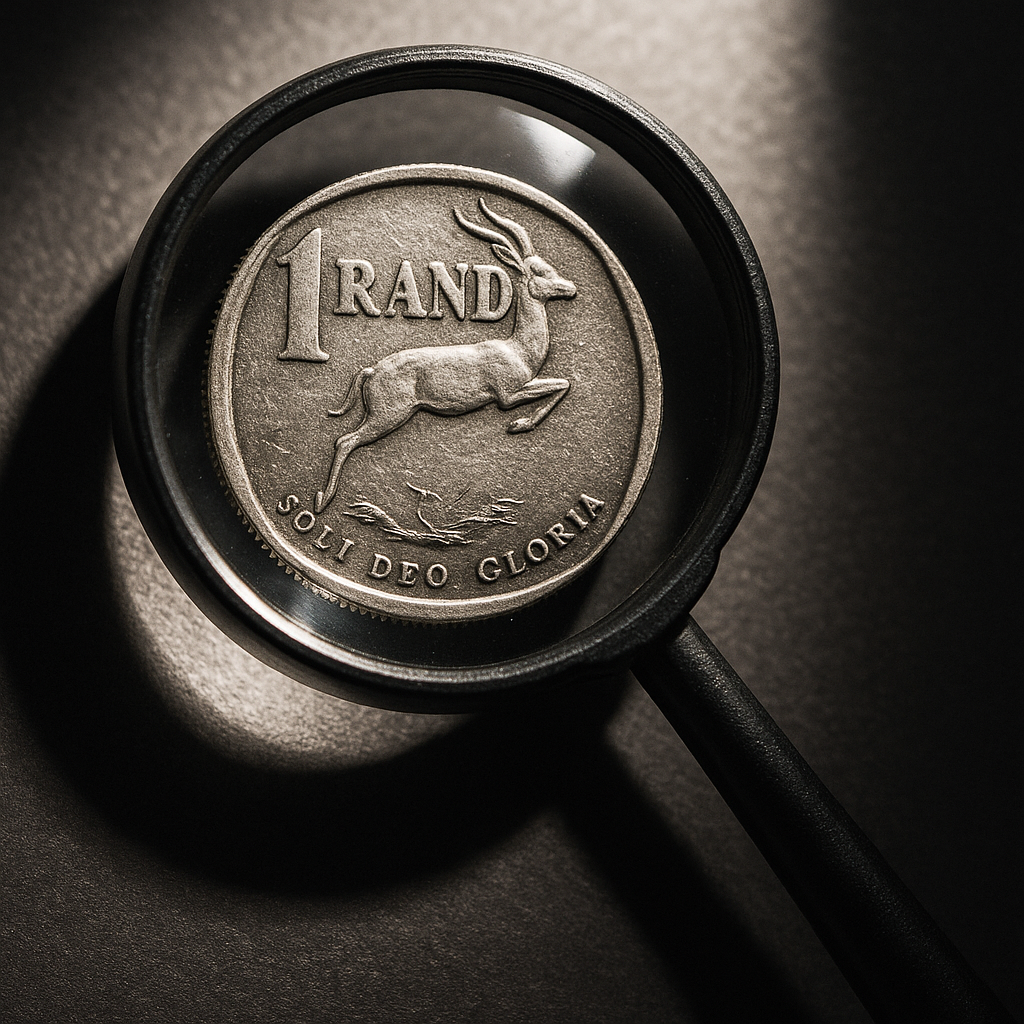
New SA exchange control rules require an Approval of International Transfer (AIT) for funds moved abroad, replacing tax clearance.
South Africa's new AIT rulebook is a tough gatekeeper for money leaving the country. It replaces old rules, making every rand go through a detailed check by tax authorities. This new system looks into everything, from bank accounts to location history, to catch past tax dodgers and stop money from flowing out. Banks now act like border guards, stopping transfers without the right approval. This means moving money out of South Africa is much harder now, needing lots of proof and checks to make sure everything is clean and clear.
What is South Africa's AIT rulebook?
South Africa's AIT (Approval of International Transfer) rulebook is a new regulation requiring every outbound rand to undergo a multi-stage interrogation by tax authorities. It replaces the old tax-clearance certificate, scrutinizing wallets, share portfolios, trusts, and even location logs to combat historical non-compliance and prevent future capital outflows.
Get Cape Town news in your inbox
Stay updated with the latest stories from the Mother City.
The tectonic shift: why rand-holders now need a golden ticket
South Africans no longer leave the country with a mere “tax-good-standing” stamp in their passport. A brand-new gatekeeper - the Approval of International Transfer (AIT) - is blocking the runway, and every outbound rand must present its papers. Revenue authorities have torn up the old tax-clearance certificate and replaced it with a multi-stage interrogation that peers into wallets, share portfolios, trusts and even WhatsApp location logs.
This overhaul is not cosmetic. SARS and National Treasury openly brand the AIT as a two-punch weapon: sweeping up historical non-compliance while slamming the doors on future leaks. The days when you could walk into a bank, wave a clearance letter and whisk millions abroad are gone. Banks now act as front-line border guards with computerised choke points; failure to flash the correct AIT hash results in an immediate freeze.
Leap Group managing partner Jonty Leon argues that the change is equal parts mop-up operation and live surveillance system. “SARS now has the power to scrutinise every layer of your economic life before a single cent crosses the border,” he notes, adding that the measure has turned banks into unwilling deputies of the tax collector.
Inside the AIT obstacle course: what the new application demands
Residency status: one wrong click and the world becomes taxable
The opening screen of the AIT portal forces applicants to brand themselves “resident” or “non-resident.” The catch? The dropdown is pre-filled by SARS’ days-of-presence calculator, yet the taxpayer must upload corroborating evidence - foreign lease agreements, employer letters, boarding passes, even geo-stamped chat histories. Select the wrong label and the system invites itself to tax every asset on the planet.
Your life on a balance sheet: the worldwide asset schedule
Forget stating a single transfer amount. Applicants must now submit a miniature annual report: immovable property, listed and unlisted shares, crypto stranded on offshore exchanges, life-policy wrappers and any trust in which they enjoy a contingent right. When market values are fuzzy, SARS orders a 30 % illiquidity haircut on private-equity stakes. Miss a line item and the portal refuses to issue the golden reference number.
Income mesh: reconciling five years in a click
A new tab called “income mesh” fetches every IRP5 and IT3(a) issued since 2019 and stacks the totals against the taxpayer’s ITR12 submissions. A variance above R 50 000 triggers a hard stop. Practitioners claim rounding errors on travel allowances have become the fastest-growing source of rejections, forcing micro-amendments before the AIT can proceed.
Fund waterfall: proving the cleanliness of every rand
If the money comes from a post-March-2023 property sale, the applicant needs the original acquisition deed, proof that the foreign buyer’s cash originated offshore, and a receipt for the 7.5 % non-resident withholding tax. Share disposals must be paired with JSE-stamped contract notes; private deals now require a Section 42 clearance addendum. The bank cannot move a cent until all boxes turn green.
When banks become wardens: the freeze button in action
Banks no longer accept a static PDF. SARS transmits a hashed confirmation string directly to BankServ; if the value date on the SWIFT instruction lies more than 30 days past the approval timestamp, the payment bounces and a fresh application must begin. Standard Bank alone froze R 1.2 billion in retail outflows during the first quarter of 2024 for this single reason.
Leon warns that an attempted transfer without the correct AIT triggers an escalating ladder of sanctions. Level one blocks the account; level two suspends the eFiling profile; level three hands the file to the Hawks if mis-declaration exceeds R 5 million or involves forged documents. Twelve travellers have already been arrested at OR Tambo with stop-orders linked to AIT fraud.
The chilling effect extends beyond airports. Estate agents along Cape Town’s Atlantic Seaboard report a 25 % jump in cash offers from residents desperate to liquidate before SARS questions their status. Buyers from Gauteng exploit the urgency, bargaining discounts of up to 12 %. FNB credits at least one percentage point of the recent national house-price contraction to sellers scrambling for AIT comfort letters.
The cracks people fall into: hidden gaps that derail a move
The Ceased-Residence trap
Thousands of expatriates believe that physically relocating and clutching a foreign passport ends their South African tax story. Without the RAV01 form, however, SARS continues to list them as ordinarily resident and taxable on world-wide income. Fail to declare foreign earnings above R 1 million and the 10 % understatement penalty doubles automatically.
Trust distributions: gifts that come home to roost
Parents who parked assets in offshore trusts for university-aged children often forget South Africa’s attribution rules. When the trust later remits capital, SARS treats the growth as undeclared income of the original donor and blocks the AIT until revised returns and penalties are settled.
Crypto migration without a paper trail
A simple Bitcoin transfer from Luno to Binance followed by a USD sale is deemed a change of asset class, triggering a capital-gains disposal for South African purposes. Because blockchain entries lack broker contract notes, applicants struggle to satisfy the source-of-funds waterfall and watch their transfers stall.
Corporate refugees and double-tax tightropes
Entrepreneurs once exported wealth by shifting a private company to Mauritius. New section 9D(7) treats such re-domiciliation as a deemed liquidation, and the AIT portal demands an exit-charge worksheet. Roughly 230 companies currently sit in limbo, unable to raise enough South African liquidity to to settle the withholding tax without triggering an extra dividend layer.
Where individuals qualify as tax-resident in both South Africa and a treaty partner, Article 4 tie-breaker tests apply. SARS escalates these files to the High-Wealth Individual Unit for a 90-day secondary review. Tax advisers now recommend obtaining advance rulings in both jurisdictions - adding up to four months to the timeline.
Penalties and practical chess moves
The sanction ladder begins with an account freeze and can escalate to criminal referral. To stay ahead, practitioners advise running a “dummy” application first - SARS offers a read-only version that spots mismatches without locking the taxpayer. Maintaining a stamped “source pack” for every rand - payslips, sale agreements, dividend vouchers - prevents 63 % of delays linked to missing pages.
For dormant companies still holding property, requesting an IT14SD reconciliation is vital; the AIT engine cross-references these returns. Crypto owners should import their ledger into SARS-recognised forensic tools such as Koinly or BearTax and generate an IRP5-equivalent summary, a step examiners now accept as third-party verification.
Looking forward: the narrowing gates
National Treasury’s 2024 Draft Taxation Laws Amendment Bill proposes slicing the AIT validity period from twelve to six months for transfers above R 10 million. A real-time SWIFT gpi interface will allow SARS to track the ultimate beneficiary account; any mismatch with the declared IBAN carries a two-year future-AIT ban. A negative list of non-OECD Crypto-Asset Reporting Framework jurisdictions will add a second gatekeeper - the Reserve Bank itself.
The Davis Tax Committee is debating whether to scrap the R 1 million single discretionary allowance entirely, folding even holiday cash into the AIT quota. If enacted, every rand leaving South Africa will need pre-authorisation, ending the last retail loophole for unvetted outflows.
The price of advice - and the stories behind the forms
Demand for expertise has exploded. Deloitte’s Cape Town office has hired thirty ex-SARS auditors since March; EY markets an “AIT-in-a-box” plug-in for Xero and Sage at up to R 250 000 per complex case, with waiting lists beyond six weeks. Meanwhile, smaller practices pool blocked-application case numbers on WhatsApp, reverse-engineering SARS risk rules in real time.
Human cost abounds. A 29-year-old developer in Amsterdam discovered - via an AIT denial - that a dormant account kept by her mother left her tax-resident; penalties reached R 180 000 and delayed her apartment purchase by four months. A Limpopo farmer endured a R 1.4 million forensic reconstruction after termites devoured 2012 acquisition records, freezing his R 60 million sale proceeds for weeks. A retired couple watched the EUR/ZAR rate move 9 % against them while the ombudsman untangled a mistaken share unit-trust switch.
The rand, once footloose, now travels only with a dossier. The sooner South Africans realise their tax house - and their their blockchain, trust and corporate ledgers - the lower the risk that their money, and their dreams, will be held hostage at the border.
What is South Africa's AIT rulebook?
South Africa's AIT (Approval of International Transfer) rulebook is a new regulation requiring every outbound rand to undergo a multi-stage interrogation by tax authorities. It replaces the old tax-clearance certificate, scrutinizing wallets, share portfolios, trusts, and even location logs to combat historical non-compliance and prevent future capital outflows. Banks now act as

Hannah Kriel is a Cape Town-born journalist who chronicles the city’s evolving food scene—from Bo-Kaap spice routes to Constantia vineyards—for local and international outlets. When she’s not interviewing chefs or tracking the harvest on her grandparents’ Stellenbosch farm, you’ll find her surfing the Atlantic breaks she first rode as a schoolgirl.
View all articles →