
Schools invited to take part in glass recycling challenge
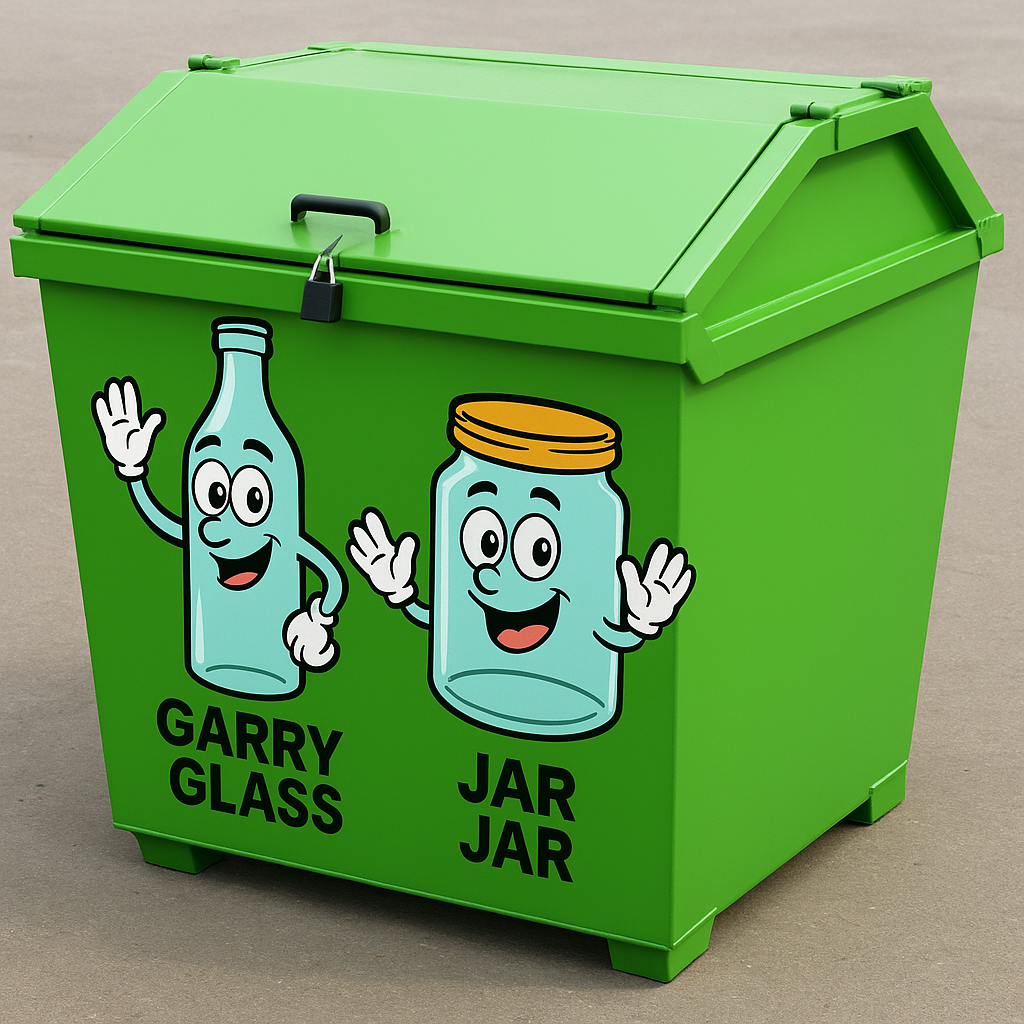
SA schools compete in a glass recycling drive to boost recovery rates, win cash, and foster environmental habits among students.
Schools in South Africa are having a glass-recycling contest called the "2026 Glass-Rush." Kids collect glass bottles and jars, and their schools get points and prizes based on how much they gather. This fun competition helps the environment by keeping glass out of landfills and teaches students to recycle every day. It's an exciting way to make a big difference, one bottle at a time!
What is South Africa's 2026 Glass-Rush?
South Africa's 2026 Glass-Rush is a competitive glass-recycling initiative for schools, aiming to divert glass from landfills and instill recycling habits in learners. Schools collect glass in skips, with deposits weighed and added to a leaderboard. The program offers financial incentives and educational opportunities, fostering a culture of sustainability while increasing the national glass-recovery rate.
Get Cape Town news in your inbox
Stay updated with the latest stories from the Mother City.
The Green Skip Lands – How a Jar Becomes a Trophy
From Soweto’s dust-whirled netball courts to Khayelitsha’s sea-swept assembly yards, learners have found a new sport that needs no running shoes: competitive glass-hunting. Any pupil can enter by tossing a sauce jar, beer quart or broken champagne flute into a 1.5 m³ lime-green skip parked at the school gate. Each deposit is weighed on collection day, fed into a live leaderboard and celebrated on WhatsApp. The 2026 contest runs for 365 days, so newcomers may sign up in January, May or even December and still battle for that month’s draw. Shabeer Jhetam, CEO of The Glass Recycling Company, says the goal is not superhero-level planet-saving but the quieter victory of rewiring one reflex: if it rings, it never sees a bin.
Rolling deadlines matter because repetition, not a calendar, forges habits. Every entrant receives a lockable “glass bank” decorated by cartoon mascots Garry Glass and Jar Jar. Caretakers unlock the lid each morning; learners rain in their empties; trucks fetch the cargo on the final school day of the month; and within 30 days those same bottles can be back on shop shelves, having used 30 % less energy and 20 % fewer emissions than glass born from fresh silica. South Africa buries roughly 900 000 tonnes of the material yearly, paying more than a billion rand in gate fees; the school drive is budgeted to rescue a modest 3 500 tonnes in 2026, but its real heft is symbolic proof that infinite recycling loops are possible.
The incentive pyramid is deliberately fat at the bottom: monthly champs in each province pocket R5 000, photographs are posted on Instagram within minutes, and surprise challenges (“first campus to tip 1 000 beer bottles before Friday”) drop like loot boxes. Psychologists at TGRC call this random reinforcement: the same dopamine hit that keeps gamers glued to screens now keeps scholars glued to recycling. Grand prizes scale like a jackpot: breach ten tonnes and the governing body receives at least R30 000; exceed twenty-five and the cheque maxes out at R74 300, ring-fenced so that 60 % must buy learner-centred assets such as tablets, 25 % may seed further green projects, and only 15 % is spent on admin.
Geography of Ingenuity – Rich Suburbs, Townships & Karoo Churches
Wealth and want play on the same scoreboard. In Sandton’s gated belt, parent drivers deliver pallet-perfect stacks of estate wine bottles and compete to fill a skip in under two days. Photographs of Dainfern College’s emerald pyramid duel online with St Stithians’ selfie wall dubbed “Mountain of Glass.” Thirty-five kilometres south, Siyabonga Secondary in Orange Farm cut a simpler deal: Monday-morning learners walk past neighbourhood shebeens, collect rinsed empties and earn fifty cents a bottle, money that underwrote last year’s matric dance. The leaderboard makes no distinction between moneyed muscle and pavement hustle; kilograms are the only currency that counts.
Provincial quirks spice the chase. Western Cape campuses already enjoy 178 public glass banks seeded by the “Green Dot” initiative, so the rules award bonus points to “virgin” schools lacking prior bins. Congregants in Beaufort West and Plettenberg Bay turned Sunday services into “bring-a-bottle” rituals; one Uitenhage pastor topped the collection with a grocery-voucher sweetener, fusing scripture with sustainability. In KwaZulu-Natal’s humid basin, week-old bottles sprout algae and are rejected by processors. TGRC’s fix is “moonlight collection”: trucks arrive at 05:00, learners gain double points for dawn deposits, and Prefects of Recycling become TikTok heroes. Durban Girls’ College clocked 2.3 million views on its #ClinkForChange clips, attracting a smoothie brand that now sponsors neon drop-off crates.
The Eastern Cape adds distance drama. The nearest smelter sits 250 km from Mthatha, so TGRC back-hauls glass on returning supermarket trucks that delivered groceries to Spar and Shoprite. Scholars at Jongilizwe College pack empties into banana cartons, a low-tech hack that impressed multinational logisticians and trimmed freight costs by 38 %. Security is another curveball: scrap-metal rings prize lead seals, so smart locks open only when a registered SIM dials a USSD code, while motion sensors ping local policing forums. In the Cape Flats the skip’s solar floodlight doubles as an informal neighbourhood watch, turning green waste into blue-light deterrence.
Cash, Curriculum & Culture – Where Money Meets the Mind
Money is only the opening act. Grade-7 classes turn the glass bank into a living lab: learners weigh ten random bottles, calculate a class average, extrapolate monthly tonnage and compare energy saved against virgin production. Grade-9 EMS pupils draft income statements, insert transport rebates and compute the probability of winning. One Gauteng Geography cohort mapped every competing school, overlaying GPS data on apartheid spatial planning and learned why waste flows follow old racial lines. Rhodes researchers record an unexpected side effect: in rural villages, 12-year-olds have become household waste bosses, freeing sisters from burn-bottle duties and gifting them an extra homework hour, a tiny but measurable nudge in gender-equity metrics.
Artisans climb aboard. Soweto ceramist Mbali Vilakazi melts wine bottles into R250 cheese platters sold at weekend markets; schools earn double points for bottles diverted to such up-cycling, provided they upload proof. Afrikaanse Hoër Meisieskool unveiled a four-metre rainbow arch made from 1 200 melted beer quarts, blending sculpture with trophy cabinet. Technology also layers on: 40 pilot campuses issue QR-coded wristbands so each learner builds a personal “green score” convertible to data bundles. An augmented-reality app, scheduled for national release in July, lets a phone-pointed skip balloon into a virtual rocket whose fuel rises with every deposit; launch unlocks a R1 000 bonus. Marketers follow eyeballs: Consol will name a 2027 limited-edition jam jar after the national winner, Woolworths is prototyping a “Return-a-Jar” condiment line linked to the leaderboard, and Nando’s trades meal vouchers for peri-peri bottle hauls.
Weather and crime keep innovating faster than manuals. A November hailstorm turned 34 Gauteng skips into glitter shrapnel; Bryanston Primary pupils sieved the mess, invented a “glass-sand” grey-water filter for their vegetable patch and unknowingly supplied UCT engineers with test material for concrete pavers that substitute crushed glass for river sand. Corporate South Africa watches closely: economists predict that if 5 000 schools enlist, beverage giants may pre-empt statutory deposits by launching voluntary refund schemes, anxious to surf the PR wave created by teenagers. The campaign therefore behaves like a civic beta-test for legislation that does not yet exist.
Final Sprint – From Schoolyard to Smelter and the Trophy Awaiting
The closing stretch turns science fair into stadium sport. Provincial playoffs will be live-streamed on Facebook in late 2026, featuring bottle-sorting sprints and eco-trivia shootouts. Winning schools earn a VIP tour of Consol’s smelter where kilograms of dusty cullet metamorphose into glowing lava, an image organisers hope will sear the recycling habit into memory for life. The national champion will be crowned on World Environment Day, 5 June 2027, at an SABC-2 gala hosted by a still-secret celebrity whose social media betrays a nostalgic affection for vintage Coca-Cola contours. Bragging rights will echo for a decade, but the bigger prize is momentum: every tonne counted pushes South Africa’s stagnant 41 % glass-recovery rate toward Europe’s 70 % benchmark.
Registration is deliberately lightweight: email Palesa Makane, sign a one-page pledge, and your campus enters the ring. Whether you oversee a palace of privilege or a tin-roofed rural campus, the rules stay identical: collect, weigh, log, repeat. Hailstorms, scrap syndicates and humid algae may complicate the chase, yet learners keep inventing fixes faster than headquarters can catalogue them. Somewhere between the first clear “clink” at dawn and the ten-thousandth kilogram flashing on a cracked tablet screen, South Africa’s next generation is quietly drafting a new waste narrative - one bottle, one vote, one habit at a time.
[{"question": "
What is South Africa's 2026 Glass-Rush?
\nSouth Africa's 2026 Glass-Rush is a nationwide school-based competition designed to encourage glass recycling. Schools collect glass bottles and jars, earning points and prizes based on the weight of their collections. The initiative aims to divert glass from landfills, teach students about recycling, and increase the national glass-recovery rate.
\n","answer": ""},{"question": "How do schools participate in the Glass-Rush?
\nSchools can participate by signing up with Palesa Makane and signing a one-page pledge. Once registered, they receive a 1.5 m³ lime-green skip where students deposit glass items. Caretakers unlock 'glass banks' daily for collection, and trucks fetch the cargo monthly. The collected glass is weighed, and scores are added to a live leaderboard. New schools can join at any point during the 365-day contest.
\n","answer": ""},{"question": "What are the incentives and prizes for participating schools?
\nThe Glass-Rush offers various incentives. Monthly champions in each province receive R5,000. Schools that breach ten tonnes of glass receive at least R30,000, and exceeding twenty-five tonnes can earn up to R74,300. These funds are ring-fenced: 60% for learner-centred assets like tablets, 25% for green projects, and 15% for administration. There are also surprise challenges, bonus points for 'virgin' schools, double points for dawn deposits, and potential sponsorship deals for high-performing schools.
\n","answer": ""},{"question": "Beyond collecting, how does the Glass-Rush engage students?
\nThe program integrates recycling into the curriculum, turning the glass bank into a 'living lab.' Students weigh bottles, calculate tonnage, and analyze energy savings. Grade 9 EMS pupils draft income statements and compute probabilities. Geography students map competing schools, learning about spatial planning. The initiative also fosters innovation, with students inventing solutions for challenges like algae growth on bottles or creating 'glass-sand' filters. An augmented-reality app and QR-coded wristbands for personal 'green scores' further engage learners.
\n","answer": ""},{"question": "What challenges has the Glass-Rush faced, and how are they addressed?
\nThe Glass-Rush has encountered various challenges, including algae growth on bottles in humid regions, security concerns with scrap-metal rings, and logistical issues for schools far from smelters. To counter algae, 'moonlight collections' are implemented. For security, smart locks on skips open via USSD codes, and motion sensors ping policing forums, with solar floodlights doubling as neighbourhood watch. Logistics are optimized by back-hauling glass on returning supermarket trucks, and students have innovated with low-tech solutions like packing empties into banana cartons.
\n","answer": ""},{"question": "What is the broader impact and long-term vision of the Glass-Rush?
\nThe Glass-Rush aims for a significant broader impact beyond just collecting glass. It seeks to rewire recycling habits, increase South Africa's glass-recovery rate from 41% towards Europe's 70% benchmark, and act as a 'civic beta-test' for potential future recycling legislation. The program fosters a new generation of environmentally conscious citizens, promotes ingenuity, and sees corporate involvement with brands like Consol, Woolworths, and Nando's exploring partnerships and initiatives linked to the program.
\n","answer": ""}]
Emma Botha is a Cape Town-based journalist who chronicles the city’s shifting social-justice landscape for the Mail & Guardian, tracing stories from Parliament floor to Khayelitsha kitchen tables. Born and raised on the slopes of Devil’s Peak, she still hikes Lion’s Head before deadline days to remind herself why the mountain and the Mother City will always be her compass.
View all articles →