
Somerset West development sees R618m sales surge
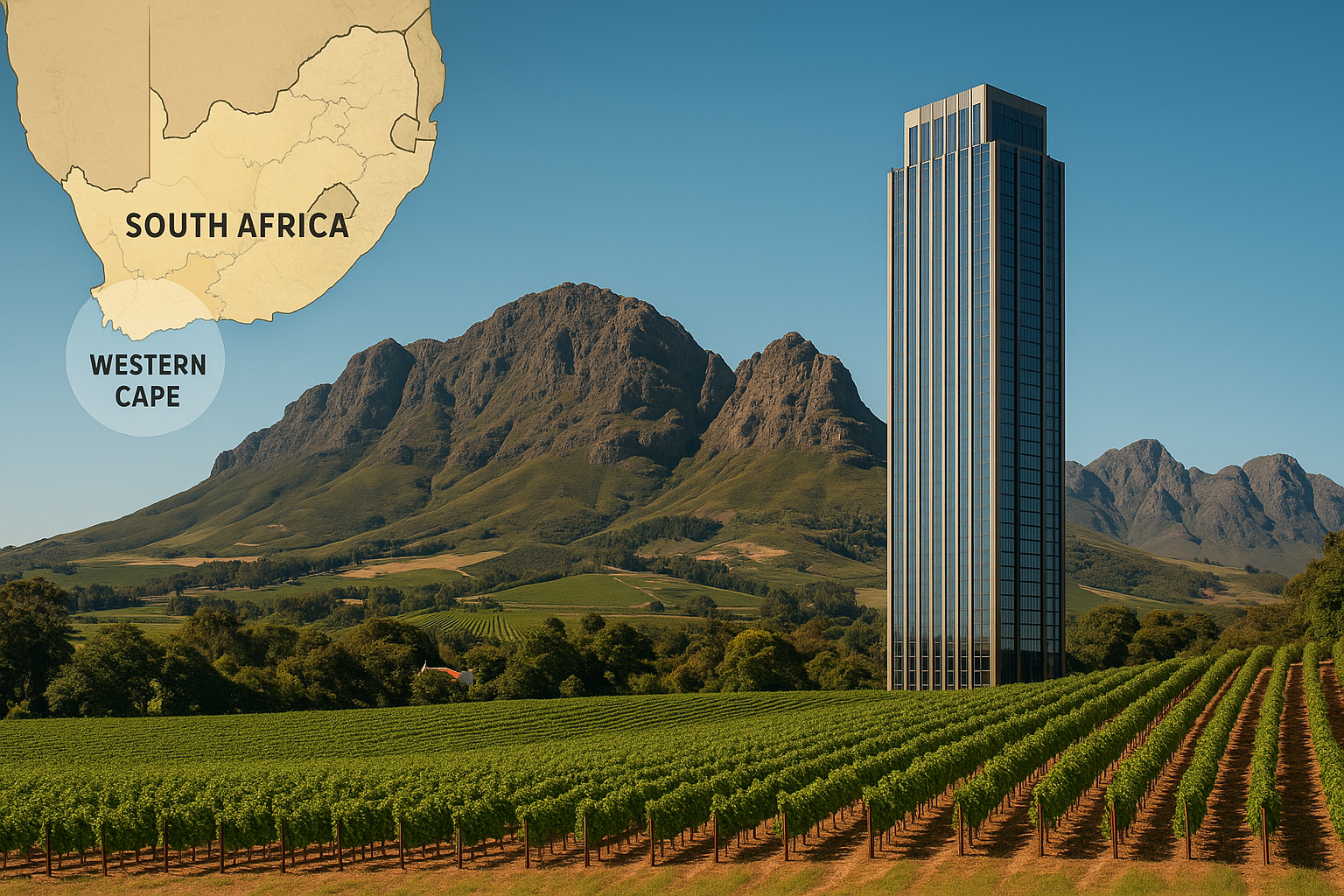
Discover how Somerset West became the Western Cape's fastest-appreciating area, driven by projects like The Charles luxury apartments.
Somerset West, once a quiet town, has blossomed into a property hot spot! It's like a sleepy village that suddenly woke up and became the coolest place to live. People are rushing to buy homes there because it's close to the airport, has strict rules to keep it beautiful, and offers a lovely Winelands lifestyle. This mix of easy travel, protected nature, and a great way of life has made it super popular, especially for working professionals seeking a slice of paradise.
What factors transformed Somerset West into a highly sought-after property market?
Somerset West's property boom is driven by three main factors: improved infrastructure, stringent municipal planning, and favorable demographics. The town now boasts enhanced airport accessibility, limited new developments protecting its natural beauty, and a growing demand from professionals seeking a Winelands lifestyle with urban conveniences, leading to low vacancy rates and high rental yields.
Get Cape Town news in your inbox
Stay updated with the latest stories from the Mother City.
The Zoom Heard 'Round the Basin
Somerset West used to be the place where people ended up when they couldn't afford Stellenbosch or didn't want the beachfront prices of Strand. That narrative died on March 18, when 178 luxury apartments vanished off the market faster than free wine at a vineyard launch party. The Charles development didn't just sell out – it rewrote the entire Helderberg Basin playbook, proving that this former retirement haven has become the Western Cape's most coveted professional playground.
The numbers border on absurd. Phase one dropped 140 units online at 9 AM. By 3 PM, 124 had digital signatures attached. Buyers spent less than five minutes reviewing contracts that committed them to millions in property investments. Prices ranged from R2.1 million for compact studios to R25 million for penthouses featuring private pool decks with Instagram-bait views of both False Bay and the Hottentots-Holland mountains. When the virtual dust settled, R618 million had changed hands – more than every Somerset West sectional-title development combined since 2016.
This wasn't speculative foreign investment or trust-fund money looking for a parking spot. The buyer profile reveals something more interesting: 38% were downsizing professionals aged 50-64, but nearly 30% represented working families aged 35-49 who've embraced hybrid work models. Women dominated the buyer pool at 54%, many leveraging divorce settlements or tech-sector bonuses. Only 10% came from overseas, yet those international buyers represented 14 different countries, each drawn by South Africa's 20% non-resident rental-income cap compared to Europe's punitive 40% rates.
The Perfect Storm of Timing and Policy
Three converging forces created this property tsunami. First came infrastructure timing that transformed accessibility. Cape Town International's new Central Terminal Building, operational since late 2023, places Somerset West within 25 minutes of passport control. The recently completed R44/R300 interchange upgrade shaved another eight minutes off peak-hour airport runs. For Gauteng migrants accustomed to Johannesburg's traffic nightmares, the ability to land internationally and reach home before their rental car contract prints proved irresistible.
Municipal planning created the second catalyst. The 2019 Spatial Development Framework effectively froze greenfield development west of the N2 to protect wine-producing lands. Between 2018 and 2023, only 314 new sectional-title units emerged within Somerset West's urban boundary against 2,870 free-standing homes. The Charles sits on the last available high-density zoned parcel beneath Helderberg mountain – a 3.2-hectare island that was previously overflow parking for the Lord Charles Hotel. Once construction completes, no adjacent land exists for replication, guaranteeing permanent scarcity.
The third element involves demographic physics that developers tracked for five years. Somerset West appeals to professionals who need airport access but crave Winelands lifestyle without Stellenbosch's premium. The town's vacancy rate hit 0.9% in February 2024 – the lowest since tracking began in 2013. Two-bedroom units lease within 11 days at R16,200 monthly, representing 34% year-on-year growth. Projections suggest The Charles' one-bedroom units will command R20,000 by 2026, delivering 7.5% gross yields even if purchase prices flatline.
The Hotel-Integration Revolution
Traditional apartment developments promise proximity to amenities. The Charles delivers something unprecedented: direct integration with a 30-year-old luxury hotel operation. Every unit connects to the Lord Charles' management system through a proprietary app. Owners toggle between "residential" and "guest" modes, effectively transforming their apartments into hotel inventory when they're elsewhere.
Guest mode triggers housekeeping services, room-service access, and automatic listing across major booking platforms. Revenue splits 70/30 after resort levies, with BDO Hospitality projecting 65% occupancy at R1,450 average daily rates. This translates to 6.8% net yields at current pricing – numbers that had Dubai investors setting 2 AM alarms for the launch. Even permanent residents benefit, earning hotel credits for spa treatments and Sunday buffets, eliminating typical lock-up-and-leave anxieties that plague seasonal residents.
The architectural execution avoids generic Tuscan pastiche while honoring regional character. Cape beech louvres manage northwest glare, while oxidized copper fascias mirror neighboring winter vineyards. Interior specifications match Cape Town's luxury hotel standards: 2.8-meter ceilings, Gaggenau appliances, matte-black Villeroy & Boch fixtures, and fiber connectivity throughout. Clever sectional planning ensures no corridor exceeds 18 meters, guaranteeing mountain or bay aspects for every unit after 42 design iterations earned municipal approval.
Sustainability features extend beyond marketing rhetoric. A privately funded grey-water bioreactor will feed 1.2 hectares of indigenous fynbos roof gardens. Photovoltaic arrays rated at 750 kW create a central micro-grid, with individual 15 kWh lithium buffers per apartment. Excess power sells back to Cape Town's grid at 76 cents per kWh, projected to reduce levies by 18% over 20 years. This isn't greenwashing – it's financial engineering that makes environmental sense.
The Ripple Effect and Future Pipeline
Within 48 hours of The Charles sellout, neighboring gated estates repriced existing stock 8-12% higher. A 2019 Helena Heights home previously listed at R5.95 million attracted an unsolicited R6.5 million cash offer. Similar shadow inflation hit Heldervue and Heritage Mews, where sellers now demand 30-day closes to ride sentiment waves. This isn't speculative bubble behavior – it's rational repricing based on permanently constrained supply.
The municipality's 2040 precinct plan reveals two additional high-density nodes. Node 2 will transform 4 hectares of former Van der Stel sports fields into 250 rental apartments targeting "silver tenants" – retirees preferring lease arrangements over capital tie-up. Node 3, still in environmental scoping, will wrap Somerset West Golf Course's driving range into a life-rights development linked to private healthcare. Combined, these projects will deliver 1,100 new apartments by 2032, potentially doubling the town's sectional-title base.
Financial innovation matches development ambition. South African banks initially balked at R45,000/m² valuations until launch-day traction convinced Absa and Standard Bank to offer 90% loans for buyers earning above R75,000 monthly. Offshore purchasers access 50% LTV through Investec's Channel Islands desk, routing payments through Reserve Bank discretionary allowance windows. In-house conveyancing reduced registration times to 18 days versus the national 56-day average, turning traditional property transaction timelines on their head.
The cultural transformation proves equally dramatic. Somerset West's main road evolved from antique shops and funeral parlors into a slow-food destination. Three wine bars, a zero-waste deli, and Belgian chocolatier opened since late 2022 within 200 meters. Saturday Parkruns attract 1,200 entrants (double 2019 numbers), while monthly wine-and-food truck markets operate from Lord Charles lawns. These aren't gentrification gimmicks – they're quality-of-life amenities that justify premium pricing.
Risk factors persist. Grid stability remains problematic despite PV micro-grids – nighttime Stage 6 loads would require 500 kWh weekly diesel backup absorbed through levies. Water security depends on Berg River-Voëlvlei augmentation arriving only after 2028. Every 100 basis point interest rate rise theoretically erodes 9% affordability at R7 million price points, though developers counter with 24-month rate buy-downs pegged at 9%. Yet for now, 70% cash-rich owner-occupiers provide downside protection against forced sales.
International investors increasingly view Somerset West as the Atlantic Seaboard's value alternative. Dollar-denominated entry points hover around €2,700/m² – 40% below equivalent Algarve coastal stock with comparable golf, wine, and airport access. South Africa's R12 million residency threshold sits above The Charles' mean price, but the Remote Worker Visa offers 36 months of tax-free foreign income relief, attracting 4,200 applications since 2022.
The Charles represents more than luxury apartments – it's crystallized semigration trends, yield mathematics, and lifestyle arbitrage into physical form. Somerset West spent decades playing understudy to Stellenbosch's property drama. That performance ended in March, though whether this transformation enjoys a decade-long run or shorter cycle depends on factors still unfolding in municipal spreadsheets and global economic shifts. For now, the bridesmaid has definitely become the bride, and the wedding guest list grows longer every month.
[{"question": "
What factors transformed Somerset West into a highly sought-after property market?
\nSomerset West's property boom is driven by a confluence of factors: enhanced infrastructure, stringent municipal planning, and favorable demographics. Improved accessibility to Cape Town International Airport, strict regulations protecting its natural beauty and limiting new greenfield developments, and a growing influx of working professionals seeking a Winelands lifestyle with urban conveniences have collectively led to low vacancy rates and high rental yields. This includes significant upgrades like the R44/R300 interchange, reducing travel times.
\n","answer": ""},{"question": "What was 'The Charles' development and why was its sale significant?
\n'The Charles' was a luxury apartment development in Somerset West that sold out an unprecedented 178 units in record time, with 124 units (from phase one) selling within hours on launch day. This event was significant because it demonstrated the immense, previously untapped demand for high-end properties in Somerset West, shifting the perception of the area from a retirement haven to a coveted professional playground. It also set a new benchmark for property valuations in the Helderberg Basin.
\n","answer": ""},{"question": "Who are the primary buyers in Somerset West's new property market?
\nThe buyer profile for developments like 'The Charles' is diverse but predominantly professional. While 38% were downsizing professionals aged 50-64, a substantial 30% were working families aged 35-49 embracing hybrid work models. Interestingly, women dominated the buyer pool at 54%, often leveraging divorce settlements or tech-sector bonuses. International buyers, though only 10%, came from 14 different countries, attracted by favorable rental income caps compared to Europe.
\n","answer": ""},{"question": "How does 'The Charles' development integrate with hotel services and what are the benefits?
\n'The Charles' offers a unique hotel-integration model. Owners can toggle their units between 'residential' and 'guest' modes via a proprietary app. In 'guest' mode, apartments become hotel inventory, receiving services like housekeeping and room service, and are listed on major booking platforms. This allows owners to generate rental income with projected 6.8% net yields. Permanent residents also benefit from hotel credits for spa treatments and dining, offering a seamless luxury living experience without typical 'lock-up-and-leave' anxieties.
\n","answer": ""},{"question": "What sustainable features are incorporated into new Somerset West developments?
\nNew developments like 'The Charles' prioritize sustainability through advanced features. These include a privately funded grey-water bioreactor feeding indigenous fynbos roof gardens, and photovoltaic arrays (750 kW) creating a central micro-grid with individual 15 kWh lithium buffers per apartment. Excess power can be sold back to Cape Town's grid, projected to reduce levies by 18% over 20 years. These aren't just marketing ploys but financially engineered solutions for environmental benefit.
\n","answer": ""},{"question": "What are the future development plans and potential risks for Somerset West's property market?
\nFuture plans include two additional high-density nodes by 2040: Node 2, transforming former sports fields into 250 rental apartments for 'silver tenants,' and Node 3, a life-rights development integrated with private healthcare near the golf course. These projects will deliver 1,100 new apartments by 2032. However, risks persist, including grid stability concerns requiring diesel backup during prolonged Stage 6 loads, water security dependent on a 2028 augmentation project, and the impact of interest rate rises on affordability, though 70% cash-rich owner-occupiers provide some downside protection.
\n","answer": ""}]
Hannah Kriel is a Cape Town-born journalist who chronicles the city’s evolving food scene—from Bo-Kaap spice routes to Constantia vineyards—for local and international outlets. When she’s not interviewing chefs or tracking the harvest on her grandparents’ Stellenbosch farm, you’ll find her surfing the Atlantic breaks she first rode as a schoolgirl.
View all articles →