
South African drinking habits changing: Death of cheap beer?
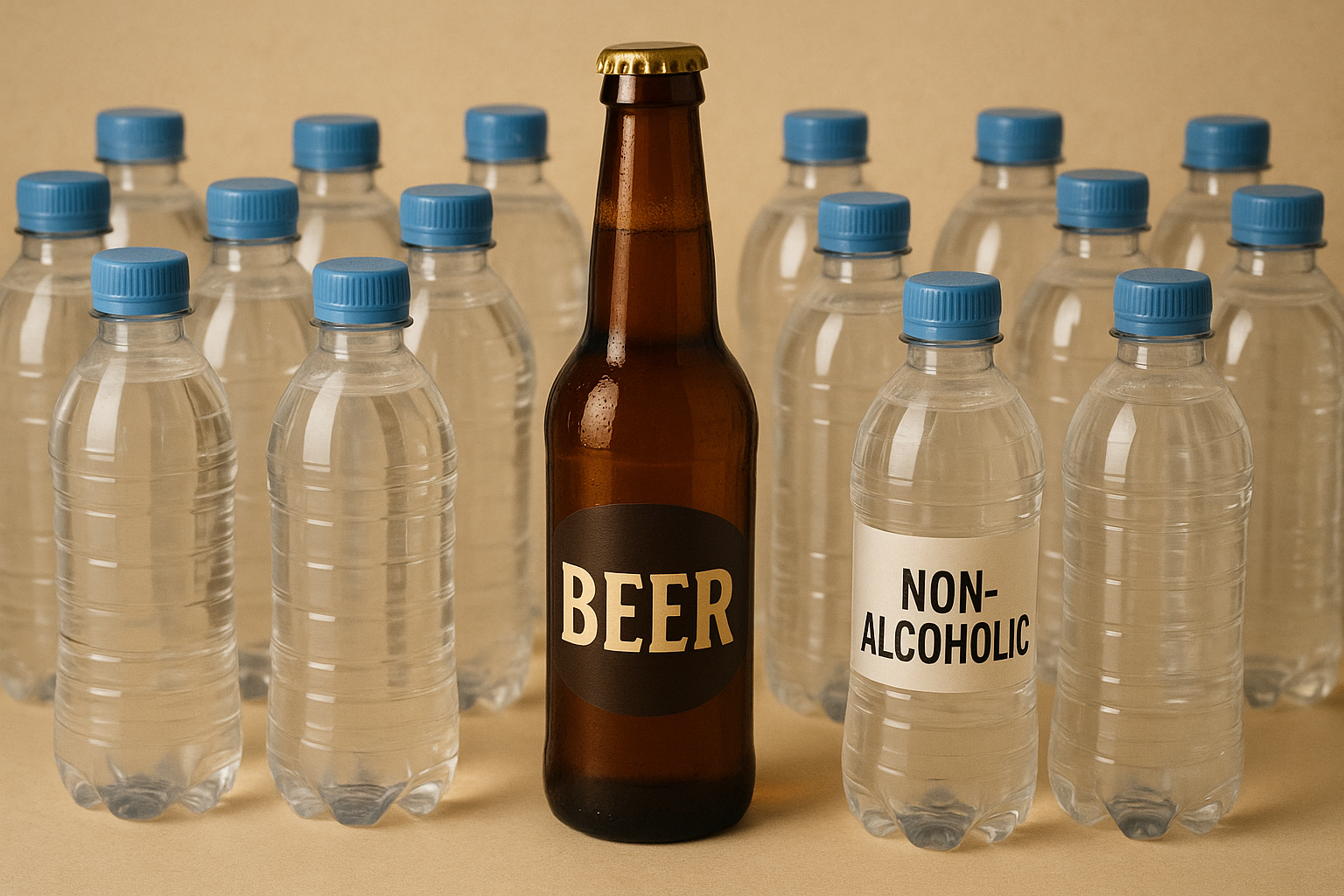
South Africa's alcohol market is rapidly shifting. High prices and economic strain are driving consumers to no/low-alcohol options & smaller packs.
South African drinkers are changing their habits big time! Prices for regular beer shot up, making people look for cheaper or healthier options. Now, stores are full of non-alcoholic drinks, and smaller, cheaper alcoholic drinks are super popular. This big shift is worth a lot of money, as people are spending less on traditional drinks and more on new choices. It's all about saving money and finding new, exciting sips.
Why are South African consumers shifting away from traditional alcoholic beverages?
South African consumers are shifting from traditional alcoholic beverages primarily due to a price revolt, with beer prices soaring by 40% in a year. This financial pressure, alongside a desire for healthier alternatives and the availability of diverse no/low-alcohol options, is driving a significant R1.4 billion move towards non-alcoholic substitutes and smaller, more affordable alcoholic formats.
Get Cape Town news in your inbox
Stay updated with the latest stories from the Mother City.
Section 1 – Fridges, Facings and the R1.4 Billion Walk-Out
Walk into any major grocery chain this March and the first thing you notice is the silence - no bass-heavy beer ads looping above twin-door coolers. Those double fridges have been cut in half, their former territory now shared with neon kombucha taps and matte-black 0% “gin” bottles. Supermarkets are not simply tidying up; they are following the money. Nielsen tills confirm that for every R100 that deserted conventional beer in the last twelve months, R31 marched straight into no- or low-alcohol substitutes, a retail swing worth a tidy R1.4 billion.
Cider tells the same story in miniature. The once-bloated 750 ml shelf has been scalped to four lonely facings, while 440 ml alcohol-free cans now own an entire gondola end. Store managers admit the reorder point for alcoholic cider is twice as slow as it used to be, so labour hours are being redeployed to keep the alcohol-free bay fully faced. The industry calls the phenomenon “silent substitution”: shoppers still greet the fridge, still linger, still spend - but leave with a different colour can.
What looks like a health fad is, at root, a price revolt. By December 2025 a mainstream lager six-pack smashed through the R120 ceiling, up from R92 in January 2024. Excise, glass surcharges and a limp rand inflate that to a 40% real-world jump. A median mineworker who traded 3.9 hours of labour for six beers five years ago must now clock 6.2 hours - almost a full shift extra. Spirits appear calmer, yet the per-standard-drink cost is still double that of beer, so households prune the category that hurts least emotionally: the weekday lager.
Section 2 – Zebra-Stripes, Basket-Hacks and the Credit Crunch
Stats SA’s regional CPI release paints the country in zebra stripes. Affluent Gauteng posts 4.3% booze inflation, comfortably under the 5.1% national average. The Eastern Cape glows red at 7.9%, punished by long haul routes and a thin store network that hands pricing power to suppliers. Limpopo and Mpumalanga, starved of platinum-belt remittances, watch volumes tumble 8.1% despite 6.7% price spikes. Only the Western Cape tourist bubble keeps fridges humming, yet even there township panels record a 9% local slump.
Households have hacked the shopping mission itself. Numerator’s 11 000-home panel shows drinkers now pop into liquor outlets 4.2 times a month - up from 3.6 - but haul away only 5.1 litres of pure alcohol, down from 6.8 litres. The objective is to dodge the “big-ticket shock”; splitting spend across several small visits feels kinder on the wallet even when the month-end total is unchanged. Once inside, consumers “trade sideways”: a 12-pack of budget lager becomes a 6-pack plus 2 litres of cola, or three alcohol-free lagers that can be rationed across a full soccer broadcast.
Credit pressure keeps the brake pressed hard. Unsecured micro-loans grew 17% year-on-year in ticket count yet shrank 9% in average size, proof that households borrow to keep groceries, not parties, afloat. TransUnion found 42% of micro-loan clients skipped at least one social drinking occasion in the past four weeks because mid-month repayments had soaked up the slack. Alcohol’s falling volumes, then, are the visible foam on a deeper liquidity wave.
Section 3 – New Players, New Packs and the Policy Chase
Suppliers are flooding the gap they helped create. Heineken 0.0 now shares fridge space with SAB’s Castle Free, AfroBotanica’s 0.3% cassava malt cooler and PuraSeed’s cannabis-infused hop water that needs no liquor licence at all. Shelf fees for no-alcohol facings run 30% below mainstream beer, so independents happily oblige. Since July 2025 the segment has compounded at 3.4% a month - an 11% annual glide path that convinced Distell to convert a Worcester wine tank into dealcoholised sparkling rosé due mid-2026.
Pack archaeology is in full swing. SAB’s January launch of a R17 single 440 ml can undercuts the psychological R20 barrier and nets 8% more margin per litre once rings and cartons disappear. Diageo’s 200 ml Johnnie Walker “nip” at R29 returns from the 1990s, paired with a R35 275 ml gin-and-tonic can that hides an Uber voucher - an admission the brand expects consumption en-route, not around the braai. Tiny AfroZone Brewery in Soweto pushes 1-litre growler refills, trimming packaging cost 35% and letting patrons stagger drinks across a weekend at half the price.
National Treasury is scrambling to keep up. The December 2025 mini-budget shoved beer duty 8.5% higher while barely touching wine or cider, arguing beer is “price-inelastic among upper-income shoppers.” The outcome: working-class lager now subsidises Clifton Sauvignon Blanc. Officials are sketching a 2027 ABV-tiered excise that could lop 1.2 percentage points off beer inflation - if brewers pass the saving on. Add global headwinds - drought-shrunk barley and glass at 47 US cents a bottle - and format innovation is no longer optional. Returnable 500 ml PET, once brand suicide, is being pitched as “eco-smart.”
Section 4 – Shebeens, Staff Bars and the 330 ml Future
Township shebeens, long the volume engine of SA beer, run “half-price Tuesdays” at R10 a 330 ml lager between 10 a.m. and 2 p.m. to flush stock. Others decant 750 ml bottles into 250 ml enamel cups at R7 each, resurrecting the colonial “quart” culture outlawed in 1960. Regulation 43 bans resale in unsealed vessels, but overstretched police look away when the alternative is zero revenue for struggling households.
Corporate South Africa is also rewriting the social contract. Old Mutual’s Pinelands staff bar replaced year-end booze with vouchers for no-alcohol cocktails, saving R1.2 million in insurance premiums and nudging three JSE peers to follow. Discovery Insure hands 100 Vitality points - redeemable for fuel - for a 0.00 breathalyser reading on a Saturday night, aligning thrift, health and loyalty in one swipe.
Even the illicit river is changing course. Home-fermented pineapple beer reappears as a 2% ABV thirst-quencher packed in 2-litre ice-cream tubs for R15 - 70% below legal beer, low enough in strength to escape community outrage. Police seized 3 400 litres in Diepsloot last month; producers simply switched to carrot and orange bases that ferment inconspicuously.
Looking forward, the crystal ball is cloudy. Climate models warn of 35% more Western Cape heatwaves, endangering brandy grapes, while the NHI white paper flags alcohol reduction as a KPI, threatening steeper taxes. Yet Treasury concedes 1.3 million livelihoods depend on the liquor chain. The consumer who holds the final vote is sober-curious, cash-strapped and hostile to price spikes. The brand that survives will greet him with a 330 ml container, a sub-R15 sticker and a QR-coded ride home - proof that in 2026 South Africa’s drinking story is being written one modest, measured sip at a time.
[{"question": "
Why are South African consumers shifting away from traditional alcoholic beverages?
", "answer": "South African consumers are shifting from traditional alcoholic beverages primarily due to a price revolt, with beer prices soaring by 40% in a year. This financial pressure, alongside a desire for healthier alternatives and the availability of diverse no/low-alcohol options, is driving a significant R1.4 billion move towards non-alcoholic substitutes and smaller, more affordable alcoholic formats."}, {"question": "How significant is the financial impact of this shift in South Africa's beverage market?
", "answer": "The shift represents a substantial R1.4 billion 'walk-out' from traditional alcoholic beverages. For every R100 that consumers stopped spending on conventional beer, R31 was redirected towards no- or low-alcohol substitutes, significantly impacting retail strategies and product offerings."}, {"question": "What types of alternative beverages are gaining popularity in South Africa?
", "answer": "Non-alcoholic alternatives like kombucha, 0% 'gin' bottles, and alcohol-free ciders are rapidly gaining market share. Additionally, smaller, more affordable alcoholic formats such as 440 ml single cans of budget lager, 200 ml 'nip' spirits, and 275 ml ready-to-drink gin and tonic cans are becoming increasingly popular."}, {"question": "How are retailers and suppliers adapting to these changing consumer preferences?
", "answer": "Retailers are reallocating fridge space, reducing facings for traditional alcoholic beverages, and expanding sections for no/low-alcohol options. Suppliers are introducing new products like Heineken 0.0, Castle Free, and cannabis-infused hop water, alongside innovating packaging with smaller, more cost-effective formats and even growler refills to meet demand for affordability and variety."}, {"question": "What role does affordability and credit pressure play in this beverage market transformation?
", "answer": "Affordability is a major driver, with soaring prices for traditional alcohol forcing consumers to 'trade sideways' to cheaper alternatives or reduce overall consumption. Credit pressure, evidenced by a rise in small unsecured micro-loans for essentials, further limits discretionary spending on alcohol, leading consumers to make more frequent, smaller purchases to avoid 'big-ticket shock'."}, {"question": "How are governmental policies and social initiatives responding to the changing drinking landscape?
", "answer": "The National Treasury is grappling with excise duties, with recent increases on beer and discussions around an ABV-tiered excise system. Corporate South Africa is also promoting responsible consumption through initiatives like replacing year-end alcohol with non-alcoholic options and offering rewards for 0.00 breathalyser readings. Even illicit markets are adapting, with home-fermented, low-alcohol beverages reappearing as ultra-cheap alternatives.", "question": "What does the future hold for South Africa's beverage industry?
", "answer": "The future points towards a market dominated by 'sober-curious' and 'cash-strapped' consumers. Brands that will thrive are those offering smaller, affordable 330 ml containers, priced under R15, and potentially integrating services like QR-coded rides home. The industry faces challenges from climate change impacting brandy grapes, potential increased taxes due to health KPIs, but also recognizes the 1.3 million livelihoods tied to the liquor chain, necessitating ongoing innovation and adaptation."}]
Chloe de Kock is a Cape Town-born journalist who chronicles the city’s evolving food culture, from township braai joints to Constantia vineyards, for the Mail & Guardian and Eat Out. When she’s not interviewing grandmothers about secret bobotie recipes or tracking the impact of drought on winemakers, you’ll find her surfing the mellow breaks at Muizenberg—wetsuit zipped, notebook tucked into her backpack in case the next story floats by.
View all articles →