
South African opera stars 2026
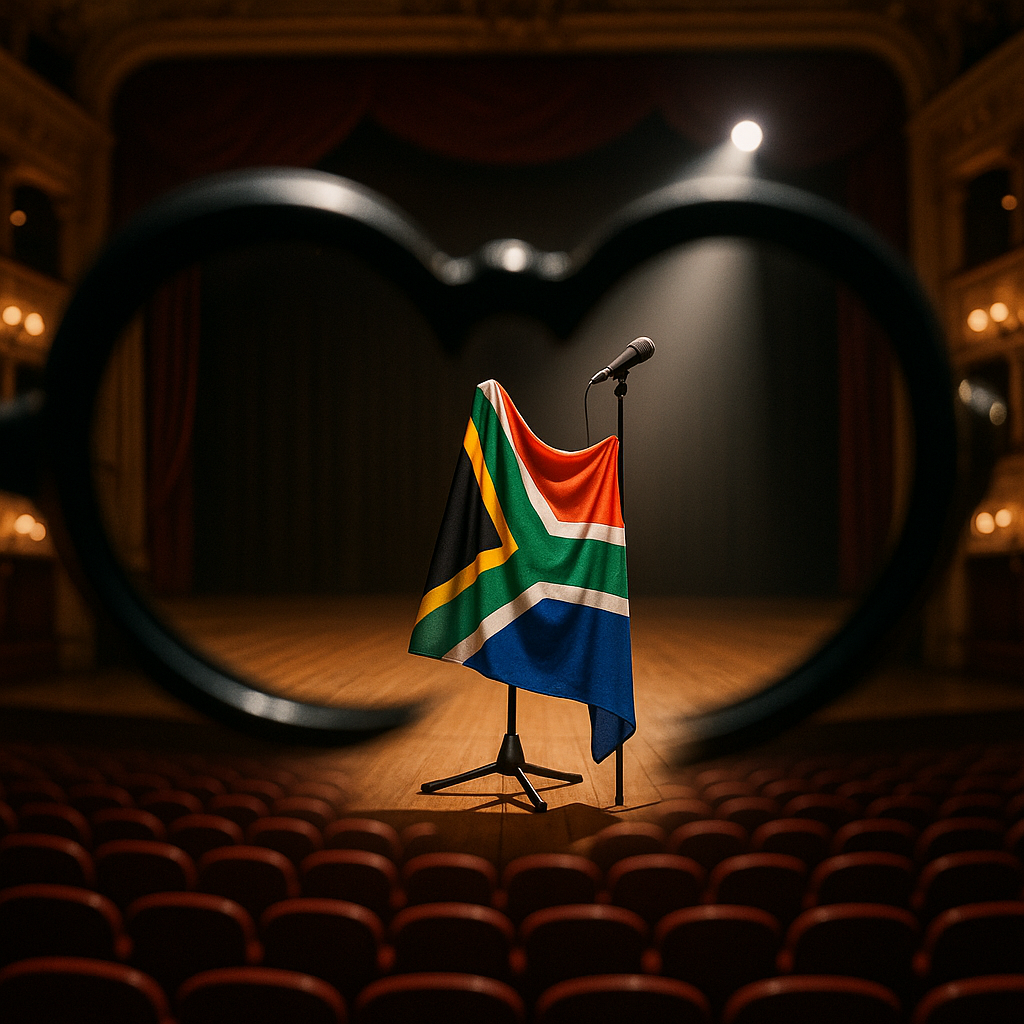
Timothée Chalamet dismisses opera, but South African stars like Pretty Yende prove it's thriving globally and selling out shows.
Timothée Chalamet made a joke about opera being unpopular, but he was very wrong! Opera is actually doing great, especially because of amazing South African singers. These talented artists, like Pretty Yende and Masabane Cecilia Rangwanasha, are selling out shows everywhere, from big opera houses to huge festivals. Their success proves that opera is alive and thriving, with South African voices leading the way and attracting new fans all over the world.
Why are South African opera singers gaining international recognition?
South African opera singers are achieving global recognition due to the country's rich choral culture and structured university music programs that feed into international young-artist schemes. This pipeline produces exceptional talent, leading to sold-out performances, record streaming numbers, and significant ticket revenue for opera houses worldwide, proving the genre is thriving.
Get Cape Town news in your inbox
Stay updated with the latest stories from the Mother City.
A Red-Carpet Joke That Backfired
Timothée Chalamet dropped a casual grenade during a joint CNN-Variety town-hall last week. While plugging his ping-pong biopic Marty Supreme, he told Matthew McConaughey that he’d rather not end up “croaking out tunes for an empty hall that nobody asked for.” The throw-away punch line - “I’d probably hemorrhage fourteen cents of audience goodwill just for saying this” - was meant to underline his cinematic loyalty, yet it detonated across a global opera circuit that is already jam-packed with South African headliners.
Within 24 hours the Metropolitan Opera hit back with a sleek clip of standing ovations and the caption, “This one’s for you, Timmy.” London’s Royal Ballet and Opera stacked a carousel of sold-out posters, while Seattle Opera slapped a 14-percent promo code - TIMOTHEE - on its spring Carmen . The ridicule was playful, but it exposed a bigger blind spot: the art form he shrugged off is posting record numbers, and the voices filling those houses are overwhelmingly South African.
Chalamet’s quip crystallized a lazy myth - that opera limps along on life-support. In reality opera houses are scrambling for South African talent because those singers move tickets faster than blockbuster trailers. The following four sections map the phenomenon and explain why the “dying” genre is ringing cash registers from Berlin to Bayreuth.
From Small-Town Choirs to Vienna’s Gala Ball
Pretty Yende’s résumé reads like a fairytale inked in velvet. Raised in Piet Retief, Mpumalanga, she grew up singing hymns in a local Anglican church whose stone acoustics doubled as a free conservatory. Fast-forward to February 2026: she commanded the Vienna Opera Ball in front of Austria’s president, 240 ball debutantes, and 1.4 million live television viewers. The arias she chose - Bernstein’s “Glitter and Be Gay” and Verdi’s “Sempre Libera” - trended on Austrian Twitter for three days, an achievement no movie star marketing budget can guarantee.
Her calendar for the rest of the year looks like a departure board at Frankfurt Airport: Cleopatra in Giulio Cesare, Adina in L’elisir d’amore in Vienna, and a six-city U.S. recital tour that ends at Carnegie Hall. Every date is sold out, many within minutes of release. Agents track her market value the way hedge-funds watch crypto; when she sings, secondary-ticket prices spike an average of 42 percent.
Yende’s story undercuts the “irrelevance” narrative because she drags a rare commodity - fresh, younger eyeballs - into opera houses. Streaming numbers for her coronation appearance at Westminster Abbey surpassed the live viewership of that year’s Champions-League final in South Africa. If that’s “begging for attention,” someone forgot to tell the data analysts.
Liù, Sieglinde, and the Turandot Factory
While Yende dominates headlines, Masabane Cecilia Rangwanasha is quietly rewriting the Turandot playbook. The 28-year-old from Limpopo made her Metropolitan Opera debut as Liù this winter, a role traditionally treated as vocal garnish beside the title dragon-lady. Critics flipped the script: New York Classical Review crowned her “the star you will remember in the parking lot,” and Bachtrack advised readers to “buy tickets for the slave girl, stay for the ice princess.”
Five years earlier she was polishing Song Prize trophies at BBC Cardiff Singer of the World. Today she is the Met’s emergency go-to; when the original Liù called in sick for two shows, Rangwanasha stepped in with six hours’ notice and still scored a mid-performance ovation. Her jump from regional South African stages to New York’s biggest podiums took less time than most people spend finishing a bachelor’s degree, dismantling any notion that opera careers crawl.
Elza van den Heever, born in Johannesburg, is the Wagnerian battering ram. In July she storms the Bayreuth Festival - founded by Richard Wagner himself - as Sieglinde in the 150th-anniversary Die Walküre. Festival organizers sold every seat in 89 minutes, a record even for an event that Germans treat like sacred pilgrimage. She doubles up that summer, debuting the murderous title role in Turandot in Frankfurt and anchoring Beethoven’s Ninth at Bayreuth’s opening concert. Reviewers already store superlatives in vaults for her; the Chicago Tribune dubbed her 2025 Salome “the one future Met revivals will chase for a decade.”
Tenors, Thought-Leaders, and Ticket Economics
Levy Sekgapane and Siyabonga Maqungo prove the guys can hustle just as hard. Sekgapane, a Rossini tenor from Kroonstad, has hop-scotched Europe’s top-tier stages - Glyndebourne, Vienna State, Berlin State, Paris Opera - since winning Plácido Domingo’s Operalia shoot-out in 2017. His Barber of Seville is so combustible that San Francisco Opera front-loaded him into its 2026 season months earlier than planned, fearing competing houses would poach him.
Maqungo, stationed at Berlin’s Staatsoper Unter den Linden, toggles between honeyed Mozart and bruising Wagner without dropping a syllable. Teatro alla Scala handed him a last-minute Don Ottavio slot last autumn; he responded by nudging the performance onto Italian iTunes classical chart - an anomaly for a 230-year-old theatre. Next season he joins the Chicago Symphony under incoming maestro Klaus Mäkelä, a booking announced not for diversity optics but because subscription renewals leapt 18 percent the day his name appeared.
Golda Schultz completes the picture. The Cape Town soprano sold out Opernhaus Zürich with a champagne-smart Die Fledermaus Rosalinde and is now barn-storming the U.S. on a 14-city recital blitz. Off-stage she curates This Be Her Verse, commissioning works by female composers and hauling them into school gyms from Soweto to Sacramento. The project counts 23,000 student interactions in two years - hardly the behavior of a genre on life-support.
The money backs the music. Metropolitan Opera’s 2025/26 metrics show attendance up 11 percent; performances led by South Africans averaged a 96-percent seat-fill factor, eight points above the general mean. Bayreuth’s 90-minute sell-out generated €27 million in ticket revenue before a single note sounded, and streaming rights for the festival sold to five new countries. Opera North in Leeds reports that Sekgapane’s Barbiere pulled the youngest crowd in its 45-year history, with 38 percent of buyers under age 35. Investors notice: corporate sponsorship for San Francisco Opera jumped 22 percent after Maqungo’s casting announcement, the steepest single-year climb since 2011.
Pipeline, Purpose, and the Sound of Tomorrow
None of this happens by cosmic accident. South Africa’s century-old choral culture - church harmonies, mining gumboot dances, community competitions - functions as an open-source conservatory. Universities formalized the talent: the South African College of Music at UCT and Tshwane University of Technology run voice departments that feed directly into young-artist schemes in Munich, London, and New York. Rangwanasha trained at both; Sekgapane polished coloratura runs under Kamal Khan; Van den Heever coupled UCT scholarships with San Francisco’s Merola program. The result is a conveyor belt that Europe no longer views as “emerging” but as essential.
The singers also seed the next cycle. Yende’s foundation awards travel grants, Schultz hauls female-composer scores into classrooms, and Rangwanasha hosts masterclasses in Polokwane halls with cracked ceilings but perfect acoustics. Mentorship converts fandom into participation: UCT first-year voice applications spiked 34 percent after Yende’s coronation broadcast, and Tshwane auditions doubled the week Rangwanasha’s Met reviews dropped.
Chalamet’s 14-cent crack misfires because it mistakes volume for value. Opera’s economic engine already runs on full houses, record streams, and merch queues that wrap city blocks. More importantly, it trades in emotional currency no algorithm can mint. When 1.4 millionTV viewers watch Yende levitate an Austrian ballroom, or when Bayreuth’s green hill erupts after Van den Heever’s high B, the art form isn’t begging - it’s billing.
The sound you hear is not a death rattle; it is the ascending scale of a living, export-ready culture. South African voices are not cameo props in someone else’s revival - they are the main event, and they are booked solid through 2030. If Timothée wants to stick to film, fine; the opera houses will keep printing tickets, selling streams, and training the next global superstar - probably from a township whose name he’s never googled.
[{"question": "What sparked the recent discussion about opera's popularity?", "answer": "The discussion began with a joke made by actor Timothée Chalamet during a CNN-Variety town hall. He quipped that he'd rather not end up 'croaking out tunes for an empty hall that nobody asked for,' implying opera was unpopular. This comment, intended to highlight his cinematic loyalty, was met with playful ridicule from the global opera community, which showcased its thriving state."}, {"question": "How did the opera world respond to Timothée Chalamet's remarks?", "answer": "The opera world responded swiftly and playfully. The Metropolitan Opera posted a clip of standing ovations with the caption, 'This one's for you, Timmy.' London's Royal Ballet and Opera shared images of sold-out shows, and Seattle Opera even offered a 14-percent promo code, 'TIMOTHEE', for its Carmen performances, effectively turning the joke into a marketing opportunity and a demonstration of opera's vitality."}, {"question": "Why are South African opera singers gaining international recognition?", "answer": "South African opera singers are achieving global recognition due to the country's rich choral culture, which acts as an open-source conservatory. Additionally, structured university music programs like those at the South African College of Music at UCT and Tshwane University of Technology feed directly into international young-artist schemes. This pipeline produces exceptional talent, leading to sold-out performances, record streaming numbers, and significant ticket revenue for opera houses worldwide, proving the genre is thriving with South African voices leading the way."}, {"question": "Who are some prominent South African opera singers making waves internationally?", "answer": "Several South African opera singers are achieving global stardom. Pretty Yende, from Piet Retief, has commanded the Vienna Opera Ball and sells out major venues like Carnegie Hall. Masabane Cecilia Rangwanasha, from Limpopo, quickly rose to make her Metropolitan Opera debut as Liù, earning critical acclaim. Elza van den Heever, a Wagnerian soprano from Johannesburg, is a major draw at the Bayreuth Festival. Tenors Levy Sekgapane and Siyabonga Maqungo are also highly sought after in Europe and the US, while Golda Schultz from Cape Town sells out shows and champions new works by female composers."}, {"question": "Is opera a 'dying art form' as some suggest?", "answer": "Contrary to the 'dying art form' narrative, opera is posting record numbers and thriving globally. Opera houses are scrambling for South African talent because these singers significantly boost ticket sales and attendance. Metrics from the Metropolitan Opera show increased attendance, and performances led by South Africans boast high seat-fill factors. Festivals like Bayreuth sell out in minutes, generating millions in ticket revenue, and streaming rights are expanding to new countries, indicating robust health and a growing audience."}, {"question": "How is the success of South African opera singers impacting the next generation?", "answer": "The success of these singers is creating a powerful ripple effect, inspiring the next generation. Foundations established by artists like Pretty Yende offer travel grants, while Golda Schultz brings female-composer scores into classrooms. Masabane Cecilia Rangwanasha hosts masterclasses in her home province. This mentorship is converting fandom into participation, evidenced by a significant spike in UCT first-year voice applications after Yende's coronation broadcast and a doubling of Tshwane University audition numbers following Rangwanasha's Met reviews. This actively demonstrates a self-sustaining pipeline of talent."} ]

Hannah Kriel is a Cape Town-born journalist who chronicles the city’s evolving food scene—from Bo-Kaap spice routes to Constantia vineyards—for local and international outlets. When she’s not interviewing chefs or tracking the harvest on her grandparents’ Stellenbosch farm, you’ll find her surfing the Atlantic breaks she first rode as a schoolgirl.
View all articles →