
SOUTH AFRICANS IN CANADA FACE PASSPORT RENEWAL REALITY
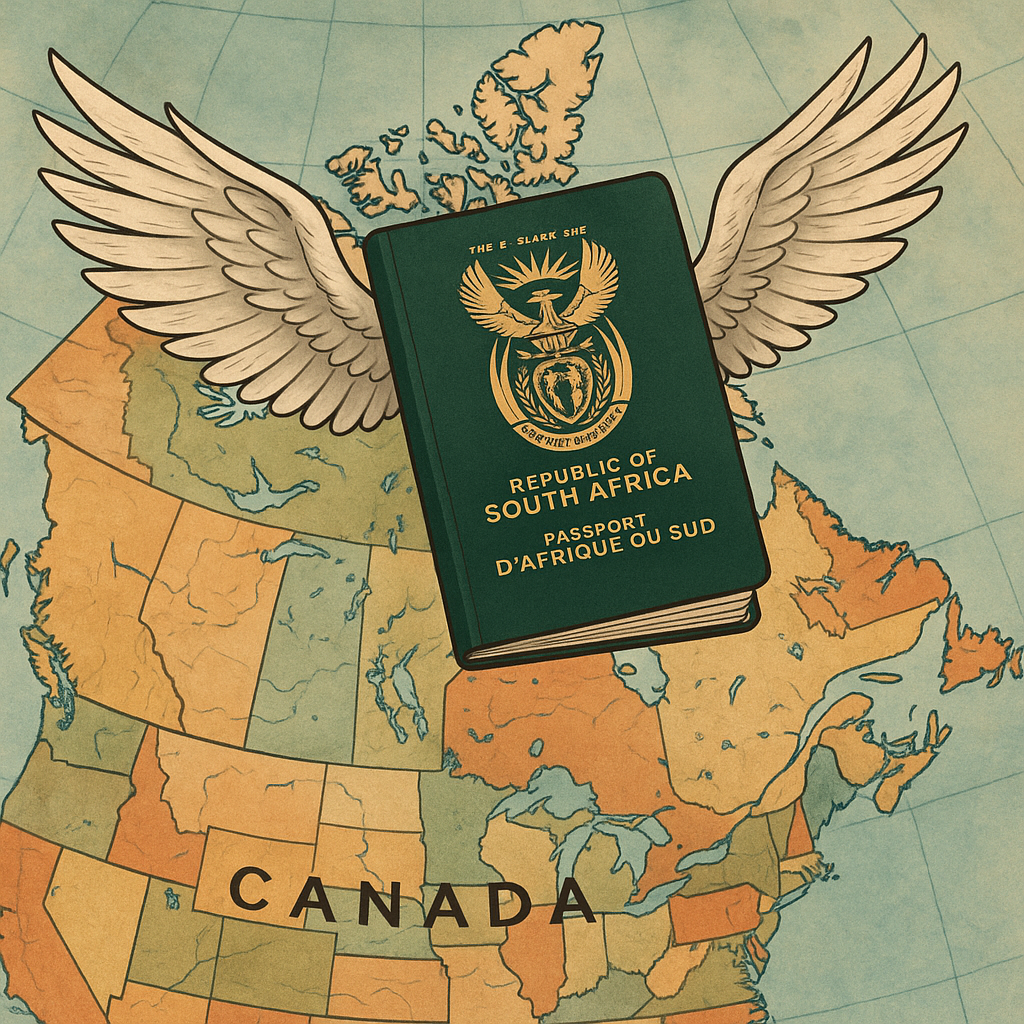
South Africans in Canada face extreme hurdles renewing passports due to limited VFS Global offices. A petition seeks policy changes.
South Africans living in Canada face huge problems renewing their passports because there are only two places to do it in the whole country.
Why is it difficult for South Africans in Canada to renew their passports?
South Africans in Canada face significant challenges renewing passports due to the closure of most honorary consulates, leaving only two passport windows in Vancouver and Toronto. This forces most citizens to travel thousands of kilometers, incurring substantial costs and time, as live fingerprinting in the presence of an accredited official is still required, making online renewals impossible.
Get Cape Town news in your inbox
Stay updated with the latest stories from the Mother City.
When Home Affairs Moves 12 000 km Away
From Tofino’s surf to the granite cliffs of Signal Hill, a low-volume but relentless grumble is rolling through South African kitchens. About 52 000 compatriots now file Canadian tax returns, yet the instant the emerald-green booklet in their desk drawer creeps toward its expiry date, they learn that “consular convenience” has become an oxymoron. In 2018, Pretoria quietly closed its honorary posts in Calgary, Montréal and St. John’s and handed the franchise to VFS Global. Overnight, the world’s second-largest country was reduced to two passport windows: one in Vancouver, one in Toronto. No pop-ups, no video calls, no travelling kiosk - just two counters and 5,5 million square kilometres of detours.
The mileage is merciless. A fly-in engineer living in Fort McMurray boards the 05:00 shuttle to Edmonton, catches the 08:40 connector to YVR, queues, fingerprints, pays, then turns around and repeats the odyssey a month later when the courier bag finally returns. A Winnipeg ICU nurse measures the drive to Toronto at 4 700 km - roughly the asphalt distance from Cape Town to Nairobi. A Halifax paediatric anaesthetist blocks three days of annual leave, books a last-minute R4 500 ticket, and still has to factor in daycare and jet-lag before she can prove she is still South African. Every church basement and university notice board carries the same refrain: citizenship has become a long-weekend luxury item.
Data collected by the advocacy network SADC-Diaspora Canada turn anecdote into arithmetic. Eighty-seven percent of resident permit-holders live outside Ontario and British Columbia, yet they must cover an average 2 180 km to the nearest biometric capture point - about the flight from Johannesburg to Dubai. A frugal summer booking for a family of four still tops CAD 3 600; fold in two hotel nights, airport parking, meals and the compulsory VFS courier fee and the bill swallows a month’s net pay for many healthcare professionals. Winter offers cheaper fares on paper, but storms regularly add 48-hour delays, cascading into extra babysitting costs and cancelled hospital shifts.
The Appointment Hunger Games
VFS releases appointment slots in cryptic monthly waves; frequent flyers set phone alarms for 03:00 EST and still watch every seat vanish within six minutes. Commercial “runners” harvest the openings and flip them on Facebook for CAD 150, while latecomers watch the calendar slide from six to ten weeks away. The old passport keeps ticking, airline apps flash red warning triangles, and December plans to visit ageing parents in Durban dissolve into “maybe next year” voice notes. Meanwhile, South Africa’s Identification Act still insists on live fingerprinting “in the presence of an accredited official,” meaning a fully on-line renewal - routine for Australians, Irish and even Namibians - remains illegal for South Africans.
Attempts to dodge the maze usually end in worse cul-de-sacs. Emergency travel certificates will get a citizen home once, but they cancel every existing visa vignette, forcing the holder to reapply for Canadian permanent-resident cards, U.S. B-1/B-2 stamps or EU Schengen waivers from scratch. Between 2014 and 2017, Pretoria’s Civic Centre famously piled up 70 000 unprinted booklets while people slept on the pavement; outsourcing was pitched as the antidote. VFS did deliver shorter queues and SMS tracking, but nobody mentioned the accompanying shrink-ray: honorary consulates in Calgary and Montréal were shuttered, and the whole Canadian landmass disappeared from the service map, leaving a diplomatic doughnut with two lonely sprinkles on the Pacific and Great-lake coasts.
Petitions, Spreadsheets and Side Hustles
In March 2023, five volunteers launched “Passports in the Post,” a Campaign-Builder petition that reads like a parliamentary brief. Its single-sentence opener - “Distance is not a luxury” - has since been pinned on 573 Canadian towns, from Yellowknife to Happy Valley-Goose Bay. Zoom into the interactive map and micro-clusters emerge: 42 households in the Northwest Territories, 17 in Whitehorse, 9 in Labrador. Signatories range from Supreme Court clerks to ice-road truckers, all arguing they are contributors, not tourists, whose tax dollars land on both ledgers - Canadian T4 slips and the expat levy that funds SASSA grants back home.
Demands stay deliberately moderate: (1) a third VFS node in Calgary or Edmonton; (2) quarterly pop-up clinics using the same mobile biometric kits that Dutch and Filipino officials wheel into hotel ballrooms from Regina to St. John’s; (3) a secure digital upload portal for photos and signatures so that only one in-person visit is required; (4) published service standards and live queue data to end the 45-minute hold music that terminates in “check the website,” which in turn says “contact the embassy.” The organisers will cap the petition at 5 000 signatures, bind it, and hand-deliver copies to every member of the Portfolio Committee on Home Affairs, backed by Cape Town legal opinion arguing the current set-up violates Sections 21 and 195 of the Constitution - rights to a passport and to “responsive, accessible” public administration.
While MPs study the folder, citizens build their own rails. A Calgary church deacon maintains a Google sheet that pairs travellers so they can hand-carry each other’s applications, splitting petrol and babysitting favours. A Zimbabwe-born trucker earns beer money by driving sealed envelopes from Thunder Bay to the Toronto drop-box on his weekly Walmart run. A Montréal photographer hosts “passport-portrait Sundays,” printing compliant 35 × 45 mm matt prints for CAD 10, half the Shoppers Drug Mart price and with guaranteed Home Affairs specs. These ad-hoc networks mirror the互助 circles of early Chinese miners or the Sikh “truck libraries” of the 1970s - proof that when the state retreats, neighbours become infrastructure.
Why Other Countries Can, and Pretoria Won’t
The logistical puzzle is not cutting-edge. India operates thirteen Passport Seva Kendro counters inside Canada plus annual mega-camps in Edmonton and Halifax that clear 1 500 renewals in a single weekend. Poland’s honorary pharmacists drive biometric kits in car trunks every quarter; Warsaw covers fuel and an honorarium per file. Tiny Estonia prints e-residency digi-ID cards at tech-conference pop-ups. South Africa already owns the hardware - mobile units used in the Eastern Cape and Limpopo in 2021 cut queue times from 48 hours to 45 minutes - yet the devices sit boxed in Pretoria, their lease expired, waiting for a R30 million Treasury rollover that never arrives. Shipping four kits to Canada for a six-month rotation would cost less than the combined airfare currently burned by 200 Alberta families trekking to Toronto, but the request stalls in the same inter-ministerial committee still debating whether expatriates deserve a provincial vote.
Corporate Canada is watching the vacuum fill up with lost opportunity. A Cape Town tech company diverted a Vancouver start-up to Lisbon after three critical hires failed to renew in time for an onboarding bootcamp. A McGill post-doc lost a fully funded Brussels conference when her passport expired two weeks before departure; the university risk office now quietly advises incoming South Africans to naturalise at the first legal moment, eroding Pretoria’s precious brain-gain strategy. IRCC statistics show South Africans on permanent-resident status apply for Canadian citizenship at twice the rate of other Commonwealth nationals, not out of patriotic conversion but because they crave a passport that can be renewed in under 20 minutes by mail. The 2022 Citizenship Report recorded a 38 percent year-on-year jump in South African grantees - the steepest rise from any single country - turning the green mamba into a transit ticket rather than a lifetime emblem.
What comes next is part lobbying, part prayer. A Democratic Alliance memorandum tabled in Cape Parliament proposes re-establishing honorary consuls in Calgary and Montréal, costed at R3,8 million annually - cheaper than the R5 million Pretoria spent chartering a jet to repatriate 140 Strandfontein evacuees from China in 2020. Committee chair Mzwanele Nyhontso has publicly conceded “we are studying the proposal,” words no previous chair has uttered. Until those studies graduate into action, parents in Saskatoon coach toddlers to belt out “Nkosi Sikelel’ iAfrika” before bedtime, then set phone alarms for day 1 095 of permanent residence - the magic moment when Canadian citizenship becomes possible and the green booklet can be retired to a keepsake drawer. They swap tips on red-eye flights, post Airbnb discount codes, and screenshot appointment slots the way earlier generations traded ration coupons: tokens of endurance, proof that they still belong to a country that, for now, seems determined to make belonging as punishing as geography allows.
Why is it so difficult for South Africans in Canada to renew their passports?
South Africans in Canada face significant challenges renewing passports primarily because the Department of Home Affairs closed most honorary consulates in 2018, leaving only two passport service points in the entire country: one in Vancouver and one in Toronto. This forces the vast majority of South Africans, who live outside of Ontario and British Columbia, to travel thousands of kilometers to complete the renewal process. The requirement for live fingerprinting in the presence of an accredited official further prevents online renewals, unlike practices in many other countries.
What are the main problems South Africans encounter when trying to renew their passports in Canada?
The main problems include the immense travel distances and associated costs (flights, accommodation, meals, lost wages) required to reach one of the two service points. Appointment slots are scarce and highly competitive, often being released in unpredictable waves and quickly snatched up. Furthermore, the inability to renew online due to the live fingerprinting requirement means that citizens cannot avoid these arduous journeys.
How much does it typically cost a South African family in Canada to renew their passports?
Data suggests that for a family of four living outside Ontario and British Columbia, a frugal summer booking for passport renewal can easily exceed CAD 3,600. This estimate often includes flights, two nights of hotel accommodation, airport parking, meals, and the compulsory VFS courier fee. For many healthcare professionals, this cost can amount to a full month's net pay. These costs can increase significantly if winter travel leads to delays and additional expenses.
What efforts are being made to address this issue?
An advocacy network called SADC-Diaspora Canada and a campaign called "Passports in the Post" have launched a petition outlining several moderate demands. These include establishing a third VFS node in Calgary or Edmonton, implementing quarterly pop-up clinics with mobile biometric kits, creating a secure digital portal for photo and signature uploads to reduce in-person visits, and publishing service standards with live queue data. There are also informal community efforts, such as shared travel arrangements and local services for passport photos.
Why can't South Africa offer more convenient passport renewal options like other countries?
While other countries like India, Poland, and Estonia offer more accessible renewal options, including multiple service counters, mobile biometric clinics, and digital solutions, South Africa faces internal hurdles. The country already possesses mobile biometric units used domestically, but these are reportedly sitting boxed in Pretoria due to expired leases and a pending R30 million Treasury rollover. Despite the cost-effectiveness of deploying these kits to Canada, inter-ministerial committees are still debating the issue, partly due to ongoing discussions about expatriates' voting rights.
What are the long-term consequences of these passport renewal challenges for South Africans in Canada?
The difficulties in renewing passports lead to several negative consequences. Some individuals miss critical career opportunities or academic conferences due to expired passports. The process also encourages South Africans on permanent resident status to naturalize as Canadian citizens at a much higher rate than other Commonwealth nationals, not out of patriotic conversion, but for the convenience of passport renewal. This trend contributes to a

Michael Jameson is a Cape Town-born journalist whose reporting on food culture traces the city’s flavours from Bo-Kaap kitchens to township braai spots. When he isn’t tracing spice routes for his weekly column, you’ll find him surfing the chilly Atlantic off Muizenberg with the same ease he navigates parliamentary press briefings.
View all articles →