
South Africa’s road anxiety, UK’s quiet solution
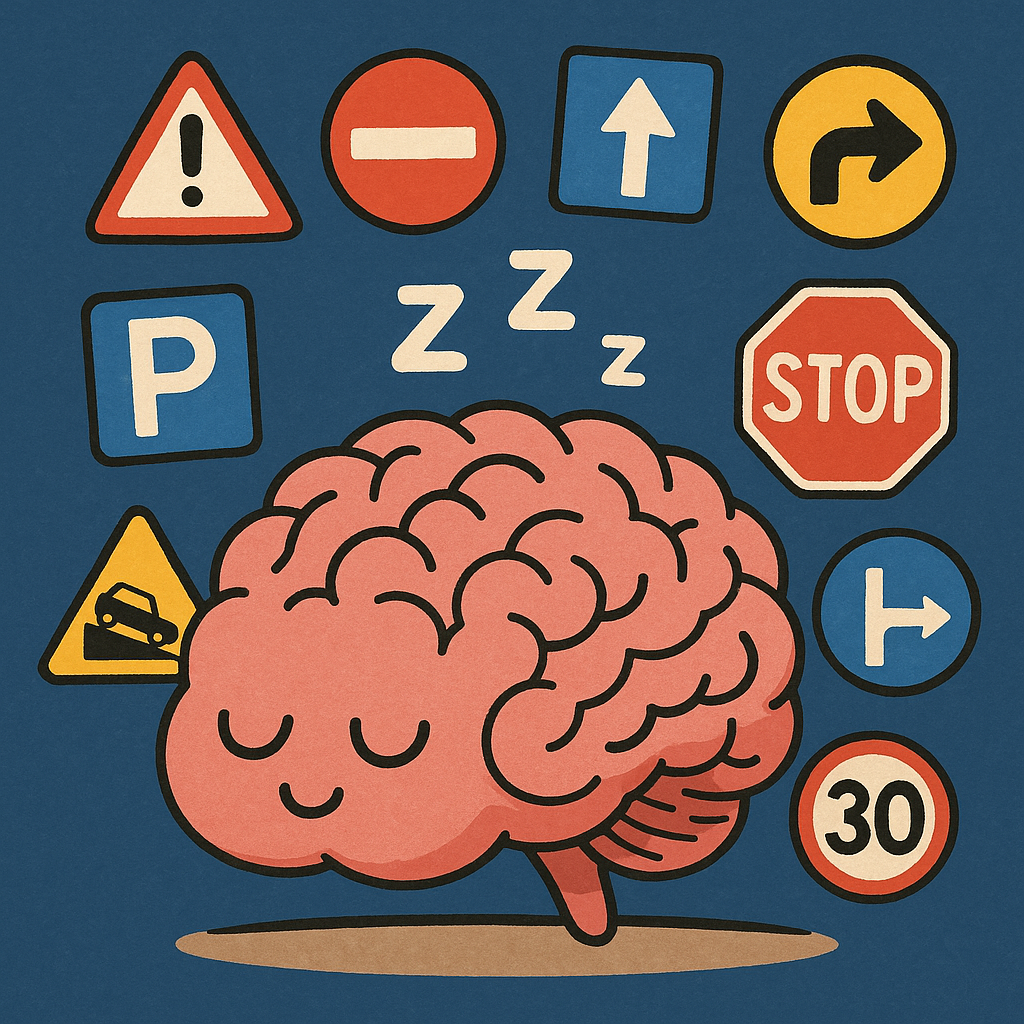
Learn road safety in your sleep! A UK audiobook turns the Highway Code into a lullaby, improving recall & reducing accidents.
South Africa is using a cool new idea called "hypnopedia" to make roads safer. This means teaching drivers traffic rules while they sleep, using soft whispers. The goal is to help them remember rules better and drive more carefully, especially since South African roads can be tricky and dangerous. It's like a gentle lullaby that helps drivers learn without even knowing it, hoping to change bad driving habits and save lives.
What is hypnopedia and how is it used to improve road safety?
Hypnopedia is a technique of learning during sleep, where facts are presented at a low volume during deep, slow-wave non-REM sleep. In South Africa, this method is being used to improve road safety by whispering traffic rules, often localized for specific regions and languages, to drivers while they sleep. This aims to embed rules into long-term memory, potentially reducing accidents and changing driving culture.
Get Cape Town news in your inbox
Stay updated with the latest stories from the Mother City.
The Fear Behind the Wheel
Slip behind the steering wheel at dusk in Johannesburg and the city turns into a pop-quiz nobody asked for. A fresh arrow appears where yesterday the road was bare, a faded yield triangle hides under shadow, and the traffic light’s amber phase seems shorter than your heartbeat. Two-thirds of South African drivers admit they worry nightly about breaking some mystery rule; almost half confess that road markings sometimes look like hieroglyphs. The anxiety is reasonable - provincial quirks, sun-bleached paint, and overnight detours conspire to make every trip feel like an exam set by a prankster.
Crash statistics sharpen the worry. South Africa records almost five times more deaths per 100,000 vehicles than the United Kingdom. Each bumper-to-bumper column on the N1 carries a silent tally of who might not make it home, and the mental arithmetic drains energy before the key even turns. Conventional refresher campaigns shout from billboards - red-font tirades about speed or grainy dash-cam horror shows - but shame rarely rewires habit. What drivers secretly crave is not another scolding, but a coach that enters the brain sideways, while defences are down and the heart rate finally slows.
Enter, bizarrely, a British bedtime story. A salvage-yard broker and a former racing commentator have recorded the UK Highway Code in a voice barely louder than a sigh, betting that rules whispered at the edge of sleep will stick better than any daytime lecture. Their audio experiment is soft enough to nudge memories, yet bold enough to invite an entire country to listen in and translate the trick for its own chaotic asphalt.
Science in the Hush
Neuroscientists call the trick “hypnopedia,” a fancy label for smuggling facts into the sleeping hippocampus. During deep, slow-wave non-REM sleep, neurons fire in fast-forward, replaying the day’s fragments and filing the useful ones into long-term folders. A clause murmured at 55 decibels - quieter than an air-conditioner - slips under the amygdala’s alarm system and lands in the inbox tagged “routine.” The brain does not master parallel parking overnight, but it can cement pattern recognition, the same reflex that suddenly surfaces a forgotten PIN at dawn.
British safety statisticians have already done the math. If only one in twenty drivers recalled one extra rule, 1,200 injury crashes could be erased each year across England and Wales. Scale that ratio to South Africa’s higher casualty rate and the hypothetical rescue rises into thousands. The Royal Society for the Prevention of Accidents likes the odds; the Road Traffic Management Corporation in Pretoria likes them even more. Both see a cheap, scalable wedge: a ninety-minute MP3 costs less than a single road sign and can be copied endlessly.
Skeptics rightly note that the night shift dumps eighty percent of incoming data. Gains therefore need waking reinforcement - micro-quizzes, fuel-voucher bribes, or five-second Instagram polls that re-ignite the dozing trace. The sweet spot is a loop: whisper, wake, reward, repeat. Without the daytime echo, the lullaby evaporates; with it, the lavender-scented clause about fog-tail gaps can still be recited at the next grey-sky merge.
Localising the Lull
South Africa cannot simply transplant British roundabout etiquette; drivers here need rhymes about orange robots, yellow lanes, and minibus taxi hand signals. The RTMC has already piloted sixty-second voice notes in isiZulu and isiXhosa, delivered via WhatsApp to taxi ranks in Soweto and Umlazi. The clips borrow the same sonic sedative - slow tempo, minor-key cicada backdrop - then quiz listeners the next morning. After three weeks, drivers were twenty-eight percent better at spotting temporary lane markings, and one father admitted he had originally played the clip to quiet a restless toddler, then caught himself repeating the rhyme on the morning run to Durban.
Fleet owners want in. A Gauteng logistics company with 270 haul trucks now pipes a private “night-school” podcast through dorm Bluetooth speakers before rest-day turnarounds. Episodes weld UK principles to local quirks - keep left, allow emergency yellow-lane overtaking on single carriageways, treat an orange light as a courteous warning, not a drag-race starter pistol. Drivers earn grocery vouchers for verified full listens; telematics logged a fourteen percent drop in hard-braking events the next month, saving roughly R180,000 in tyres and brake drums.
City planners are layering the concept into concrete. Cape Town’s MyCiTi bus stations murmur simplified after-hours rules just below platform ambient noise - soft warnings about bus-lane hours and left-turn arrows. The hope is to seed subconscious templates so that jaywalkers instinctively pause when the red bus whooshes in. Meanwhile, a Stellenbosch tech start-up lets users record their own voice reading personalised danger zones - perhaps the rail crossing on the daily commute - then morphs the clip into a theta-wave lullaby delivered through a bone-conduction headband. The headset tracks heart-rate variability and fades the track the moment deep sleep kicks in, ensuring the lesson stays while the wearer still dreams.
From Cadence to Culture
The biggest payoff may be social, not statistical. Road rules, long experienced as hostile diktats from anonymous bureaucrats, morph into shared bedtime folklore. A minibus driver in Mdantsane and a sales rep in Sandton can both mumble the same drowsy couplet about pedestrian stripes, united by an invisible chorus. Sociologists call it “ritual regard”: when enough people internalise the same quiet metre, courtesy becomes the default rather than the exception. In a country where public trust is threadbare, the notion that consideration can be sung into collective memory feels gently radical.
Night after night, the voices keep flowing - velvet reminders that a solid white line is promise, not paint; that an amber light is a courteous heads-up, not a dare. Somewhere between the first yawn and the final stanza on rail-crossing etiquette, regulations stop being external impositions and become internal rhythm, the hidden soundtrack to tomorrow’s morning merge. And if the crash curves budge only a notch, the savings will still count in lives, tyres, and tear-stained hospital corridors - proof that a whisper, repeated often enough, can outshout a billboard’s boldest red-font scream.
What is hypnopedia and how is it used to improve road safety?
Hypnopedia is a technique of learning during sleep, where facts are presented at a low volume during deep, slow-wave non-REM sleep. In South Africa, this method is being used to improve road safety by whispering traffic rules, often localized for specific regions and languages, to drivers while they sleep. This aims to embed rules into long-term memory, potentially reducing accidents and changing driving culture, much like a gentle lullaby for learning.
Why is South Africa adopting this unusual approach to road safety?
South Africa faces significant road safety challenges, with almost five times more deaths per 100,000 vehicles than the UK. Many drivers experience anxiety due to confusing road markings, provincial quirks, and a general lack of clarity on rules, leading to high crash statistics. Traditional awareness campaigns have proven ineffective. Hypnopedia offers a novel, non-confrontational way to internalize rules and change habits by leveraging subconscious learning during sleep, aiming to reduce accidents and save lives.
How does hypnopedia work scientifically?
Neuroscientists explain that during deep, slow-wave non-REM sleep, the brain actively processes and files information into long-term memory. Facts murmured at a low volume (around 55 decibels) can bypass the brain's conscious alarm systems and be filed as routine information in the hippocampus. While it doesn't teach complex skills like parallel parking, it can reinforce pattern recognition and recall of specific rules. This subconscious learning is then ideally reinforced with conscious activities during waking hours.
What are the potential benefits of using hypnopedia for road safety?
British safety statisticians estimate that if just one in twenty drivers recalled one extra rule, 1,200 injury crashes could be prevented annually in England and Wales. Scaled to South Africa's higher casualty rates, the potential for saving lives is even greater. Beyond statistics, it's a cost-effective and scalable solution; a ninety-minute MP3 costs less than a single road sign. It also aims to foster a cultural shift, transforming road rules from external impositions into shared, internalized norms.
Has hypnopedia been localized for South African road conditions?
Yes, South Africa has adapted the concept to its unique road environment. The Road Traffic Management Corporation (RTMC) has piloted sixty-second voice notes in isiZulu and isiXhosa, distributed via WhatsApp to taxi ranks. These clips incorporate local specifics like 'orange robots' (traffic lights), 'yellow lanes', and minibus taxi hand signals. Fleet owners are also implementing private 'night-school' podcasts for their drivers, and city planners are integrating soft rule reminders at public transport hubs like Cape Town's MyCiTi bus stations.
What challenges or limitations does hypnopedia face?
Skeptics note that the sleeping brain filters out about eighty percent of incoming data, meaning hypnopedia is not a standalone solution. For lasting effects, it requires 'waking reinforcement' through quizzes, incentives, or daily reminders. Without this daytime echo, the learned information can quickly fade. The goal is a loop: whisper, wake, reward, repeat, ensuring that the subconscious learning is cemented by conscious engagement.

Emma Botha is a Cape Town-based journalist who chronicles the city’s shifting social-justice landscape for the Mail & Guardian, tracing stories from Parliament floor to Khayelitsha kitchen tables. Born and raised on the slopes of Devil’s Peak, she still hikes Lion’s Head before deadline days to remind herself why the mountain and the Mother City will always be her compass.
View all articles →