
Stellenbosch-grown algae cut E. coli levels 10 000-fold
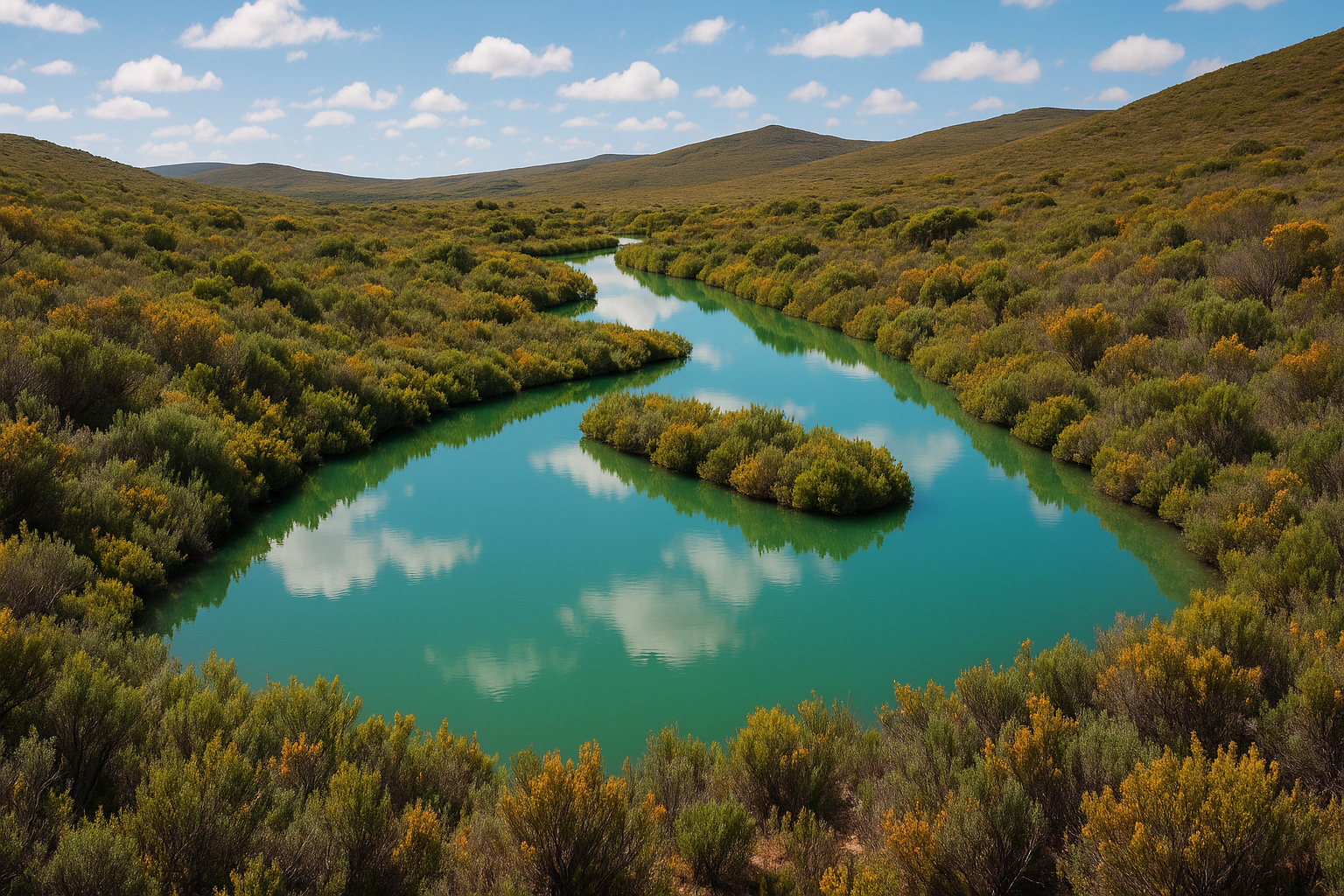
Discover how South Africa's smallest photosynthetic allies are transforming rural wastewater treatment, rewiring economics with algae.
Mossel Bay uses tiny pond-paint, or algae, to clean dirty water. This special mix of algae eats bad stuff in the water. Sunlight helps kill germs, and plants clear out other bits. The cleaned-up gunk is then sold as plant food, making money and keeping the water sparkling clean.
How does Mossel Bay's algal treatment system work?
Mossel Bay's system uses a nine-player squad of indigenous microalgae to treat municipal sewage. These algae consume nutrients, clean water, and produce biomass. Sunlight is the primary weapon, blinding coliforms, while a clay blanket and water hyacinths remove nitrates. The harvested biomass is then sold as fertilizer, offsetting operational costs.
Get Cape Town news in your inbox
Stay updated with the latest stories from the Mother City.
Section 1 – Where the Smell of Cash Replaces Diesel and Kelp
Rising behind the Mossel Bay container terminal, seven shallow basins glitter like dropped fragments of bottle glass. Walk closer and the breeze carries the aroma of steamed greens rather than bunker fuel. Each basin - only hip-deep - holds millions of single-cell algae that lap up municipal sewage and exhale water clean enough for baby-lettuce sprayers. No mechanical aerators churn, no imported ferric chloride is dripped; the only agitator is the Cape Doctor, the reliable south-easter that rattles fynbos and keeps the surface gently creased.
Spread across barely three rugby pitches, the array uses the daily electricity found in one fast-fryer at a roadside takeaway. In return it posts disinfection scores that make engineers blink: a 99.99 % plunge in faecal indicators, nitrates down 90 %, orthophosphates almost zeroed. Those figures were clocked by CSIR scientists during the first six months of operation without a gram of chlorine, ozone or ultrafiltration.
For the municipality the payoff is instant. Surplus nutrients that once cost money to police are now netted, dried and sold back to farmers as fertiliser. The project’s opex is covered by the product it grows, an accounting trick big-city utilities still regard as alchemy.
Section 2 – Stirring the Potjie: Blending Local Strains into a Self-Steering Cleansing Crew
The magic is not one alga but a nine-player squad of indigenous chlorophytes, cyanobacteria and a dash of diatoms for silica crunch. Dr Luyanda Ndlela, the CSIR bioprospector who brewed the mix, likens it to a communal stew: “Every valley leaves a different taste; let the microbes sort out the seasoning.” She collected starter cells from farm dams, irrigation furrows and even puddles outside cattle kraals, then conditioned them in 20-litre carboys until the broth glowed like pea soup.
From Stellenbosch the seed culture travels chilled to Mossel Bay, where it is tipped into the lead pond at one part in ten thousand. Within sixty days the外来者 becomes the neighbourhood, crowding out pathogens by guzzling the same phosphate and photons the germs need. Once entrenched, the consortium polices itself: if a rotifer bloom starts mowing on algae, diatoms shift to thicker silica armour, restoring balance without human meddling.
Because the community is locally harvested it already “knows” the regional climate, so no patented strain or royalty fee is required. That keeps the price of replication low and the political optics - community microbes serving community water - irresistible to councillors.
Section 3 – Starving Germs of Light and Turning Phosphorus into Pay-Dirt
Sunlight is the chief weapon. When cell density surpasses twenty million per millilitre, the top five centimetres of water morphs into an emerald blindfold. Light never reaches deeper zones, so coliforms slip into an energy coma and their antioxidant pumps fail under a drizzle of algal oxidants. The die-off obeys first-order kinetics with a rate constant of 0.38 per hour; 10 000 CFU/100 mL collapse to single digits in under a week.
Night-time brings the second act. Algae rest, releasing traces of nitrate; the final pond is therefore engineered to go breathless. A clay blanket seals the mud, water hyacinths float above, leaking oxygen only through their roots. Surrounding bacteria grab the chance, exhale nitrogen gas and strip six kilograms of nitrate every 24 hours - the emission equivalent of parking 120 diesel SUVs for a year.
Phosphate, meanwhile, is hoarded inside algal cells as polyphosphate granules. Every three weeks rotating drums - second-hand from the wine industry - press out 30 t of damp biomass. Sun-dried flakes contain 8 % P₂O₅, a grade that matches commercial fertiliser yet sells 40 % cheaper. Surrounding citrus and avocado orchards gladly pay the gate price, and the proceeds fund two full-time caretakers who double as night security.
Section 4 – Counting Coins, Kilojoules and the Carbon Future
Energy books reveal the sharpest contrast with conventional plants. A typical activated-sludge works guzzles 0.35 kWh per cubic metre, chiefly to blow air; the algae cascade demands 0.02 kWh, almost the kilojoule load of one chocolate sundae per day.
Downstream growers report sweeter numbers still. Onion producer Jacques Claassen halved nematicide doses after switching to algae-rinsed water, saving ZAR 1 800 per hectare. Neighbouring dairy farmer Neels van der Merwe blends the effluent with borehole water and watches somatic-cell counts drop, unlocking a 15-cent premium per litre of milk.
Looking ahead, CSIR is testing two extra cheque stubs: a 28 % crude-protein chicken feed that outperforms soya, and a biodegradable plastic precursor (PHB) that reaches 35 % of cell dry weight. If legislators adopt the proposed “eco-disinfection” class, municipalities could tap the same subsidies that prop up solar pumps, turning today’s pilot into tomorrow’s default for 140 overloaded small-town works.
[{"question": "
How does Mossel Bay's algal treatment system work?
", "answer": "Mossel Bay's system utilizes a unique 'squad' of nine indigenous microalgae species to treat municipal sewage. These algae consume nutrients (like nitrates and phosphates) from the wastewater. Sunlight plays a crucial role by sterilizing the water and killing coliform bacteria. A clay blanket and water hyacinths further assist in removing nitrates. The resultant algal biomass, rich in phosphorus, is then harvested, dried, and sold as fertilizer, effectively offsetting the operational costs of the treatment plant."}, {"question": "What are the key benefits of using this algal treatment system over conventional methods?
", "answer": "The algal treatment system offers several significant benefits. It achieves impressive disinfection rates, with a 99.99% reduction in faecal indicators and substantial decreases in nitrates (90%) and orthophosphates (almost zeroed), all without using chemicals like chlorine. Environmentally, it requires significantly less energy (0.02 kWh per cubic meter compared to 0.35 kWh for activated sludge plants) and effectively removes nitrogen, equivalent to taking 120 diesel SUVs off the road for a year. Economically, the harvested algal biomass, sold as fertilizer, generates revenue that covers the project's operational expenses, turning a waste product into a valuable resource."}, {"question": "How does the system achieve such high disinfection rates without chemicals?
", "answer": "The system primarily uses sunlight as its 'chief weapon' for disinfection. When the algal cell density reaches a certain level (over twenty million per millilitre), the top five centimeters of water become an 'emerald blindfold.' This dense algal layer blocks sunlight from reaching deeper zones, effectively starving coliform bacteria of the light they need to survive. This light deprivation puts the coliforms into an 'energy coma,' and their antioxidant pumps fail under the constant presence of algal oxidants, leading to a rapid die-off."}, {"question": "Where did the specific blend of algae for this system come from?
", "answer": "The unique 'nine-player squad' of indigenous chlorophytes, cyanobacteria, and diatoms was developed by CSIR bioprospector Dr. Luyanda Ndlela. She collected starter cells from various local sources, including farm dams, irrigation furrows, and even puddles near cattle kraals. These local strains were then conditioned and cultivated in a lab before being introduced into the Mossel Bay system. This local sourcing ensures the algae are well-adapted to the regional climate and eliminates the need for patented strains or royalty fees, keeping replication costs low."}, {"question": "What happens to the harvested algal biomass?
", "answer": "Every three weeks, rotating drums, repurposed from the wine industry, press out 30 tons of damp algal biomass. This biomass is then sun-dried into flakes that contain 8% P₂O₅, making it a high-grade, natural fertilizer. This product, which sells for 40% cheaper than commercial alternatives, is eagerly purchased by surrounding citrus and avocado orchards. The revenue generated from these sales directly funds the operational costs of the treatment plant, including the salaries of two full-time caretakers."}, {"question": "Are there any future applications or developments planned for this technology?
", "answer": "Yes, the CSIR is actively exploring additional valuable products that can be derived from the algal biomass. Current research is testing the feasibility of producing a 28% crude-protein chicken feed, which has shown to outperform soya, and a biodegradable plastic precursor (PHB) that can constitute up to 35% of the cell's dry weight. Furthermore, there's anticipation that if legislators adopt a proposed 'eco-disinfection' classification, municipalities could access subsidies similar to those for solar pumps, potentially making this sustainable algal treatment system a default solution for numerous overloaded small-town waterworks across the region."}]
Aiden Abrahams is a Cape Town-based journalist who chronicles the city’s shifting political landscape for the Weekend Argus and Daily Maverick. Whether tracking parliamentary debates or tracing the legacy of District Six through his family’s own displacement, he roots every story in the voices that braid the Peninsula’s many cultures. Off deadline you’ll find him pacing the Sea Point promenade, debating Kaapse klopse rhythms with anyone who’ll listen.
View all articles →