
Supermarkets warned as fuel prices threaten SA food costs
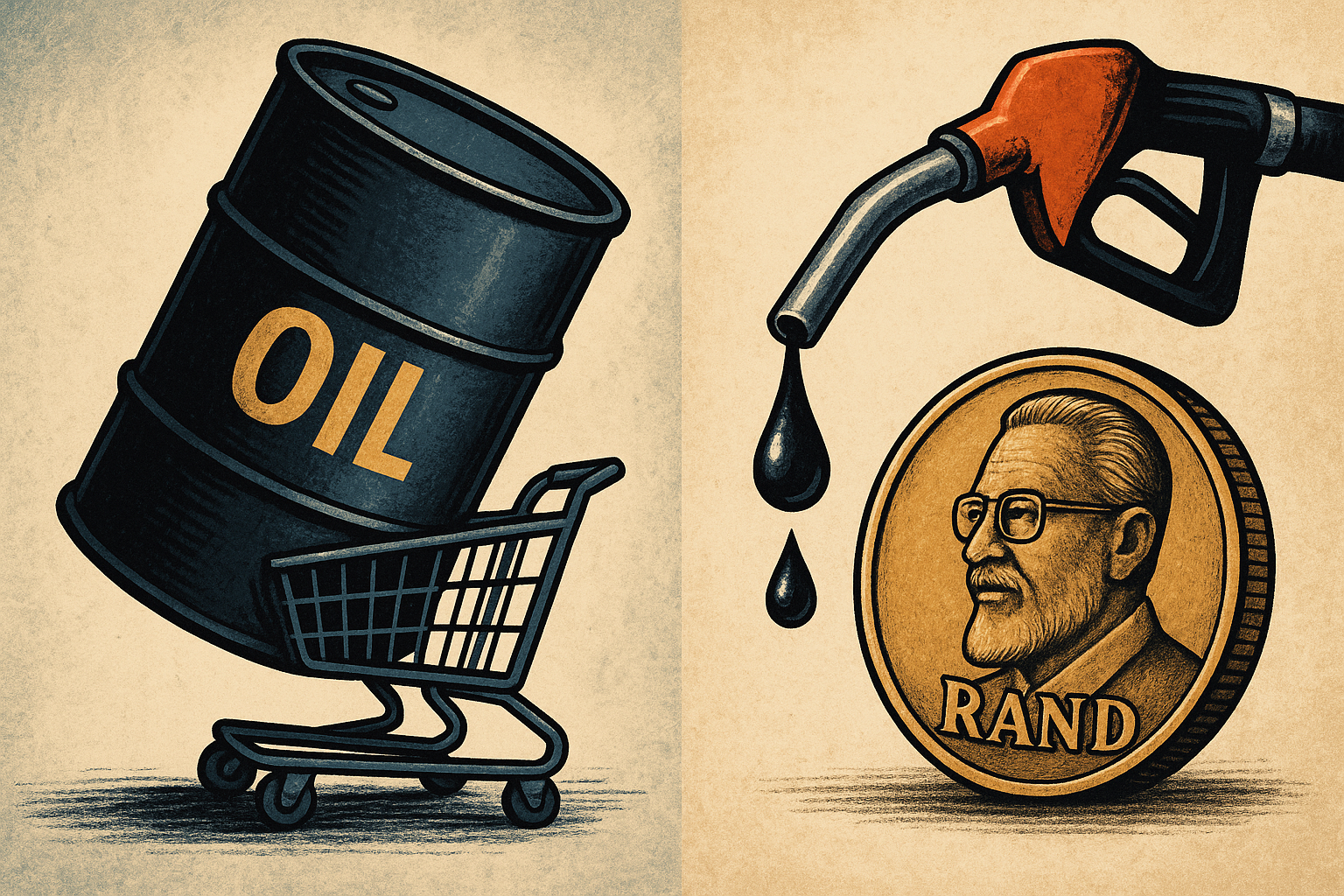
Rising oil prices in South Africa hit shoppers hard, impacting everything from food to transport. Expect higher prices at the till.
Rising oil prices, especially crude hitting $100, are making everything more expensive for South African shoppers. From the food on your plate to the clothes you wear, the cost of moving goods around is soaring due to pricier diesel. This means higher prices in every store aisle, forcing families and businesses to find new ways to cope with the climbing costs.
How does rising oil prices impact South African consumers?
When oil prices rise, South African consumers face increased costs for groceries, transportation, and electricity. This is due to higher diesel prices affecting farming, freight, and manufacturing, leading to inflated food prices, and increased operational costs for retailers and cold storage, which are passed on to the consumer.
Get Cape Town news in your inbox
Stay updated with the latest stories from the Mother City.
Aisle One: The Invisible Pipeline Behind Your Groceries
Walk past the bright lights of any South African supermarket and you are, in effect, strolling through a floating oil field. The tractor diesel that broke the soil for your butternut, the refrigerated truck that kept the lamb roast chilled, the fertiliser granules that coaxed the maize taller and even the shrink-wrap on a loaf of Sasko all begin life as molecules of crude somewhere east of Suez. When Brent finally leapt above the mythical US $100 line in late September, the shockwave did not pause for customs paperwork; it sprinted from Durban’s harbour to a Spar shelf in Soweto faster than a cashier can scan a barcode.
South Africa has no onshore gushers to soften the blow. Every litre of petrol, every drop of tractor diesel, every cubic metre of feedstock for synthetic fertiliser arrives on a ship. The state’s emergency cache near Saldanha Bay - ten million barrels tucked into salt caves - would run dry in 18 days if the pumps stood still. So when a drone punches a hole in a Red Sea tanker or a missile arcs over the Strait of Hormuz, the rand price of fuel is already sprinting before the next supertanker rounds the Cape of Good Hope. Coastal 95-octane has rallied 127 cents since August; Central Energy Fund maths whispers another one-forty to one-sixty is on the way, plus a 25-cent slate levy that refuses to retire. Inland drivers may wave goodbye to sub-R26.50 petrol before the first Christmas carol plays.
Yet petrol is merely the headline act. The real plot unfolds in 1.2 billion litres of diesel guzzled each year across 270 000 farms. A single rand added to the pump price inflates on-farm budgets by R1.2 billion; by the time that extra rand has hauled 14 million tons of maize, two million tons of wheat and a million tons of cane to mills and elevators, it has snowballed into an extra R95 per ton on the Johannesburg Futures Exchange. Wheat - two-thirds of which is imported from the Black Sea - lands already bloated by a stronger dollar and pricier freight, then faces a 600-kilometre diesel hop to Pretoria’s mills. The miller adds a margin, the baker another, and a township loaf that greeted shoppers at R15.99 in January now demands R19.49.
Aisle Two: Imports, Onions and the Long Road to Meat
Imported staples feel the burn first. Thailand’s benchmark 5% broken white rice has jumped from US $520 per ton in June to US $640 after India slammed export gates and the baht firmed. Once freight, insurance and duty are tallied, the Durban landed price has swollen R2.30 per kilo since August. Shelf stickers still read R27 for a 2 kg Mahatma bag only because wholesalers front-loaded containers in July; when that buffer evaporates, expect labels north of R32. Sugar enjoys a moment of peace - KwaZulu-Natal’s 19% bigger crop and an import-parity support structure keep prices docile - but the reprieve is seasonal. Next year’s plantings must still pay today’s diesel price, and world raw-sugar futures have already reclaimed 23 cents per pound on El Niño fears.
Fresh produce tells a quicker, crueller story. Potatoes, cabbage and butternut ride diesel-guzzling rigs from farm to city; within weeks of an oil spike, the Johannesburg market’s 10 kg potato average has vaulted from R42 to R58, smashing seasonal trends. An 18-ton onion truck that left the Northern Cape in July now burns R2 700 more on the return trip to Durban. Growers who locked in fixed-price contracts with national chains are frantically invoking force-majeure clauses, testing legal language about “input-cost shocks” in the Grain Information Service’s arbitration rooms.
Meat marches to a slower drum but delivers the heaviest punch. Broiler rations blend dollar-priced soya and maize; although the local yellow-maize spot is down 6% in rand terms since July, the currency’s 9% slide against the greenback wipes out the gift. Day-old-chick placements have slipped 3% year-on-year, an early warning that farmers are trimming expansion plans. Red meat’s lag is even longer: weaner calves that trotted out of Limpopo feedlots in September will only reach abattoirs in March, by which time diesel could be another rand dearer. Industry insiders whisper that lamb may kiss R130 per kilo retail by mid-2025, up from today’s R98.
Aisle Three: Retailers, Wires and the Trust Deficit
Big-box chains tread a knife-edge between profit and public wrath. Shoprite, Pick n Pay, Spar and Woolworths have resurrected “price-freeze” banners on select private-label baskets, hoping shoppers notice the kindness while procurement teams quietly insert “fuel-adjustment” clauses that nudge prices 0.8% for every ten-cent rise in the wholesale diesel index. Independents lack such legal artillery; instead, they crowd-source truck space on weekly WhatsApp groups, chasing 7–9% savings through back-loading. One Free State grocer has gone further, running a “tripod” supply chain: staples hauled from Durban, fresh goods sourced within 150 km, and air-freight luxuries ordered only when surcharges dip below R22 per kilo.
Transparency, or the lack of it, can detonate loyalty faster than any sticker shock. When cooking-oil prices exploded 34% in 2022, fewer than one in five supermarkets posted explanatory notes; community radio filled the void with accusations of profiteering, sparking boycotts that pummelled small franchises hardest. The Pietermaritzburg Economic Justice & Dignity Group now urges retailers to print QR codes on shelf talkers that link to date-stamped invoices - proof of when the rice landed and at which exchange rate. Shoprite is piloting a “supply-chain visualiser” in twenty Checkers Hypers, betting that shoppers will scan before they scream.
Electricity piles on a second layer of pain. Eskom’s 8.7% tariff hike that kicked in July pushes Gauteng’s average municipal rate to R1.84 per kilowatt-hour. For a household burning 350 kWh a month, that alone devours R103.50 of the R352 monthly gain brought by the higher minimum wage. Cold-chain operators budget an extra R1.2 million per large distribution centre every year to keep milk, yoghurt and frozen chicken at the right temperature. When municipal “load curtailment” forces abattoirs to fire up diesel generators for six hours daily, an extra R1.60 is etched onto every broiler that lands on shelf.
Aisle Four: Policy, Innovation and the R30/Litre Shadow
Treasury’s cupboards are bare of quick fixes. A repeat of the 2022 “fuel-levy holiday” is off the table; the R6.5 billion monthly revenue hole would yank the deficit wider just as sovereign-risk spreads widen. Ministers have instead exhumed a 2018 bio-ethanol plan that could trim 8–10 cents per litre off petrol while mopping up surplus North-West maize, but the required inland distilleries carry a R14 billion price tag and will not pour a drop before 2026. Expanding the Maize Trust’s strategic reserve from four to six million tons sounds heroic until one remembers that the old Suidwes silos were sold off; hauling extra grain to coast during a drought merely swaps food inflation for freight inflation.
Innovators are therefore ghosting the state. A Stellenbosch agritech firm is fitting solar-powered cold rooms in the Witzenberg Valley, slicing 1 800 litres of diesel per month per 20-ton unit and saving R42 000 at today’s wholesale price. Hex River table-grape growers have ordered hydrogen-ready fuel-cell forklifts; at R65 per kilo the hydrogen is pricey, but zero downtime and immunity from load-shedding carve 2% off reefer-container handling fees. Scale that to Durban’s 700-strong fruit terminal and banana prices can stay flat even when oil storms.
Households, meanwhile, are dusting off 2008 and 2022 playbooks. Bulk-buy clubs in Soweto have doubled membership since August; neighbours pool cash to purchase 25 kg maize sacks straight from rural mills, dodging brand premiums. Cooking oil is decanted into 500 ml Coke bottles and sold in spaza shops for R15, a 12% saving over branded 750 ml packs. Butcher “off-cuts” such as trotters and heads are back in vogue because their prices lag the diesel curve. Google Trends records a 70% spike in “kombucha recipe” queries, a hint that middle-class families are trying to kick the aluminium-bound soft-drink habit.
Global tea leaves warn that the drama has weeks, maybe months, to run. OPEC+ has extended its 1.7 million barrel-per-day cut through 2025, while US shale executives - scarred by investor backlash - have added a mere 80 000 barrels since June. The IEA sees a 1.2 million barrel-per-day supply deficit for the first quarter of 2025 even if China goes no further than flat demand. Should the rand lose another 3–4%, South Africa will stare at R30 per litre, a red line that in 2021 lit lanes of burning trucks and emptied malls. Retailers have already reopened the risk files labelled “July 2021 Unrest”: satellite stores, shadow warehouses and prepaid inventory now live on board dashboards under the ominous heading “Oil-Shock Scenario 3.”
[{"question": "
How do rising oil prices affect the cost of groceries in South Africa?
", "answer": "Rising oil prices, particularly crude hitting $100, significantly impact grocery costs. This is because every stage of food production and distribution, from farming (tractor diesel, fertilizers) to transportation (refrigerated trucks), relies heavily on diesel, which becomes more expensive. For example, a single rand increase in pump price adds R1.2 billion to on-farm budgets, and the cost is passed on to consumers through higher prices for maize, wheat, and other staples. Imported goods like rice are also affected by higher freight costs and currency fluctuations.
"}, {"question": "Why is South Africa particularly vulnerable to global oil price increases?
", "answer": "South Africa is highly vulnerable because it has no onshore oil reserves and must import every drop of fuel. This means that global events affecting oil supply or shipping routes, such as drone attacks on tankers or geopolitical tensions in the Middle East, immediately impact the rand price of fuel. The country's strategic fuel reserve near Saldanha Bay is also limited, making it susceptible to supply disruptions.
"}, {"question": "What is the 'invisible pipeline' behind South African groceries?
", "answer": "The 'invisible pipeline' refers to the extensive and often unseen reliance on crude oil derivatives throughout the entire food supply chain. This includes the diesel for tractors that prepare the soil, the fuel for refrigerated trucks transporting produce and meat, the feedstock for synthetic fertilizers, and even the packaging materials like shrink-wrap. When crude oil prices rise, these interconnected costs increase, making groceries more expensive for consumers.
"}, {"question": "How are retailers and businesses coping with the increased fuel costs?
кожуховская.", "answer": "Retailers are adopting various strategies. Large chains like Shoprite and Pick n Pay are implementing 'price-freeze' banners on select private-label items while quietly introducing 'fuel-adjustment' clauses that increase prices by a small percentage for every rise in the wholesale diesel index. Independent grocers are exploring options like crowd-sourcing truck space for back-loading to achieve savings. Some are even diversifying their supply chains, sourcing staples from distant hubs, fresh goods locally, and air-freight luxuries only when surcharges are low. However, these costs are ultimately passed on to consumers.
"}, {"question": "Beyond fuel, what other costs contribute to rising prices for consumers?
", "answer": "Electricity costs are another significant factor. Eskom's tariff hikes directly impact household expenses and increase operational costs for businesses, especially those requiring cold storage like large distribution centres for perishable goods. Additionally, municipal 'load curtailment' often forces businesses like abattoirs to rely on expensive diesel generators, further adding to the cost of products like chicken.
"}, {"question": "What are some of the long-term implications and potential solutions being explored?
", "answer": "The long-term implications include potential food inflation, reduced purchasing power for consumers, and increased operational challenges for businesses. While immediate government interventions like fuel-levy holidays are unlikely due to fiscal constraints, plans for bio-ethanol production are being discussed, though they are years away. Innovators are exploring solar-powered cold rooms and hydrogen-ready fuel-cell forklifts to reduce reliance on diesel. Consumers are also adapting by joining bulk-buy clubs, seeking cheaper alternatives, and even growing their own food or making homemade products to cut costs.
"}]
A Russian-Spanish journalist and Cape Town native, channels his lifelong passion for South Africa into captivating stories for his local blog. With a diverse background and 50 years of rich experiences, Serjio's unique voice resonates with readers seeking to explore Cape Town's vibrant culture. His love for the city shines through in every piece, making Serjio the go-to source for the latest in South African adventures.
View all articles →