
Table mountain cableway recognised at WTM Africa for responsible tourism excellence
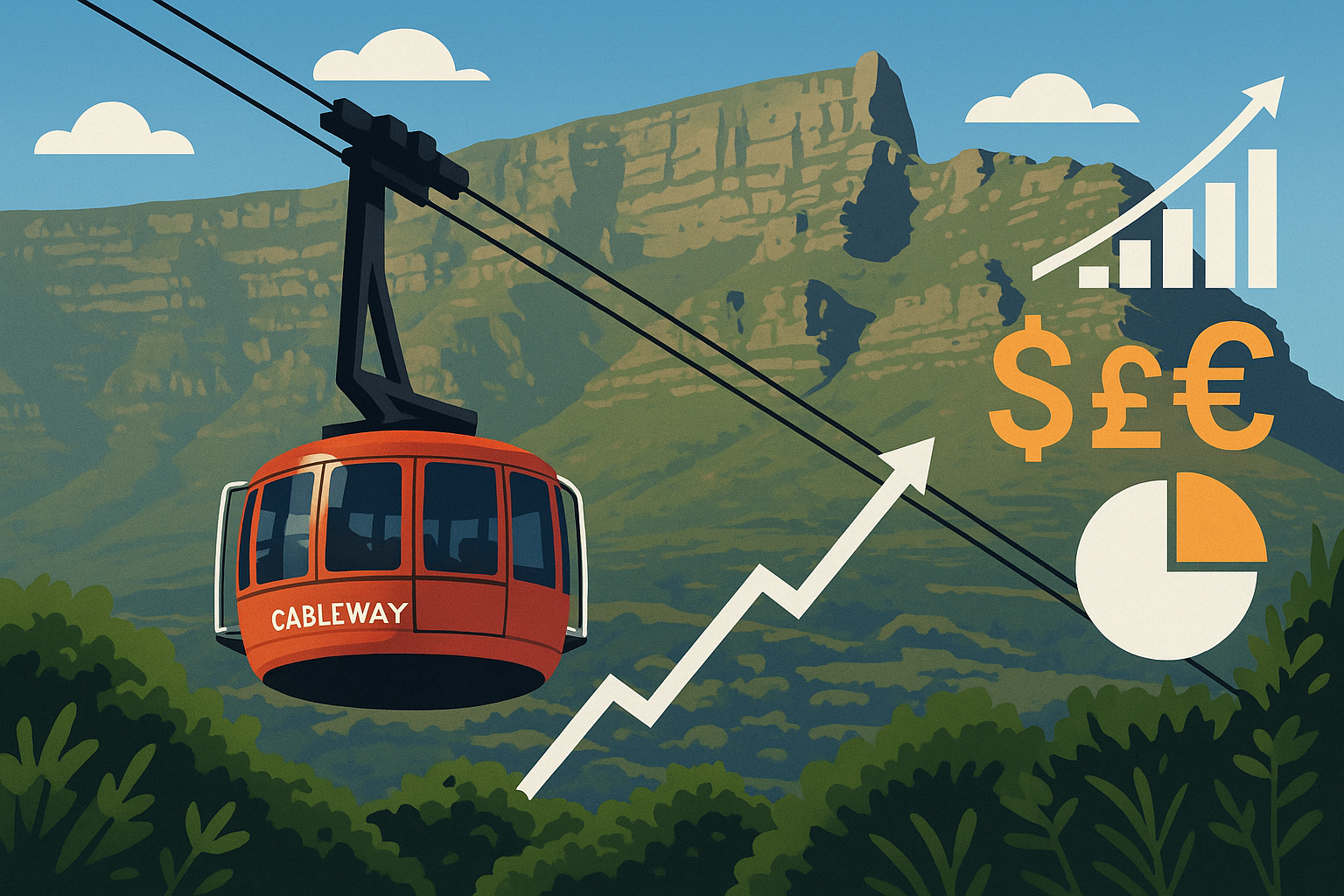
How Table Mountain's Cableway became an economic powerhouse, deeply integrating with local communities and re-engineering Cape Town's economy.
Table Mountain's Cableway isn't just a fun ride; it's a super powerful money-maker for Cape Town! It changed from buying only a little bit locally to buying almost everything from nearby businesses. This has created tons of jobs and helped small companies grow super big. They even use clever tricks like collecting fog for water and powering the cable cars with their own movement, which is super smart for the environment and saves money too. It's truly a silent hero, making the city richer and helping many people get ahead.
How does the Table Mountain Cableway benefit Cape Town's economy?
The Table Mountain Aerial Cableway (TMACC) significantly boosts Cape Town's economy by prioritizing local procurement, supporting small businesses, creating jobs, and implementing sustainable practices. It transformed from 29% to 89% local suppliers, leading to a substantial increase in vendor turnover and creating employment opportunities for many, acting as a key economic driver for the region.
Get Cape Town news in your inbox
Stay updated with the latest stories from the Mother City.
The Ride That Keeps on Giving
In 1929 a steel rope climbed 1,2 km to spare well-heeled hikers a three-hour slog up Table Mountain. Ninety-four years on, the same cabins complete the trip in under two minutes, yet every rotation now pumps roughly R 2,3 million through Cape Town’s most cash-strapped neighbourhoods. City economists traced every rand: wages, laundry contracts, spaza restocking, child-minding fees - proof impressive enough for the 2026 World Travel Market Africa jury to hand the Table Mountain Aerial Cableway Company (TMACC) top honours in the Local Economic Benefit category.
Judges weren’t swayed by postcard sunsets; they followed the paper trail - purchase orders, mentorship logs, waste-transfer dockets - that shows how a tourist icon can masquerade as a mini development bank. The numbers look abstract until you meet the people they represent: the seamstress who started with one domestic sewing machine and today ships 18 000 souvenir buffs a week, or the Khayelitsha mill that now machines cable parts once flown in from Rotterdam. A 90-second hop has become a durable flywheel for jobs, skills and township turnover.
From 29 % Local to 89 %: Rewriting the Procurement Playbook
Six years ago TMACC’s finance team colour-coded a spreadsheet: red for Gauteng suppliers, blue for China, green for the Western Cape. Green filled barely 29 %. Today the sheet is an almost unbroken emerald band. Engineers rewrote specs so a 16 mm galvanised lifting pin could be forged in Stikland instead of Rotterdam. Insurers were persuaded that a Khayelitsha plastics start-up could hold a 0,2 mm tolerance demanded by Swiss aerial standards.
That colour swap translates into 152 formal vendors whose combined turnover leapt from R 87 million in 2018 to R 410 million last year. Forty-three were informal micro-sellers four years ago; each is now VAT-registered and employs on average eleven people. The stand-out is 29-year-old Nolwazi Booi, who once stitched branded neck-gaiters in her lounge and now runs a 4 500 m² Maitland factory supplying every visitor with a locally made memento.
Retail shelves inside the upper station tell the same story. Ninety-seven per cent of the 1 200 product lines did not exist before 2018. Ceramicist Zizipho Ndamane won an open call to craft a “fynbos penguin” from Cape clay; her studio now fires 600 pieces a month and pays university fees for her sister’s engineering degree. Jewellery cast from alien black-wattle wood carries a QR code that pinpoints the exact river patch where the invader was removed, turning each sale into a tiny rewilding contract.
Waste, Water, Watts: Engineering the Closed Loop
Table Mountain’s cloud band lingers around the upper station for roughly 2 900 hours a year. Thirty-five fog-collecting nets, each 12 m tall, harvest 18 000 litres of potable water daily - enough to flush loos, rinse floors and keep the cable-car windows gleaming. A hidden 100 000 litre bladder stores the water, UV-treated and gravity-fed, shrinking municipal demand in a drought-scarred city.
Every descending car carries 65 passengers and generates 550 kWh of regenerative power - four nights of free LED floodlighting for the lower plaza. A repurposed Johannesburg bus-battery smooths peaks and has already slashed diesel-generator runtime by 92 %, saving R 1,1 million a year. Eskom’s creaky grid is now the backup; the mountain supplies the baseload.
Food waste, once landfill fodder, travels in olive-green drums to 14 township piggeries. Swine convert 38 % of the calories; leftovers are pyrolysed into biochar sold to Constantia wine growers battling phylloxera. Even the grey-water used to wash restaurant glasses is filtered through that same biochar, closing an elegant urban-ecological circle.
Classrooms in the Clouds and an Urban Cableway Dream
Since 2001 more than 360 000 learners from no-fee schools have been bussed up the slope for a free STEM outing. Retired teachers and SANBI botanists co-write annual modules: kids seal a chip packet at base station, watch it inflate 1 200 m higher, then calculate how many household electricity-months 1 000 descent trips could supply (answer: 28). Pre- and post-tests show a 34 % leap in atmospheric-science comprehension, double the provincial average for outdoor programmes.
Night-time full-moon dinners rotate among township chefs who receive a crash course in high-altitude gastronomy. One sitting of 180 covers nets a chef cooperative R 1,2 million a year and turns the mountain into a lit stage in a city notorious for dark public spaces. Infrared cameras beam straight to the nearest police kiosk; incidents have stayed flat even as foot traffic soared.
City planners are now asking the heretical question: if a tourism cableway can redistribute value so efficiently, could a 4 km urban route linking Langa to the Waterfront do the same for commuters? A pre-feasibility study, funded by TMACC dividends, projects 5 000 passengers an hour, 1,2 million fewer minibus-taxi kilometres and a R 450 million injection into Gugulethu’s economy within five years. The proposal sits in the mayor’s inbox, evidence that a 1929 piece of German engineering may yet inspire Africa’s first commuter cable-car built not for sight-seeing but for economic justice.
How does the Table Mountain Cableway benefit Cape Town's economy?
The Table Mountain Aerial Cableway (TMACC) significantly boosts Cape Town's economy by prioritizing local procurement, supporting small businesses, creating jobs, and implementing sustainable practices. It transformed from 29% to 89% local suppliers, leading to a substantial increase in vendor turnover and creating employment opportunities for many, acting as a key economic driver for the region. The cableway pumps approximately R 2.3 million through Cape Town's neighborhoods with every rotation, encompassing wages, laundry contracts, spaza restocking, and child-minding fees.
How has the Cableway's procurement strategy changed over time?
Six years ago, only 29% of TMACC's suppliers were local (Western Cape). Through a conscious effort to rewrite procurement specifications, engineers enabled local production of parts previously imported, such as 16mm galvanized lifting pins now forged in Stikland instead of Rotterdam. This strategic shift has resulted in an almost unbroken "emerald band" of local suppliers, increasing the local procurement percentage to 89%. This change has transformed 152 formal vendors, with their combined turnover leaping from R 87 million in 2018 to R 410 million last year.
What sustainable practices does the Table Mountain Cableway employ?
The TMACC has implemented several innovative sustainable practices. They harvest 18,000 liters of potable water daily from fog using 35 nets, which is used for flushing toilets, cleaning, and keeping cable car windows gleaming, thereby reducing municipal water demand. Each descending cable car generates 550 kWh of regenerative power, used to provide four nights of free LED floodlighting for the lower plaza. A repurposed bus battery smooths power peaks, cutting diesel-generator runtime by 92% and saving R 1.1 million annually. Additionally, food waste is sent to township piggeries and then pyrolyzed into biochar for Constantia wine growers, and greywater is filtered through this biochar, closing an elegant urban-ecological loop.
How does the Cableway support local entrepreneurship and job creation?
The Cableway acts as a mini development bank by nurturing local businesses. Forty-three of their current formal vendors were informal micro-sellers just four years ago; these businesses are now VAT-registered and employ an average of eleven people each. A notable example is Nolwazi Booi, who started by stitching branded neck-gaiters in her lounge and now runs a 4,500 m² factory employing many and supplying souvenirs. Retail shelves at the upper station also showcase local talent, with 97% of the 1,200 product lines being new since 2018, featuring items like "fynbos penguin" ceramics and jewelry made from alien black-wattle wood, supporting local artists and empowering communities.
What educational and social initiatives does the Cableway undertake?
Since 2001, over 360,000 learners from no-fee schools have received free STEM (Science, Technology, Engineering, and Mathematics) outings, with modules co-written by retired teachers and SANBI botanists. These programs have shown a 34% leap in atmospheric-science comprehension. The Cableway also hosts night-time full-moon dinners, rotating among township chefs who receive high-altitude gastronomy training, generating R 1.2 million annually for chef cooperatives and transforming the mountain into a vibrant public space.
Is there a future vision for urban cableways in Cape Town inspired by the Table Mountain Cableway?
Inspired by the Table Mountain Cableway's efficiency in redistributing value, city planners are exploring the feasibility of a 4 km urban cableway linking Langa to the Waterfront for commuters. A pre-feasibility study, funded by TMACC dividends, projects this route could transport 5,000 passengers an hour, reduce minibus-taxi kilometers by 1.2 million, and inject R 450 million into Gugulethu's economy within five years. This initiative aims to utilize the cableway model not just for tourism but for economic justice and improved urban mobility.

Zola Naidoo is a Cape Town journalist who chronicles the city’s shifting politics and the lived realities behind the headlines. A weekend trail-runner on Table Mountain’s lower contour paths, she still swops stories in her grandmother’s District Six kitchen every Sunday, grounding her reporting in the cadences of the Cape.
View all articles →