
TAIL DOCKING AND BREED IDENTITY
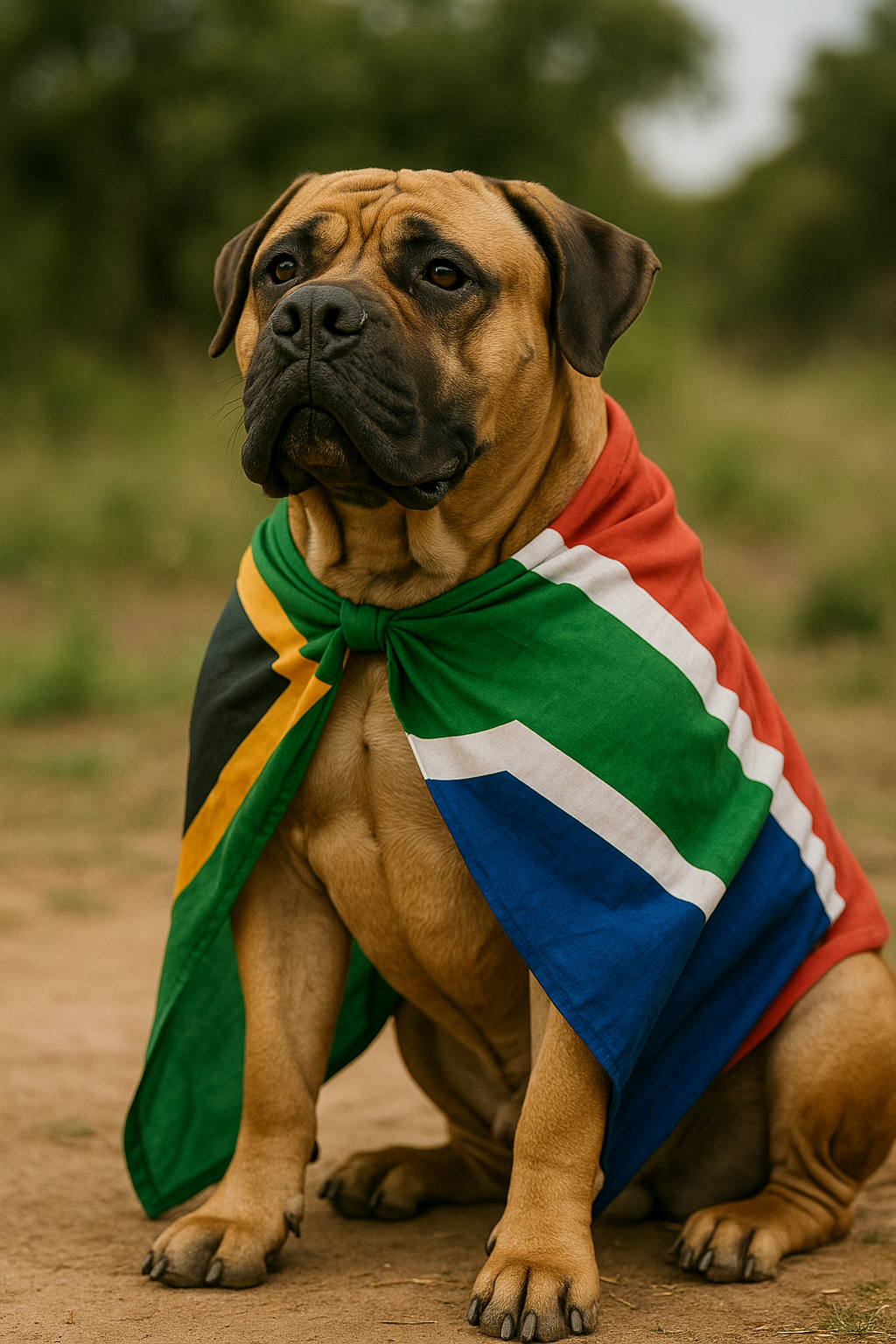
South Africa debates Boerboel tail docking: culture vs. cruelty. A legal battle unfolds with science, tradition, and ethics clashing.
In South Africa, there's a big fight about Boerboel dogs having their tails cut short. Some people say it's an old tradition that helps the dogs do their farm work. They also say it helps them sell the dogs overseas. But others say it hurts the dogs and isn't fair to them. The law courts are now looking at all the reasons to decide what's best for these special dogs.
What is the debate surrounding Boerboel tail docking in South Africa?
The debate centers on whether Boerboel tail docking should be re-licensed as a cultural heritage practice or banned due to animal welfare concerns. Breeders argue it's a centuries-old tradition essential for the breed's working function and marketability, while opponents cite pain, EU laws, and ethical issues regarding non-therapeutic mutilation.
Get Cape Town news in your inbox
Stay updated with the latest stories from the Mother City.
Stone Steps, Velvet Ears: How a Courthouse Became a Canine Culture War Zone
The sandstone palace of justice in Bloemfontein has witnessed every stride of South Africa’s march through history - anti-pass demonstrators, drought-stricken farmers begging for fodder subsidies, and, on the first Tuesday of August, rows of khaki-clad breeders clutching glossy kennel pamphlets like hymn books. Inside, counsel for the South African Boerboel Breeders’ Association (SABBA) asked the full bench to recognise the breed’s tail as living heritage: not a flap of flesh to be snipped, but a cultural emblem whose removal should be re-licensed under state supervision. The case caption - “SABBA v. Minister of Agriculture, Land Reform & Rural Development & Others” - hides a 1 800-page dossier stuffed with infrared thermographs, veld diaries that begin the week Queen Victoria died, colour-spread genetic charts and sworn statements from Namibian stockmen who swear a lion hesitates when it cannot grab a dog’s tail like a handle.
Satellite vans ringed the lawn, their dishes tilted toward the dome. A reporter live-streamed a breeder snapping shut a plastic crate on two-day-old apricot pups whose tails were still intact, bellies drum-tight with milk. In that pixelated second the moral compass spun: trim now or gamble with later injury, African self-determination or the universal welfare grammar written in Brussels.
The Boerboel itself is barely four centuries old, yet its chromosomes carry four continents. Dutch East India mastiffs met British bull-baiters, then absorbed Khoi ridgeback hunters and the sharp-eared curs that guarded Sotho shafts. No stud-book policed the mix; survival in the kraal and against leopards wrote the standard. When a tail split in thorn-bush combat, it came off with sheep shears and Stockholm tar. Habit calcified into custom, then into show-ring chic after commercial kennels mushroomed in the 1980s.
Price Tags, Pain Scores and the EU Export Curtain
A registered pup fetches R45 000; the same bundle with an undocked tail is advertised on Gumtree as “price slightly negotiable.” That discount, breeders insist, is the invisible tariff imposed by global pet portals that tag South African exports “non-standard” and block them. The state counters with the same EU law that has forbidden docking since 1998, noting Britain now imports more naturally short-tailed French bulldogs than ever - proof, they say, that markets evolve faster than genomes.
Veterinary science keeps rewriting its own verdict. A 2021 University of Pretoria pilot strapped infrared cameras to measure cortisol surrogates in 3–5-day-old docked pups; levels spiked for four hours, but so did those of control pups when the whole litter was lifted out for weighing. Pain, the authors shrugged, is inseparable from husbandry; the ethical line is pragmatic, not absolute. A 2023 Utrecht meta-analysis pooled 22 papers and found neuromas in 6% of docked tails versus 0.2% in undocked trauma cases - enough, Dutch regulators said, to keep the ban. Both studies glare at each other from opposite counsel’s tables, each accused of category mistakes: farm versus sofa, African sun versus temperate lounge, landrace versus breed.
South African law lies stacked like Karoo strata. The 1962 Animals Protection Act still speaks of “maiming.” A draft Animal Welfare Bill, stranded in committee since 2019, would entrench the Five Freedoms and demand “demonstrable utility.” The Veterinary and Para-Veterinary Professions Act lets the South African Veterinary Council discipline vets who perform “non-therapeutic mutilation,” but elastrator bands in lay hands sit beyond its reach. Breeders want docking back under veterinary licence so amateurs cannot undercut professionals on price.
Algorithms, Arms Races and the Jackal Ledger
Lesser known is the Animal Improvement Act of 1998, which lists “Boerboel” as an officially recognised breed eligible for genomic selection toward “productive efficiency.” SABNA already crunches Estimated Breeding Values for hip score and bite force; tail length is not a trait because humans fixed it at zero. End docking, breeders warn, and the algorithm stalls. The state retorts that landraces are plastic - if tails truly handicap veld dogs, natural selection will shorten them, as it did for bobtail Corgi and Jack Russell lines abroad.
Ethologists have weighed in with 42 000 hours of night-vision footage. Docked guards rely 18% more on ear set and 32% more on body shift to signal, yet trigger 14% more approach-avoidance loops among cattle. Some herd-owners love the ambiguity; others demand “honest signalling” and now request undocked litters. The court sat through 17 hours of curated cow-dog choreography.
Public opinion fractures in unexpected places. A 2022 Rapport poll found 61% suburban opposition to docking, yet 68% support among feature-phone readers - mainly rural. In townships the dog doubles as night security: Soweto likes the intimidating silhouette; Khayelitsha dreads police confiscating an undocked Boerboel as a pit-bull-type. The South African Jewish Board of Deputies filed an amicus brief likening docking to circumcision - both covenantal, both medicalised to survive Victorian scorn. The NSPCA replied that dogs cannot consent to covenants, prompting a justice to label the exchange “theologically interesting but zoologically irrelevant.”
While advocates spar, the Kalahari keeps score. Farmer Andries Saayman logs every jackal encounter on an app built in Cape Town. After 28 months, 14 undocked dogs suffered 11 tail lacerations; docked dogs recorded zero, yet one bled out from a flank bite Saayman thinks a tail might have deflected. He calls the data a draw: jackals evolve tactics faster than statutes.
Between the Gavel and the Wag: What Happens When the Court Goes Quiet
The court adjourned sine die, dispatching the parties to mediation under a retired Constitutional Court judge who weekends with Nguni cattle. Site visits were ordered: a commercial kennel, a working farm, an SPCA shelter overflowing with surrendered Boerboels whose only shared trait, volunteers whisper, is an inability to wag what they no longer own. Until the gavel sounds again, South Africa’s national dog balances on a blade: guardian and pet, tradition and taboo, its future measured not in vertebrae but in how far a society can stretch its definition of humane.
[{"question": "
What is the core debate surrounding Boerboel tail docking in South Africa?
", "answer": "The debate revolves around whether Boerboel tail docking should be re-licensed as a cultural heritage practice or permanently banned due to animal welfare concerns. Proponents, primarily breeders, argue it's a centuries-old tradition vital for the dogs' working capabilities on farms and their marketability, especially for international export. Opponents, including animal welfare organizations, highlight the pain inflicted, ethical issues of non-therapeutic mutilation, and alignment with international (e.g., EU) laws that ban such practices."},{"question": "
Why do breeders advocate for tail docking?
", "answer": "Breeders argue that tail docking is a long-standing tradition for Boerboels, essential for their role as working farm dogs where an undocked tail could be injured in rough terrain or during encounters with wild animals. They also claim it's crucial for the breed's marketability, as many international markets and dog show standards historically preferred or even required docked tails, leading to 'non-standard' classification and reduced prices for undocked pups."},{"question": "
What are the arguments against tail docking?
", "answer": "Opponents of tail docking emphasize the pain and suffering inflicted on puppies during the procedure, which is often performed without anesthesia by non-veterinarians. They also highlight ethical concerns regarding non-therapeutic mutilation of animals and point to international veterinary consensus and laws (like those in the EU) that have banned docking due to animal welfare reasons. Studies on neuromas in docked tails also suggest long-term pain or discomfort."},{"question": "
How do international regulations and markets influence the debate?
", "answer": "International regulations, particularly EU laws enacted in 1998, have a significant impact. These laws forbid tail docking and lead to South African-exported Boerboels with docked tails being labeled 'non-standard,' affecting their market value and export opportunities. Breeders see this as an 'invisible tariff,' while the state argues that markets can adapt, as seen with breeds like French Bulldogs, which are now predominantly undocked."},{"question": "
What scientific evidence is being presented in the court case?
", "answer": "Both sides are presenting scientific evidence. A 2021 University of Pretoria study measured cortisol levels in docked pups, noting a spike for four hours, but also observed similar spikes in control pups during handling, suggesting pain is inherent in husbandry. Conversely, a 2023 Utrecht meta-analysis found neuromas in 6% of docked tails versus 0.2% in undocked trauma cases, leading Dutch regulators to maintain their ban. These studies are used to argue different perspectives on pain, long-term effects, and the pragmatic versus absolute ethical line."},{"question": "
What is the current legal status of tail docking in South Africa?
", "answer": "South African law is complex on this issue. The 1962 Animals Protection Act references 'maiming,' which could apply to docking. The Veterinary and Para-Veterinary Professions Act allows the South African Veterinary Council to discipline vets for 'non-therapeutic mutilation,' effectively banning vets from performing the procedure. However, the use of elastrator bands by laypersons is outside the Council's direct reach. Breeders are seeking re-licensing under veterinary supervision to regulate the practice and prevent amateur procedures. The Animal Improvement Act of 1998, which lists Boerboels as an officially recognized breed, currently doesn't consider tail length, as it was historically fixed by human intervention."}]
Lerato Mokena is a Cape Town-based journalist who covers the city’s vibrant arts and culture scene with a focus on emerging voices from Khayelitsha to the Bo-Kaap. Born and raised at the foot of Table Mountain, she brings an insider’s eye to how creativity shapes—and is shaped by—South Africa’s complex social landscape. When she’s not chasing stories, Lerato can be found surfing Muizenberg’s gentle waves or debating politics over rooibos in her grandmother’s Gugulethu kitchen.
View all articles →