
Tax increases spare the majority, but smokers and drinkers face new levies
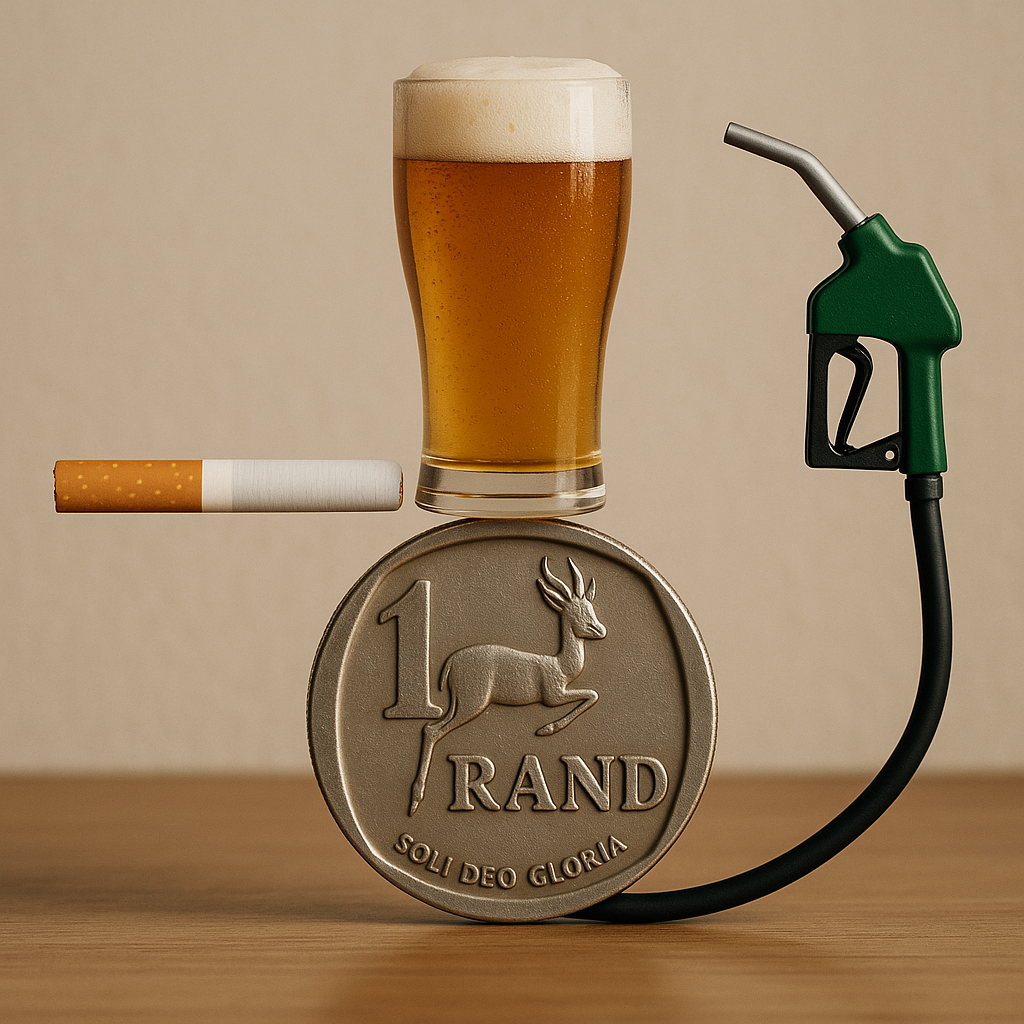
South Africa raises 'sin' and fuel taxes slightly from April 1, 2023, aligning with inflation while battling illicit trade.
South Africa's 2023 budget quietly made small price changes: cigarettes went up 77c, and petrol 21c. These tiny increases are meant to gather money without helping smugglers. The government is also getting tougher on illegal trade with new scanners and more customs people to win back lost taxes. These changes are a careful balancing act, aiming to fix the “sin economy” without causing too much trouble.
What is the impact of South Africa's 2023 budget changes on "sin taxes" and fuel?
The 2023 South African budget introduces modest increases: 77c on cigarette cartons, 8c on lager, R3.20 on whisky, and 21c per liter on petrol due to levies and carbon tax. These small adjustments aim to balance revenue generation with combating illicit trade, while new enforcement measures target smugglers to reclaim lost excise income.
Get Cape Town news in your inbox
Stay updated with the latest stories from the Mother City.
1. The Silent Nudge: Why Treasury Chose a Whisper over a Whip
From 1 April 2023 the price of a smoke, a beer and a litre of petrol edges up by less than the cost of a WhatsApp message, yet the ripple effect will reach every tavern, taxi rank and harbour scanner from Musina to Cape Point.
Finance chief Enoch Godongwana slipped the new numbers into the Budget Review without the theatre that accompanied last year’s tobacco-ban talk-show, opting for a mechanical inflation-catch instead of headline-grabbing punishment.
Cigarette cartons pick up 77c, a lager adds 8c, a bottle of whisky R3,20 and each litre of unleaded just under 21c once the general fuel levy, carbon tax and RAF contribution are stacked together.
The modesty is deliberate.
After COVID-19 blew a R35 billion hole in excise income and pushed the illicit cigarette share past half the market, Treasury econometricians warned that anything above inflation simply hands shelf space to smugglers.
The 3,4% increase is therefore a tight-rope walk between the World Health Organisation’s 75% tax-to-price target and the moment legal sales collapse faster than revenue rises.
April was chosen for bureaucratic choreography rather than politics.
Updating SARS customs codes, re-pricing wholesaler invoices and steering the first extra rands into the 2023/24 revenue column require a clean quarterly cut-off, something a March or May date would have muddied.
In short, the hike is small because the state can no longer afford a big one, and April because the accountant’s diary said so.
2. At the Till: What the New Labels Mean for Your Pocket and Your Liver
Walk into any supermarket after the long weekend and the shelf talkers will already reflect the new excise base, even if the jump looks like a rounding error.
A 20-pack of cigarettes climbs from R22,81 to R23,58 before VAT; once the retailer’s margin and 15% VAT are layered on you will pay about R1,05 more at the checkout.
Rolling tobacco, pipe cuts and cigars follow the same escalator: 87c extra on a 50g pouch, 28c on a 25g pipe rub and R4,56 on a 23g stogie.
Beer remains the country’s cheapest sin tax bargain.
The 8c rise on a 340ml can keeps the state’s share at 34% of the retail price, comfortably below the 38% global median and light-years from the WHO’s 50% benchmark.
Wine, taxed at only 11% of shelf price, is still treated like an agricultural blessing rather than a health hazard, while spirits cross the psychological 50% line as the R3,20 hike pushes brandy and whisky into cigarette-like fiscal territory.
Fuel is where the Treasury hides two stories inside one.
The advertised pain is 21c, made up of 9c for the general fuel levy, 7c for the Road Accident Fund and 5c for the carbon tax on petrol; diesel mirrors the total even though the carbon component is 6c, not 5c.
What the pump does not tell you is that you also pay VAT on the new levies, adding another 3c or so to every litre, a stealth top-up that flows straight into the consolidated fund.
3. The Smugglers’ Reply: How the State Plans to Win Back the Shelf
Numbers on a spreadsheet mean little when a R5 pack of “toxic blend” is available at the spaza shop, so Godongwana devoted more speech minutes to enforcement than to the actual rate change.
SARS believes R8bn in cigarette revenue and R3,5bn in alcohol duty vanished into the shadow economy last year, a shortfall larger than the entire budget of the National Prosecuting Authority.
The culprits are threefold: counterfeit containers landing in Durban, herbal-tobacco cocktails mixed in rural KwaZulu-Natal and cloned excise stamps on duty-free ethanol that re-emerges as fake brandy.
Treasury is betting R1bn over three years that better dogs, smarter scanners and a blockchain stamp ledger can tilt the playing field back towards the legal sector.
Durban harbour will receive three new mobile cargo scanners, 200 additional customs staff and a canine unit trained to tell cheap Chinese tobacco from the local article.
Most importantly, every cigarette excise stamp will carry a unique digital key that can be read by SARS, the manufacturer and the retailer in real time; 50 million stamps go live in July, with alcohol labels following in 2024.
Early results already flash green: January 2023 set a record when 110 million illegal cigarettes were seized at six land borders, thanks to portable X-ray units bought with last year’s excise top-slice.
The Border Management Agency, only four months old, has redeployed 300 officers with the new gear and promises that the monthly seizure graph will rise further before it flattens.
The message to smugglers is simple: every extra rand you now pay to get product past the scanners eats into the price advantage that keeps your R5 pack alive.
4. Beyond the Pack: Carbon, Elasticities and the 2024 Rewrite
Hidden inside the fuel story is South Africa’s first carbon-tax increase since 2019, a modest 5c–6c that still translates to $1,20 per tonne of CO₂.
Treasury has published a glide-path to $30 per tonne by 2030, adding roughly 75c to every litre of petrol once fully phased in.
None of the new carbon money is ring-fenced for green projects; instead it melts into the general pot while the Development Bank is quietly ordered to use the $30 figure when deciding whether to fund more lanes of asphalt or electric buses.
Academic price elasticities explain why Treasury can afford to be timid.
A 3,4% cigarette hike, applied to a product with an elasticity of –0,35, should cut legal sales by only 1,2%, far smaller than population growth, so gross revenue still rises.
Spirits, hit hardest with a R3,20 jump, are expected to fall 2% in legal volume, yet the higher rate nets the fiscus an extra R650m after lost VAT is accounted for.
In short, the model banks on addicts grumbling rather than quitting, a bet history says it will win.
Looking forward, 2024 will bring the first full excise review since 2002, and discussion papers already hint at bigger moves: a two-tier cigarette duty that clobbles sub-R15 packs, a volumetric alcohol tax to replace the current hybrid mess and even a domestic jet-fuel carbon levy that could harvest R1,2bn from OR Tambo alone.
Until then the April adjustments serve as a down-payment on credibility: not large enough to cure addiction or cool the planet, but just big enough to keep the treasury lights on while the scanners, dogs and blockchain ledgers prepare for the real war against the shadow shelf.
What is the impact of South Africa's 2023 budget changes on "sin taxes" and fuel?
The 2023 South African budget introduces modest increases: 77c on cigarette cartons, 8c on lager, R3.20 on whisky, and 21c per liter on petrol due to levies and carbon tax. These small adjustments aim to balance revenue generation with combating illicit trade, while new enforcement measures target smugglers to reclaim lost excise income.
Why did the Treasury opt for small increases instead of larger ones?
The Treasury deliberately chose modest increases (e.g., 3.4% on cigarettes) to avoid further empowering smugglers. After the COVID-19 pandemic caused a R35 billion hole in excise income, larger tax hikes were shown to push consumers towards illicit products, making it counterproductive for revenue collection. The goal is to carefully balance the World Health Organisation's 75% tax-to-price target with preventing a collapse in legal sales.
How will the new budget changes affect everyday prices for consumers?
From April 1, 2023, consumers will see slight price increases. A 20-pack of cigarettes will cost about R1.05 more at checkout, while a 50g pouch of rolling tobacco will increase by 87c. Beer remains a relatively cheap sin tax bargain, with an 8c rise on a 340ml can. Fuel prices will increase by approximately 21c per litre, composed of a general fuel levy, Road Accident Fund contribution, and carbon tax, plus an additional 3c VAT on these new levies.
What measures is the government taking to combat illicit trade?
The government is investing R1 billion over three years to combat illicit trade, which cost the state R8 billion in cigarette revenue and R3.5 billion in alcohol duty last year. Measures include deploying three new mobile cargo scanners at Durban harbour, adding 200 customs staff, and establishing a canine unit. Crucially, every cigarette excise stamp will carry a unique digital key for real-time tracking by SARS, manufacturers, and retailers, with alcohol labels following in 2024.
What is the significance of the carbon tax increase?
South Africa's 2023 budget includes its first carbon tax increase since 2019, adding 5c-6c per litre of fuel, which translates to $1.20 per tonne of CO2. The Treasury has outlined a plan to reach $30 per tonne by 2030, which would add roughly 75c to every litre of petrol. While none of this new carbon money is ring-fenced for green projects, it influences decisions by institutions like the Development Bank regarding infrastructure funding.
What future changes are being considered for excise duties?
Looking ahead to 2024, significant changes are anticipated as part of the first full excise review since 2002. Discussion papers suggest potential moves such as a two-tier cigarette duty to target cheaper packs, a volumetric alcohol tax to simplify the current system, and even a domestic jet-fuel carbon levy that could generate substantial revenue from airports like OR Tambo.

Amanda Wilson is a Cape Town-born journalist who covers the city’s evolving food scene for national and international outlets, tracing stories from Bo-Kaap spice shops to Khayelitsha micro-breweries. Raised on her grandmother’s Karoo lamb potjie and weekend hikes up Lion’s Head, she brings equal parts palate and pride to every assignment. Colleagues know her for the quiet warmth that turns interviews into friendships and fact-checks into shared laughter.
View all articles →