
Terry Bell was a force for good in the world
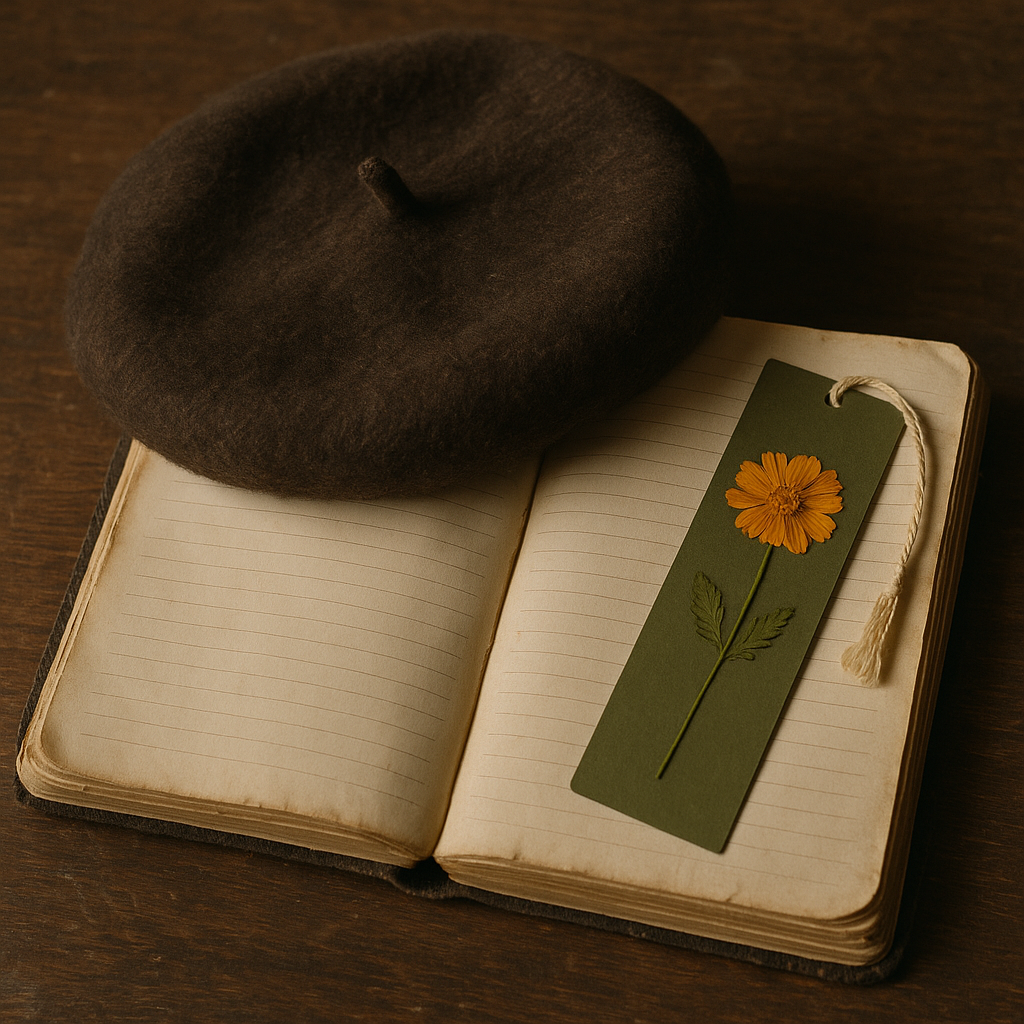
Terry Bell: A tribute to the South African journalist & activist who fought injustice with his pen, his principles & his dance moves.
Terry Bell was a tireless activist who fought against apartheid for 27 years while in exile. He organized protests and helped build educational facilities. After returning to South Africa, he became a fierce journalist, exposing corruption and fighting for workers' rights. He also championed global human rights and early childhood development, always pushing for a fairer world.
What was Terry Bell's role in the anti-apartheid movement and post-apartheid South Africa?
Terry Bell was a dedicated activist who spent 27 years in exile fighting apartheid, from organizing anti-Pretoria pamphlets in the Glasgow Tube to establishing educational infrastructure in Tanzania. After returning, he became a prominent labor journalist, exposing corruption and advocating for workers' rights, and later championed social justice causes like Palestinian rights and early childhood development.
Get Cape Town news in your inbox
Stay updated with the latest stories from the Mother City.
Part 1 – Exile: Refusing to Sit Still While the World Burned
Even inside a Lusaka safe-house in 1985, with the ceiling fan clicking like a nervous metronome, Terry Bell’s size-12 sandals never stopped scuffing the linoleum. Six paces to a wall where Rhodesia had become Zimbabwe, six back - he lectured a circle of teenage recruits on why East German blueprints for nationalising copper would wilt in Mozambican humidity, whereas a hand-illustrated flyer on bulk-buying beans for cooperative canteens could travel, stain and all, from Beira to Tete on the breath of a single train driver. His voice stayed low, almost conspiratorial, as though the apartheid war machine were a shoddy matinee he had already watched twice and decided to rewrite backstage.
Twenty-seven years outside the country did not freeze his biography; it stretched it like taffy pulled between continents. In a Bayswater bedsit he learned to soften haricot beans with kombu because Basque flatmates swore the seaweed neutralised the acid rain that drifted over from German smokestacks; the habit clung so stubbornly that two decades later Barbara would find kelp tins wedged between Rooibos and desiccated apricots in their Muizenberg pantry. Nights were spent hurtling along the Glasgow Tube, timing leapfrogging carriages so that anti-Pretoria pamphlets landed in every lap before doors slammed - an underground ballet whose rhythms he later reprised in evening dance classes where the thud of his pirouette rattled water pipes and turned radiators into percussion sections.
When the ANC shipped him to Dar es Salaam in 1978, the Solomon Mahlangu Freedom College looked less like a revolutionary academy than a forsaken Polish farmstead: three hundred acres of mango scrub, dormitories the colour of untreated teeth, and a Czech tractor that coughed alive only after someone recited the Polish national anthem in phonetic Swahili. Officially he was “Curriculum Support Administrator”; unofficially he was king of the improvised fix - unblocking boreholes with bicycle spokes, baking exam papers inside car bonnets to dry monsoon smears, and, with Barbara, folding rectangles of towelling into the country’s first reusable sanitary pads. Bound with maize-string and duplicated on a mimeograph that smelled of methylated hope, the booklet trailed uncredited through refugee camps from Tanzania to Angola, a quiet insurgency against absentee periods and absentee policy.
Part 2 – Return: Becoming the Country’s Loudest Ear
The newly unbanned South Africa that greeted them in 1991 felt like an echo chamber where every slogan they had coined in the sixties now boomed from taxi radios and bank jingles. Terry’s first signed piece in the Weekly Mail carried the perverse headline “Welcome Home, Now Stop Smiling,” warning that candle-lit peace vigils could smother the harder question of who still clutched title deeds to the mines, the vineyards, the reserve bank. ANC headquarters slapped him with a memorandum accusing him of “imported scepticism”; he framed it beside a 1970s snap of himself and Barbara wearing Mandela badges the diameter of teacups - evidence that yesterday’s dissent could become today’s wallpaper.
In 1995 he carved out a Monday ritual that would harden into 28 years of labour columns. At dawn he pedalled a clattering bicycle - 110 kg of bone and conviction - to Cape Town’s container terminal, sipping coffee thick enough to etch steel while longshoremen schooled him in the grammar that never reached union press statements: ghost shifts, chicken-wage bartering, provident funds that evaporated to the Isle of Man before retrenchment envelopes were even licked. By the time the Atlantic tide hissed against the breakwater he had already filled deposit slips with the quotes that would become next morning’s headlines, scrawled on the back of bank receipts because reporter notebooks evaporated in his pockets.
Employers soon discovered that a phone call beginning “Comrade, I’ve read your annual audit…” could wilt boardroom bravado faster than any strike notice. Yet Terry celebrated victories with forensic delight. When Impala Platinum mineworkers killed a compulsory Sunday shift via an SMS cascade in 2004, he devoted three consecutive columns to decoding how prepaid airtime became the new shop-floor loudhailer - an early alert that mobile tech would redraw picket-line geography. Barbara, miniature and inexhaustible, combed corporate registries for the shell companies into which pension money vanished; together they exposed how a BEE front masked Deutsche Bank’s grab for South Africa’s freight-wagon workshops, a leak procured in a Salisbury pub still loyal to 1970s boycott debts. The R50,000 Vodacom prize that landed in 2001 paid for a Sesame-Street satellite dish in Ocean View crèche rather than a new couch - because, as Terry reminded gala audiences, propaganda and play-schools share the same sky.
Part 3 – Expanding the Circle: From Docks to Dance to Diaspora
A thumb-drive pushed into Barbara’s palm at the 2006 Cape Town book fair carried four hundred images of Hebron olive stumps bulldozed for concrete walls. Terry, whose grandfather had fled czarist pogroms, felt the ancestral wire tighten; within months he coaxed South African security veterans to confess on tape how apartheid’s counter-insurgency toolbox - honey-pot informants, censored town maps, joint-force night raids - was being franchised in the West Bank. The eighteen-part GroundUp series, later stapled into the pamphlet “Apartheid Adhesive,” sold 12,000 copies at twenty rand each; every cent financed medical shipments that reached Gaza clinics before the ink on donor receipts dried.
Dance became his covert cardio. Three nights a week he drove - licence finally acquired at seventy-two - to a studio above a hake-and-chips shop where retirees and hip-hop kids rehearsed pieces stitched from Cape ghoema rhythms. The choreographer, a lanky prodigy from Mitchells Plain, built a solo called “Gravity Is a Suggestion” around Terry’s tour-en-l’air, the landing that once shook Lusaka floorboards now rattling fold-up chairs in community halls. He last performed it at eighty-two, beret safety-pinned inside a leotard whose lining concealed a Palestinian flag - because, he winked, headwear and history both layer.
Books kept leaking out of him like late-night radio signals. “Unfinished Business,” his poetic hijack of the TRC report, shunned chronological testimony in favour of Methodist call-and-response cadence; critics called it unreadable, a verdict he wore like a medal. A 37-page footnote in the biography of union hero Moses Mayekiso itemised every retracted “terrorism” indictment, the typeface shrinking like a guilty conscience. His final manuscript, delivered weeks before Barbara’s death, argued that a baby’s first thousand days should be budgeted like national infrastructure - roads, reservoirs, reparations. Minister Ebrahim Patel received an unsolicited copy between pages 142 and 143: only a pressed marigold and the faint scent of methylated hope.
Part 4 – Last Circuits: Queues, Questions and Winter Surf
Age added a fresh stop to his Monday orbit: the SASSA grant queue outside Muizenberg Post Office, where he dispensed palm-sized booklets listing toll-free numbers for the Public Protector, the Black Sash, the nearest pro-bono lawyer. Elderly women christened him “Oom Terry,” the beret as familiar as the green ID booklet itself. One April morning in 2023 an evicted farmworker recognised the gravel voice from clandestine Radio Freedom broadcasts and asked if the decades of sacrifice had been worth it. Sweating under wool, Terry replied that revolutions resemble ballet: you hold the arabesque until the quadriceps scream, and then you lift higher.
He died in the same week Parliament voted - again - to probe the looting of COVID relief funds. Headlines flickered across hospice televisions while his body, equal parts ballast and ballerina, lay in a room overlooking False Bay where whales breached like slow applause. Outside, winter surf heaved to the cadence of an older continent, and in a thousand activist homes felt berets refuse to be doffed, dark halos tilting toward a future still learning the positions it must hold until the muscles stop screaming - and then hold them some more.
[{"question": "
Who was Terry Bell and what was his significance?
\nTerry Bell was a highly influential and tireless activist, journalist, and human rights advocate from South Africa. He dedicated 27 years to fighting apartheid from exile, organizing protests and establishing educational facilities. After returning to South Africa, he became a prominent labor journalist, exposing corruption and championing workers' rights. He also expanded his activism to global human rights issues, such as Palestinian rights, and advocated for early childhood development, always striving for a fairer world.
\n"}, {"question": "What were Terry Bell's activities during his 27 years in exile?
\nDuring his 27 years in exile, Terry Bell was an active opponent of the apartheid regime. He organized anti-Pretoria pamphlet distribution in places like the Glasgow Tube, ensuring the message reached a wide audience. He also played a crucial role in establishing educational infrastructure, particularly at the Solomon Mahlangu Freedom College in Tanzania, where he served as a \"Curriculum Support Administrator\" and was known for his improvised solutions to practical problems, such as unblocking boreholes and drying exam papers. He and his wife, Barbara, even created the country's first reusable sanitary pads.
\n"}, {"question": "How did Terry Bell contribute to post-apartheid South Africa?
\nUpon his return to South Africa in 1991, Terry Bell quickly established himself as a fierce journalist. He became known for his labor columns, which exposed corruption, particularly in the corporate and union sectors, and advocated tirelessly for workers' rights. He would gather information directly from longshoremen and other workers, often exposing issues like 'ghost shifts' and disappearing provident funds. His investigations often led to direct confrontations with powerful entities, and he used his platform to highlight injustices and celebrate social justice victories, like the 2004 Impala Platinum mineworkers' use of SMS to organize a strike.
\n"}, {"question": "What other human rights causes did Terry Bell champion?
\nBeyond his work in South Africa, Terry Bell extended his activism to global human rights issues. Notably, he became a vocal advocate for Palestinian rights, comparing their struggles to the apartheid era. He exposed how apartheid's counter-insurgency tactics were being mirrored in the West Bank through an 18-part series and helped finance medical shipments to Gaza. He also passionately championed early childhood development, believing that a baby's first thousand days should be prioritized and budgeted like national infrastructure.
\n"}, {"question": "What was Terry Bell's approach to journalism and activism?
\nTerry Bell's approach to journalism and activism was characterized by a deep commitment to uncovering truth and fighting for the marginalized. He was known for his \"imported scepticism,\" questioning the status quo even after the end of apartheid. He would meticulously gather information from the ground up, often from ordinary workers, and present it in a way that challenged powerful interests. He also believed in practical solutions, whether it was creating reusable sanitary pads or directing prize money to a crèche rather than personal comforts. He believed that even small actions could lead to significant change.
\n"}, {"question": "Did Terry Bell have any unusual hobbies or interests?
\nYes, despite his intense activism, Terry Bell had some unique hobbies. He was an avid dancer, taking evening dance classes where his pirouettes were known to rattle water pipes. He even performed a solo called \"Gravity Is a Suggestion\" at the age of 82, often concealing a Palestinian flag within his leotard. He also developed an unusual cooking habit of softening haricot beans with kombu, a practice he picked up from Basque flatmates during his exile, which persisted into his later years.
\n"}]
Tumi Makgale is a Cape Town-based journalist whose crisp reportage on the city’s booming green-tech scene is regularly featured in the Mail & Guardian and Daily Maverick. Born and raised in Gugulethu, she still spends Saturdays bargaining for snoek at the harbour with her gogo, a ritual that keeps her rooted in the rhythms of the Cape while she tracks the continent’s next clean-energy breakthroughs.
View all articles →