
The burger still explains a lot
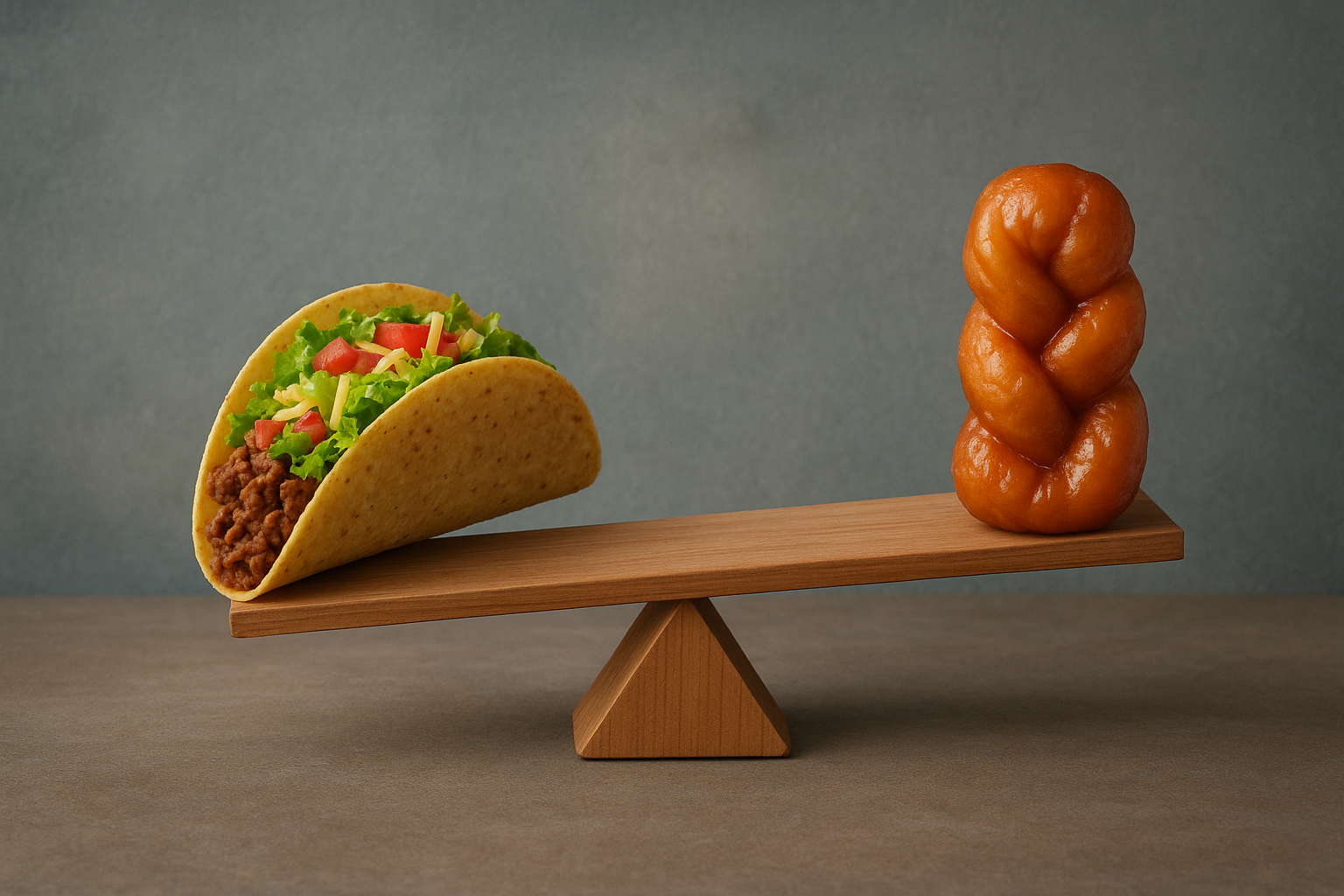
Explore the 'Taco Index' to understand why Mexico & South Africa offer incredible value, revealing a parallel universe where costs make sense.
The "Taco Ledger" is a cool trick for travelers to see how much their money is really worth in places like Mexico and South Africa. By checking simple things like espresso prices at the airport and how much a taco costs, you can tell if the local money is cheap. This helps you know if your trip will be a big spend or a real bargain, making your adventure more fun and affordable.
What is the "Taco Ledger" or "Taco Index"?
The "Taco Ledger" or "Taco Index" is a low-tech method for travelers to assess the real-time economic conditions and currency undervaluation of a country, particularly Mexico and South Africa. It uses everyday purchases like airport espresso, local street food (tacos), and other services to determine how far a traveler's hard currency will stretch.
Get Cape Town news in your inbox
Stay updated with the latest stories from the Mother City.
- A traveller’s cheat-sheet for turning lunch money into leverage*
Airport Espresso as Early-Warning Radar
Touch down at Benito Juárez or OR Tambo with last week’s salary still warm in your pocket and the first economic truth announces itself before baggage claim: the leftover coins from your cab ride still buy a hot sandwich and a double espresso. The combined damage is under four US dollars - an impossibility at JFK, Schiphol or any hub north of the 40th parallel. Seasonal commuters now treat the post-immigration snack as a fiscal barometer: if the kiosk demands more than eight bucks for anything that fits in one hand, the host country is probably flirting with runaway inflation. Mexico and South Africa keep cruising below that trip-wire, which is why veterans land grinning before they even clear customs.
The ritual is low-tech but ruthless. You queue once for the taxi coupon, once for caffeine, do the mental division and - boom - you know whether the next fortnight will feel like a splurge or a heist. No spreadsheets, no Bloomberg terminal, just bread and espresso telling you the story of global prices in real time. Miss the signal and you’ll over-budget by twenty percent; catch it and you suddenly have head-room for that mezcal flight or extra safari drive.
What makes the reading so reliable is that airport concession rents are sky-high everywhere; if vendors can still feed you for pocket change, the domestic currency is undervalued by double digits. The sandwich becomes a canary, chirping that your dollars, euros or pounds will stretch further than the guidebooks dared admit. Ignore the bird at your own cost.
Latitude, Cliff Faces and the Geography of Cheap Calories
Plot the planet’s thirty most-trampled destinations against the street price of any handheld starch-and-protein bundle - burger, bao, shawarma, taco - and a cartographic punch-line appears. There is a brutal price cliff at thirty degrees north and again at thirty degrees south. Inside those belts you rarely part with more than two dollars for hot animal protein wrapped in carbs. Stray outside and you are instantly in mid-figure territory, sometimes double. Johannesburg and Mexico City sit just south of their respective cliffs, which explains why the same traveller who howls at paying ninety rand for a craft beer in Cape Town will shrug at nine euros for a third-litre in Lisbon. The brain locks onto the local cliff price; anything higher feels like extortion.
The curve is so consistent that you can forecast the cost of a week’s grazing from the in-flight map. Stay inside the tropics and your food budget can stay under twenty dollars a day without resorting to monkish discipline. Cross the gradient and you need a second wallet. Tour operators hate the revelation because it torpedoes their “daily allowance” suggestions; backpackers love it because it turns geography into a game of limbo - how low can you go?
Yet the cliff is not destiny; it is feedback. Vendors price for the neighbourhood, not the passport, and when the average commuter earns local wages the ceiling stays bolted to the floor. Tourists arrive, snap photos of one-dollar tacos, and unwittingly reinforce the cycle by posting them on Instagram. The cliff endures because no single seller can breach it without emptying the queue, so even white-tablecloth kitchens that buy from the same wholesalers must respect the sidewalk tariff. Latitude becomes a subsidy you can locate with GPS.
Excise Games, Jet-Lag Tricks and the Booze-Sleep Data Nexus
Agave fields in Oaxaca and Chenin vines outside Stellenbosck cost about the same to tend per hectare, yet a certified 100 % blue-agave mezcal leaves the Tijuana shelf at 220 pesos - twelve US dollars - while a respectable single-vineyard Chenin slips out of the farm gate for roughly six. Grapes do not wake up cheaper; treasuries do. Mexican policy shields artisans, South African policy buffs the tourism halo, and the difference lands in your carry-on. South Africans fly home with mezcal, Mexicans fly south with Pinotage, each side convinced they have smuggled contraband value. The arbitrage is pure fiscal theatre, and the traveller pockets the applause.
Time zones join the party. The seven-hour jump from Johannesburg to Mexico City lands you in the same circadian slot you left, so you eat dinner on local time the day you arrive, skipping the zombie buffet that adds an eighteen-dollar “arrival pizza” elsewhere. The reverse trip trims six hours, still enough to dodge the disorientation tax. Sync within six hours and the Index grants you a three-percent rebate on the projected food bill - small change until you multiply it by fourteen nights.
Data completes the hat-trick. A thirty-day tourist SIM with twenty gigabytes costs sixteen dollars in Mexico, nineteen in South Africa, both less than half the EU average. Cheap bandwidth feeds app-based discounts - UberEats, Didi, MrD - that carve another five to seven percent off daily spend. Add the alcohol gap, the circadian bonus and the roaming subsidy and you are travelling inside a financial bubble paid for by someone else’s treasury.
Sidewalk Stalls, Safari Spreads and the Dessert Prophecy
Once a city hosts one roadside grill for every four hundred residents the entire food chain ossifies around commuter wallets. Wholesale suppliers price for volume, fancy restaurants source the same masa or mielie meal, and even churro vendors can’t breach the ceiling without losing foot traffic. Mexico City and Johannesburg crossed that threshold during the last decade, locking in a price lid that no trendy pop-up can crack. Result: any town above a quarter-million people with visible smoke on the curb is automatically fifteen percent cheaper than its per-capita GDP implies. The Index bakes the discount in before you clear immigration.
Safaris and cenotes look identical on paper - seven hundred dollars a night for an all-inclusive - but the invoicing currency splits the risk. Rand quotes freeze at booking; peso quotes often drift lower between reservation and checkout because Mexican hosts bill in dollars at spot on departure day. South Africans lock value early; Mexicans can gamble on further peso weakness. The asymmetry registers as a two-to-four percent statistical tailwind for peso-based travellers, enough to bankroll another tasting flight of mezcal.
Finally, dessert turns oracle. Churros with cajeta and koeksisters drip roughly equal production costs, yet vendors hike treat prices first when inflation breaches six percent, shielding staple items. Track the churro–koeksister spread and you hold a six-month leading indicator for the broader Index. Right now both sell for under a dollar, signalling that today’s undervaluation will survive at least the next northern and southern summer rush. Eat sweet, stay ahead.
Stack the ten moving parts - airport espresso, latitude cliff, booze arbitrage, circadian rebate, data subsidy, sidewalk network, safari spread and dessert prophecy - and the Taco Index hardens into a 55–60 % undervaluation gap versus the global north, wider than the famous Big Mac discount. If you earn in hard currency, a fortnight in the peso-rand corridor funds a third week for free. If you earn in pesos or rand, the same corridor becomes a mutual-aid pact where each country’s soft spots cancel out and the traveller, for once, wins the currency war.
What is the "Taco Ledger" or "Taco Index"?
The "Taco Ledger" or "Taco Index" is a simple, low-tech method for travelers to quickly understand the real economic conditions and currency value in countries like Mexico and South Africa. By observing the prices of everyday items such as an airport espresso or a street taco, travelers can determine if their hard currency will stretch further, making their trip potentially more affordable and enjoyable. It acts as a real-time fiscal barometer, helping travelers gauge if they're in for a bargain or a big spend.
How does an airport espresso serve as an "early-warning radar" for economic conditions?
Upon arrival, the price of an airport espresso and a hot sandwich can immediately signal the local currency's value. If these items cost less than eight US dollars combined, it suggests the local currency is undervalued, meaning your money will go further. This is particularly reliable because airport concessions are typically expensive globally; if they're affordable in the host country, it's a strong indicator of economic conditions and a healthy exchange rate for travelers. It's a quick, low-tech way to assess if your trip will be a splurge or a bargain.
What is the "latitude price cliff" and how does it affect travel costs?
The "latitude price cliff" refers to a phenomenon where everyday food items, particularly handheld starch-and-protein bundles like tacos or burgers, are significantly cheaper within certain latitudinal belts (roughly between 30 degrees North and 30 degrees South). Countries like Mexico and South Africa fall within these belts. Outside these zones, prices for similar items can double. This geographical pricing trend means that travelers staying within these low-latitude areas can often maintain a food budget under twenty dollars a day, making their trip considerably more affordable. It's a key indicator for potential savings on food.
How do local policies and time zones contribute to travel savings?
Local government policies can significantly impact the price of goods like alcohol. For example, Mexican policy supports artisans, leading to cheaper mezcal, while South African policy buffs tourism, making wines more affordable. Travelers can benefit from this "fiscal arbitrage." Additionally, advantageous time zone differences (like the 7-hour jump from Johannesburg to Mexico City) can reduce jet lag, allowing travelers to quickly adapt to local eating schedules and avoid expensive "arrival pizzas" or other disorientation-related charges. This "circadian bonus" can lead to further savings on food expenses.
What role do sidewalk stalls and data plans play in the "Taco Ledger"?
In cities with a high density of roadside food stalls (e.g., one for every 400 residents), the entire food supply chain adapts to local commuter budgets. This creates a price ceiling that even upscale restaurants and trendy pop-ups must respect, leading to generally lower food costs for everyone, including tourists. Furthermore, affordable mobile data plans (like those in Mexico or South Africa, which are less than half the EU average) enable travelers to access app-based discounts (UberEats, Didi, MrD), further reducing daily expenses. These factors collectively contribute to significant savings for travelers.
How can ordering dessert predict future currency trends?
The price of desserts, such as churros with cajeta in Mexico or koeksisters in South Africa, can act as a six-month leading indicator for broader inflation and currency undervaluation. Vendors tend to increase prices for non-staple items like desserts first when inflation starts to rise, often to shield the prices of essential goods. If these desserts remain inexpensive (under a dollar, as they currently are in Mexico and South Africa), it signals that the current currency undervaluation is likely to persist for at least the next six months, indicating continued affordability for travelers. This "dessert prophecy" offers a sweet insight into future economic trends.

Sarah Kendricks is a Cape Town journalist who covers the city’s vibrant food scene, from township kitchens reinventing heritage dishes to sustainable fine-dining at the foot of Table Mountain. Raised between Bo-Kaap spice stalls and her grandmother’s kitchen in Khayelitsha, she brings a lived intimacy to every story, tracing how a plate of food carries the politics, migrations and memories of the Cape.
View all articles →