
The fiction falls apart
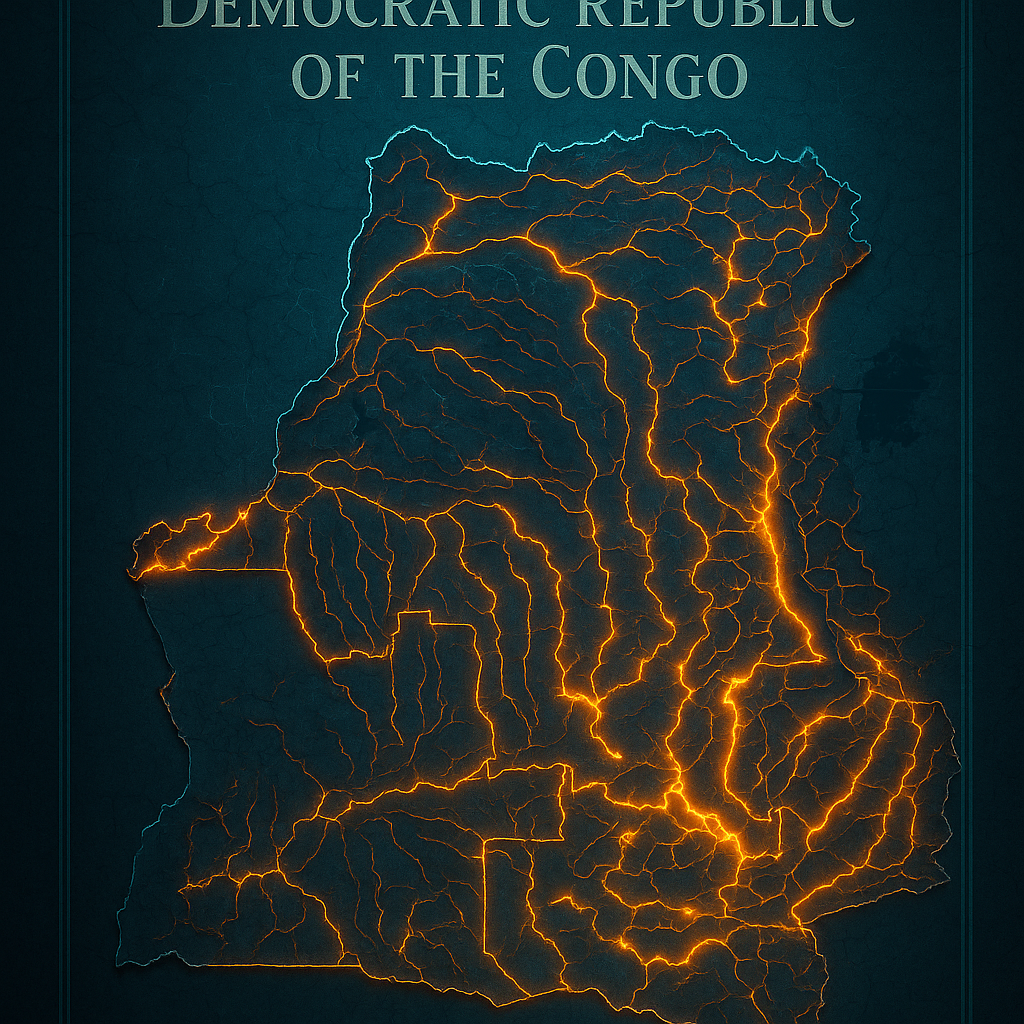
The DRC's cobalt strategy reshapes global resource politics, turning minerals into geopolitical leverage and financial instruments.
The Democratic Republic of Congo (DRC) is shaking up the global cobalt market using smart tactics. They show off their cobalt deposits in real-time, turning their geology into a powerful tool. The DRC also uses its debt to China as a bargaining chip, and makes money by selling security services. By timing deals perfectly with international budget cycles, they play both sides without picking favorites, making their mineral wealth a source of diplomatic power.
How is the DRC influencing the global cobalt market?
The Democratic Republic of Congo (DRC) is influencing the global cobalt market by weaponizing its geology through real-time data on deposits, leveraging its Chinese debt to its advantage, selling security as a service, and exploiting international budget cycles to secure deals without choosing sides, effectively turning mineral scarcity into diplomatic power.
Get Cape Town news in your inbox
Stay updated with the latest stories from the Mother City.
The Collapse of the Old Bloc Diplomacy
Inside the United Nations delegates’ dining hall this February, the seating chart looked nothing like the group portraits of yesteryear. Gone is the familiar “South corner,” the cluster where African, Asian and Latin American envoys used to trade gossip over coffee. Instead, a Congolese diplomat trades tapas with a ConocoPhillips engineer from Houston, a Saudi delegate splits dessert wine with a South Korean battery scientist, and an Indian counsellor skips the room entirely for biryani from a 46th-Street food truck. The choreography of 1970s Non-Aligned solidarity has dissolved into pop-up alliances that dissolve as soon as the espresso cups are cleared.
The old ideological labels - First, Second, Third World - have lost their predictive power. What matters now is the chemistry under the topsoil. Roughly three-quarters of the planet’s cobalt, two-thirds of battery-grade nickel, half of all flake graphite and nearly half of known lithium brine lie inside countries once filed under “developing.” Rather than forming a cartel, each government is staging its own permanent e-auction. Highest bidder earns extraction rights, second place books future offtake, third secures either a police-training package or a cyber-surveillance upgrade. Every visitor signs a memorandum; nobody leaves with a comrade.
The hashtag “# GlobalSouth” lives on as social-media nostalgia, yet its diplomatic utility is weaker than a Bloomberg cobalt-price alert. Mineral scarcity, not ideological affinity, now drives seating choices in Manhattan cafeterias. The bloc is dead; the bazaar has replaced it.
Kinshasa’s Four-Step Playbook
-
Weaponise the geology.* Gécamines, the DRC’s state miner, keeps an open-access cloud ledger hosted in China. Weekly updates list proven cobalt tonnage, GPS coordinates of each deposit, haul-road distances and feasibility traffic lights. Investors in Shenzhen, Houston or Riyadh can refresh their cost models before breakfast. By flaunting scarcity in real time, the government turns rock into a pressure tool more precise than any embassy demarche.
-
Turn debt into judo.* Kinshasa’s $24 billion Chinese liability is treated not as a noose but as a lever. Roughly thirty percent of that sum must be repaid in cobalt cathode. When Beijing drags its feet on restructuring, the finance minister hints that the same cathode could instead sail straight into an American bonded warehouse. Fearing fresh non-performing loans while domestic property giants wobble, Chinese banks quietly grant grace extensions. The borrower, not the lender, dictates tempo.
-
Sell security like a service.* The lingering M23 insurgency serves as the strategic shock absorber OPEC once provided for oil. Every U.S.-supplied ScanEagle that lifts off from Goma is simultaneously a battlefield edge, a reminder to China that Washington can choke the Katanga-to-Indian-Ocean corridor, and a depreciation event for Chinese-built highways now competing with a potential American-financed rail spur toward Angolan ports. Anxiety keeps bids high.
-
Exploit calendar arbitrage.* Washington’s fiscal year ends 30 September; Beijing’s budget cycle closes 31 December. Kinshasa times “last and final offer” deadlines in both quarters. December’s Strategic Asset Reserve announcement forced the U.S. to divert unspent Inflation Reduction Act money; February’s FORGE declaration arrived just as the National People’s Congress prepared extra export-credit liquidity. The DRC harvested both windfalls without choosing sides.
Washington Builds a Mineral Bundesbank
Treasury officials quietly upgraded the word “reserve” to “Vault,” a vault being collateral that can be re-pledged. Metal delivered into the new U.S. stockpile instantly qualifies for Federal Reserve swap lines, putting Congolese ore on the same monetary tier as Treasury bills. Miners can borrow dollars at SOFR plus sixty basis points, a rate far sweeter than the London Metal Exchange contango. Geography dissolves once commodity becomes currency.
Glencore, once allergic to American oversight, now reroutes fifteen percent of its Kamoto Copper Company cobalt straight to San Antonio warehouses, bypassing its own European refineries. The firm gains liquidity; Washington secures buffer stock; Kinshasa pockets royalties from both streams. No one waited for diplomatic cables; the spreadsheet wrote the treaty.
Vault eligibility has already narrowed the Congolese sovereign-spread by seventy basis points, while South Africa’s has widened by more than a hundred. Investors price in the American backstop, not the governance score. Transparency International ranks Kinshasa 166th, yet it now borrows cheaper than Pretoria, proving that in 2026 collateral trumps conscience.
Beijing’s Refinery Wall and the Circular Trap
China’s reply is less theatrical but surgically structural. Of 187 refineries able to convert Congolese cobalt hydroxide into battery-grade sulfate, 142 sit inside Chinese borders. Those plants now impose a market-entry toll: miners must first import foreign cobalt concentrate that will be blended with Congolese feed. The eight-percent foreign quota props up Chinese-owned Indonesian lines and dilutes any future U.S. embargo. Refineries that once welcomed any bag now vet passports.
Across the Indian Ocean, Jakarta will bundle nickel, cobalt and rare-earth blocks into a single digital gavel on 17 November. Bidders must post triple-currency deposits - yuan, dollars, dirham - and the algorithm maximises tax take, not alliance alignment. Riyadh’s Manara Minerals has already bought bankrupt Umicore’s cathode recipes with plans to relocate entire lines to the Red Sea, where solar heat will undercut European energy costs and Sharia-compliant prepaid deals bypass London clearing.
From the Gulf to the Great Lakes, teenagers still descend thirty-metre shafts in Kolwezi for six thousand Congolese francs a day, the only price not yet arbitraged. For the sovereign brokers slicing geology into collateral, that wage is an externality waiting for optimisation.
How is the DRC influencing the global cobalt market?
The Democratic Republic of Congo (DRC) is influencing the global cobalt market by implementing a multi-faceted strategy. They publicly share real-time data on their cobalt deposits, effectively weaponizing their geology. Furthermore, they leverage their significant debt to China as a bargaining chip, sell security services (using the M23 insurgency as a strategic shock absorber), and strategically time deals to align with international budget cycles to secure favorable terms from various global powers without committing exclusively to any one side. This approach transforms their mineral wealth into significant diplomatic power.
What is "Bloc Diplomacy" and why is it considered dissolved?
"Bloc Diplomacy" refers to the traditional alliances and groupings of nations, such as the

A Russian-Spanish journalist and Cape Town native, channels his lifelong passion for South Africa into captivating stories for his local blog. With a diverse background and 50 years of rich experiences, Serjio's unique voice resonates with readers seeking to explore Cape Town's vibrant culture. His love for the city shines through in every piece, making Serjio the go-to source for the latest in South African adventures.
View all articles →