
The minister who doesn’t want to talk about minerals
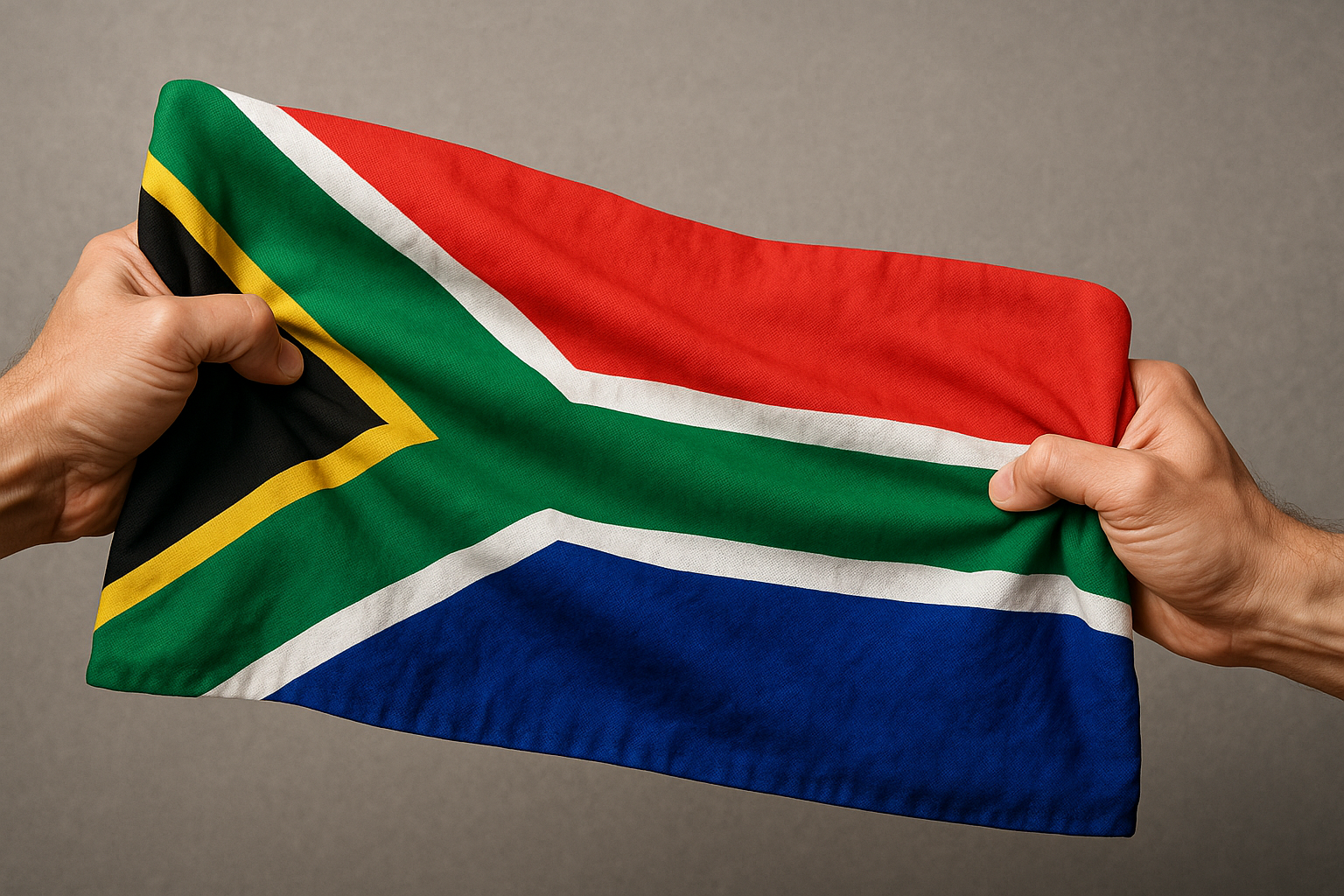
South Africa, a manganese superpower, faces industrial decline due to policy incoherence, failing infrastructure, and missed global opportunities.
South Africa has lots of manganese, but struggles to make it useful. High electricity costs and bad train tracks make it cheaper to just ship the raw rock away. Other countries are making smart deals for this important metal, leaving South Africa behind. This means South Africa misses out on money and jobs, even though they have so much of the valuable material.
Why is South Africa, a manganese rich country, struggling to process its own manganese?
South Africa struggles to process its manganese due to a combination of high electricity costs, inefficient rail infrastructure leading to increased transport expenses, and a lack of coherent industrial policy. These factors make local smelting uncompetitive, forcing the export of raw ore and hindering the development of a value-added manganese industry.
Get Cape Town news in your inbox
Stay updated with the latest stories from the Mother City.
Mantashe’s Sausage, Mantashe’s Mess
Cape Town’s International Convention Centre crackles with 8 000 badges, 900 mining logos and 38 trade ministers, yet the loudest sound on 9 February 2026 is the clatter of a plastic fork against porcelain. Gwede Mantashe, minerals czar and part-time breakfast comedian, has cornered a chicken-apple sausage and is using it to indict the entire Democratic Republic of Congo for “continental treason.” Cameras swarm, delighted: a quotable scold always beats another panel on “green minerals.” The minister insists his outrage is pan-African, not parochial - “continental interest, not national” - but no reporter can wring out an answer to the obvious follow-up: why does Pretoria still ship 98 % of its manganese across the Indian Ocean as glorified gravel, most of it to China, while the republic’s final smelter wheezes toward the grave?
The scene is pure theatre, yet the props are real. That smelter, Transalloys in eMalahleni, is bleeding R1.2 billion a year. Electricity swallows 42 % of every tonne it tries to cook, and Eskom’s approved glide-path will lift the price to 128 c/kWh by 2028 - twice what Guangxi refiners pay and triple Vale’s blended bill in Brazil. Meanwhile, the Kalahari Manganese Field - 45 km by 35 km of battery-grade nodules practically sun-bathing on the surface - sits next door, mocking the arithmetic. Washington’s brand-new Project Vault, unveiled five days earlier, has just offered duty-free entry to any manganese metal that can prove it was not dug up by children, did not trash a river and was not shipped from a country that treats industrial policy like a karaoke playlist. South Africa is not on the invite list; the DRC, Zambia and Tanzania are. The sausage on Mantashe’s plate has more strategic vision than the talking points he repeats between bites.
The Ore That Leaves, the Jobs That Don’t
Twenty-five winters ago South Africa poured 850 000 tonnes of manganese alloys a year into world markets. Today the tally is 35 000 tonnes, barely enough to fill two modern cape-size hulls. The reason is a death-spiral that begins on a rail track and ends on a Chinese dock. Transnet built the Hotazel-to-Ngqura corridor to haul 16 million tonnes annually; last year it delivered 5.7 million, and two of those had to be trucked 1 100 km at R1.40 per tonne-kilometre because the train never showed. Trucks raise the landed cost, high costs crush smelter margins, crushed margins mothball furnaces, fewer furnaces mean less local demand, surplus ore stacks up at mine shafts, exporters discount to clear inventory, Beijing scoops up cheap rock, Chinese refiners enjoy cheaper inputs, and the merry-go-round spins faster. Every tonne that leaves in raw form drags 18 kg of alloy-grade metal with it - metal South Africa could have sold at $1 750/t; instead, China refines it and sells it back to Cape Town fabricators at $3 200/t. The only domestic winners are diesel mechanics and tyre fitters.
Policy pretends not to notice. In 2023 cabinet rushed through an 18 % electricity rebate for chrome smelters, arguing stainless steel is “strategic.” Manganese - without which there is no carbon steel, let alone stainless - was ignored. Treasury bean-counters warn that a similar discount for manganese would cost Eskom R4.3 billion a year. They never subtract the R6.1 billion in tax, royalties and wages that evaporate when furnaces switch off for good. The rebate meeting is chaired by the same minister who brandishes a sausage at journalists, so the agenda never leaves coal.
The spiral is not inevitable; it is maintained. Transnet spends roughly $620 million a year on dry-hire locomotives it cannot use because 1 800 km of cable has been stolen and signals no longer exist. That same $620 million is exactly what the CSIR says it would take to retrofit 14 idle Witbank furnaces with plasma hybrid technology already running in Ukraine and Norway, cutting power use 34 % and freeing 1 100 MW of evening peak. The IDC has approved R3.2 billion for a manganese-chemicals hub at Coega, contingent on a firm power price; Eskom will not quote one until Treasury guarantees the offtake; Treasury will not move until the IDC proves bankability. The circle has been spinning since 2021, and the only thing moving is ore - onto trucks, then onto ships, then out of sight.
China’s Bid for the Last Smelter, America’s Bid for the Future
Beijing has watched the comedy long enough to time the punchline. Citic Metal has offered Transalloys a convertible bond: 49 % equity in exchange for a 20-year solar PPA approved by NERSA last November. The plant - 150 MW of Kalahari sunshine - looks green on paper, but the tariff is denominated in yuan, indexed to Shanghai manganese futures and locked behind a take-or-pay clause that forces 80 % of output onto Chinese spot. In plain English, South Africa’s final smelter would become a Chinese tolling booth on South African soil, adding zero patents, zero brand equity and zero domestic pricing power. The offer is still on the table, politely waiting for Eskom’s next tariff hike to make the decision obvious.
Washington’s counter-offer is colder cash and stricter rules. Project Vault will pre-stock 200 000 t of manganese metal in a $12 billion Cold-War-sized hoard. EXIM’s $10 billion credit line carries a simple gatekeeper: ore must come either from a US mine (there are none) or from a country that signs a bilateral minerals pact with enforceable labour, environmental and governance clauses. Pretoria never submitted the paperwork; Dar es Salaam, Lusaka and Kolwezi did. The tariff math is surgical: under the April 2025 reciprocal schedule, Vault-partner metal enters the US duty-free, while South African rock faces 30 %. At today’s CIF Baltimore quote of $4.20/dmtu the penalty is $1.26/dmtu - enough to erase the freight advantage from Ngqura and redirect vessel queues to Tanzanian deep-water berths. GM, Ford and Tesla have already petitioned to add high-purity manganese sulphate to the Vault list before 2027, when lithium-manganese-ferro-phosphate cathodes hit scale. If Pretoba is still outside the tent, 42 % of forecast global sulphate demand - some 7.3-times today’s market - will be sourced from anywhere but the Northern Cape.
Hydro in Kolwezi, Hope in the Kalahari
The DRC has not missed the cue. At a closed Sunday session minister Louis Watum slid Mantashe a single-page factsheet: a US-DRC memorandum commits $900 million to build a 120 MW hydro-powered electrolytic-manganese refinery at Kolwezi, co-owned by Gécamines and a Washington SPV. The plant will deliver 120 000 tpa of 99.9 % metal, the purity EV cathode plants demand. Power will cost 4.2 US cents/kWh - one-third of Transalloys’ tab in eMalahleni. South Africa has never produced a kilo of electrolytic manganese; the last try, a 50 000 tpa project at Richards Bay, collapsed in 2015 when Eskom insisted on a 25-year take-or-pay at 98 c/kWh. The Kalahari ore body is richer than Katanga’s, but ore alone does not vote in Washington procurement offices; traceable, low-carbon, rule-of-law metal does.
Outside the convention hall 600 Transalloys workers in neon bibs chant “Save our smelter!” They are joined by 200 truck-owner-drivers who dread rail revival. It is a coalition of the precarious, held together by the same red rock that could fund their pensions if anyone could agree on a kilowatt-hour price. Inside, the minister hustles toward a panel titled “Critical Minerals and Just Transition,” but radio reporters collar him one last time: “What about manganese?” Mantashe sighs, eyes the distant mountain of ore that never sleeps, and defaults to the familiar riff: “We cannot cherry-pick minerals. Coal is also critical.” The line will echo across drive-time shows all week, a rhetorical shield against the uncomfortable truth that geological endowment is worthless when strategy documents never meet steel rails, kilowatt-hours or billion-dollar stockpiles already being filled by everyone except the country that actually owns the mountain.
Why is South Africa, a manganese-rich country, struggling to process its own manganese?
South Africa struggles to process its manganese due to a combination of high electricity costs, inefficient rail infrastructure leading to increased transport expenses, and a lack of coherent industrial policy. These factors make local smelting uncompetitive, forcing the export of raw ore and hindering the development of a value-added manganese industry.
What are the main obstacles to manganese processing in South Africa?
The primary obstacles include exorbitant electricity costs, with Eskom's prices making local smelting uncompetitive compared to countries like China and Brazil. Additionally, the dysfunctional state of Transnet's rail infrastructure forces miners to use expensive road transport, significantly increasing the landed cost of ore at smelters. Political inaction and a lack of strategic vision for manganese also contribute to the problem.
How has South Africa's manganese alloy production changed over time?
South Africa's manganese alloy production has drastically declined. Twenty-five years ago, the country produced 850,000 tonnes of manganese alloys annually. Today, this figure has plummeted to just 35,000 tonnes, illustrating the severe contraction of its domestic processing capacity.
What is the 'death-spiral' affecting South Africa's manganese industry?
The 'death-spiral' describes a chain of negative events: poor rail infrastructure leads to high transport costs for ore, which crushes smelter margins. Crushed margins result in mothballed furnaces and reduced local demand for ore. This surplus ore is then heavily discounted for export, primarily to China, where it is refined and sold back at a higher price. This cycle prevents local value addition and job creation.
What international offers has South Africa received for its manganese resources?
South Africa has received two notable but contrasting offers: China's Citic Metal has offered to acquire 49% equity in Transalloys, South Africa's last smelter, in exchange for a 20-year solar power purchase agreement indexed to Chinese manganese futures. This deal would essentially turn the smelter into a Chinese tolling booth. In contrast, the US, through Project Vault, offers duty-free entry for manganese metal from countries with enforceable labor, environmental, and governance clauses, but South Africa has not met these requirements, unlike the DRC, Zambia, and Tanzania.
Why is South Africa missing out on lucrative opportunities in the global manganese market?
South Africa is missing out because its raw ore exports, despite its vast reserves, are not meeting the demands of the global market for value-added products like high-purity manganese metal for EV batteries. Countries like the DRC are actively developing hydro-powered electrolytic manganese refineries for EV cathode production, offering lower power costs and meeting strict international procurement standards, while South Africa's smelters face high electricity costs and its government has failed to implement policies that support local processing and meet international ethical sourcing requirements.

Lerato Mokena is a Cape Town-based journalist who covers the city’s vibrant arts and culture scene with a focus on emerging voices from Khayelitsha to the Bo-Kaap. Born and raised at the foot of Table Mountain, she brings an insider’s eye to how creativity shapes—and is shaped by—South Africa’s complex social landscape. When she’s not chasing stories, Lerato can be found surfing Muizenberg’s gentle waves or debating politics over rooibos in her grandmother’s Gugulethu kitchen.
View all articles →