
The new rule of fitness in 2026: Don’t go solo
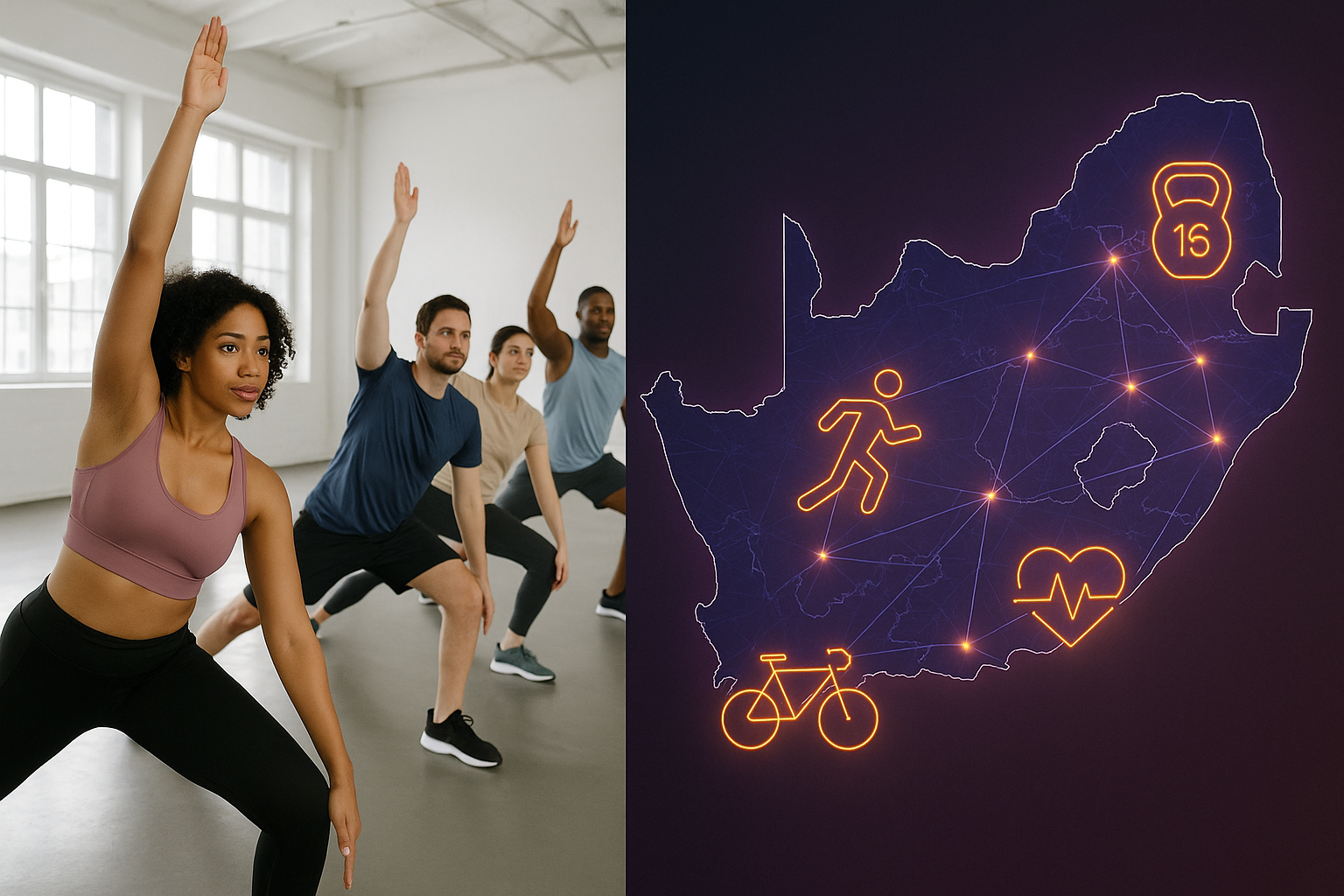
South Africa's fitness culture is evolving, focusing on community and belonging over traditional programs. Discover the 'clubhouse effect' and social workouts.
South Africa’s Fitness Revolution: Where Sweat Serves Friendship First, Abs Second
South Africa is changing how people get fit! Forget lonely workouts; now, fitness places are like clubhouses where friends meet. People move together, chat, and build strong communities, making new pals more important than just getting abs. They're even using nature and old traditions like 'stokvels' to make fitness fun and social. It's all about moving with others and finding your 'tribe'!
What is South Africa's "clubhouse effect" in fitness?
South Africa's "clubhouse effect" describes fitness spaces that act as neutral social hubs, distinct from work or home. Movement is a ticket for conversation and building community, prioritizing interaction over intense individual workouts. This trend has led to a rise in "high-interaction, small-format" memberships.
Get Cape Town news in your inbox
Stay updated with the latest stories from the Mother City.
1. The Third Place Is the Real Workout
Cape Town’s Biscuit Mill wakes up long before the food markets arrive. By 06:15 on a plain Tuesday, kettle-bells rattle against scarred cement while the smell of freshly-ground coffee drifts across the hall. Someone balances a tin of home-made rusks on a fold-up table, the trainer asks a newcomer how last night’s blind date went, and nobody checks a stop-watch. The official class ends at 07:00, yet the floor stays busy. Phones remain in backpacks, sweat dries naturally, and over half the group co-ordinates a sunset hike up Kloof Corner before drifting off to work.
Researchers at the University of Cape Town call the phenomenon the “clubhouse effect”: a room that behaves like a neutral tribe space, neither office nor lounge, where movement is simply the ticket for conversation. Identical scenes now hide inside Salt River’s old printworks, an abandoned church hall in Observatory, and a CBD rooftop that doubles as a dawn breath-work lounge. None of them sell dream physiques in thirty days; flyers promise “your people are here.” The message is clearly profitable - Planet Fitness South Africa’s 2025 trend survey shows “high-interaction, small-format” memberships climbing forty-two percent while mega-gyms with rows of treadmills have flat-lined.
Money follows the chatter. Property owners who once chased anchor supermarkets now court micro-studio collectives that need only 150 square metres and a Bluetooth speaker. The shift re-wires foot traffic: members arrive at six, linger until eight, then wander next door for breakfast. Retailers report a twenty-eight percent bump in Tuesday-morning takings, proving that social sweat can lease space better than traditional anchors ever did.
2. Why the Brain Loves Moving in Sync
Stellenbosch neuro-psychiatrist Dr Nasreen Pandy measures oxytocin - the social-bond hormone - before and after group workouts. Her early numbers show a forty-two percent jump after forty-five minutes of synchronised squats, lunges or drum-paced Pilates, a rise that outstrips most competitive sports. “When bodies move in rhythm, the cortex files every nearby face under ‘safe tribe’,” she explains. “That label lingers and drags people back even when the session itself is average.”
Her lab now designs “social REITs” (Rhythmic Endorphin Investment Tasks) for desk teams fractured by remote work. One insurance company replaced its Monday sales meeting with chant-timed burpees; absenteeism dropped eighteen percent within a quarter. The once-skeptical finance chief now starts every board gathering with three minutes of call-and-response breath-work, claiming calmer balance sheets and faster decisions.
The takeaway is simple: synchrony beats intensity when the goal is retention. Studios that swap scoreboards for collective rhythm find fuller rooms and lower drop-off, proving the brain chooses companionship over calories whenever it gets the chance.
3. From Rooftops to Townships: Community First, Equipment Optional
The movement is not an inner-city privilege. In Khayelitsha, “Sweat 100” gathers at the crossroads of Mew Way and Spine Road at five sharp. There are no mirrors, branded shirts or turnstiles - just a shipping container stuffed with resistance bands and a solar-powered speaker loud enough to wake the neighbourhood. Founder Nombulelo Dlikilili, a former netball player, says the hardest part was defeating shame. “Public workouts used to scream poverty; we flipped that script into a street celebration,” she laughs. Toddlers mimic push-ups, elders clap time, and local spaza owners hand out rehydration sachets for free.
Attendance now tops four hundred, and a waiting list has formed for “Sweat 100 Singles,” a buddy system that pairs strangers by work shift and favourite gospel track. A nearby barber gives complimentary shape-ups to anyone who logs twenty sessions a month, turning physical presence into social currency. Zero marketing budget, huge social upside.
Developers chasing the next hotspot have noticed. Instead of importing outside brands, new mixed-use precincts invite Sweat-style crews to animate empty lots until construction cranes arrive. The contract is informal: keep the space safe and lively, receive free electricity and security. It is a low-cost activation that turns dead capital into vibrant real estate and gives communities continuity even while neighbourhoods re-zone.
4. Nature, Stokvels and the Future of Belonging
South Africa’s iconic landscapes are becoming prescribed medicine. Cape Nature’s “Eco-Rx” programme lets GPs issue vouchers for guided boulder hikes or tidal-pool aerobics. Patients enter WhatsApp micro-teams matched by age, BMI and Spotify history; the shared awe produces a sixty-seven percent completion rate - triple that of solo gym scripts. The state saves on chronic-disease spend, and rural guides gain stable income.
Financial traditions are also mutating. “Friendship bonds,” inspired by rotating stokvels, now appear in studios country-wide. Ten members chip in roughly four hundred and fifty rand each; the pooled cash earns interest and every month one person pockets the pot for a bike, therapist sessions or child’s school fees. Miss more than two classes and you forfeit your share, so the group quietly enforces attendance without shaming texts. Default rates hover below two percent, outperforming most micro-loans.
Even apps reinforce offline ties rather than replace them. UbuntuMove lets friends co-own class bundles: if four commit to six weeks of capoeira, everyone pays twenty-five percent less. Skip twice and your partners collect a refund from your card - financial skin in the game keeps feet on the floor. Another platform, AmandlaSync, geo-fences night runners; when five users converge, the map unlocks discounts at a nearby health café, turning lonely jogs into luminous safety clusters.
The endgame is explicit: success is measured in collective rhythm, not individual heart-rate. As dawn breaks over Kloof Nek, a line of runners spreads across the ridge exchanging recipes, builder contacts and childcare hacks. A hesitant newcomer hangs at the back until a veteran slows, offers a silent high-five, and their steps lock for twenty strides. No one uploads the moment; it lives only in the invisible lattice tightening with every footfall. In that instant the old idea of “going to gym” feels as dated as dial-up internet - South Africa has re-written the contract, and the fine print reads: show up for each other; fitness is simply the excuse.
[{"question": "
What is South Africa's \"clubhouse effect\" in fitness?
", "answer": "South Africa's \"clubhouse effect\" describes fitness spaces that act as neutral social hubs, distinct from work or home. Movement is a ticket for conversation and building community, prioritizing interaction over intense individual workouts. This trend has led to a rise in \"high-interaction, small-format\" memberships, with a 42% increase reported by Planet Fitness South Africa's 2025 trend survey, while mega-gyms have seen flat-lined growth."},{"question": "
How does group synchronization impact social bonding and retention in fitness?
", "answer": "Neuro-psychiatrist Dr. Nasreen Pandy's research shows a 42% jump in oxytocin, the social-bond hormone, after 45 minutes of synchronized group workouts like squats or Pilates. This synchronization leads the brain to file nearby faces as 'safe tribe,' fostering companionship and retention. This concept has even been applied to corporate settings, with one insurance company seeing an 18% drop in absenteeism after replacing sales meetings with chant-timed burpees."},{"question": "
How are fitness communities emerging in various South African settings, including townships?
", "answer": "The fitness revolution is not limited to inner-city areas. In Khayelitsha, 'Sweat 100' gathers hundreds of people for workouts using minimal equipment and solar-powered speakers, transforming public workouts into 'street celebrations.' This initiative, founded by Nombulelo Dlikilili, has a waiting list and fosters community through buddy systems and local business partnerships, demonstrating that strong social connections can be built with zero marketing budget. Developers are even using these 'Sweat-style crews' to activate empty lots, providing free electricity and security in return for community engagement."},{"question": "
What role do nature and traditional financial concepts play in South Africa's fitness trend?
", "answer": "South Africa is leveraging its natural landscapes, with programs like Cape Nature’s 'Eco-Rx' allowing doctors to prescribe guided hikes or tidal-pool aerobics. These nature-based activities, often facilitated through WhatsApp micro-teams, boast a 67% completion rate, significantly higher than solo gym scripts. Additionally, traditional financial concepts like 'stokvels' are being adapted into 'friendship bonds' in studios. Members pool money, which earns interest, and one person receives the pot monthly for personal needs, with attendance at classes being a condition, ensuring high retention and low default rates."},{"question": "
How are technology and apps reinforcing offline social connections in South African fitness?
", "answer": "Instead of replacing offline interactions, apps are enhancing them. UbuntuMove allows friends to co-own class bundles, offering discounts when groups commit together, and implements a system where skipped classes result in a refund from the skipping member to their partners, creating financial incentive for attendance. AmandlaSync geo-fences night runners, unlocking discounts at health cafés when five users converge, transforming solitary jogs into safer, more social experiences. These apps prioritize collective rhythm and shared experiences over individual metrics."},{"question": "
What is the ultimate goal and measure of success in this fitness revolution?
", "answer": "The ultimate goal of South Africa's fitness revolution is explicit: success is measured in collective rhythm and strengthened social bonds, not individual heart-rate or aesthetics. The focus is on showing up for each other, building community, and finding a 'tribe.' Fitness becomes the excuse for social interaction, fostering an 'invisible lattice' of support and connection that extends beyond the workout itself, making the traditional idea of 'going to gym' feel outdated."}]
Emma Botha is a Cape Town-based journalist who chronicles the city’s shifting social-justice landscape for the Mail & Guardian, tracing stories from Parliament floor to Khayelitsha kitchen tables. Born and raised on the slopes of Devil’s Peak, she still hikes Lion’s Head before deadline days to remind herself why the mountain and the Mother City will always be her compass.
View all articles →