
The rise of running clubs in Cape Town
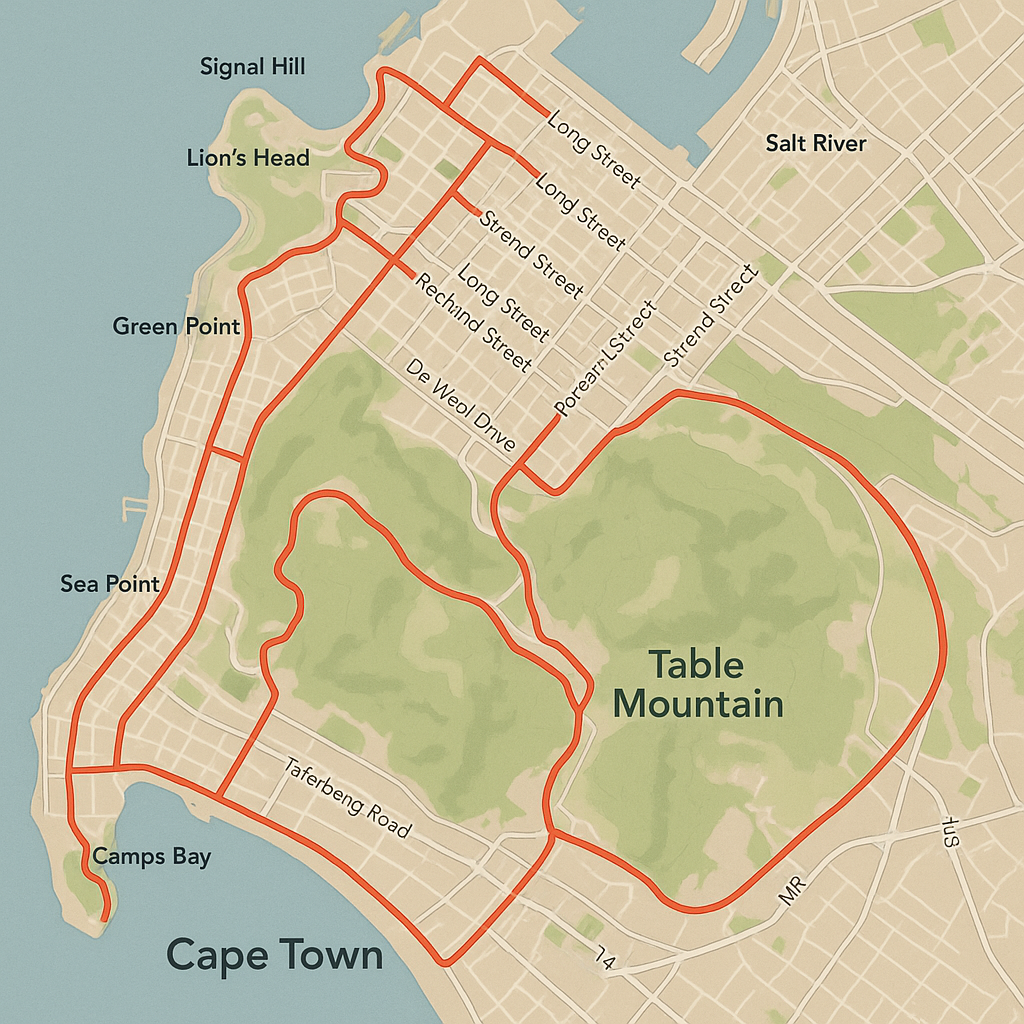
Cape Town's running clubs have transformed the city into a vibrant social hub, boosting physical & mental health, and local economies.
Cape Town's running scene exploded into a 24-hour party, turning city streets into a vibrant playground. Over 60 running crews, born from a simple WhatsApp group, now fill the city with people of all ages running, socializing, and exploring. This unique blend of fitness and fun has even attracted global brands and local businesses, creating a new way to experience the city. From early morning jogs to late-night runs, these crews show that running in Cape Town is more than just exercise; it's a lively community where every stride builds connections.
What is the running crew culture like in Cape Town?
Cape Town's running crew culture is a vibrant, 24-hour social phenomenon, transforming sidewalks into a "roaming carnival" of sweat and selfies. Over 60 branded crews, born from a single WhatsApp group, run at all hours, attracting diverse participants from students to grandparents, and integrating with local businesses and community initiatives. It's a unique blend of fitness, social connection, and city exploration.
Get Cape Town news in your inbox
Stay updated with the latest stories from the Mother City.
Dawn Patrol to Night Neon: The Rise of Social Sweat
Signal Hill flickers with head-torches at 05:00 while Green Point’s athletics oval glows like a disco at 20:00. Cape Town’s sidewalks have morphed into a roaming carnival of sweat, selfies and espresso shots. A lone WhatsApp group born in 2019 has since multiplied into 60 officially branded crews, each owning a hashtag, a jersey shade and a favourite flat-white joint. The surge mirrors a worldwide urban shift that treats jogging as living infrastructure, yet the Mother City’s cliffs, culture and post-lockdown craving for company forged a vibe that no other metropolis can photocopy.
Crew culture here refuses to respect office hours. Students, baristas and finance brokers negotiate shift swaps so they can “make the boomerang” – the 270-degree turn on Sea Point promenade where Instagram Stories explode. Retired grandparents queue for LED bibs that flash heart-rate colours, and toddlers learn to count in kilometres before they master sheep. The city’s tourism board no longer markets Table Mountain alone; it packages sunrise sweat sessions as “cardio safaris” and sells them faster than penguin tours.
Global brands, academics and neighbourhood watches sprinted to keep up. Adidas resurrected a derelict Woodstock petrol station, Puma turned runners into human disco balls, and a UCT lab proved that eight weeks of pavement therapy beats mindfulness apps. Taxi ranks, once hostile to spandex, now reserve benches for post-run stretches, and grandmothers in townships stock ginger beer in iced cooler boxes because 200 thirsty strangers are guaranteed every Thursday.
Micro-Calendars & Macro-Fun: Seven Days of Choreographed Chaos
The “Cape Town Road Runners Collective” meta-calendar lists 42 public departures every week. Tuesday’s “Slow & Steady” trots 5 km along the promenade, dogs on leash and R25 flat-whites waiting at a shipping-container café. Wednesday evenings belong to “U-Turn Athletics” on Green Point’s lawn where a former biomechanics lecturer dishes QR-coded pace bands tuned to heart-rate zones. Thursday township bass rattles windows when “Khayelitsha Canter” meets at Site-C Plaza, amapiano blasting from a speaker bolted to a cooler-box trolley and grandmothers selling home-brewed ginger beer from plastic stools.
Saturdays open with five free parkrun 5 km events within 30 km, then “Park-Run-Pancakes” hijacks a different diner and judges flapjacks on syrup-to-crisp ratios broadcast to TikTok. Sundays finish at “Gugs-Mile” where Siphokazi Mbobo stuffs 120 “Carbo-Reload” quarter-loaves with spinach, eggs and chilli before most church bells ring. The only common currency is sweat; pace is negotiable, selfies are not.
Instagram Stories arrive pre-loaded: route maps, elevation graphs, sunset percentages and group-pic templates framed in Canva. Emojis act as traffic lights – olives mean water-stop, dolphins signal beach finish, proteas promise post-run picnics. “Table Mountain Terminators” crowdsource live weather selfies; an algorithm decides 30 minutes ahead whether stairs in the CBD replace the exposed ridge. Miss the story, miss the run – no one waits.
From Township Tracks to Crypto Wallets: The New Economy of Kicks
Adidas turned a 1960s Woodstock garage into a “Run Base” – lockers, showers, USB ports and a 30 m LED wall streaming Berlin marathon footage while you foam-roll. Puma’s night “Glow Runs” hand out programmable bibs that flash your Strava handle in heart-rate hues. Under Armour funds “Couch-Potato-to-10K”, a six-week funnel that ends with discounted Cape Town Marathon entries and an NFT race bib worth 20 % off at nearby eateries. Even crypto joined the kilometres: “Sweat-South” mints 0.02 Solana per verified club kilometre, spendable at inner-city food markets – a literal pocket-money economy powered by glutes.
Local design fights back against corporate sameness. “Mzansi Mamba” singlets printed in a Langa backroom morph protea petals into sprinting figures; profits fund the adjoining creche. Sneaker-repair pop-ups teach stitch-and-glue skills that keep R1,500 shoes out of landfill and create side-hustles for unemployed youth. By the time you’ve earned enough Solana for breakfast, you’ve also bankrolled a childcare centre and saved the planet one mid-sole at a time.
Hotels, roasteries and spaza shops rewrote revenue forecasts around 7 a.m. sweat. The Mojo Hotel’s “Run-Stay-Eat” bundles a waterfront 7 km loop, yoga mats and a buffet calibrated to 532 kJ burned; mid-week occupancy leapt 18 % above pre-COVID highs. “Bean-There-Run-That” built a 1.5 km circuit inside the Old Biscuit Mill; scanning a QR code lands a R40 “Runner’s Flight” of three single-origin espressos, pushing Saturday foot-traffic up 22 %. Every kilometre now carries a price tag and a purpose.
Proof on the Pavement: Science, Safety and Social Surprises
Stellenbosch Sports Medicine tracked 240 newbies for 14 months. VO₂-max jumped 18.7 %, but the jaw-dropper hides in mental-health columns: depression scores fell 4.3 points – the clinical cut-off for “major” to “mild” – and loneliness plummeted 28 %. Sleep latency shrank nine minutes; cortisol awakening response flattened for 72 % of runners, an effect researchers equate to eight weeks of mindfulness, only no one skipped a session – compliance hit 96 %. Discovery Vitality now triples points for club-verified kilometres, and Mitchells Plain clinics prescribe “Khayelitsha Canter” instead of diet lectures.
Safety innovations sprout faster than sweat stains. “Run4Rights” crews wear bibs reading “Community Patrol”, turning runners into moving neighbourhood watches. Strava Metro heat-maps lobbied the city to install 42 solar streetlights along the Langa-Pinelands corridor; muggings dropped 38 % in six months. Female-only “Sisters of the Sweat” host “Pepper-Sprint” nights – Muay-Thai combos between 400 m reps – and maintain a live Google Doc rating cat-calling, lighting and restroom risk. Restaurants scoring under 3/5 are exiled from post-run brunch, a boycott more effective than any municipal by-law.
Behavioural economists discovered the cheat code for loyalty: first-night Polaroids. Strava’s data boffins proved that selfie variety, not VO₂-max, predicts who returns. Cape Town clubs exploit the finding by forcing every newcomer to pin an unfiltered mugshot on a communal cork board. Retention rockets from 46 % to 78 % once runners literally see themselves on the wall. Identity fusion beats lactate every time.
Car-Free Wednesdays & Climate Routers: The Future Is Already Late
November’s “Cape Town 12 OneCity” sold out in 11 minutes – faster than Beyoncé tickets. That panic pushed councillors to debate car-free Wednesday dusks: three CBD blocks handed to runners, skaters and dance crews for a pilot that spiked Strava activity 400 % and cut air pollution 29 %. Taxi associations threaten gridlock, yet hotels count an extra R4 million mid-week boom. Whatever the vote, the chat itself proves that asphalt has become referendum material.
A former round-the-world sailor now micro-forecasts Cape Town’s infamous south-easter using 1 km ECMWF grids. For R3 a month, runners receive GIFs of cartoon ostriches swerving routes when wind shear jumps from 10 km/h to 50 km/h in 12 minutes. The service saves an estimated eight km per year in cancelled sessions, turning meteorological tantrums into trivia.
From Python classes on yoga mats to sneaker-stitch side-hustles, crews export knowledge, not just hashtags. Nairobi and Accra copy “Pace-Setters for Papers”, pairing university mentors with school kids who run exam-pace kilometres. Cape Town’s pavements have already become a classroom, a clinic, a bank and a stage. The only remaining question is not whether to join, but which colour tee to pull over your head before the next sunrise sends another river of head-torches up the hill.
[{"question": "
What is the running crew culture like in Cape Town?
", "answer": "Cape Town's running crew culture is a vibrant, 24-hour social phenomenon, transforming sidewalks into a 'roaming carnival' of sweat and selfies. Over 60 branded crews, born from a single WhatsApp group, run at all hours, attracting diverse participants from students to grandparents, and integrating with local businesses and community initiatives. It's a unique blend of fitness, social connection, and city exploration."}, {"question": "How did the running crew movement start in Cape Town?
", "answer": "The running crew movement in Cape Town originated from a single WhatsApp group in 2019. This initial group quickly multiplied, leading to the formation of over 60 officially branded running crews, each with its own identity, hashtag, and favorite post-run spots."}, {"question": "What kind of activities do Cape Town running crews offer?
", "answer": "Cape Town running crews offer a wide array of activities catering to different paces and interests. From 'Slow & Steady' 5km trots with dogs on leash to 'U-Turn Athletics' with QR-coded pace bands, and 'Khayelitsha Canter' featuring amapiano music and local ginger beer. There are also free parkrun events, 'Park-Run-Pancakes' gatherings, and 'Gugs-Mile' for carbo-reloading. Many runs emphasize social connection and exploration over strict pace."}, {"question": "How do global brands and local businesses interact with the running crews?
", "answer": "Global brands like Adidas, Puma, and Under Armour have actively engaged with the running crews, setting up 'Run Bases,' organizing 'Glow Runs,' and funding 'Couch-Potato-to-10K' programs. Local businesses, including hotels, roasteries, and spaza shops, have also adapted, offering 'Run-Stay-Eat' bundles, 'Runner's Flight' coffee deals, and selling refreshments like ginger beer to thirsty runners. Even cryptocurrency has joined, with 'Sweat-South' minting Solana for verified kilometers."}, {"question": "What are the proven benefits of participating in these running crews?
", "answer": "Research has shown significant benefits from participating in Cape Town's running crews. Studies indicate an 18.7% increase in VO₂-max, a 4.3-point drop in depression scores (moving from 'major' to 'mild'), and a 28% decrease in loneliness. Sleep latency shrank by nine minutes, and 72% of runners experienced a flattening of their cortisol awakening response, comparable to eight weeks of mindfulness treatment. These benefits have even led to clinics prescribing participation in crews like 'Khayelitsha Canter.'"}, {"question": "How do the running crews contribute to community safety and development?
", "answer": "Running crews contribute to community safety through initiatives like 'Run4Rights' where runners act as 'Community Patrols.' They've also influenced urban development, with Strava Metro heat-maps leading to the installation of solar streetlights, significantly reducing crime. Female-only groups like 'Sisters of the Sweat' host 'Pepper-Sprint' nights and maintain live Google Docs to rate safety and amenities. Additionally, local design efforts fund creches, and sneaker-repair pop-ups create side-hustles for unemployed youth, fostering economic and social development."}]
Hannah Kriel is a Cape Town-born journalist who chronicles the city’s evolving food scene—from Bo-Kaap spice routes to Constantia vineyards—for local and international outlets. When she’s not interviewing chefs or tracking the harvest on her grandparents’ Stellenbosch farm, you’ll find her surfing the Atlantic breaks she first rode as a schoolgirl.
View all articles →