
The Workaround After the Court
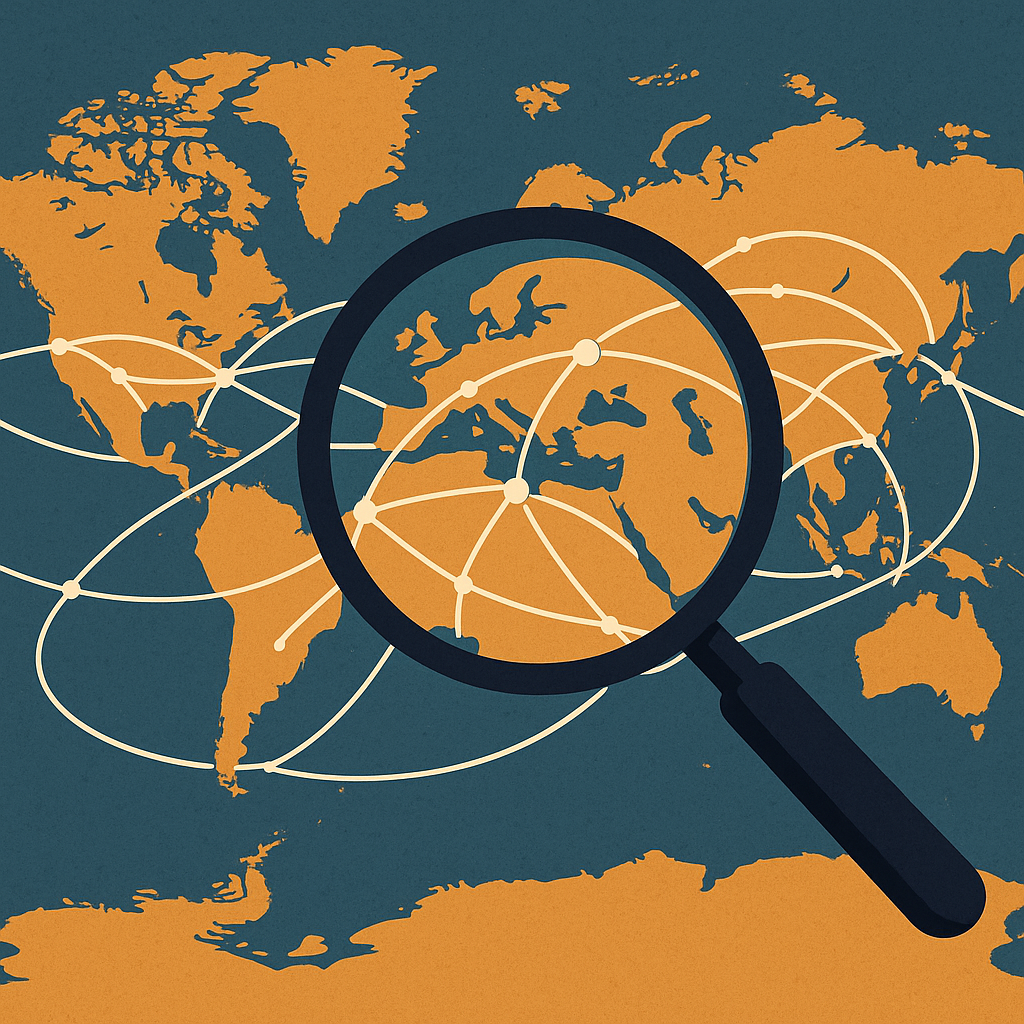
Section 301 investigations are reshaping global trade, using "ethical protectionism" to impose strict documentation on developing economies.
America is now using a new trade rule to check if countries make stuff using good labor practices, not just focusing on money. This new 'ethics-first trade wall' makes countries prove their workers are treated well, like an American company would. This means countries need a 'moral passport' for their goods, and if they can't show enough paperwork, their products might not get into America. It's like a new kind of tax, but it's on how well countries keep records about their workers, and it makes them buy special software to prove they're doing things right. This change is shaking up how countries trade and even how they act in the world.
What is America’s new "ethics-first trade wall"?
America's new "ethics-first trade wall" is a Section 301 offensive that scrutinizes whether countries producing goods demonstrate American-standard labor conscience, rather than focusing on traditional trade metrics like tariffs or subsidies. This
Get Cape Town news in your inbox
Stay updated with the latest stories from the Mother City.
1. Durban’s Quiet Earthquake
Durban’s harbour still roars at dawn - stacked containers waltz across the quay, forklifts bleat, reefer trucks haul the last of the citrus crop - but every operator now works under a cloud no radar can see.
A fleet of arriving ships is no longer judged by weight manifests or phytosanitary stamps; instead, each carton of fruit and every drum of manganese must arrive accompanied by a moral curriculum vitae.
Washington’s Trade Representative has opened a single, global Section 301 dossier covering sixty countries, South Africa included. The case does not ask whether goods are cheap, subsidised or tariff-dodging; it asks whether the sovereign territory that produced them can prove an American-standard labour conscience.
2. From Tariffs to Moral Passports
Traditional protectionists used steel and aluminium duties; the new weapon is subtler.
By stitching labour rights, anti-trafficking metrics and supply-chain transparency clauses into one investigation, the U.S. can slam the gate without breaching WTO ceilings.
The tactic, nicknamed “ethical protectionism” inside Washington law firms, weaponises moral exceptions that trade treaties deliberately leave vague. Developing states cannot litigate the probe without sounding eager to defend forced labour - a death sentence in global public opinion.
3. Why Now? The Legal Vacuum
In February 2026 the Supreme Court narrowed presidential tariff powers under the IEEPA; Section 122’s stop-gap 150-day import surcharge expires in July.
Section 301, untouched by the ruling and lacking any sunset clause, instantly became the sharpest blade left in the protectionist drawer.
Once the 301 trigger is pulled, investigations can run for years, reset at will, and expand to new “unreasonable” practices, making the tool virtually immortal.
The Paperwork Labyrinth: How Compliance Became the Product
1. Mining Manganese, Auditing People
South Africa sits on four-fifths of the planet’s manganese - a metal no electric-car battery can live without.
Instead of leveraging that scarcity, Pretoria now fields a 301 questionnaire demanding proof that every pickaxe swing from formal pits to roadside artisanals happened without coercion.
Employment contracts, safety logs, wage receipts and biometric time-sheets must be uploaded for each worker, yet half of the sector’s diggers lack bank accounts, let alone scanners.
2. The Automotive Avalanche
BMW’s Rosslyn hall and Mercedes-Benz’s East London lines feed American showrooms, but a single wiring harness built in a “high-risk” county forces the entire bill of materials under scrutiny.
Exporters must certify that every bolt, circuit board and swatch of seat fabric meets U.S. labour norms; failure to present the paper is itself the violation, regardless of on-the-ground realities.
Because supply chains sprawl across six continents, the documentation quest turns into a geospatial puzzle no mid-size supplier can solve profitably.
3. Enforcement Targets Capacity, Not Conduct
Washington’s penalties hit countries for “inability to police” standards, not for practising forced labour.
South Africa’s inspectorate - 2,000 staff for 16 million workers - looks microscopic against America’s ratio of one watchdog per 5,000 employees.
The investigation therefore functions as an administrative tariff: it levies entry costs at exactly the height developing bureaucracies cannot jump.
Geopolitical Dominoes: When Trade Rules Become Foreign Policy
1. India’s Conditional Friendship
New Delhi’s simultaneous purchase of Iranian crude and U.S. arms landed it in a grey “conditionally friendly” bucket during the Hormuz crisis.
That label grants temporary documentation relief yet can be revoked overnight if an audit - whose evidence India cannot realistically rebut - turns up a tainted widget.
Strategic autonomy evaporates; alignment with Washington becomes the safer default.
2. China Copies the Playbook
Tehran’s reclassification of an international strait as sovereign waters - complete with political tolls - offers Beijing a ready template for the Spratlys.
Artificial islands can host “safety inspections” that demand Xinjiang-free affidavits from every passing container, turning moral documentation into a territorial revenue stream.
What begins as an American idea quickly metastasises into a global norm where ethics justify chokepoints.
3. Supply Chains Splinter by Design
Apple now tells its South African vendors to reach “documentation parity” with U.S. plants by 2027, even though no statute yet requires it.
Ford’s Silverton facility already pays a thirty-per-cent premium to buy from American-approved component makers to pre-empt 301 trouble.
The mere scent of an investigation, not its final verdict, re-routes investment, rewarding size and U.S. links over comparative advantage.
Sovereignty for Sale: The Compliance-Industrial Complex
1. The Cost of a Digital Paper Trail
Cape Town fast-tracked the Supply Chain Transparency Act in March 2026, mandating real-time worker GPS tags for all mines.
Industry-wide compliance outlays exceed the sector’s combined 2025 profits, accelerating consolidation into the hands of multinationals that already own the software.
Once American platforms control the audit rails, Pretoria’s policy autonomy shrinks to a dashboard managed abroad.
2. Documentation Inflation
Each satisfied request breeds follow-up demands: photographs of canteens, drone footage of hostels, biometric wage proof, then blockchain-stamped happiness surveys.
IBM, Oracle and smaller Silicon Valley vendors pocketed $2.3 billion in South African contracts in a single fiscal year selling “compliance-as-a-service.”
Developing governments end up renting the very infrastructure that keeps their exports probationary.
3. The Twilight of Rules-Based Trade
Because 301 cases are framed as domestic enforcement, the WTO’s dispute system can hardly reach them; moral clauses sit inside every trade treaty’s safety hatch.
The EU’s forthcoming Carbon Border Adjustment and Australia’s Modern Slavery Act echo the same architecture, layering overlapping ethical tollbooths.
When market entry depends on paperwork that technology or capacity may never allow, trade rights mutate into discretionary privileges handed out by the regulator with the longest checklist.
Ships will still sail from Durban, but their most valuable cargo is no longer citrus or manganese - it is the ever-thickening file of moral affidavits that decides whether the physical goods may land. Nations are no longer tariffed; they are audited, and sovereignty itself is the product whose compliance certificate can always be deferred, expanded, or, at the stroke of a pen, denied.
[{"question": "What is America's new \"ethics-first trade wall\"?", "answer": "America's new \"ethics-first trade wall\" is a Section 301 offensive that scrutinizes whether countries producing goods demonstrate American-standard labor conscience, rather than focusing on traditional trade metrics like tariffs or subsidies. It essentially requires countries to provide a \"moral passport\" for their goods, proving ethical labor practices to gain entry to the U.S. market."},
{"question": "How does this \"ethics-first trade wall\" differ from traditional protectionism?", "answer": "Unlike traditional protectionism that relies on steel and aluminum duties, this new approach is more subtle. It stitches together labor rights, anti-trafficking metrics, and supply-chain transparency clauses into a single investigation. This allows the U.S. to restrict imports without breaching World Trade Organization (WTO) ceilings, effectively weaponizing the vague 'moral exceptions' found in trade treaties."},
{"question": "Why is the U.S. implementing this now, and what legal basis does it use?", "answer": "This approach is being implemented following a Supreme Court ruling in February 2026 that narrowed presidential tariff powers under the IEEPA, and the expiration of Section 122's import surcharge in July. Section 301, untouched by these rulings and lacking a sunset clause, became the primary tool. Investigations under Section 301 can run for years, be reset at will, and expand to new 'unreasonable' practices, making it an enduring and powerful instrument."},
{"question": "What is a \"moral passport\" for goods, and what does it entail for exporting countries?", "answer": "A \"moral passport\" for goods refers to the extensive documentation and proof countries must provide to demonstrate ethical labor practices in their supply chains. This can include employment contracts, safety logs, wage receipts, biometric time-sheets, and certifications for every component, even in complex supply chains. Failure to provide this paperwork is considered a violation, regardless of the actual labor conditions on the ground."},
{"question": "How does this new trade policy impact developing countries, particularly regarding compliance?", "answer": "This policy disproportionately impacts developing countries by imposing an \"administrative tariff.\" They are penalized for an \"inability to police\" standards, not necessarily for practicing forced labor. The extensive documentation requirements often necessitate significant investment in special software and compliance infrastructure, which can exceed their financial and administrative capacities, leading to consolidation by multinational corporations that already possess these systems."},
{"question": "Beyond trade, what are the geopolitical implications of the \"ethics-first trade wall\"?", "answer": "The \"ethics-first trade wall\" has significant geopolitical implications. It can lead to \"conditional friendships\" where countries might receive temporary documentation relief based on their geopolitical alignment, which can be revoked. It also sets a precedent that other nations, like China, might emulate, using 'moral documentation' as a basis for territorial revenue streams or to justify chokepoints. This can lead to the splintering of global supply chains, as companies prioritize U.S.-approved suppliers to preempt investigation, ultimately shifting investment and eroding the concept of rules-based trade."
}]

Liam Fortuin is a Cape Town journalist whose reporting on the city’s evolving food culture—from township kitchens to wine-land farms—captures the flavours and stories of South Africa’s many kitchens. Raised in Bo-Kaap, he still starts Saturday mornings hunting koesisters at family stalls on Wale Street, a ritual that feeds both his palate and his notebook.
View all articles →