
This Is Cape Town goes global
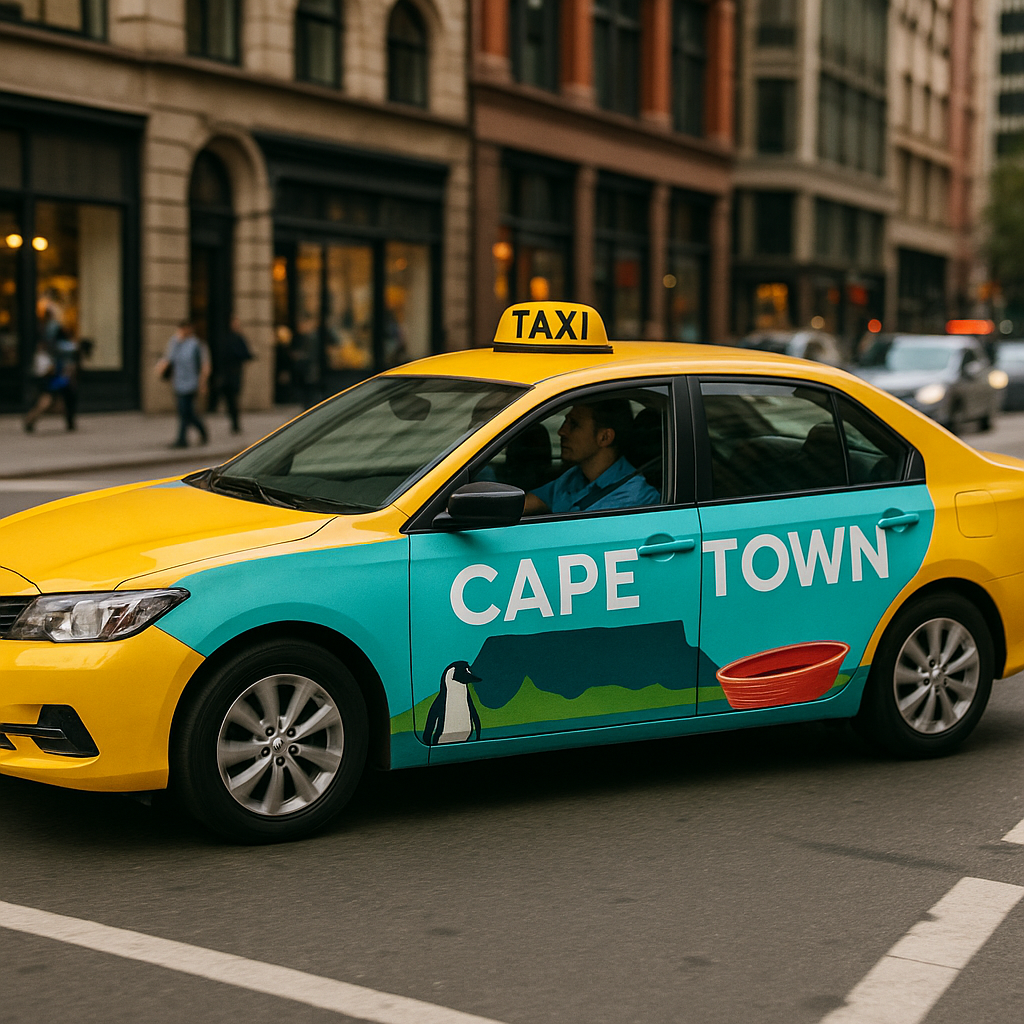
Discover "This Is Cape Town," a global campaign bringing the city's allure to Times Square, London cabs, and European living rooms.
Cape Town is captivating the world using super smart digital ads, grabbing everyone's attention. They flash amazing five-second videos in famous places like Times Square and even wrap London taxis with cool designs. They also sneak unskippable video ads onto European smart TVs. On top of that, they've made flights easier, teamed up with pop culture stars, and even turned exploring the city into a fun game to make people really want to visit.
How is Cape Town attracting tourists?
Cape Town is attracting tourists through innovative, pervasive digital advertising campaigns. They use targeted five-second video loops in high-traffic areas like Times Square, wrap London taxis with themed designs, and inject unskippable video ads into European smart TVs. Additionally, they've optimized flight routes, engaged in pop-culture collaborations, and even gamified the city experience to entice visitors.
Get Cape Town news in your inbox
Stay updated with the latest stories from the Mother City.
- (and quietly rewires the travel economy while you blink)*
I. The City That Learned to Leap Out of Frames
Picture Table Mountain, but not where it belongs.
Instead of rising behind a waterfront parking lot, it pulses across a 55 m LED cliff in Times Square, reflects in the obsidian door of a London cab, hijacks a Milanese binge-watch at 20:47 and whispers in Swiss-German: “only eleven hours away.”
This restless cameo is the opening gambit of “This Is Cape Town,” a project that behaves like an art heist rather than advertising. While competing destinations still buy polite magazine spreads, Cape Town’s marketers are spray-painting the globe’s retina with five-second loops: surfers threading translucent Atlantic lips above Llandudno, dusk settling on the Twelve Apostles, penguins jay-walking across Boulder Beach.
The barrage is calibrated to the exact week when New Yorkers and Berliners first google “somewhere warm.” By the time those thumbs finish typing, the city’s silhouette is already squatting in the mental slot normally reserved for groceries and dry-cleaning. No billboards ask you to visit; the pictures simply assume you will.
II. Stealth Planes, Wrapped Cabs & Living-Room Coups
-
New York*
3 200 yellow taxis wear rooftop screens that refresh every ninety seconds. Sit in mid-town traffic for a quarter-hour and you ingest at least ten micro-doses of Cape Town salt-air, enough for the hippocampus to tag the place as familiar. -
London*
Forty hackney carriages trade chrome for matte indigo that matches the mountain at twilight. Rest your head and a hidden fynbos motif blooms in heat-sensitive ink; scan the seat-back QR and Virgin Atlantic auto-loads the cheapest Cape Town seat for the exact week your calendar screams “annual leave.” One in four riders completes the click, a conversion rate airline execs call “absurd.” -
Continental Europe*
The fight moves indoors. Smart-TVs inject 15-second, unskippable interruptions into Samsung TV Plus, Pluto, RTL+. Nordic-noir audiences get moody, colour-graded cliffs; baking-show viewers are ambushed by sun-flared penguins and a Swiss-German voice-over. Precision geo-fencing decides which accent sweet-talks you, ensuring the mountain feels like a neighbour rather than a postcard.
III. Runways, Algorithms & the War on Price Gouging
-
Supply-Side Surgery*
When United’s first Newark–Cape Town jet lifted off in December 2019 it ferried 264 av-geeks. Six winters later the same airline will park 91 749 bodies a year on that route - enough to fill Cape Town Stadium twice. Washington-Dulles followed in 2023 after data miners discovered that 38 % of U.S. bookings leaked out of the Beltway, a zip-code stuffed with policy advisors who Google “safari” the instant Congress recesses. -
Virgin’s Night Owl*
Virgin Atlantic nudged its Heathrow departure to 22:10, dumping travellers onto African tarmac at 11:05 local. The schedule is catnip for “GMT+2” Slack jockeys who clear immigration, drop bags at the Radisson Red and invoice clients from the Watershed before lunch. Load-factor boards inside Crawley HQ show Sunday-night exodus beating Friday by 18 % - a reversal of every leisure-travel playbook. -
The Invisible Ledger*
Every European who endures the mandatory three-second YouTube watch triggers a 0.4-cent micro-donation. Hyperledger tech, borrowed from carbon-trading desks, funnels the pennies to Langa cooking schools and Khayelitsha cycling co-ops. The tally already tops ZAR 1.7 million - proof that day-dreams can be crowdfunded into working capital long before a suitcase appears. -
Rate-Cap Cartel*
To protect that goodwill from post-pandemic price hysteria, 84 hotels signed a first-ever pact: rack rates may not rise more than 12 % above December 2024 levels for the next two peak seasons. STR Global says the ceiling stretches average stays by 0.8 nights, pushing total per-person spend past the magic ZAR 25 000 mark without triggering sticker-shock memes.
IV. Whales, Weebs, Shoegaze & the Gamified City
-
Pop-Culture Piracy
Within hours of Netflix releasing One Piece* season two - shot around Cape Point - the city’s social squad dropped TikTok side-by-sides of anime frames and drone shots. Hashtag #CapeTownOnePiece clocked 31 million views and crashed the server of Japan’s H.I.S. travel agency; its October charter 787 sold out in 53 minutes, a Tokyo aviation record. -
The Whale Livestream*
Thermal cameras bolted to the Twelve Apostles Hotel broadcast the southern-right migration 24/7 - geoblocked inside South Africa to protect local boat operators. Germans, who rank whales above Oktoberfest, receive pop-up packages that marry Lufthansa’s new Munich nonstop with a discounted One&Only stay, bundled 14 % cheaper than à-la-carte. -
Indie-Diplomacy in Asia
Safari-fatigued Indians are pitched June–August winter escapes: 22 °C vineyard afternoons, empty Camps Bay sunsets. A Mumbai Metro wrap in Devanagari script reads, “When Mumbai rains, Cape Town shines,”* scoring 34 % unaided recall among affluent 25-40-year-olds. In China, three Beijing shoegaze bands recorded EPs with track-title map pins; 3 000 vinyl records ship with QR itineraries curated by Mandarin-speaking guides, while NetEase Cloud Music geotags the songs with seat maps for Air China’s new direct Beijing run. -
Playable Cape Town*
Phase three turns the entire city into an AR game. Long-haul passengers land to an SMS inviting them to drop digital penguins - rendered in London-taxi indigo - onto every photo they take. Each waypoint unlocks steeper museum discounts, a star-based loyalty scheme brewed from Starbucks DNA but caffeinated on joy instead of coffee. Scratch the arrival card, WhatsApp “water,” and a 45-second voice note from a local explains Day Zero lessons plus three conservation tips, boosting positive social posts by 58 %.
As ledgers tick - 17 million META impressions in São Paulo, ZAR 1.7 million for township guides, a Tokyo sell-out faster than a concert - Table Mountain keeps its silent vigil. Only now the silhouette lives as an open browser tab in millions of minds, refreshed every few seconds, waiting for curiosity to hit Enter on a boarding pass.
[{"question": "
How is Cape Town attracting tourists?
", "answer": "Cape Town is attracting tourists through innovative, pervasive digital advertising campaigns. They use targeted five-second video loops in high-traffic areas like Times Square, wrap London taxis with themed designs, and inject unskippable video ads into European smart TVs. Additionally, they've optimized flight routes, engaged in pop-culture collaborations, and even gamified the city experience to entice visitors."}, {"question": "What kind of digital advertising is Cape Town using?
", "answer": "Cape Town is deploying a sophisticated array of digital advertisements. This includes five-second video loops showcased on large LED screens in prominent locations like Times Square, 'wrapped' London taxis featuring Cape Town themes, and unskippable 15-second video ads inserted into content on European smart TV platforms such as Samsung TV Plus, Pluto, and RTL+. These ads are often geo-fenced and localized with appropriate accents."}, {"question": "How are flight routes being optimized to increase tourism to Cape Town?
", "answer": "Cape Town has actively worked to optimize flight routes by increasing the frequency and capacity of existing flights, such as United's Newark-Cape Town route, and introducing new direct flights, like Washington-Dulles. Virgin Atlantic also adjusted its Heathrow departure time to 22:10, allowing travelers to arrive in Cape Town early the next morning, maximizing their day for business or leisure and catering to specific traveler demographics like remote workers."}, {"question": "How is Cape Town using pop culture and gamification to attract visitors?
", "answer": "Cape Town is leveraging pop culture by quickly responding to trends, such as creating TikTok side-by-sides of anime frames from One Piece (filmed near Cape Point) with drone shots of the city. They also engage in 'indie-diplomacy' by collaborating with artists and musicians in target markets like China. For gamification, phase three of their strategy plans to turn the entire city into an augmented reality (AR) game, where long-haul passengers can drop digital penguins on their photos, unlocking museum discounts and other rewards."}, {"question": "What measures has Cape Town taken to address price gouging and support local communities?
", "answer": "To combat post-pandemic price hysteria and protect goodwill, 84 hotels in Cape Town signed a pact limiting rack rate increases to no more than 12% above December 2024 levels for the next two peak seasons. Furthermore, the advertising campaigns generate micro-donations (0.4 cents per European YouTube watch) funneled through Hyperledger technology. These funds, totaling over ZAR 1.7 million, support local initiatives like cooking schools in Langa and cycling co-ops in Khayelitsha, directly benefiting township communities."}, {"question": "Are there any unique or unusual advertising strategies employed by Cape Town?
", "answer": "Yes, Cape Town employs several unique strategies. These include thermal cameras on the Twelve Apostles Hotel livestreaming the southern-right whale migration 24/7 (geoblocked in South Africa to protect local businesses), which is then packaged with discounted travel deals for markets like Germany. They also use 'indie-diplomacy' with initiatives like Beijing shoegaze bands recording EPs with track-title map pins and QR itineraries for Chinese tourists, and a Mumbai Metro wrap in Devanagari script promoting winter escapes to affluent Indians."}]
Sizwe Dlamini is a Cape Town-based journalist who chronicles the city’s evolving food scene, from boeka picnics in the Bo-Kaap to seafood braais in Khayelitsha. Raised on the slopes of Table Mountain, he still starts every morning with a walk to the kramat in Constantia before heading out to discover whose grandmother is dishing up the best smoorsnoek that day.
View all articles →