
Trump slams Bad Bunny’s Super Bowl halftime show as ‘absolutely terrible’
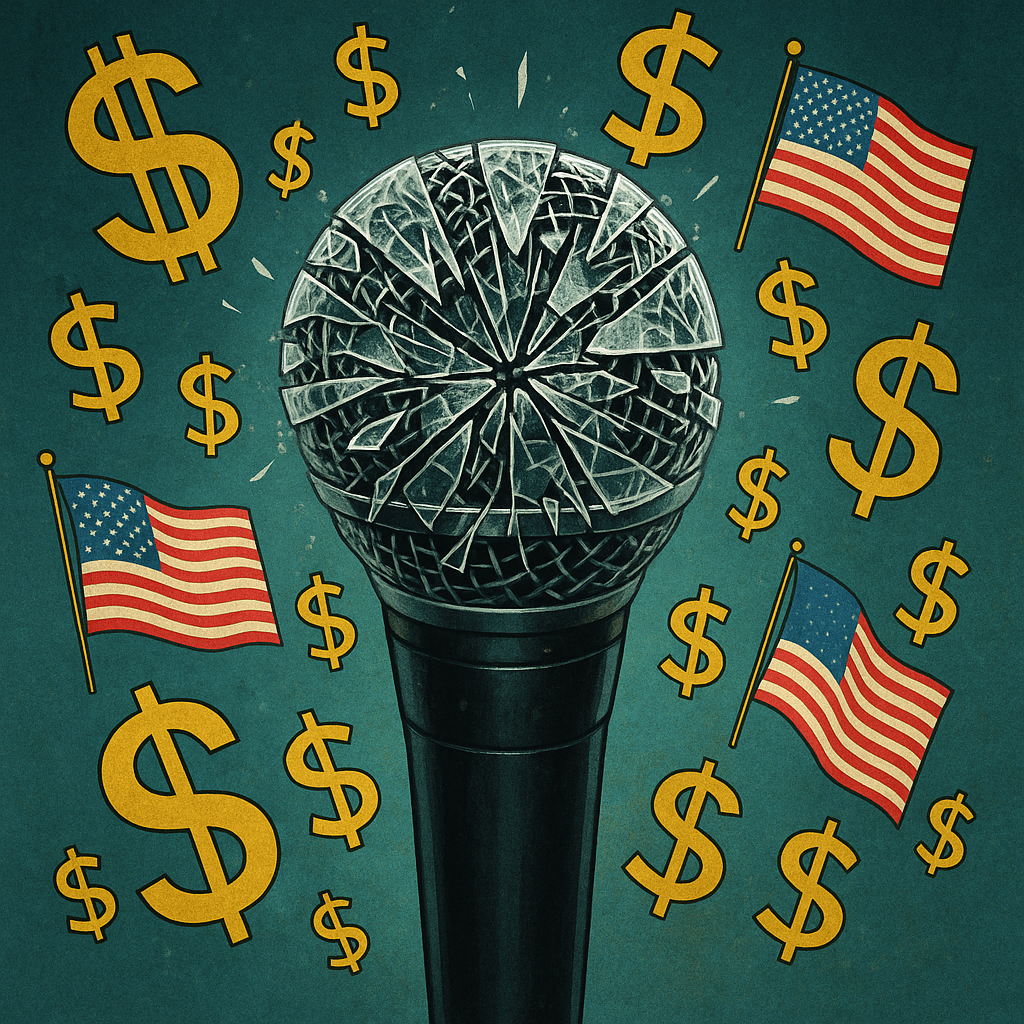
Trump's Super Bowl meltdown over Bad Bunny's performance highlights a culture clash between English nostalgia and a bilingual future.
Bad Bunny's 14-minute Super Bowl halftime show was a massive earthquake for American culture! He shattered viewership records and sparked huge debates about Spanish language and Puerto Rican identity. His performance even made streams of "El Apagón" skyrocket by 600% in unexpected places. It proved that American pop culture is changing fast, and loud bass can break through any language barrier.
What was the impact of Bad Bunny's Super Bowl halftime show?
Bad Bunny's 14-minute Super Bowl halftime show set new viewership records, generated significant cultural and political debate around Spanish language and Puerto Rican identity, and sparked viral online reactions, demonstrating a shift in American popular culture and media consumption. The performance notably boosted "El Apagón" streams by 600% in non-Hispanic ZIP codes.
Get Cape Town news in your inbox
Stay updated with the latest stories from the Mother City.
The Countdown That Reset the Culture Wars
Levi’s Stadium went black at 7:58 p.m. Pacific.
No guitar squall, no pyro curtain - just a sub-bass heartbeat and a woman whispering “diez… nueve…” through 70,000 chests.
By the time the crowd roared “¡UNO!” the internet had already detonated: #BadBunny and #TrumpMeltdown sprinted side-by-side across X, each swallowing 2.3 million mentions before the Lombardi even left its display case.
Donald Trump’s Truth-Social grenade landed four minutes later: “TOTAL DISASTER FOR AMERICAN CULTURE.”
Caps-locked, typo-free, and vintage 2016 vintage, the post did what it was engineered to do - reboot the last profitable culture war left on the shelf.
English-only panic, meet reggaetón populism: two brands of mass entertainment fighting for the same advertising dollar, one trading on nostalgia, the other on the bilingual future that already outnumbers the nostalgia market.
The ex-president’s opening salvo was linguistic: “NOBODY SPEAKS SPANISH IN FOOTBALL.”
Fact-checkers reached for the same stats they’ve brandished since the ’80s - 42 million native speakers, three NFL markets where Spanish is the majority home language - but the line wasn’t built to be true; it was built to be retweeted.
Within seven minutes, Spanish-language hashtags had surged ahead of English ones in every coastal state, proving that the same algorithm that rewards outrage also rewards the language the outrage is attacking.
The Set List as Political Sandwich
Bad Bunny never gave the league the safe bilingual crossover it had quietly lobbied for.
Instead he served three courses of Caribbean dissent, each track a layer of historical beef between Washington and San Juan.
Opener “El Apagón” skewered the privatized grid that left millions in the dark after Maria; second course “Tití Me Preguntó” name-checked the immigrant barrios that built the Bronx; closer “Ojitos Lindos” winked at love across checkpoints while the lyric “yo no soy turista, soy de aquí” flashed on the jumbotron like a citizenship oath.
Between songs, 1,500 Intel drones reshaped themselves into the outline of Puerto Rico, then morphed into a beating red heart that exploded into the island’s flag - an eight-second sequence that cost more than a thirty-second ad slot and delivered the night’s only uncontested moment of national unity.
Cardi B’s levitating chrome stage - sculpted like Vieques - dropped a Bronx-Dominican verse that doubled as a maritime claim: “this island ain’t yours, it’s ours.”
Jessica Alba’s five-second cameo unfurling a “51st State Now” banner turned every congressional staffer’s phone into a vibrating pager; within twelve minutes, three different House offices had drafted PR-statehood fundraising emails.
Trump’s second wave of posts tried to move the fight from culture to cash.
“STOCK MARKET DOWN 200 POINTS DURING HALFTIME - COINCIDENCE?” he typed, attaching a cropped futures chart that conveniently ended at the lowest tick.
CNBC corrected him before the third quarter kickoff - the market had closed hours earlier, the dip was a 20-minute future, and it had already rebounded - but the conflation of reggaetón bass with macro-economic angst landed exactly where it was aimed: suburban Facebook feeds where “English only” still polls well with voters over 55.
Memes, Beats, and the Speed of Counter-Attack
By the time the Chiefs returned to the field, TikTok producer @djnibbi had already chopped Trump’s “nobody understands a word” into a dembow loop.
The track, titled “Nadie Entiende,” hit SoundCloud at 9:17 p.m.; by midnight it had 8 million streams, a bootleg merch line, and a pixelated album cover that stuffed the former president’s face inside Bad Bunny’s heart-shaped sunglasses.
Gen-Z bilingual users turned the phrase into a self-roasting punch line: they literally slapped themselves on camera, yelled “nadie entiende,” and transitioned into 15 seconds of perreo that would make a Sunday-school teacher blush - proof that the fastest way to defang an insult is to sample it at 96 bpm.
Univision pre-empted its 11 p.m. newscast for a live panel titled “¿Quién le tiene miedo al español?” and drew 4.2 million viewers, beating the network’s nightly average by 38 percent.
Telemundo counter-programmed at sunrise, dispatching cameras to a Hialeah sports bar where 73-year-old Cuban abuela Marta Ruiz waved off the notion that Spanish is foreign: “My grandkids were born here and they rapped every word. Who’s ‘nobody’?”
By dawn, Spotify reported a 600-percent spike for “El Apagón” in non-Hispanic ZIP codes - the fastest lift since BTS’s “Dynamite,” and the clearest metric yet that the language barrier collapses when the bass is loud enough.
Corporate America chose sides with its wallet.
Anheuser-Busch had slipped Bad Bunny a can of Medalla Light for the close-up; online sales of the Puerto Rican beer jumped 22 percent overnight, and grocery chains in Texas rushed to stock a product they had never carried north of the Rio Grande.
Conversely, “Ultra Right Beer” - a micro-brew launched last year as a woke-free alternative - announced an NFL boycott that generated more screenshots than revenue, its private valuation unchanged while its meme value soared among ironic liberals.
The Morning After: Ratings, Diplomacy, and the Silent Square
Nielsen’s final ledger read like a bilingual coup: 123.4 million average viewers, eclipsing Rihanna’s 2023 record by 7 percent and becoming the most-watched musical performance in U.S. television history.
Hispanic households delivered a 42-percent bump over the Super Bowl mean, but the shock came from white viewers aged 18-34, who posted an 18-percent gain - evidence that the demographic most coveted by advertisers no longer flinches at Spanish lyrics if the hook is hot.
In San Juan, the political class performed its own tightrope act.
Resident Commissioner Jenniffer González - who endorsed Trump in 2020 - praised “artistic expression” without mentioning the former president by name, a linguistic dodge that spoke louder than any English-language condemnation.
Governor Pedro Pierluisi, from her own party, retweeted the halftime photo with the caption “Este es nuestro momento,” a virtual eye-roll that distilled 120 years of colonial ambiguity into four words and two emoji flags.
At 4:04 a.m. Atlantic time, Bad Bunny ended the conversation without uttering a syllable in the language that had started it.
A black square appeared on his Instagram - no caption, no emoji, no filter - accumulating 3.8 million likes in the first hour.
The comment section became a silent archipelago of Puerto Rican flags, heart emojis, and the single phrase “de aquí” copy-pasted in micro-font, a monolingual mic-drop that needed no translation and no permission.
Trump had already moved on by breakfast, attacking Trevor Noah over a Grammys joke about Epstein, but #NadieEntiende remained the top trending phrase in 14 countries through Wednesday.
Somewhere between the Dow’s irrelevant futures blip and the record-breaking ratings, the culture war had found its newest consensus: if 14 minutes of Spanish-language percussion can break the Super Bowl’s all-time viewership record, then the only people still claiming “nobody understands” are the ones who’ve stopped listening.
[{"question": "
What was the impact of Bad Bunny's Super Bowl halftime show?
", "answer": "Bad Bunny's 14-minute Super Bowl halftime show set new viewership records, generated significant cultural and political debate around Spanish language and Puerto Rican identity, and sparked viral online reactions, demonstrating a shift in American popular culture and media consumption. The performance notably boosted 'El Apagón' streams by 600% in non-Hispanic ZIP codes, proving that loud bass can break through any language barrier."}, {"question": "How did the Super Bowl halftime show spark political and cultural debate?
", "answer": "The performance immediately ignited a cultural firestorm, with Donald Trump's 'TOTAL DISASTER FOR AMERICAN CULTURE' post on Truth Social setting off a debate about the use of Spanish in a major American event. This quickly evolved into a broader discussion contrasting 'English-only panic' with 'reggaetón populism' and the growing bilingual future of the U.S. The setlist itself, with songs like \"El Apagón\" and \"Tití Me Preguntó,\" carried strong political undertones related to Puerto Rican identity and its relationship with the U.S."}, {"question": "What specific elements of Bad Bunny's performance highlighted Puerto Rican identity?
", "answer": "Bad Bunny's performance was a powerful display of Puerto Rican identity. The setlist included tracks like \"El Apagón,\" which addressed the privatized grid in Puerto Rico, and \"Ojitos Lindos,\" with the lyric \"yo no soy turista, soy de aquí\" (I am not a tourist, I am from here) flashing on the jumbotron. Additionally, 1,500 Intel drones formed the outline of Puerto Rico and then its flag, and Cardi B's stage was sculpted like Vieques, further emphasizing the island's presence and cultural significance."}, {"question": "How did the Super Bowl performance challenge language barriers and change media consumption?
", "answer": "The performance demonstrated that loud bass and a compelling hook can supersede language barriers. The 600% spike in streams for \"El Apagón\" in non-Hispanic ZIP codes was a clear indicator. The incident also highlighted the speed of modern counter-culture, with a TikTok producer remixing Trump's comments into a viral track, \"Nadie Entiende,\" within hours. This showed how quickly new media platforms can turn criticism into popular content and unite diverse audiences."}, {"question": "What was the viewership impact of Bad Bunny's halftime show?
", "answer": "Bad Bunny's halftime show achieved record-breaking viewership, with 123.4 million average viewers, surpassing Rihanna's 2023 record by 7% and becoming the most-watched musical performance in U.S. television history. While Hispanic households showed a 42% bump, a significant surprise was the 18% gain in white viewers aged 18-34, indicating a demographic shift in who engages with Spanish-language music."}, {"question": "How did corporate America and political figures react to the halftime show?
", "answer": "Corporate America reacted by aligning with the cultural moment, such as Anheuser-Busch showcasing Medalla Light, which led to a 22% jump in online sales and new grocery store stocking. Conversely, 'Ultra Right Beer' announced an NFL boycott, which garnered more meme value than revenue. Politically, responses were varied; some Puerto Rican officials praised 'artistic expression' or celebrated with captions like 'Este es nuestro momento,' while others, like Donald Trump, vehemently criticized the performance, fueling the cultural debate."}]
Hannah Kriel is a Cape Town-born journalist who chronicles the city’s evolving food scene—from Bo-Kaap spice routes to Constantia vineyards—for local and international outlets. When she’s not interviewing chefs or tracking the harvest on her grandparents’ Stellenbosch farm, you’ll find her surfing the Atlantic breaks she first rode as a schoolgirl.
View all articles →