
Turning credit into opportunity as South Africans adapt to rising costs
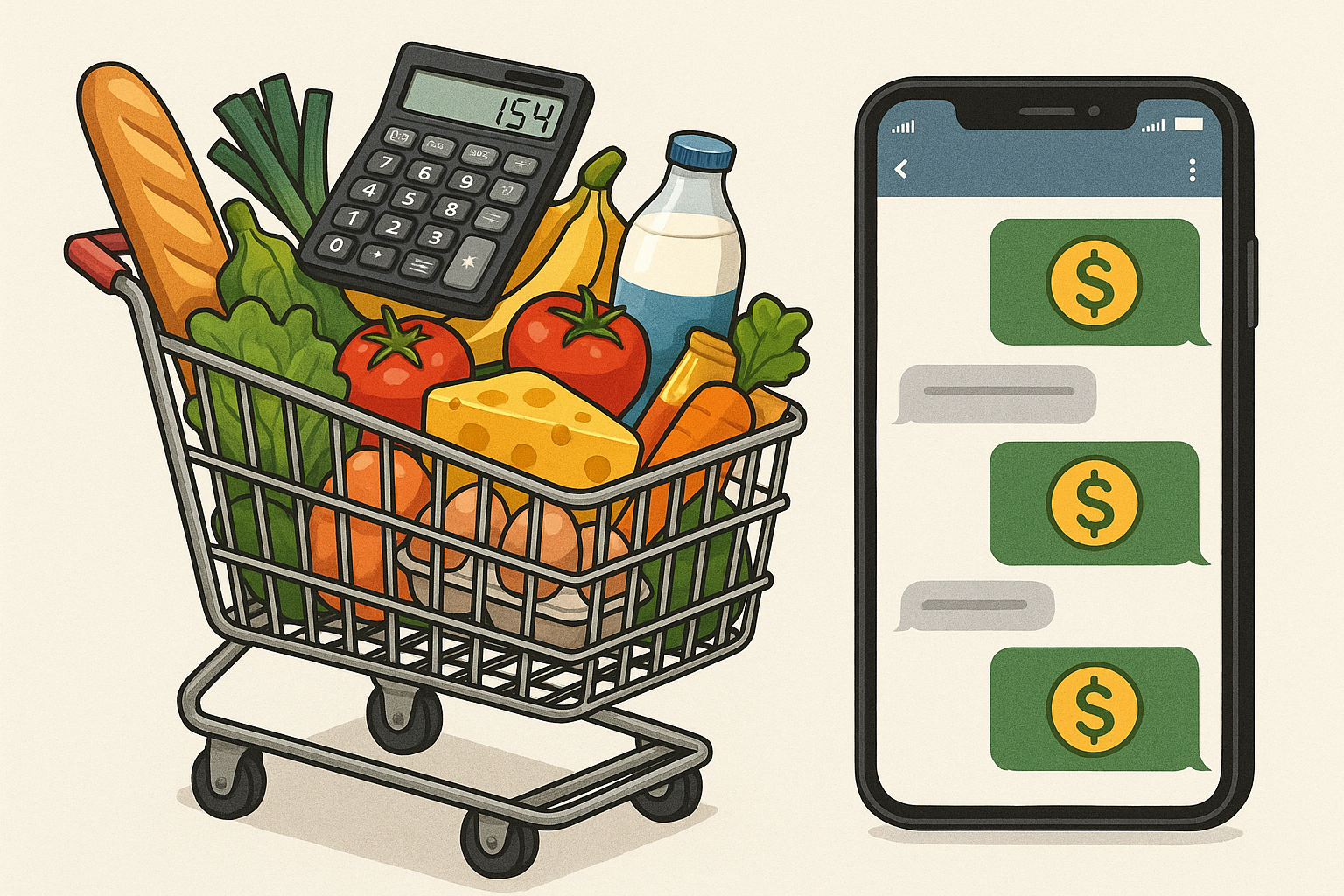
Everyday South Africans are redefining credit, using micro-loans for groceries, transport, and education amidst rising costs. Discover how.
South Africans are changing how they use credit! Instead of just for emergencies, they're using small loans like a smart tool to manage everyday money, especially with prices going up. They borrow to grab deals, juggle different jobs, and even invest in tiny things like water tanks. This shows a new, clever way of handling money that's different from what banks usually expect.
How are ordinary South Africans managing their finances amidst rising costs?
Ordinary South Africans are rewriting the credit rulebook by using short-term credit as a routine cash-flow tool, not just for emergencies. They strategically borrow to exploit retail cycles, manage multiple income streams, and invest in nano-assets, demonstrating innovative financial management beyond traditional banking.
Get Cape Town news in your inbox
Stay updated with the latest stories from the Mother City.
The Trolley Shock That Sparked a Credit Revolution
Picture the typical South African supermarket scene: shoppers in Cape Town, Durban or Polokwane halt halfway down the aisle, phone calculators glowing, deciding what goes back on the shelf. Over the past two years, bread, rice and cooking-oil prices have leapt 19 %, 27 % and 34 % respectively, dwarfing headline inflation. Taxi fares tracked by the SA National Taxi Council have climbed another 12–18 % since January. A trolley that cost R1 200 in 2021 now demands R1 700, yet the median formal-sector salary has crept up only 4 %. That gap has quietly normalised short-term credit as just another line on the monthly grocery list.
The result is a new rhythm of household finance. Instead of saving for bulk specials, families borrow to hit promo weekends, repay a fortnight later and still pocket net savings. Credit has shifted from emergency rescue to routine cash-flow tool, used as deliberately as loyalty cards. In townships and suburbs alike, “I'll tap a small loan” now carries the same weight as “let's buy in bulk.”
This behavioural pivot is massive. For millions, formal employment wages no longer anchor household budgets; volatility is the default. The grocery aisle has become the frontline where inflation meets innovation, and where fintech start-ups compete with spaza shops for the right to finance tomorrow's supper.
Inside the 12 000-Receipt Investigation
During May and June, digital lender Wonga hid a three-question mini-survey inside its routine SMS confirmations: “What will you spend this on? What would you do without it? How regularly do you need such help?” More than 12 000 clients answered in free text, creating the richest open-data trove on everyday borrowing since the National Credit Regulator's 2014 over-indebtedness study. Unlike tick-box questionnaires, the unprompted replies let borrowers narrate their own reality.
The vocabulary that surfaced was humdrum but telling. References to “groceries,” “taxi fare,” “pre-paid electricity” and “school transport” popped up in 38 % of all answers, overshadowing “medical emergency” (11 %) and “family funeral” (9 %). Luxury items such as “furniture,” “gadgets” or “holiday” barely scraped 4 %. In short, micro-loans are feeding kids and keeping lights on, not financing flat-screen TVs.
Researchers split motives into two mind-sets. “Calendar borrowers” time credit to exploit predictable retail cycles - bulk-meat specials or discounted school-fee windows. “Shock borrowers” react to sudden income gaps or surprise costs. Contrary to expectations, 55 % of respondents sat in the calendar camp, proving that borrowing is often strategic, not desperate.
Income Stacking and the Myth of the Single Paycheque
Traditional credit scoring still hunts for one tidy payslip, yet 42 % of survey takers reported three or more income streams: a formal wage, a side hustle (weekend Uber shifts, hair-braiding, stokvel dividends) and a government grant. Each flow is small and erratic, but layered they form a repayment capacity invisible to legacy bureaus. The formal bank declines, so the applicant turns to a WhatsApp lender and the cost pyramid begins.
Economists call this “income stacking.” It explodes the myth that irregular earners are automatically risky. In fact, diversified cash sources can smooth shocks better than a single employer paycheque. The policy implication: affordability tests must aggregate gig-platform statements, grant receipts and peer-to-peer income, not just payslips.
Because banks lag behind, township innovators are filling the void. In Soshanguve, a co-op named Galaxy Fin issues NFC tap-cards pre-loaded with R1 000 shop credit. Repayments happen in cash at local BP garages, monitored by community social pressure. Default rates sit below 6 %, half those of big banks' unsecured books, proving that neighbour-level enforcement can substitute for collateral.
The Hidden Cost of WhatsApp Sharks - and How to Outswim Them
Informal lending has migrated from street-corner mashonisas to encrypted WhatsApp bots. A typical chat offers “R1 200 for every R1 000 after two weeks,” a sneaky 730 % annualised rate. Wonga's data show 28 % of rejected applicants later used such channels, and 63 % rolled their loan at least once, kissing goodbye an extra 15 % “re-registration” fee. The knock-on is cruel: school-fee money is diverted, grant income garnished, and month-end austerity deepens.
Regulators are scrambling. Draft National Credit Act amendments published in March 2023 propose cutting the total-cost-of-credit cap on sub-R5 000 loans, forcing re-assessment after two rollovers, and licensing algorithm-only lenders. Industry lobbyists warn the reforms will simply push riskier clients toward Telegram sharks. Consumer groups retort that a 4 % margin trim is trivial beside 500 % informal rates. Whichever side wins, tech moves faster than statute; by the time Parliament signs the clause, borrowers will already be onto the next bot.
Hope lies in alternative data. Fintechs are piloting 90-second psychometric quizzes - applicants allocate R50 tokens between livestock, schoolbooks and airtime - to predict willingness-to-pay. Early African trials cut default by 19 %. If regulators accept such scores under the NCA's “supplementary information” clause, thin-file consumers could leap from mashonisa misery to 5–7 % monthly rates - still steep, but no longer fatal.
Groceries, Growth and Gender: Designing the Next Loan
Retailers smell opportunity. Shoprite, Boxer and Makro already upsize baskets with six-month club fees at the till. The coming step is invisible point-of-sale micro-credit: a R750 grocery basket triggers an interest-free, four-week repayment offer on the card terminal, merchant-subsidised for loyalty. Brazilian pilots lifted average ticket size 28 %. Transplanted to South Africa, food credit could morph from third-party debt to retailer-funded instalments, governed by NCA transparency rules.
Nano-asset finance is another frontier. Thirteen percent of survey respondents used micro-loans for “infrastructure” such as JoJo tanks, pre-paid meters or zinc sheets for backyard rooms. These upgrades create rental cash (a backyard room fetches R900–R1 400 in metros) and improve women's safety. Average ticket: R2 500–R3 500, repaid over 3–6 months. Regulators should treat such loans as miniature mortgages eligible for development-finance rebates, cutting the real cost to borrowers.
Gender shapes the market. Women made up 61 % of survey participants and displayed sophisticated calendar mapping: borrow on the 9th, catch a “Double Smart Shopper” weekend, align repayment with the child-support grant on the 31st. Single mothers, in particular, run micro cash-management operations that rival corporate treasury desks. Products that sync draw-down and repayment dates with grant cycles materially cut default rates, proving that financial design is as important as price.
Policy Playbook: Six Lessons from the Checkout Line
- Credit is no longer a last resort; it is a high-frequency smoothing device, the household equivalent of an overdraft facility.
- Affordability algorithms must graduate from payslip worship to multi-income stacking, counting gig apps, grants and social collateral.
- Township pilots - NFC cards, community enforcement - are live sandboxes: regulate what works, license it and bring it inside the tent.
- Nano-asset loans for ECD fees, water tanks or rooftop rooms generate measurable ROI and deserve developmental subsidies.
- Gender-sensitive design (timing, nudges, grant alignment) improves portfolio quality more than blanket rate caps.
- Borrowing is only half the story; the end-game is financial health. Embedding forced-savings wallets that skim a slice of each repayment converts today's bridge into tomorrow's buffer.
Next time you see a shopper tap “Accept” on a pre-approved R1 200 grocery loan, remember: Nomsa is not falling into debt; she is arbitraging a grant cycle, investing in bulk savings and quietly funding December school uniforms. That tap is the sound of South Africa's new credit map being drawn - one trolley, one township, one Tuesday at a time.
What is driving the change in how South Africans use credit?
Ordinary South Africans are now using small loans as a strategic tool for everyday money management, rather than just for emergencies. This shift is primarily driven by rising costs of essential goods like bread, rice, cooking oil, and taxi fares, which have far outpaced median salary increases. This creates a significant gap in household budgets, making short-term credit a necessary tool to smooth cash flow and manage daily expenses.
How are South Africans strategically using micro-loans?
South Africans are strategically using micro-loans in innovative ways. This includes 'calendar borrowing' to exploit predictable retail cycles, such as buying bulk specials during promotional weekends, and then repaying the loan within a fortnight to still achieve net savings. They also use loans to manage multiple income streams, cover essential needs like groceries, taxi fare, and prepaid electricity, and even invest in 'nano-assets' like water tanks or zinc sheets for backyard rooms that can generate rental income.
What is 'income stacking' and why is it important for credit assessment?
'Income stacking' refers to the practice where individuals combine multiple, often small and erratic, income streams to form their total household budget. These streams can include formal wages, side hustles (e.g., weekend Uber shifts, hair-braiding), and government grants. This approach challenges traditional credit scoring models that primarily look for a single, stable payslip, as diversified income sources can actually make a borrower more resilient to financial shocks than someone relying on a single paycheck. Recognizing income stacking is crucial for more accurate and inclusive credit assessments.
What are the risks associated with informal lending channels like WhatsApp bots?
Informal lending channels, often operating through platforms like WhatsApp, pose significant risks due to their exorbitant interest rates. For example, a common offer might be to repay R1,200 for every R1,000 borrowed after two weeks, which translates to a stealthy 730% annualised rate. These channels can lead to a cruel cycle of debt, with borrowers often rolling over loans and incurring additional fees, diverting funds from essential needs like school fees or even having grant income garnished. This further exacerbates financial hardship for vulnerable individuals.
How can alternative data and innovative fintech solutions improve credit access and affordability?
Alternative data, such as psychometric quizzes that assess willingness-to-pay, and innovative fintech solutions are being piloted to improve credit access and affordability for 'thin-file' consumers who lack traditional credit histories. These methods can provide insights into a borrower's financial behavior beyond just payslips, potentially reducing default rates and allowing for more favorable interest rates than those found in informal markets. Additionally, community-based lending models, like NFC tap-cards with localized repayment monitoring, have shown significantly lower default rates than traditional banks, proving that alternative approaches can be effective.
What policy changes are being considered to better regulate micro-lending in South Africa?
Draft amendments to the National Credit Act (NCA) in South Africa are proposing several changes to better regulate micro-lending, particularly for loans under R5,000. These include cutting the total-cost-of-credit cap, forcing re-assessment after a certain number of loan rollovers, and licensing algorithm-only lenders. The goal is to protect consumers from predatory informal lending practices and improve affordability. However, challenges remain, as technology often evolves faster than legislation, and there is debate over whether reforms might inadvertently push riskier clients towards unregulated channels.

Liam Fortuin is a Cape Town journalist whose reporting on the city’s evolving food culture—from township kitchens to wine-land farms—captures the flavours and stories of South Africa’s many kitchens. Raised in Bo-Kaap, he still starts Saturday mornings hunting koesisters at family stalls on Wale Street, a ritual that feeds both his palate and his notebook.
View all articles →