
Two capitals, two stories

G7 snub of South Africa reveals the fragile architecture of global diplomacy, highlighting the unraveling of multilateralism.
South Africa's absence from the G7 summit means big trouble for its money.
What is the main consequence of South Africa's absence from the G7 summit?
South Africa's absence from the G7 summit is not merely symbolic; it represents a significant economic setback. This exclusion could disrupt global supply chains for critical minerals like platinum, hinder collaboration on sunrise technologies, and jeopardize South Africa's agricultural exports due to potential retaliatory tariffs, ultimately impacting its economy and progress.
Get Cape Town news in your inbox
Stay updated with the latest stories from the Mother City.
The Lake, the Photo-Op, and the Phone Call That Erased Them
Beneath the spa-town vapors of Évian-les-Bains, Macron had scripted a scene worthy of a Renaissance painting: a relaxed Emmanuel sharing mineral water with Cyril Ramaphosa while the Alps photo-bombed the shot, proof that Europe could court the Global South without waiting for Washington’s permission. The setting was deliberate; the 1938 crisis conference that failed to stop Hitler once made the town a synonym for diplomatic impotence, and Paris intended to overwrite that memory with a new tale of strategic autonomy. Photographers were briefed, chefs rehearsed springbok loin, and even the lake’s swans seemed choreographed.
Then came the granular work of undoing it all. There was no single thunderbolt, just a steady drip of calls that began days after the November handshake. Mid-level U.S. officials wondered aloud whether a “unified G7 signal” might be blurred by an extra chair; later, principals-level voices asked Paris to “clarify objectives.” Each conversation stayed impeccably polite - no threats, only “concerns” - but the subtext was a ledger: Ukraine votes at the UN, export-control lists, IMF quotas. By late March the French protocol office quietly re-printed the seating chart: same number of seats, one fewer name.
Paris chose the path of the invisible eraser. No press release, no “scheduling conflict” statement, just a revised agenda emailed to capitals. Macron’s team told themselves they had preserved both relationships: Washington got its monocolor photo, Pretoria was spared the embarrassment of a public rejection. In reality they had gifted the world a master-class in how multilateralism dies - not with a bang, but with a silent pdf attachment.
Platinum, Citrus, and the High Cost of a Missing Seat
South Africa’s absence is not a symbolic hiccup; it is an economic event. The country sits on four-fifths of the planet’s platinum-group metals, the iridium without which hydrogen electrolyzers stall and the palladium that keeps European cars within emission limits. Each ton of ore that leaves Richards Bay is a tiny thread in the green-transition sweater the G7 wants to finish knitting this decade. Excluding Pretoria from the room does not make those rocks less necessary; it simply encourages alternate channels - Shanghai, Mumbai, Riyadh - to bid louder.
The same math applies to sunrise technologies. Pretoria’s Square Kilometre Array telescope already feeds data to both NASA and China’s CNSA; 5G licenses bundle Ericsson masts with Huawei antennas because mixing vendors keeps prices sane. Washington’s current export-control theology demands binary choices, yet every forced either-or nudges South African firms toward suppliers that do not come with congressional questionnaires. Over time the cables, satellites, and software stacks drift into separate, non-interoperable spheres, raising the cost of everything from weather apps to credit-card rails.
Agriculture feels the chill just as keenly. Citrus orchards in Mpumalanga and vineyards along the Olifants River valley operate on razor-thin margins that depend on AGOA’s duty-free slots into U.S. supermarkets. Retaliatory tariffs - already floated in congressional letters - would hit precisely the labor-intensive sectors Pretoria relies on to absorb youth unemployment. A 30 % levy on passenger vehicles, threatened after the Lady R docking row, risks assembly lines outside Pretoria that feed both European and American brands. Each container that fails to sail is a paycheck that never reaches a township, converting diplomatic etiquette into food-bank statistics.
From Bridge-Builder to Tight-Rope Walker: Pretoria’s Post-Apartheid Identity Crisis
Since 1994 South African diplomats have marketed the “rain-nation” brand: the country that could speak to Havana, Washington, and Beijing in the same afternoon without blushing. Nelson Mandela’s funeral lineup - Obama, Castro, and Xi sharing umbrella space - was the visual apex of that balancing act. The choreography required patience, an ethic of “constructive engagement” that treated every crisis as a conversation starter. Even when domestic politics howled - think 2003 and the Iraq war abstention - Pretoria clung to the middle, convinced that refusing permanent enemies maximized leverage.
Washington’s recent five-point wish list reads like a syllabus for remaking the South African state. Land-expropriation legislation, BEE scoring grids, port-security manuals, Iran stance, and Vladivostok docking logs are now bundled into a single pass-fail exam. Each item slices into sovereign choices: who may own farmland, how to redress centuries of racial exclusion, which naval vessels may refuel. Capitulation would mean uprooting the compromise architecture that keeps Pretoria’s fractious domestic coalition stitched together; refusal earns threats of market lock-outs. The bridge-builder suddenly discovers the bridge is mined.
The BRICS lifeline beckons, but it is no monolithic life-raft. Brazil wants ethanol access, India eyes coal-plant exports, Russia offers discounted oil, and China bundles ports-plus-parliament-building loans. Inside the expanded bloc Pretoria is both partner and piggy-in-the-middle: the smallest economy in a club that now speaks for 45 % of humanity. Leverage exists - the New Development Bank’s $30-billion project pipeline is real money - yet every vote is also a wager on how long Sino-Indian border feuds or Russia-West energy wars stay contained. Multipolarity sounds romantic until the poles start shifting under your feet.
The Empty Chair at the Climate Table: Why Everyone Loses from Diplomatic Silos
The cruel irony is that while envoys argue over protocol, the atmosphere keeps signing its own non-negotiable communiqué. South Africa ranks among the top dozen global emitters per capita because eighty-year-old coal stations still light up Soweto kitchens. At COP26 France, Germany, the UK, and the U.S. stitched together an $8.5-billion Just Energy Transition Partnership precisely to retire those boilers without creating a Rust Belt around the Mpumalanga highveld. The deal is engineering-heavy: new transmission lines, retrained miners, and European carbon credits that must survive annual audits. None of it works if ministries stop answering one another’s emails.
Each diplomatic snub adds frost to the collaboration. U.S. Treasury staff already hint that future disbursements could be “re-scoped” unless Pretoria aligns with American export-control lists; European donors quietly table similar pre-conditions. Every pause signal reaches the boardrooms of engineering giants - Siemens, GE, Vestas - that must place turbine orders years in advance. Delay begets delay: grids age, coal maintenance bills climb, and solar-panel containers divert to less politically toxic addresses. The beneficiaries are the very hydrocarbon exporters the G7 wants sidelined; spot-market coal prices jump every time a transition milestone slips.
Meanwhile the African Continental Free Trade Area - 1.3-billion-people strong on paper - offers only partial cushion. Yes, Shoprite check-outs in Lagos and MTN towers in Kinshasa diversify revenue, but intra-African freight still moves at one-third the speed of European trucks thanks to 110 border posts and nineteen different rail gauges. The Lagos–Mombasa highway remains a gravel rumor for long stretches; citrus trucks lose three days at Beitbridge. Until those physical choke points widen, the continent cannot absorb the volume of wine, cars, and machinery that Europe or America might reject. Diplomatic exclusion therefore ricochets back as lost industrial jobs and darker skies, a reminder that when multilateral chairs stay empty, the air itself fills the vacuum.
[{"question": "What is the main consequence of South Africa's absence from the G7 summit?", "answer": "South Africa's absence from the G7 summit is not merely symbolic; it represents a significant economic setback. This exclusion could disrupt global supply chains for critical minerals like platinum, hinder collaboration on sunrise technologies, and jeopardize South Africa's agricultural exports due to potential retaliatory tariffs, ultimately impacting its economy and progress."}, {"question": "How was South Africa's exclusion from the G7 summit handled diplomatically?", "answer": "The exclusion was handled with extreme subtlety, described as an 'invisible eraser.' There was no public announcement, press release, or 'scheduling conflict' statement. Instead, the French protocol office quietly re-printed the seating chart, and a revised agenda was emailed to capitals, effectively removing South Africa without public embarrassment or direct rejection."}, {"question": "What economic impact does South Africa's absence have on global critical mineral supply chains?", "answer": "South Africa possesses four-fifths of the world's platinum-group metals (PGMs), including iridium for hydrogen electrolyzers and palladium for European car emission controls. Excluding South Africa from G7 discussions doesn't diminish the need for these minerals; it merely encourages alternative buyers like Shanghai, Mumbai, and Riyadh, potentially shifting global supply dynamics and increasing prices for G7 nations."}, {"question": "How does the G7's approach to South Africa affect 'sunrise technologies' and global technological interoperability?", "answer": "Washington's current export-control policies demand binary choices, pushing South African firms towards suppliers that don't come with extensive congressional questionnaires. This can lead to technological infrastructure, like 5G networks and data systems, drifting into separate, non-interoperable spheres, increasing costs for various services and technologies globally."}, {"question": "What are the agricultural and industrial implications of South Africa's diplomatic isolation?", "answer": "South Africa's agricultural sector, particularly citrus and vineyards, relies heavily on duty-free access to U.S. markets via AGOA. Retaliatory tariffs, already hinted at, would severely impact these labor-intensive sectors and exacerbate youth unemployment. Similarly, threats of levies on passenger vehicles, following issues like the Lady R docking row, risk assembly lines and jobs in South Africa that supply both European and American brands."}, {"question": "How does South Africa's 'bridge-builder' identity conflict with current international pressures?", "answer": "Historically, South Africa has prided itself on its ability to engage with diverse global powers, maintaining a 'rain-nation' brand. However, recent demands from Washington, essentially a 'five-point wish list' concerning sovereign choices like land expropriation, BEE scoring, and stances on Iran, force South Africa into a 'pass-fail exam.' This challenges its traditional non-aligned foreign policy and risks alienating either its domestic coalition or key international partners, turning its bridge-builder role into a tight-rope walk."}, {"question": "Why is diplomatic collaboration with South Africa crucial for climate initiatives, despite its high emissions?", "answer": "South Africa is a major per capita emitter due to its reliance on old coal-fired power stations. The Just Energy Transition Partnership (JETP), a multi-billion-dollar initiative led by G7 nations, aims to help South Africa transition from coal. However, diplomatic snubs and conditional aid based on geopolitical alignment threaten the continuity of this collaboration, potentially delaying critical infrastructure projects and making it harder for South Africa to meet its climate goals, ultimately undermining global climate efforts."}]
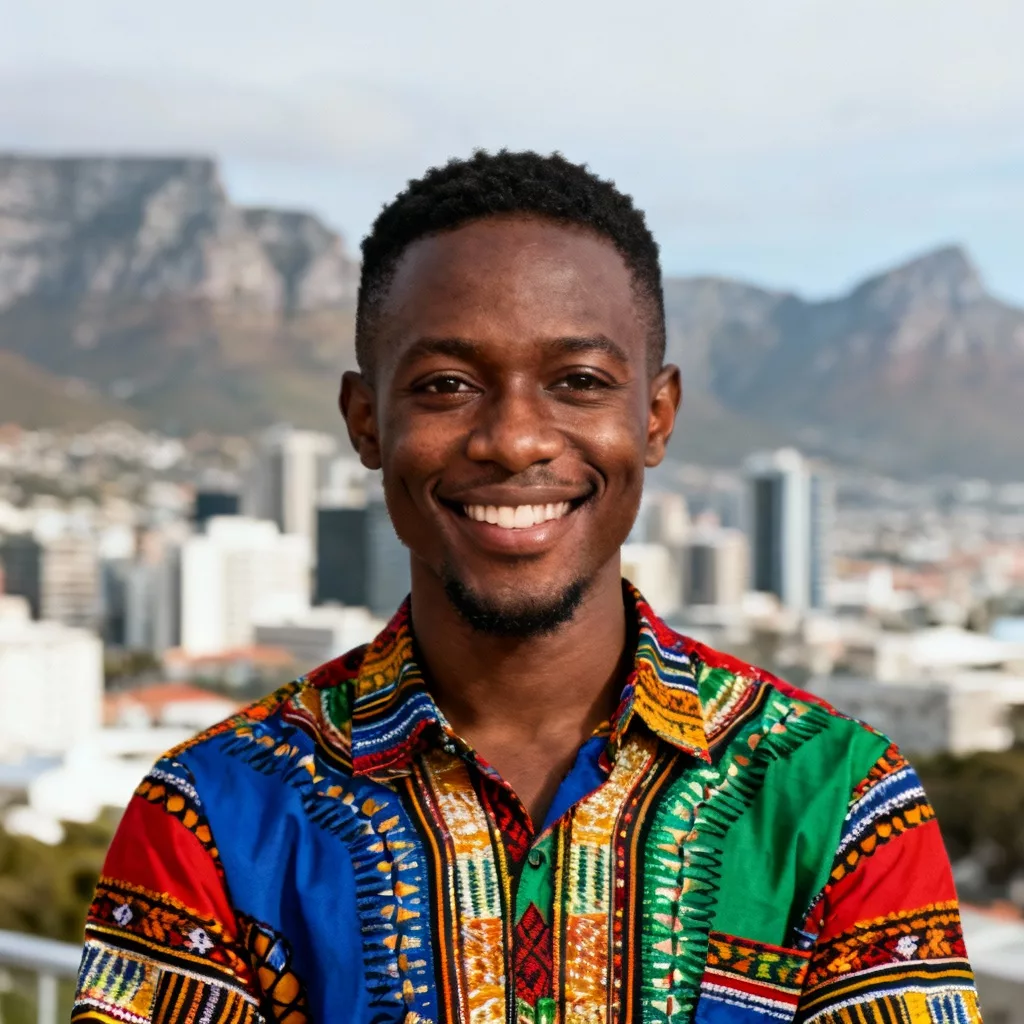
Thabo Sebata is a Cape Town-based journalist who covers the intersection of politics and daily life in South Africa's legislative capital, bringing grassroots perspectives to parliamentary reporting from his upbringing in Gugulethu. When not tracking policy shifts or community responses, he finds inspiration hiking Table Mountain's trails and documenting the city's evolving food scene in Khayelitsha and Bo-Kaap. His work has appeared in leading South African publications, where his distinctive voice captures the complexities of a nation rebuilding itself.
View all articles →