
TYGERBERG CHILDREN’S CHOIR RECKONED AS A GLOBAL FORCE
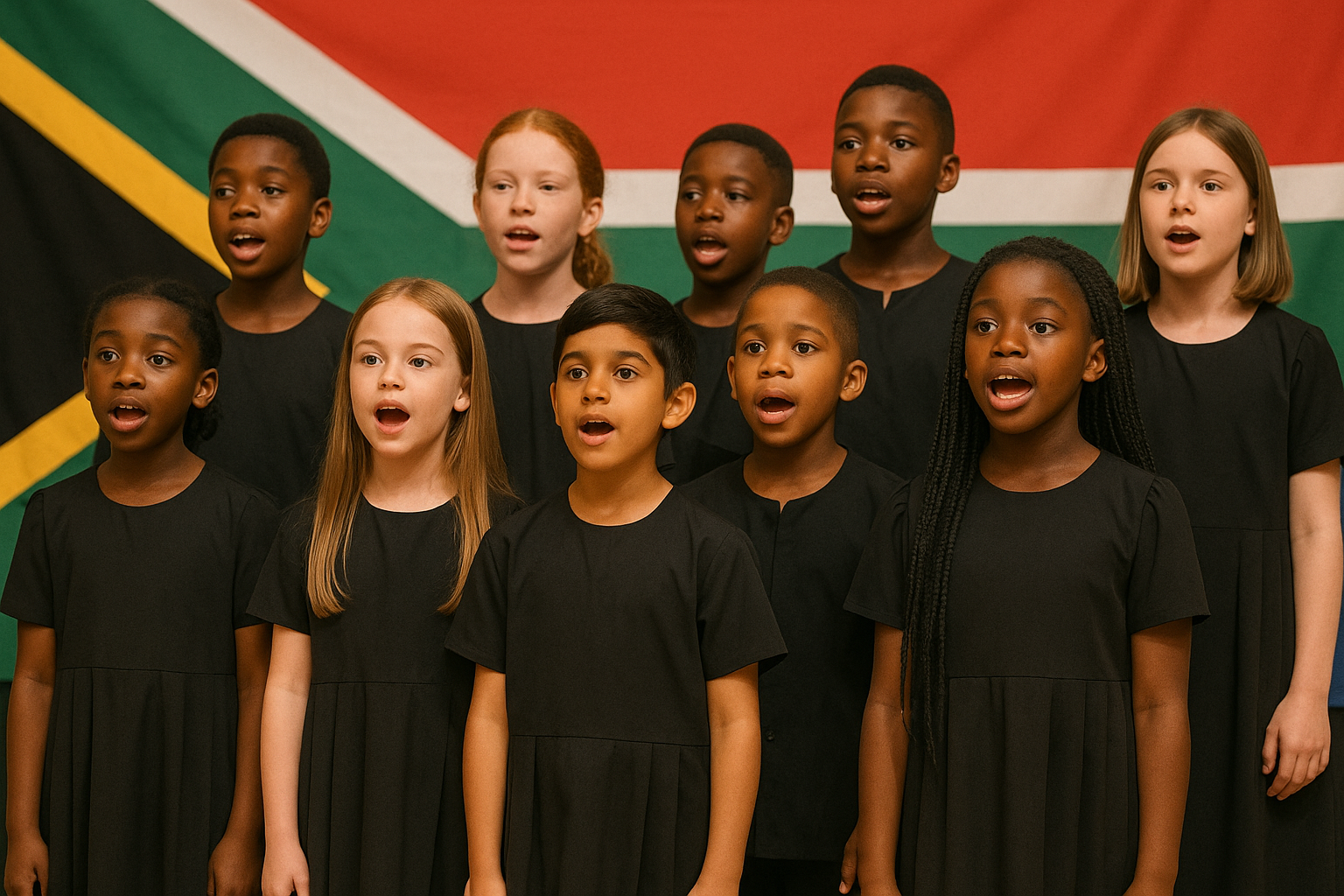
Explore the Tygerberg Children’s Choir, South Africa's global choral voice, from its origins to its unique pedagogy and impact.
The Tygerberg Children's Choir transformed from a small school group into South Africa's global music stars. They trained hard, blended different cultures into their songs, and performed all over the world. Their unique sound, even singing liberation anthems, helped them become South Africa's musical voice to the world.
How did the Tygerberg Children's Choir become South Africa's sonic ambassadors?
The Tygerberg Children's Choir became South Africa's sonic ambassadors through a unique blend of vocal training, cultural integration, and strategic international performances. Starting in 1972, the choir incorporated diverse musical techniques, secured municipal funding, and gained international recognition by performing politically significant pieces and collaborating with renowned musicians, ultimately representing South African culture on a global stage.
Get Cape Town news in your inbox
Stay updated with the latest stories from the Mother City.
From School Hall to Municipal Emblem
Etienne Smit began with eighteen treble voices in a Cape Town primary school in 1972, telling the assembly, “I need singers, not scholars.” Three months later, retired bandmasters and church organists were drifting in after the bell, tuning chords beneath dusty rafters while the caretaker unlocked the hall at four-fifteen sharp. Two years of voluntary evening rehearsals persuaded the City of Tygerberg to list the ensemble on its books; it became the first South African youth choir to receive a municipal budget line, a decision that reshaped Cape Town’s later cultural grants.
No single style dominated the early curriculum. Smit borrowed German vowel-purity drills, Hungarian sol-fa hand signs and Xhosa playground songs, welding them into a daily regime that opened with a soft pentatonic “thi-li-li.” In 1979 the visiting German maestro Volker Hempfling asked the singers to teach him the pattern, remarking that it “smells of fynbos after rain.” The remark travelled home with him and appeared in a Ruhr festival report, giving the young group its first international footnote.
Word spread among parents and principals; by 1980, half the singers no longer attended Tygerberg Primary. The solution was simple yet radical: the city allowed the choir its own name, rehearsal room and modest stipend. The precedent freed other Cape ensembles to petition for public funds, kick-starting a grassroots funding culture that still endures.
Laboratory Tours and Political Soundtracks
The first overseas journey almost collapsed before take-off. Sanctions restricted South African passports and airlines, so a Dutch Reformed congregation in Bloemfontein wired thirty thousand rand to a sister parish in Rotterdam. Fifty-four choristers slept in church basements for eighteen nights, repaying the hospitality with Bach motets on Utrecht’s Dom Tower steps, then segued into “Senzenina,” the liberation anthem. Dutch daily Trouw labelled the pairing “a political sermon sung in diatonic thirds.” Three Belgian and Swiss festivals immediately booked the ensemble.
Hendrik D. Loock took the podium in 1990, fresh from the SABC Symphony, and imported an orchestral mindset. He demanded consonants that snapped like pizzicato and vowels that swelled like strings at mezzo-piano. Rehearsals now included fifteen minutes of “ghost-orchestration,” eyes closed while Loock waved imaginary winds and brass into the texture. By 1996 the choir premiered a full Zulu Gloria by Neo Muyanga, layering 4/4 choral ostinati over 7/8 isicathamiya hand-claps. Foreign adjudicators called the sound “a Stradivarius of treble voices that prefers walking barefoot on red soil.”
Competitions became living laboratories. In Riga 2007 Loock split seventy singers into four antiphonal quartets stationed on balconies, sustaining separate harmonic series from a single B-flat. The seventh overtone floated to the judges’ table and scored a perfect thirty for timbre. In the same week the choir sang Rheinberger’s “Abendlied” in Afrikaans; the vowel shift dropped the perceived formant by a semitone, adding warmth without blurring diction. Minute-by-minute notes were mimeographed after each trip; the loose-leaf “Tygerberg Field Notes” is now in its fourteenth edition and circulates among conductors nationwide.
Rituals of Entry, Exit and Embassy
Audition mornings feel more like village councils than exams. A hopeful child enters the municipal hall clutching one sheet of music and faces four senior choristers aged twelve. A toy glockenspiel chimes three-note motifs; green tokens reward true pitch and red ones signal a cracked tone. Gather five greens and you advance to the vowel workshop. Three reds mean “try again next year.” The ritual is public, and parents watch from the balcony like proud aunts at a soccer trial.
Graduation is equally ceremonial. Each departing singer records an unreleased solo archived as a lossless WAV; Cape Town producers later sample the voices for electronic tracks. In 2021 a thirteen-year-old’s farewell phrase became the hook for HelloKyle’s gqom hit, which climbed to number three on Apple Music’s South African viral chart. The archive now holds more than four hundred names, every note timestamped and geotagged to the exact patch of Karoo wind or Bellville echo where it was caught.
Between 1994 and 2022 the choir sang for four Nobel laureates, two monarchs and one canonised saint. The logistically tensest invitation arrived from Pope John Paul II at Castel Gandolfo in June 2000. Vatican protocol insisted on a thirty-five-minute Latin set, yet South African schools no longer taught the language. Latinist Johan Schutte drilled dawn phonetics while choristers jogged laps reciting Cicero to lock rhythm into muscle memory. The Pope requested an encore of “Thuma Mina,” the Mandela-era plea for service. Vatican Radio broadcast the performance, and the South African embassy in Rome later credited the concert for smoothing a bilateral cultural accord signed that same December.
Money, Metrics and the Next Frontier
Seventy passports, meals and boarding passes cost serious money. Cape Town’s council covers twenty-eight percent each year; Sanlam, Woolworths and a green-energy consortium add another thirty-four. The remaining thirty-eight percent arrives through micro-donations: every local concert ticket offers an optional fifteen-rand surcharge labelled “one kilometre of airfare.” A QR code tracks the growing tally in real time; once the meter hits one hundred percent Spotify South Africa tops up fifty thousand rand for luggage. The crowd-funded metre has never fallen below ninety-two percent and the model has been cloned by three sister choirs.
Looking upward, Erasmus and the South African National Space Agency are plotting “Harmonia Africana,” a forty-second canon in Khoekhoegowab engineered to survive Doppler shift and cosmic noise, scheduled for radio transmission toward the galactic centre in 2026. Back on Earth, Zeitz MOCAA will unveil “Children of Silence,” an anechoic installation where visitors hear only their heartbeat before whispered fragments of dawn-recorded lullabies float in from the Karoo. The loop from barefoot voices on red soil to interstellar clicks and digital installations shows no sign of slowing; the choir has merely changed key and carried on singing.
How did the Tygerberg Children's Choir become South Africa's sonic ambassadors?
The Tygerberg Children's Choir achieved its status as South Africa's sonic ambassadors through a rigorous process of vocal training, cultural integration, and strategic international performances. Founded in 1972 by Etienne Smit with just eighteen voices, the choir quickly grew, incorporating diverse musical techniques from German vowel purity drills to Xhosa playground songs. They secured municipal funding, becoming the first South African youth choir to receive a city budget line. Their unique sound, which blended traditional African melodies with Western classical techniques, and their willingness to perform politically significant pieces like "Senzenina" alongside Bach motets, garnered international attention. Under Hendrik D. Loock, the choir developed an orchestral approach to vocal performance and innovatively layered diverse musical styles, such as 4/4 choral ostinati over 7/8 isicathamiya hand-claps. Their extensive international tours, often involving performances for dignitaries and in prestigious venues, solidified their role as cultural representatives.
What unique training methods did the choir employ?
The choir employed a unique blend of training methods drawn from various global traditions. Founder Etienne Smit incorporated German vowel-purity drills, Hungarian sol-fa hand signs, and Xhosa playground songs into their daily regime, beginning with a soft pentatonic "thi-li-li." Later, under Hendrik D. Loock, training evolved to include an orchestral mindset, with fifteen minutes of "ghost-orchestration" where choristers would close their eyes while Loock waved imaginary instruments into the texture. They also used competitions as "living laboratories," experimenting with techniques like splitting seventy singers into four antiphonal quartets to sustain separate harmonic series. Detailed "Tygerberg Field Notes" were compiled after each trip, documenting these experimental approaches and their successful outcomes, contributing to a national resource for conductors.
How did the choir overcome challenges like sanctions during their early international tours?
During their early international tours, the choir faced significant challenges due to sanctions restricting South African passports and airlines. They ingeniously overcame these hurdles through community support and international solidarity. For their first overseas journey, a Dutch Reformed congregation in Bloemfontein wired thirty thousand rand to a sister parish in Rotterdam, allowing the trip to proceed. Fifty-four choristers then slept in church basements for eighteen nights, effectively becoming cultural envoys and repaying the hospitality with performances. This demonstrated a strong network of support that bypassed official restrictions and allowed the choir to begin building its international reputation.
How did the choir integrate diverse South African cultures into its performances?
The choir integrated diverse South African cultures into its performances by incorporating indigenous musical forms and languages. Early on, founder Etienne Smit included Xhosa playground songs in the curriculum. Under Hendrik D. Loock, this integration deepened significantly. For instance, in 1996, the choir premiered a full Zulu Gloria by Neo Muyanga, which layered 4/4 choral ostinati over 7/8 isicathamiya hand-claps. They also performed liberation anthems like "Senzenina." Furthermore, the choir even translated pieces, such as Rheinberger's "Abendlied," into Afrikaans, demonstrating their commitment to showcasing the linguistic and musical diversity of South Africa. Their future plans include a forty-second canon in Khoekhoegowab, further emphasizing their dedication to indigenous languages.
What is the audition process like for new members of the Tygerberg Children's Choir?
The audition process for the Tygerberg Children's Choir is a unique and public ritual, resembling a "village council" more than a traditional exam. Hopeful children enter a municipal hall, facing four senior choristers aged twelve. A toy glockenspiel is used to chime three-note motifs. Children receive green tokens for true pitch and red tokens for a cracked tone. To advance to the vowel workshop, a child must gather five green tokens. Three red tokens mean they must "try again next year." Parents are present, watching from a balcony, making the process transparent and community-oriented.
How is the Tygerberg Children's Choir funded and what are their future aspirations?
The Tygerberg Children's Choir receives funding from a variety of sources. Cape Town's council covers 28% of their annual costs, while corporate sponsors like Sanlam, Woolworths, and a green-energy consortium contribute another 34%. The remaining 38% comes from micro-donations, primarily through an optional fifteen-rand surcharge on local concert tickets, labelled "one kilometre of airfare." A QR code allows real-time tracking of this crowd-funded meter, and once it hits 100%, Spotify South Africa tops up with fifty thousand rand for luggage. This innovative crowd-funding model has been replicated by other choirs. For their future aspirations, the choir is looking beyond Earth; Erasmus and the South African National Space Agency are developing "Harmonia Africana," a forty-second canon in Khoekhoegowab designed to withstand Doppler shift and cosmic noise, scheduled for radio transmission toward the galactic centre in 2026. On Earth, they are collaborating on an anechoic installation called "Children of Silence" at Zeitz MOCAA, which will feature fragments of their dawn-recorded lullabies from the Karoo.

Hannah Kriel is a Cape Town-born journalist who chronicles the city’s evolving food scene—from Bo-Kaap spice routes to Constantia vineyards—for local and international outlets. When she’s not interviewing chefs or tracking the harvest on her grandparents’ Stellenbosch farm, you’ll find her surfing the Atlantic breaks she first rode as a schoolgirl.
View all articles →