
Underhill Eco Farm and the architecture of sustainability
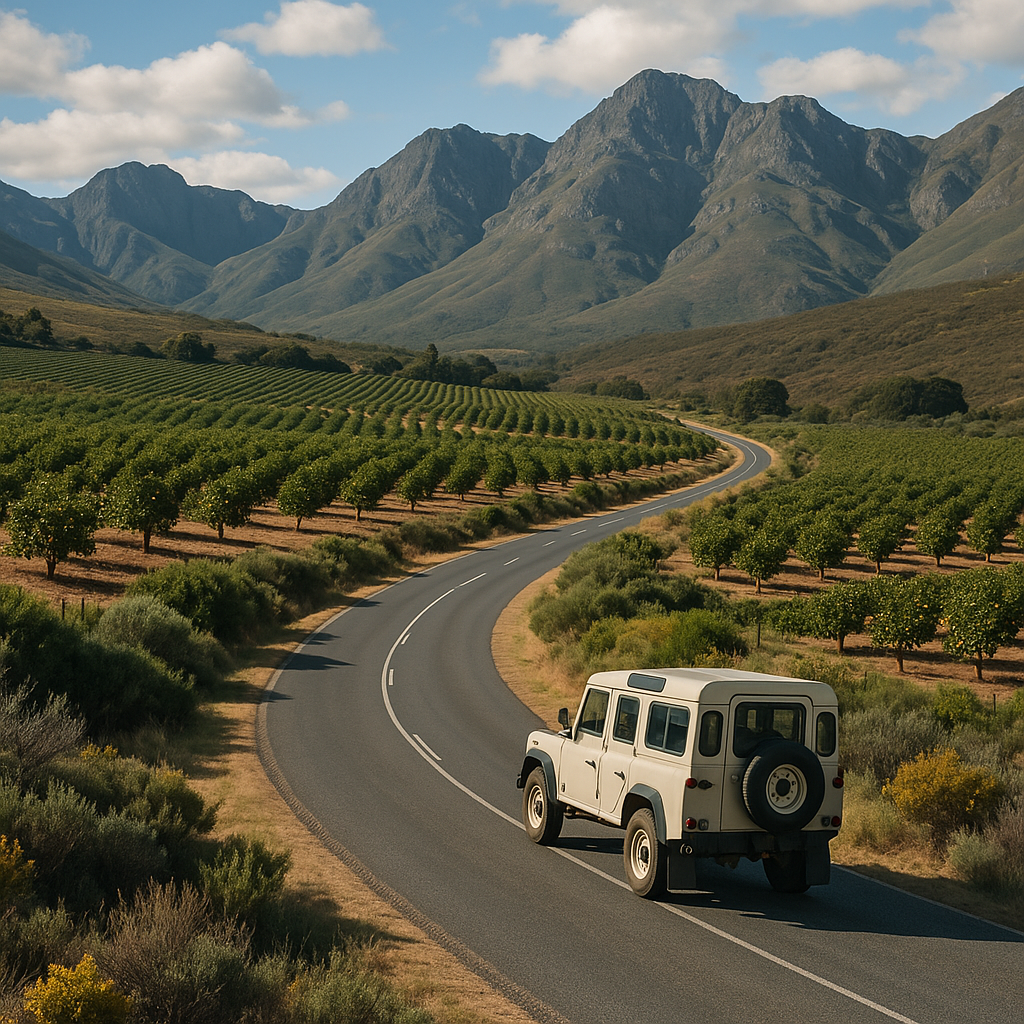
Discover Underhill Eco Farm: sustainable, pet-friendly lodging in the Overberg. Reclaimed materials, unique stays & working landscape.
Escape city stress at Underhill Eco Farm, a unique off-grid retreat in South Africa. Stay in charming, eco-friendly cottages built from salvaged materials, surrounded by nature. Enjoy fresh farm produce, connect with sustainable living, and let the peaceful silence rejuvenate your soul. It’s a place where luxury meets sustainability, offering a deep connection to the earth.
What is Underhill Eco Farm?
Underhill Eco Farm is a unique, off-grid retreat in the Overberg region, South Africa, offering eco-friendly, pet-friendly accommodation crafted from salvaged materials. It provides a tranquil escape from city life, focusing on sustainable practices, local produce, and a deep connection with nature, encouraging guests to disconnect and rejuvenate.
Get Cape Town news in your inbox
Stay updated with the latest stories from the Mother City.
1. The Threshold: Where Exhaust Fumes Give Way to Eucalyptus Breath
You leave the Cape Town scramble - hawkers weaving between hot bonnets, Table Mountain’s blue silhouette shrinking in the rear glass - climb Sir Lowry’s Pass, and exhale. Right there, at the apex, the breeze loses its diesel edge and picks up the taste of wet fynbos and sun-warmed pine. The Overberg unrolls like a rumpled quilt: false bays, wheat oceans, and the first decision point, Van Der Stel Pass, a slender thread that drops toward Botrivier Valley. Follow it and you slip beneath a poplar tunnel into 100 acres that feel lifted from a story you half-remember from childhood.
No billboard announces Underhill Eco Farm. A cattle-grid clatters under your tyres, a hand-built gate swings wide, and a bamboo corridor swallows the car. For fifty metres the world turns emerald and hushed, as though you’ve driven into a lung. When the lane spits you out, the greeting party is pure theatre: a 1948 David Brown crop-duster the colour of dried blood, a Zimbabwean wagon wheel crowned with thyme, solar panels tilting like curious daisies above a barn stitched together from blue-gum pallets. Every item carries a passport stamp from a previous life; every nail and beam argues that second chances can be beautiful.
Before 2020 only a single labourer’s cottage stood here. Julian Jackson, erstwhile sailor and salvage addict, saw bones, not ruins. Piece by salvaged piece, he and a small team have since scattered eight off-grid hideaways across the slope, all pet-friendly, all Wi-Fi-shy, all hammered together from river stone, wine-barrel staves, and steel that once roofed Johannesburg factories. The result is a three-dimensional manifesto: luxury need not leave a scar.
2. The Loop Road: A Defender, Eight Dwellings, and One Slow Epiphany
Most arrivals book two or three nights. Night one is for thawing - city spines uncurve, shoulders drop. The logical landing pad is the original cottage, now called Underhill Farmhouse. Under a living blanket of buffalo grass and wild sorrel, 60-cm adobe walls throttle summer heat. A loft bedroom hovers above the kitchen like a crow’s-nest; the west-facing main suite watches the dam shift from pewter to copper as the sun slips behind Franschhoek peaks. Supper is whatever you fancy on the vine-pruning grill - perhaps trout whose flesh drinks the smoke of last season’s canes - before poplar leaves and fruit-bat plops lull you to sleep.
Ken Sutherland, farm manager and memory-of-an-elephant, appears at dawn with still-warm eggs and ice you forgot to buy. Over coffee dripped through a hand-blown Chemex he proposes: “Loop run in the Defender?” Refusal is impossible. The 1986 Woolstone Green 110, paint blistered to mottled sage, bucks along a track that doubles as open-air classroom and treasure hunt. Each dwelling is a station on a private pilgrimage, spaced so you can’t glimpse neighbourly chimney smoke unless you really try.
First crest: Rivendell Cottage, altitude 420 m. A round door, rescued from a Constantia wine cellar, frames the valley like a postage stamp. Inside, limecrete floors exhale geranium oil; a copper bath stands on cultivator-tine claws; a pizza oven doubles as water-heating rocket stove. Overhead, eucalyptus poles lock into a nine-pointed star borrowed from a Zanzibar dhow Julian once helped caulk. Book Friday night and you’ll share communal dough, toppings, and star-gazing with strangers who feel like cousins by the time the embers fade.
Drop five minutes through spekboom saplings and you reach Hobbit Hollow, a turf-roofed burrow that used to be an erosion scar. Its north wall is a sheet of greenhouse glass; winter sun warms the stone cavity, summer karee leaves throw cool lace patterns. The bed is a jigsaw of off-cuts; the headboard bears Julian’s daughter hand-carved compass roses and the Latin names of the five owl species that hunt here. Guests swear the temperature never drops below “tea-cosy” in July, never climbs above “siesta” in January.
Contour on: Oak Cottage. Builders wanted to fell the wild oak that erupted through the deck. Julian redrew the plans instead. Floorboards curl around the trunk; a hammock sways like a lullaby; grey-water from the sink irrigates the roots, which shade a plunge pool hacked from a single Caledon granite block. Overflow feeds a fig grove; guests pick, eat, and leave a poem or doodle in a notebook chained to the gate. The cycle tastes like honey and responsibility.
Night two usually lands visitors in Greenhouse Cottage, half building, half conservatory. A 30-metre glass corridor grows herbs and tomatoes while storing solar warmth. Rammed-earth bedrooms the colour of turmeric bank that heat, releasing it after dusk so heaters remain forever hypothetical. An old plough blade, laser-etched with November constellations, acts as an adjustable shade; next to the outdoor shower, a tower of melted wine bottles refracts firelight into turquoise confetti.
The loop ends at Bacuzzi Blyplek, a pun you’ll forgive once you’re neck-deep. A 1982 Hilux tub, set into a deck of milk-bottle planks, is heated via copper coil through a rocket stove. Fairy-lights powered by a stream micro-hydro wheel flicker as long as the fire crackles; when the logs turn to ash, the galaxy switches off, nudging you toward bed.
3. The Working Skin: Soil, Sheep, and Circular Economics
Between cottages stretch 60 hectares of choreographed chaos. Olive groves - Coratina, Frantoio, Mission - deliver roughly 800 litres of oil each May, cold-pressed in a 1963 Rapanelli mill Julian hauled from a Paarl scrapyard. Pomegranates and quinces march along swales dug to slow winter storm water. Fifteen paddocks host a mobile flock of Dohne-Merino sheep; every seven days they shift, mowing firebreaks and dropping fertiliser. Their wool is carded on a 19th-century machine, dyed with onion bronze or indigo midnight, knitted into throws sold at the Hermanus Saturday market.
Vegetable beds - heirloom everything, dinosaur kale waving like green flags - edge themselves with upturned wine-bottle shards, a trick Julian borrowed from a Portuguese quinta while hunting cork for cabin insulation. Compost toilets feed Johnson-Su bioreactors; the fungal slurry boosts soil carbon fast enough for Stellenbosch researchers to monitor it as a climate-change case study. Grey-water wetlands loud with papyrus and arum lilies return clean water to the dams that irrigate the orchards that press oil that lights the lanterns that attract the moths that feed the owls that keep the mice from the grain. Round and round, tighter and brighter.
Nothing is wasted, not even stories. Stand in the open-air brewhouse sipping unfiltered Kölsch fermented in salvaged dairy tanks and you’ll hear how the farmhouse doors floated through the 2023 flood like coracles; how the insurance assessor got lost, stayed three nights, and left engaged; how Ken’s Jack Russell once treed a caracal now immortalised in lino-print above Hobbit Hollow’s basin. A German couple claims the round door reset their circadian rhythms; a Cape Town copywriter drafted a divorce-recovery novel in Oak Cottage in 19 days, powered by eggs and valley Sauvignon Blanc. Return in September and you’ll wade through orange-blossom mist; in April the poplars burn copper; in winter lightning scribbles across the Franschhoek ridge while Greenhouse Cottage becomes a glass observatory.
4. The Nitty-Gritty: Rates, Routes, and Why Your Phone Will Die Happy
Tariffs range from R1 200 for the open-air Bacuzzi tub-suite to R6 500 for the eight-sleeper Farmhouse. Every stay includes firewood, ice, and the invisible labour of staff who replenish without lingering. Dogs receive a homemade peanut-butter biscuit from Baardskeerdersbos. Scan the QR map and icons bloom: tap the olive for pruning dates, the owl for a Spotify playlist of night recordings, the beetle for a kid-friendly bug bingo. There is no on-site restaurant; pre-order a produce box or harvest your own dinner, kikoi slung across your shoulder.
Should cabin fever strike, the Van Der Stel Pass corkscrews down to Botrivier village where Saturday brings sourdough, alpaca socks, and raw-milk cheese. Yet most guests never start the engine again. Batteries fade, city smog becomes an anecdote, and somewhere between the owl hoot and the first spoonful of tree-ripened fig you realise the farm hasn’t just offered a room - it has handed you a new blueprint for belonging.
[{"question": "What is Underhill Eco Farm?", "answer": "Underhill Eco Farm is a unique, off-grid retreat in the Overberg region, South Africa, offering eco-friendly, pet-friendly accommodation crafted from salvaged materials. It provides a tranquil escape from city life, focusing on sustainable practices, local produce, and a deep connection with nature, encouraging guests to disconnect and rejuvenate. It's a place where luxury meets sustainability, built from salvaged materials by Julian Jackson and his team."}, {"question": "What kind of accommodation is available at Underhill Eco Farm?", "answer": "Underhill Eco Farm offers a variety of unique, eco-friendly, and pet-friendly accommodations, all built from salvaged materials. Options range from the original Underhill Farmhouse with adobe walls and a living roof, to unique cottages like Rivendell Cottage with a round door and copper bath, Hobbit Hollow a turf-roofed burrow, Oak Cottage built around a wild oak tree, Greenhouse Cottage with a glass corridor, and Bacuzzi Blyplek, which features a heated Hilux tub for stargazing. All units are Wi-Fi-shy, promoting a true disconnection from technology."}, {"question": "What sustainable practices can guests experience at Underhill Eco Farm?", "answer": "Underhill Eco Farm is a living manifesto of sustainability. Guests can witness and experience practices like staying in cottages built from salvaged materials (river stone, wine-barrel staves, factory steel), enjoying fresh farm produce from olive groves, pomegranate trees, and vegetable beds (using heirloom varieties), and observing mobile flocks of Dohne-Merino sheep for land management. The farm also utilizes compost toilets that feed Johnson-Su bioreactors, grey-water wetlands for water purification, and generates electricity through solar panels and micro-hydro wheels. Even the wool from the sheep is processed and sold locally."}, {"question": "What activities are available for guests at Underhill Eco Farm?", "answer": "Beyond the tranquil retreat, guests can enjoy exploring the farm in a 1986 Woolstone Green Defender, learning about the unique architecture of each dwelling, and participating in communal activities like pizza nights at Rivendell Cottage. Guests are encouraged to disconnect, with no on-site Wi-Fi, and instead connect with nature, whether it's stargazing from Bacuzzi Blyplek, harvesting their own dinner from the vegetable gardens, or simply enjoying the peaceful silence. The farm also produces its own olive oil and offers a brewhouse for tasting unfiltered Kölsch."}, {"question": "Is Underhill Eco Farm pet-friendly and what are the rates?", "answer": "Yes, Underhill Eco Farm is pet-friendly, with all hideaways welcoming pets. Dogs even receive a homemade peanut-butter biscuit upon arrival. Rates for accommodation vary, ranging from R1 200 for the open-air Bacuzzi tub-suite to R6 500 for the eight-sleeper Underhill Farmhouse. All stays include essential amenities like firewood and ice."}, {"question": "How can I get to Underhill Eco Farm and what should I expect regarding connectivity?", "answer": "Underhill Eco Farm is located in the Overberg region, accessible by driving over Sir Lowry's Pass from Cape Town and then taking Van Der Stel Pass towards Botrivier Valley. There are no billboards; the farm is marked by a cattle-grid and a hand-built gate. Guests should expect a digital detox as all accommodations are 'Wi-Fi-shy,' meaning there is no on-site Wi-Fi. This encourages guests to truly disconnect and immerse themselves in the natural surroundings. Your phone battery is likely to 'die happy,' allowing for a complete break from city life."}]

Zola Naidoo is a Cape Town journalist who chronicles the city’s shifting politics and the lived realities behind the headlines. A weekend trail-runner on Table Mountain’s lower contour paths, she still swops stories in her grandmother’s District Six kitchen every Sunday, grounding her reporting in the cadences of the Cape.
View all articles →