
US ambassador slams SA over Iran message
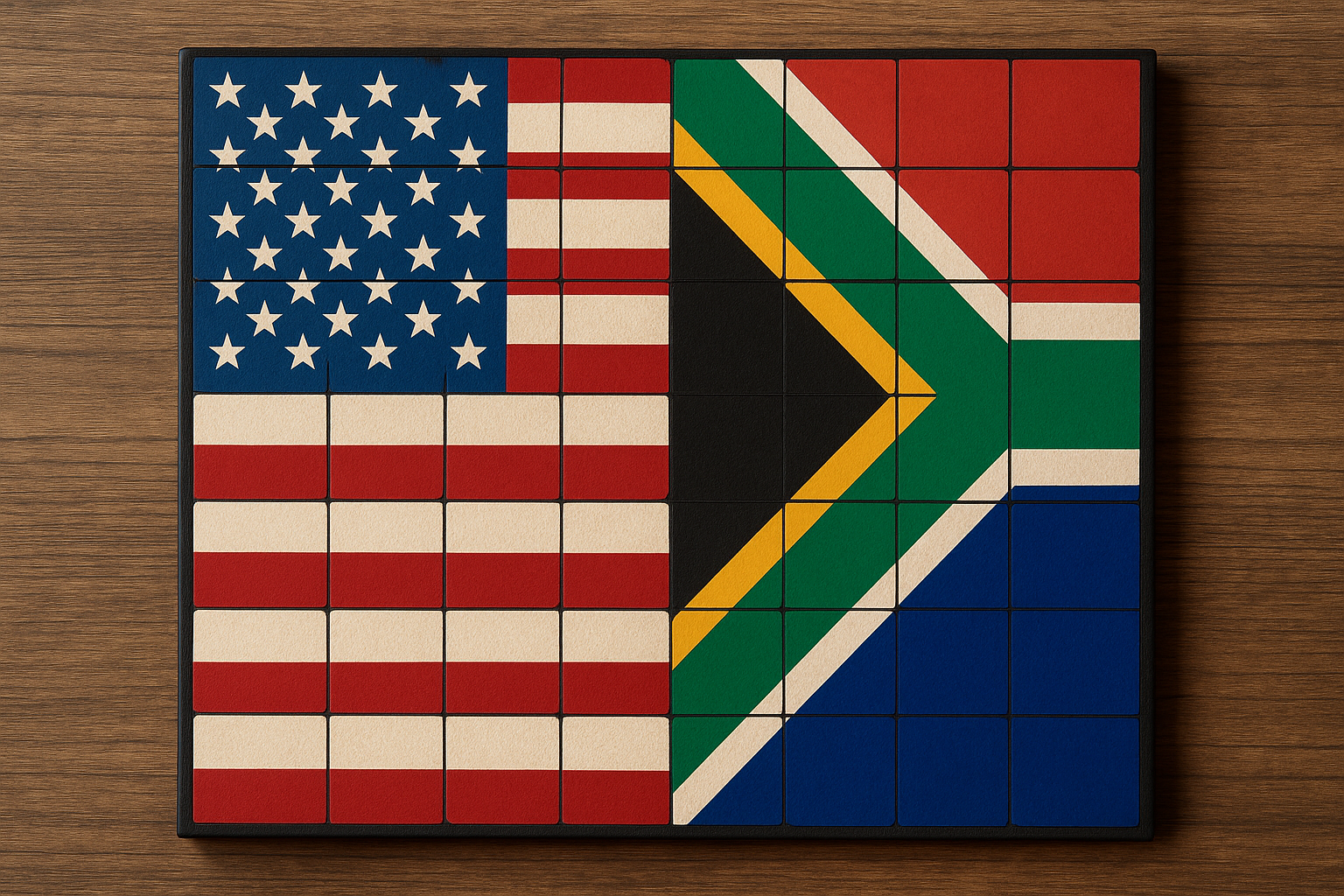
{ "description": "US Ambassador's rebuke of South Africa's foreign policy sparks diplomatic crisis, currency slide, and economic threats." }
Get ready for a diplomatic earthquake! Ambassador Bozell arrived in Cape Town and unleashed a verbal firestorm, completely ditching fancy diplomatic talk. He slammed South Africa's president and its condolences to Iran, causing chaos. The country's money immediately dropped, and diplomats were scrambling! It was a bold move that had everyone talking and tensions rising.
What was the impact of Ambassador Bozell's speech in Cape Town?
Ambassador Bozell's speech in Cape Town caused immediate financial repercussions, with the rand slipping 1.3% against the dollar and the sovereign-bond spread widening 18 basis points. It also led to diplomatic tension, prompting South Africa's DIRCO to summon the U.S. chargé for "clarifications" and sparking public protests.
Get Cape Town news in your inbox
Stay updated with the latest stories from the Mother City.
The Ambush at the Bay Hotel
On 12 March, Brent Bozell III stepped onto the BizNews stage in Cape Town and tore up the diplomatic script. No polite pleasantries, no velvet-gloved references to “mutual concern.” Instead, the U.S. ambassador uncorked a 15-minute barrage that felt more like a stump speech than a communiqué. He linked President Ramaphosa’s late-February swipe at Donald Trump to the sudden death of an Oval Office invitation, branded South Africa’s 4 March condolence note to Tehran as “moral proximity to terrorism,” and then turned to the packed room of fund-managers and said it was time to resurrect the “1995 spirit.”
The timing was surgical. Organisers sandwiched him between a panel on black-outs and a fireside chat with a private-equity billionaire, ensuring the audience - people who watch geopolitical risk the way farmers watch the sky - had nowhere to run. WhatsApp voice notes of Bozell’s juiciest lines pinged across the city before he had even left the building. Within an hour the rand had slipped 1.3 % against the dollar and the sovereign-bond spread had widened 18 basis points. By sunset, DIRCO had hauled in the U.S. chargé for what it politely called “clarifications.”
Bozell’s scriptwriters knew exactly which nerves to pinch. Invoking 1995 hit every nostalgia button among executives who still toast the Mandela miracle and the 5 % growth it delivered. Mentioning Iran poked the ANC’s revolutionary ribcage, reminding the party faithful of the days when Tehran’s cash and passports kept exiles alive. And dangling the cancelled White House meeting stung the presidential ego at a moment when Ramaphosa needs every external photo-op he can get ahead of an election polling below 45 %. It was diplomacy by meme, calibrated for retweets rather than policy briefs.
Sovereignty, Sympathy and the Condolence Wars
Pretoria’s wreath-laying for Ayatollah Ali Khamenei was, on paper, minimalism itself: three sentences, a 20-minute embassy visit, deputy secretary-general Nomvula Mokonyane in attendance. Washington, however, read the act as a loyalty oath to the axis-of-resistance. Bozell’s sound-bite - “terrorists forfeit the right to condolences” - was the clearest signal yet that the Trump administration wants to privatise grief, allocating it only to friends who stay on the right side of American missiles.
South African officials fire back with precedent. They dispatched identical messages when Shimon Peres and George H. W. Bush died, arguing that diplomacy, not ideology, drives such rituals. DIRCO mandarins call the new U.S. demand “outsourced sovereignty,” warning that if Pretoria lets Washington edit its sympathy cards, next week it will be asked to censor its UN votes and, eventually, its memory of the anti-apartheid struggle itself.
Behind the semantics lurks a classified dossier that U.S. spies have handed to their South African counterparts. The file alleges an Iranian embassy cell is shopping for titanium alloys and frequency-hopping radios under diplomatic seal. Washington wants four diplomats expelled and a suspected IRGC general sent home. SSA is split: one faction says the evidence is thin, another fears secondary sanctions on the four local banks that still finance Tehran to the tune of USD 1.2 billion. The ANC has shelved a decision until after the May local elections, but Bozell’s public ultimatum has forced the spooks to negotiate in daylight - every intelligence officer’s nightmare.
Non-Alignment, Multi-Alignment and the Word Game
Bozell keeps repeating Trump’s one-page order: “Return South Africa to non-alignment.” Historians scoff. Between 1960 and 1991 Pretoria was non-aligned only because both blocs treated it as a toxic pariah. After 1994 the country joined the Non-Aligned Movement yet simultaneously pocketed USAID millions, signed TIDCA, and hosted U.S. naval exercises. Today it juggles BRICS, Chinese reactors, German car plants and AGOA preferences - an intricate multi-alignment that keeps the lights flickering and the assembly lines rolling.
Translation: when Washington says “non-aligned,” it hears “Washington-only.” South African diplomats predict the price of readmission would be three painful concessions: dropping the ICJ genocide case against Israel, scrapping military-technical talks with Tehran, and denouncing Russia’s Ukraine invasion in language sharper than the carefully calibrated abstentions Pretoria has cast since 2022. Each demand touches a domestic third rail - left nostalgia, Islamic solidarity, and the BRICS romance that many voters still see as a ticket to a post-Western world.
Corporate SA is doing its own math. AGOA covers USD 3.8 billion of duty-free exports; citrus growers say a 100 % tariff on oranges would vaporise 120 000 seasonal jobs; car-makers warn that a 2.5 % tariff gap would erase the profit on every Audi built in Nelson Mandela Bay. Consulting firms are dusting off 2015 playbooks that route final assembly through Botswana or Lesotho - neighbouring countries whose foreign-policy silence can be bought for lower labour productivity. The master-plan to lift vehicle output to 1.4 million units by 2035 could become collateral damage in a fight over who gets invited to whose funeral.
Flags, Sanctions and the Hashtag Rebellion
Bozell closed his speech by quoting Martin Luther King Jr. - “Injustice anywhere is a threat to justice everywhere.” Within 48 hours the line had been weaponised against him. Youth activists pasted the ambassador’s face onto the famous “I Have a Dream” poster, captioned “I have a sanction.” EFF supporters marched on the U.S. embassy, torching doll-size Stars-and-Stripes and demanding Bozell’s expulsion. Methodist bishops declared a “Season of Lament” for all state-violence victims, Palestinians and Iranians included, effectively baptising the ANC’s condolence mission.
Meanwhile, the nuclear clock is ticking. Koeberg’s two 970 MW reactors need new steam generators by 2026. Westinghouse wants USD 2 billion, Rosatom promises ruble credit, and China’s SNPTC waves Hualong-One technology. Draft AGOA renewal text already bars civil-nuclear deals with sanctioned Russian entities, so Bozell’s next ultimatum is pre-written: choose Westinghouse or wave goodbye to duty-free car exports. Gwede Mantashe, the Stalin-trained minerals minister turned atomic salesman, must decide whether Marxist instinct or junk-status fear wins.
Encrypted Telegram chats, JSE spreadsheets, and classified cables are now drafting the next chapter. Bozell says “difficult conversations” lie ahead; Pretoria’s answer, still unwritten, will decide whether the story ends in economic trench warfare or a brittle new equilibrium inside the churning geometry of a world that no longer takes its orders from one capital.
[{"question": "What was the immediate impact of Ambassador Bozell's speech in Cape Town?", "answer": "Ambassador Bozell's speech in Cape Town immediately caused the rand to slip 1.3% against the dollar and the sovereign-bond spread to widen 18 basis points. Diplomatically, South Africa's Department of International Relations and Cooperation (DIRCO) summoned the U.S. chargé for \"clarifications.\""}, {"question": "What specific actions or statements by South Africa did Ambassador Bozell criticize?", "answer": "Ambassador Bozell criticized South Africa's President Ramaphosa's earlier comments about Donald Trump and, more significantly, South Africa's condolence note to Tehran following the death of Ayatollah Ali Khamenei, which he characterized as \"moral proximity to terrorism.\""}, {"question": "How did South Africa defend its condolence message to Iran?", "answer": "South African officials defended their condolence message by stating it was a matter of diplomatic protocol, not ideology. They noted they had sent identical messages upon the deaths of Shimon Peres and George H. W. Bush, arguing that such acts are driven by diplomacy rather than political alignment and calling the U.S. demand \"outsourced sovereignty.\""}, {"question": "What is the \"1995 spirit\" that Ambassador Bozell invoked?", "answer": "Ambassador Bozell invoked the \"1995 spirit,\" which refers to a period of significant economic growth (around 5%) and optimism in South Africa following the end of apartheid and Nelson Mandela's presidency. This reference was aimed at appealing to fund managers and executives in the audience who might be nostalgic for that era of prosperity and stability, suggesting a return to closer ties with the U.S. could bring similar benefits."}, {"question": "What are the potential economic consequences for South Africa if it doesn't align with U.S. expectations?", "answer": "If South Africa does not align with U.S. expectations, it faces potential economic repercussions, particularly concerning the African Growth and Opportunity Act (AGOA). AGOA covers $3.8 billion of duty-free exports, and a withdrawal could lead to significant job losses, especially in sectors like citrus farming (120,000 seasonal jobs at risk) and the automotive industry, where even a small tariff increase could erase profits and impact the goal of increasing vehicle output."}, {"question": "What U.S. intelligence allegations were presented to South Africa regarding Iran?", "answer": "U.S. intelligence presented a classified dossier to South African counterparts alleging that an Iranian embassy cell was attempting to procure titanium alloys and frequency-hopping radios under diplomatic cover. Washington requested the expulsion of four diplomats and the return of a suspected IRGC general. This places South Africa in a difficult position, with concerns about potential secondary sanctions on local banks financing trade with Iran."}]

Aiden Abrahams is a Cape Town-based journalist who chronicles the city’s shifting political landscape for the Weekend Argus and Daily Maverick. Whether tracking parliamentary debates or tracing the legacy of District Six through his family’s own displacement, he roots every story in the voices that braid the Peninsula’s many cultures. Off deadline you’ll find him pacing the Sea Point promenade, debating Kaapse klopse rhythms with anyone who’ll listen.
View all articles →