
Watch: Homeless man reflects on nearly a decade surviving atop Table Mountain
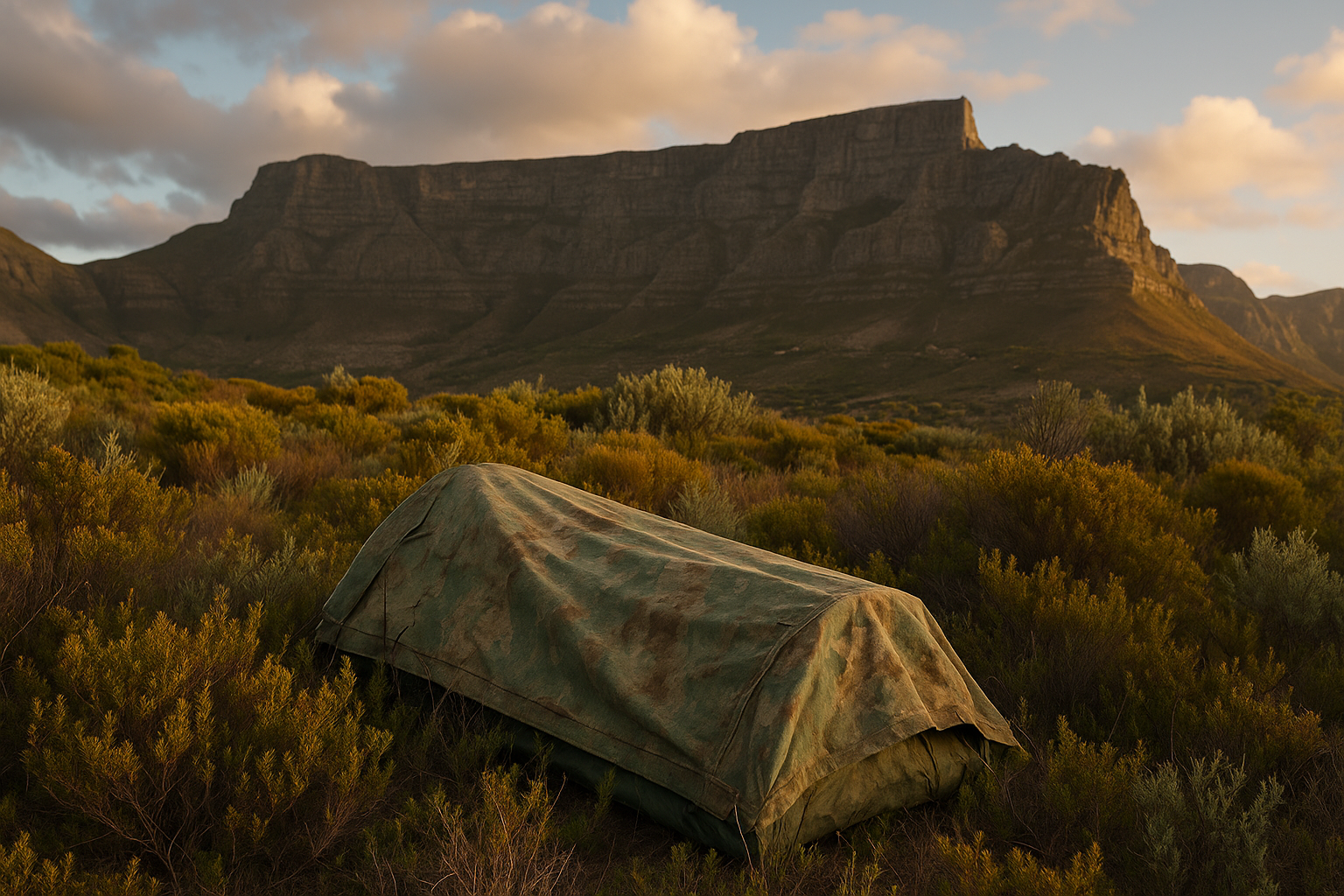
Meet Vincent van der Zeer, a former programmer who has made Cape Town's Table Mountain his home, revealing the hidden lives of its unseen residents.
Vincent van der Zeer, a 62-year-old former soldier and software developer, has ingeniously made Table Mountain his secluded home for nearly a decade. He braves the elements using a camouflaged alpine bivouac, cooks on a small LPG stove, and gathers water from natural springs. He masterfully manages his humble food supply, and despite his unusual residence, he stays connected to the digital world with a salvaged laptop and late-night data bundles. Vincent's story is a powerful testament to human resilience, showing how one man can find a way to survive and even thrive in an unforgiving natural environment, all while staying connected to the world below.
How does Vincent van der Zeer survive on Table Mountain?
Vincent van der Zeer survives on Table Mountain by employing resourceful strategies like using an alpine bivouac for shelter, cooking with an LPG stove, collecting water from natural sources, and carefully managing his food supply. He also utilizes digital ingenuity with a cracked laptop and MTN's midnight data bundle to stay connected and productive.
Get Cape Town news in your inbox
Stay updated with the latest stories from the Mother City.
From Soldier to Software Developer to Mountain Dweller
Cape Town's iconic flat-topped mountain appears on countless postcards, beer bottles, and Instagram feeds, yet few photographs capture Vincent van der Zeer, a quiet 62-year-old who has transformed the mountain's secluded cliffs and aromatic ravines into his residence for nearly ten years. On a foggy Tuesday at dawn, he broke camp before sunrise, hiked down the contour trail, and caught public transport to Sea Point's CapeTalk studios for his inaugural live broadcast interview. Though producers offered taxi fare, takeaway coffee, and the option to remain anonymous, he declined. "I'm not embarrassed about where I sleep," he informed host Refilwe Moloto. "I'm embarrassed that such a wealthy nation still allows people to disappear through the cracks."
His journey to the mountain began in Belhar's Dutch Reformed Church, where as an adolescent he taught Bible stories to wide-eyed seven-year-olds amid the scent of furniture polish and pressed suits. At twenty-one, apartheid's military machine conscripted him into signals intelligence, deploying him to Angola's frigid border where he monitored radio transmissions through freezing Kalahari nights. "The cold was so intense it made dental fillings ache," he recalls. "Perhaps that prepared me for high-altitude living."
Demobilization coincided with Cape Town's vibrant 1980s counter-culture explosion. Van der Zeer embraced the bohemian lifestyle, growing his hair long while sharing an Observatory commune and experimenting with psychedelic substances that fueled the city's punk-poetry movement. Between protests and parties, he taught himself programming languages - first BASIC, then COBOL, then C++ - eventually writing code for a startup developing inventory management systems for wholesalers. Marriage, two children, and a Pinelands semi-detached followed in rapid succession, marking his entry into middle-class respectability.
Life Above the City: Practical Survival Strategies
Cape Town's Mediterranean reputation overlooks the brutal weather systems that assault from the southeast, bringing hail and hurricane-force winds capable of destroying shelters and sandblasting exposed skin. Van der Zeer's initial mountain winter destroyed his bargain nylon tent within days. He now survives in a pre-owned alpine bivouac crafted from siliconized rip-stop fabric, dyed to match fynbos vegetation for optimal concealment. Recycled billboard vinyl serves as waterproof ground cover, while sunset-warmed rocks buried beneath thin soil provide radiant heat throughout frigid nights. He cooks using a refillable 3kg LPG cylinder with a Chinese single-burner stove, employing a collapsible aluminum windscreen to prevent scorch marks that attract fines and ranger attention.
His daily nutrition follows a careful routine: morning oats enhanced with powdered milk and peanut butter, evening lentils supplemented with discounted vegetables from Gardens Pick n Pay's closing-time markdowns. Bulk-purchased pilchards - labels removed to minimize weight and waste - provide essential protein. He employs a dual-bag system against wildlife, suspending his main food supply from silver trees while placing a decoy bag lower to satisfy curious polecats and dassies. Water collection relies on Newlands Ravine's perpetual seepage and an 1895 hydroelectric pipe-trough, with five-liter batches boiled and stored in repurposed brandy bottles sterilized with bleach drops.
Monthly grant collection requires a dawn departure to Kloof Nek, where he catches the 101 MyCiTi bus to the civic center. He carries all valuables - ID, bank card, and battered Huawei phone - because unattended shelters attract thieves. At the Absa branch opposite Grand Parade, he queues with domestic workers and pensioners to withdraw his R2,090 SASSA old-age grant. This routine reveals a maddening paradox: while 2014's Constitutional Court ruling forced grant payments into formal bank accounts for transparency, it failed to eliminate commercial fees. Between monthly maintenance charges, withdrawal fees, and transportation costs, he loses nearly five percent of his income before purchasing a single tomato.
Community Connections and Digital Ingenuity
Table Mountain National Park's World Heritage status brings armed rangers combating muggings, poaching, and drug trafficking. Van der Zeer's camouflage techniques keep him largely invisible, though danger persists. Last year, he interrupted two men butchering a stolen klipspringer near Window Buttress. When one threatened him with broken glass, Van der Zeer deployed his carbon-fiber hiking pole and shouted in Afrikaans until they fled. He reported the incident but avoided follow-up meetings. "You maintain low profile after speaking up," he explains. "The mountain has long memory."
Medical care means traveling ninety minutes to Retreat's provincial day-clinic - two minibus taxis and a walk - for his hypertension medication. Nurses provide free monthly enalapril supplies if he arrives before 7 a.m. Tuesdays. When damp shale caused a sprained ankle, he convinced a trail runner he was a day-hiker needing rescue. SANParks medics stretchered him down without charge, though he confesses guilt about the deception: "Private ambulance costs exceed my entire monthly grant."
The mountain's solitude can spiral into isolation, linked to accelerated cognitive decline. Van der Zeer's solution involves a 64GB offline library - Shakespeare, Nietzsche, Alistair MacLean, and his childhood Afrikaans Bible reread every December. He trades books through car-guards' underground lending network and maintains a handwritten journal morphing into newspaper letters. His SASSA fee critique appeared as Die Burger op-ed "Bankkoste vreet my geld," demonstrating how marginal voices can penetrate mainstream discourse.
Digital survival demands creative economy. His lifeline is MTN's midnight data bundle - R15 per GB from 12-4 a.m. - used weekly for downloading podcasts, Linux distributions, and security patches. Google Opinion Rewards surveys earn occasional airtime, though questions dried up after he listed "8001 - Mountain" as his postal code. On a R600 cracked ThinkPad, he maintains open-source software converting CSV files into printable survival checklists. This GitHub repository - three contributors, 127 stars - includes Portuguese localization for São Paulo flood victims, proving technology can serve humanity regardless of housing status.
Weather Wisdom and Future Visions
Long-term mountain residency provides informal climate monitoring. Van der Zeer insists Cape Town's famous southeaster now arrives three weeks earlier and blows stronger than during his 1990s film career. "Commercial shoots scheduled November because wind only intensified mid-December. Now you get 70 km/h gusts before Heritage Day." CSIR's 2022 study confirms his observations, documenting statistically significant October wind-speed increases from sub-Antarctic pressure system shifts.
Rainfall patterns have transformed from gentle soaking fronts to destructive cloudbursts creating flash runoff. Van der Zeer strategically pitches above natural drainage but still lost two shelters to "table-cloth" deluges converting trails into streams. "Extreme weather resembles municipal bills," he notes. "The poor experience effects first and worst."
Hiker interactions reveal society's complex relationship with homelessness. "Nodders" acknowledge politely; "avoiders" switch path sides; "evangelists" force prayers or unwanted food. A nine-year-old girl's question resonates: "Uncle, did you lose your house or did the house lose you?" He remains uncertain which answer rings truer. City officials push shelter placement, but dormitory regulations feel punitive - early curfews, cooking bans, mandatory chapel. "The mountain has curfews too - leopards, lightning - but they're honest about risks," he argues, advocating for autonomy-respecting tiny-home villages instead.
His biweekly library visits include guest-lecturing UCT geography students on "informal urban ecology," earning hot meals and Wi-Fi access. A weekly chess club for car-guards - moves recorded for later analysis - helped Zimbabwean immigrant Tendai gain 300 Elo points and increased tourist tips. "That's trickle-up economics," Van der Zeer smiles.
Policy debates rarely include voices like his, yet his radio appearance sparked political traction: a provincial MP pushed for bank-fee capping legislation review; the Finance Standing Committee chair hinted at upcoming parliamentary hearings. As he boards the 101 back to Kloof Nek, clouds gathering like cauliflower over the Back Table, he stops to photograph tourists fumbling with selfie sticks. One shutter click creates ephemeral connection between housed and unhoused before he disappears into fynbos that absorbs sound faster than darkness, walking toward a horizon that - for now - remains free to occupy.
How does Vincent van der Zeer manage to live on Table Mountain for nearly a decade?
Vincent van der Zeer, a 62-year-old former soldier and software developer, has ingeniously made Table Mountain his home for almost ten years. He lives in a camouflaged alpine bivouac, cooks on a small LPG stove, and collects water from natural springs. He carefully manages his food supply, using discounted vegetables and bulk-purchased pilchards, and even employs a dual-bag system to deter wildlife from his food.
What are some of the challenges Vincent faces living on Table Mountain?
Vincent faces numerous challenges, including harsh weather conditions like hurricane-force winds and destructive cloudbursts. He also deals with the risk of theft, encounters with wildlife, and the need for medical care, which requires a significant journey. The mountain's solitude can also lead to isolation, which he combats through reading, journaling, and digital connectivity.
How does Vincent stay connected to the digital world from Table Mountain?
Vincent utilizes a salvaged, cracked laptop and MTN's midnight data bundles (R15 per GB from 12-4 a.m.) to stay connected. He downloads podcasts, Linux distributions, and security patches. He also uses Google Opinion Rewards for occasional airtime and maintains a GitHub repository with open-source software, demonstrating his digital ingenuity.
How does Vincent fund his life on Table Mountain?
Vincent relies on his R2,090 SASSA old-age grant, which he collects monthly from an Absa branch in the city. However, he faces a "maddening paradox" as commercial fees, including monthly maintenance charges, withdrawal fees, and transportation costs, deplete nearly five percent of his income before he can purchase necessities.
What is Vincent's background and how did he come to live on the mountain?
Vincent's journey began with a childhood teaching Bible stories, followed by conscription into apartheid's signals intelligence in Angola. After demobilization, he embraced Cape Town's 1980s counter-culture, taught himself programming languages, and eventually became a software developer. He was married with two children, living a middle-class life before his circumstances led him to make Table Mountain his residence.
What are Vincent's views on homelessness and societal issues?
Vincent is not embarrassed about where he sleeps but is "embarrassed that such a wealthy nation still allows people to disappear through the cracks." He advocates for autonomy-respecting tiny-home villages as an alternative to punitive dormitory shelters. His experiences have led him to critique bank fees for grant recipients and he uses his voice, even through op-eds, to highlight issues faced by marginalized communities.

Sarah Kendricks is a Cape Town journalist who covers the city’s vibrant food scene, from township kitchens reinventing heritage dishes to sustainable fine-dining at the foot of Table Mountain. Raised between Bo-Kaap spice stalls and her grandmother’s kitchen in Khayelitsha, she brings a lived intimacy to every story, tracing how a plate of food carries the politics, migrations and memories of the Cape.
View all articles →