
Western Cape agriculture leads job growth as exports skyrocket
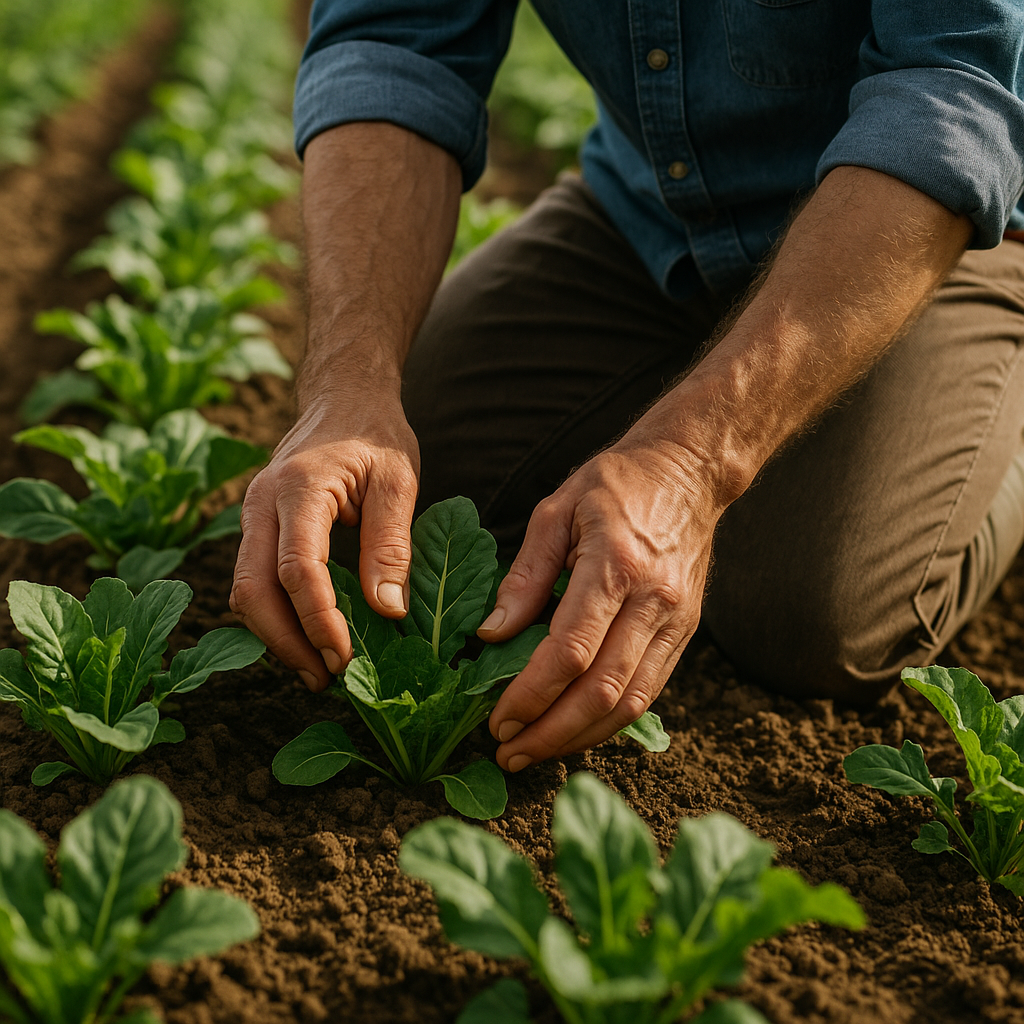
Western Cape agriculture is SA's quiet engine: provides 21% of jobs, boosts exports, drives innovation & green tech, secures water.
The Western Cape is a farming powerhouse, quietly feeding and funding South Africa. It creates jobs for many people, putting money in their pockets. From juicy fruits to new green energy, this region smartly grows food and wealth. It protects its farms from sickness and changes, making sure everyone benefits. This silent giant helps South Africa thrive, one harvest at a time.
How does the Western Cape's agriculture impact South Africa's economy?
The Western Cape's agricultural sector significantly boosts South Africa's economy. It accounts for 21% of employed South Africans' paychecks, supports 680,000 registered farm staff, and generates a strong multiplier effect where every rand from deciduous-fruit exports ricochets into R 1.87 of upstream service income, making it a silent giant feeding and financing the nation.
Get Cape Town news in your inbox
Stay updated with the latest stories from the Mother City.
One in Five Paychecks Starts Here
Premier Alan Winde’s 2024 state-of-speech number sounded almost casual: twenty out of every hundred employed South Africans cash a wage that began life in a Western Cape orchard, cellar, cannery or chilled truck.
That 21 % slice is stitched from 680 000 registered farm staff, 312 000 factory-shift workers and roughly 430 000 day-rate labourers who surface only when peaches or grapes need picking.
During the past year the province added a quarter-million new posts; 22 000 were officially tagged “agriculture” yet the knock-on pushed the tally far higher - each new Ceres orchard manager spins off 1.4 extra openings for diesel technicians, fertiliser blenders and cold-chain crews.
Independent modelling by BFAP shows that every rand spent on deciduous-fruit exports ricochets into R 1.87 of upstream service income, the strongest multiplier in the national primary sector.
Put differently, the apples packed in Ceres tonight will pay school fees for mechanics’ children in Johannesburg long before they reach a supermarket in Dubai.
Seventy-Eight Flags on the Export Map
In 2018 the provincial trade dashboard flickered at 56 country marks; today it glows at 78, thanks to a protocol blitz that crammed 174 sanitary-and-phytosanitary meetings into 2023 alone.
China finally signed off on stonefruit after a five-year pest audit; Seoul agreed to let navels and mandarins sail together; Washington lifted the fumigation-temperature bar for table grapes by 0.3 °C, saving packers R 18 million a season in re-sorting losses.
The payoff: 58 % of everything South Africa exports that once grew on a tree, vine or stalk now leaves from Cape harbours - R 52 billion worth last year, outstripping overseas sales of gold jewellery for the first time.
A single shift at the Port of Cape Town can stuff enough raisins to bake muffins for the entire Middle East, enough Granny Smiths to school Britain’s lunchboxes, and enough wine to flood an Olympic lane every day and a half.
Behind each container is a paper trail of lab certificates, barcode scans and blockchain temperature logs - evidence that a bureaucracy once notorious for backlog has become the quiet engine of foreign exchange.
From Township Kitchen to Woolworths Shelf
Montseng Taste Buds was a one-woman sandwich circle in Langa five years ago; today her peri-peri pesto retails for R 39.99 in 62 Woolworths delis and is produced in a 1 200 m² HACCP plant at the V&A Waterfront.
The provincial incubator footed the shelf-life trial bill at Stellenbosch’s FoodSURE lab, bought the R 17 000 barcode and subsidised two-fifths of a spiral freezer that froze her cash-flow problems instead of just her product.
She is graduate number 117 from the same programme; alumni firms turned over R 411 million last year and hired 1 900 people, 64 % of them women younger than 35.
What speeds the climb is market access, not mentorship alone: an online EAN-coding portal lets a rooibos ice-tea start-up book 220 Spar shelves in six weeks, a dance that once took nine months of pleading with category managers.
The lesson is simple - give a baker a barcode and she can feed the nation; give her a shelf and she’ll hire the neighbourhood.
Water Without Concrete: 16 000 ha That Breathe Like a New Dam
While newspapers countdown to Day Zero, crews have been chainsawing a landscape-scale sponge.
They ripped out 37 million invasive pine and eucalyptus stems across the Berg, Breede and Olifants catchments, letting fynbos soils drink and leak at natural pace.
Satellite metres show an extra 19.4 million cubic metres of winter runoff reached taps and vineyards in 2023 - equal to the gross storage of the Berg River Dam, delivered without pouring a single lorry-load of cement.
The job list is deliberately labour-hungry: 2 300 temporary posts for chainsaw crews, herbicide sprayers and indigenous-seed collectors pulled from towns where joblessness tops 30 %.
Workers earn R 18 per felled stem, plus a R 2 000 kicker if the plot stays clean after six months, injecting R 68 million straight into household wallets.
In effect, the province borrowed nature’s own engineering and paid the interest to people who need it most.
Border War Against Hoof-and-Mouth
When foot-and-mouth disease flared in Limpopo during 2022, Western Cape feedlots faced a R 4.1 billion export shut-out because 92 % of their red-meat markets bar any South African region once the virus surfaces.
The reaction looked military: 13 fixed roadblocks, nine roaming wash-bays and a live permit portal synced to the national animal-tracking base.
Vaccinators have already jabbed 12 000 cattle along the N1 “red zone” and 30 000 extra SAT-2 booster doses are en-route from Botswana.
Every truck is weighed, scanned and mapped, building a heat-zone atlas that will decide where the next fence goes.
The bill - R 75 million this year - shrinks beside the R 1.8 billion in beef and mutton exports that would disappear if the virus slipped into the Swartland.
In short, the checkpoints are not just gates; they are insurance policy, data hub and rural pay-point rolled into one.
Silicon in the Soil: Low-Key Tech With High-Impact yields
Forget the headline-hogging drones; the real revolution pings in on WhatsApp before sunrise.
A University-of-Cape-Town-built irrigation scheduler feeds evapotranspiration stats from 42 weather stations to 1 100 fruit growers, trimming summer water use by 14 % while keeping tonnage intact.
Sixty-five pear-and-apple farmers now run “bloom-forecast AI” that crunches 1.2 million smartphone blossom photos and predicts fruit set within 4 %, allowing crews to thin precisely and save R 3 800 per hectare in hand labour.
These quiet tweaks explain how the province harvested a record 3.2 million tonnes of pome fruit last year from 3 % fewer hectares than a decade earlier.
The story is not chrome-plated robots; it is cheap code, open data and farmer微信群s that turn weather into profit.
Cold Chain at the Port: A 24-Hour Protein Runway
The provincial treasury has locked R 1.3 billion into port upgrades over three years, starting with 720 extra reefer plug-points before December 2024.
Average dwell time for deciduous fruit has already dropped from 4.2 to 2.7 days, shaving half a percent off interest carried per container - enough cash to grade another 120 km of farm road each season.
Meanwhile, the 180 km Ceres-Cape Town rail line reopened for citrus; four block trains a week pull 180 trucks off the N7 and save the roads R 12 million in repairs annually.
GPS wagons ping temperature every 180 seconds, so insurers can settle reefer failures within hours instead of weeks.
The net result is fruit that arrives firmer, meat that arrives redder, and farmers who can bank on speed instead of praying for it.
Green Hydrogen, Tractors and the Next R 3 Billion Wave
Five projects near financial close this year include a 300 MW green-hydrogen plant at Saldanha that will crack 45 000 tonnes of desalinated water every year using winter-surplus solar.
Half the hydrogen will feed the local ammonia works; the rest will run 80 fuel-cell tractors across 14 grain farms, cutting diesel bills by 1.4 million litres and carbon by 3 700 tonnes each season.
A 20-year Rotterdam offtake contract locks in a farm-gate price of $3.20 per kilo - already below the EU’s 2030 import target.
Construction starts in October and will demand 2 800 workers at peak, 30 % recruited from fishing communities learning to live without diesel trawlers.
In short, the vineyards that gave the world Pinotage may soon export sunshine itself.
Travel Vouchers That Harvest Jobs
Cape Town’s travel-voucher pilot - 12 free bus or train rides a month for job-seekers - boosted permanent hiring odds by 38 % simply by removing the taxi-fare barrier.
George will adopt the scheme in 2024/25 at a cost of R 14 million, funded by a levy on new airport-edge commercial properties.
Here the voucher hops onto minibus routes that thread pack-houses in the Outeniqua valley, syncing rides with peak harvest labour demand.
The premise is elegant: if the only thing standing between a worker and a wage is petrol money, delete the petrol.
Do that at scale and unemployment starts to fall like autumn fruit - quickly, visibly and cheaply.
Start-ups, Insects and the 55 % Registration Surge
Provincial company registrations jumped 55 % since 2022, triple the national clip, with 1 400 new “agri-preneur” listings.
More than half were launched by people under 35 and 43 % by women; the hottest niche is insect farming.
Seventeen black-owned fly farms now churn 1.2 tonnes of black-soldier-fly larvae weekly, swapping R 280-per-tonne landfill fees for R 4 200-per-tonne protein sales to pet-food and poultry feed mills.
Cape Town’s 190 000 tonnes of post-consumer fruit pulp have suddenly become someone else’s feedstock, and the department waived organic-waste haul licences within a 50 km radius to keep transport costs negligible.
One woman’s apple-core is another woman’s cricket steak, and the province just wrote the rule book that lets both sides win.
Climate-Proofing the Land Before the Thermometer Moves
To buffer high-value horticulture against a possible 2 °C rise by 2050, officials overlaid heat-unit maps, frost probability and aquifer depth to sketch “climate corridors.”
Swartland canola is rotating into drought-tolerant chickpeas on 38 000 ha, while 5 200 ha of marginal wheat around Caledon swap combine harvesters for pomegranate saplings that earn 32 % more per drop of water.
Insurers have cut crop-replacement premiums by 8 % for farms that submit verified adaptation plans, pouring R 22 million of saved premiums back into tractors and trellis wire.
The landscape is being re-assembled like a living exchange-traded fund, diversified against weather shocks long before the storm arrives.
Watch the horizon and you will see wheat stubble morph into pomegranate crimson - an orchard hedge against an overheated future.
The Ripple Still Spreading
Every tonne of grapes that rolls out of the Western Cape ferments more than wine; it distils fresh logistics work in Gauteng, new carton orders in KwaZulu-Natal, new fintech code in Stellenbosch that pays pickers by phone.
Premier Winde’s 21 % headline is therefore a living fraction, swelling nightly as another start-up registers, another rail wagon hums, another sunrise lights hydrogen tractors.
If you want a preview of South Africa’s next pay slip, look past the city skyline and watch what germinates in Western Cape soil - it is already growing the country’s tomorrow.
How does the Western Cape's agriculture impact South Africa's economy?
The Western Cape's agricultural sector significantly boosts South Africa's economy. It accounts for 21% of employed South Africans' paychecks, supports 680,000 registered farm staff, and generates a strong multiplier effect where every rand from deciduous-fruit exports ricochets into R 1.87 of upstream service income, making it a silent giant feeding and financing the nation.
What are the key export achievements of the Western Cape's agricultural sector?
The Western Cape has expanded its agricultural export reach significantly, now trading with 78 countries compared to 56 in 2018. This growth is due to intensive diplomatic efforts and protocol agreements, leading to 58% of South Africa's tree, vine, or stalk-grown exports leaving from Cape harbours, totaling R 52 billion last year. This even surpassed overseas sales of gold jewellery for the first time.
How does the Western Cape support local agri-businesses and entrepreneurs?
The province fosters local agri-businesses through incubators and market access initiatives. For example, Montseng Taste Buds grew from a small sandwich circle to a product sold in 62 Woolworths delis with provincial support for trials, barcodes, and equipment. Alumni firms from these programs turned over R 411 million last year and hired 1,900 people, with 64% being women younger than 35. There's also been a 55% surge in provincial company registrations, with many new 'agri-preneurs' in niches like insect farming.
What innovative approaches is the Western Cape taking to water management and climate change?
The Western Cape is implementing innovative natural solutions for water management by removing 37 million invasive alien plants across major catchments. This has resulted in an extra 19.4 million cubic metres of winter runoff reaching taps and vineyards in 2023, equivalent to a new dam without concrete. Furthermore, the province is climate-proofing its land by mapping 'climate corridors' and encouraging shifts to drought-tolerant crops like chickpeas and pomegranates in vulnerable areas. Insurers offer reduced premiums for farms with verified adaptation plans, incentivizing climate-resilient practices.
How is the Western Cape using technology to enhance agricultural productivity?
The province leverages low-key, high-impact technology to boost yields. A University-of-Cape-Town-built irrigation scheduler, fed by 42 weather stations, helps 1,100 fruit growers reduce summer water use by 14% while maintaining tonnage. Additionally, 65 pear and apple farmers use 'bloom-forecast AI' that predicts fruit set within 4% from 1.2 million smartphone photos, saving R 3,800 per hectare in labor. These technological tweaks have allowed the province to harvest a record 3.2 million tonnes of pome fruit last year from 3% fewer hectares than a decade earlier.
What efforts are being made to improve infrastructure and logistics for agricultural exports?
The provincial treasury is investing R 1.3 billion into port upgrades, including 720 extra reefer plug-points by December 2024, which has already reduced deciduous fruit dwell time from 4.2 to 2.7 days. The Ceres-Cape Town rail line has reopened for citrus, with four block trains weekly removing 180 trucks from the N7, saving R 12 million annually in road repairs. These improvements ensure produce arrives firmer and quicker, benefiting farmers and international markets.

Chloe de Kock is a Cape Town-born journalist who chronicles the city’s evolving food culture, from township braai joints to Constantia vineyards, for the Mail & Guardian and Eat Out. When she’s not interviewing grandmothers about secret bobotie recipes or tracking the impact of drought on winemakers, you’ll find her surfing the mellow breaks at Muizenberg—wetsuit zipped, notebook tucked into her backpack in case the next story floats by.
View all articles →