
Western Cape opens R11.4 million linen depot to enhance healthcare services
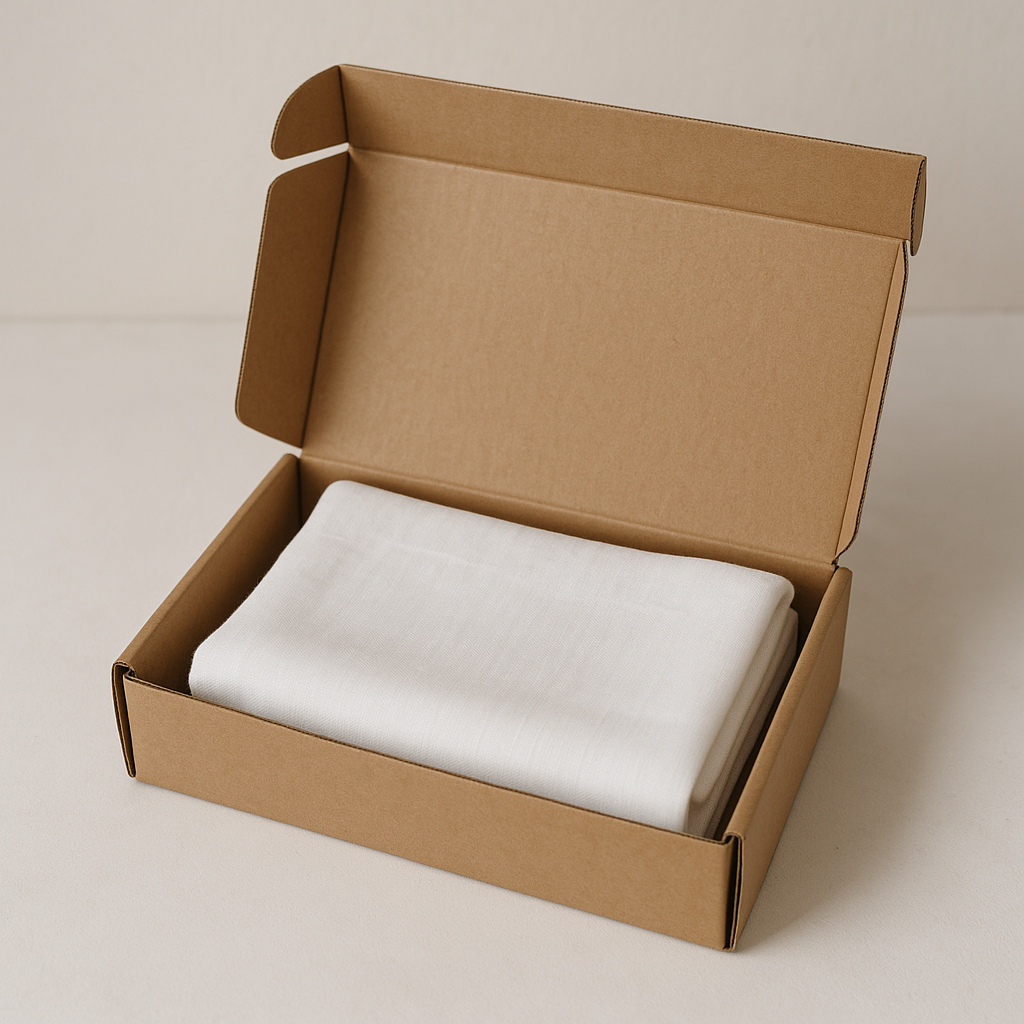
Western Cape revamps hospital logistics with a new depot, ensuring clean linen for 4.2M residents & pioneering sustainable practices.
In the Western Cape, a small but mighty Provincial Linen Depot is quietly changing healthcare. This 300-square-meter facility makes sure 4.2 million people get clean hospital clothes and sheets when they need them most. It coordinates over a million textile items across 554 health spots, using smart tech like barcodes and RFID to track everything. This depot not only saves money and helps the environment by recycling, but it also creates jobs and keeps hospitals ready for anything. It's a true hero, making sure patients are comfortable and safe.
What is the Western Cape's Provincial Linen Depot?
The Western Cape's Provincial Linen Depot is a 300-square-meter facility coordinating 1.15 million textile items across 554 healthcare locations. It ensures hospitals have clean gowns, sheets, and surgical coverings through a resilient supply chain, maintaining a sixty-day strategic reserve, and processing 5.5 million pieces annually while focusing on financial and environmental sustainability.
Get Cape Town news in your inbox
Stay updated with the latest stories from the Mother City.
The Unseen Heartbeat of Hospital Care
At the far northern corner of the Tygerberg Hospital grounds, a modest charcoal structure barely larger than a family residence pulses with mechanical rhythm. Forklifts weave between steel shelving, barcode scanners chirp their digital acknowledgments, and the subtle aroma of freshly processed fabric hangs in the air. This unremarkable exterior conceals something extraordinary: the Provincial Linen Depot, a facility that determines whether millions of Western Cape residents receive clean hospital gowns, bed sheets, and surgical coverings precisely when circumstances demand them.
Since its official launch last month, this 300-square-metre space has assumed responsibility for coordinating more than 1.15 million textile items across 554 healthcare locations. The network spans everything from sprawling medical complexes with two thousand beds to diminutive mobile clinics navigating dusty Karoo tracks. Annual throughput reaches approximately 5.5 million pieces - enough material laid end-to-end to bridge Cape Town with Kampala.
The depot represents a fundamental reimagining of how essential supplies reach those who need them. Rather than accepting the fragility of traditional distribution models, administrators constructed something genuinely resilient.
Engineering Resilience Into Every Thread
Hospital textiles constitute perhaps the most overlooked critical service in medical environments. Visitors immediately detect stained bedding; almost nobody contemplates the intricate choreography delivering replacements within the hour. This visibility gap fostered dangerous complacency across numerous provinces, where shortages triggered desperate improvisation: urgent messages between ward supervisors, emergency retail purchases, skilled theatre staff sacrificing evenings to repair torn pillowcases.
Western Cape authorities determined that reactive approaches had reached their limit. The new facility maintains a sixty-day strategic reserve capable of weathering disruptions that previously brought individual hospitals to their knees - torrential floods severing major highways, extended industrial action by laundry workers, or sudden pandemic waves doubling consumption overnight. Supplies arrive pre-sorted in colour-coded containers, hermetically sealed and ready for immediate loading onto conventional trucks or Red-Ant helicopters.
The architectural inspiration draws directly from Amazon's compact fulfilment centres: compressed aisle spacing, gravity-assisted rack systems, and elevated platforms storing high-velocity items like large patient gowns and size-six theatre drapes. Each container carries barcode integration with provincial inventory networks, though the genuine innovation appears as an unassuming black module: radio-frequency identification technology capturing manufacturing dates, laundering history, thermal tolerances, and even agricultural origins of raw cotton.
Once these electronic markers register one hundred fifty washing cycles - the established replacement threshold - containers automatically route toward the Department of Labour's Service Products initiative. There, fabric transforms into mop heads and wheelchair cushioning, completing a circular journey from field to hospital and back again.
Financial Wisdom in Every Calculation
Government healthcare expenditures typically attract publicity for unfortunate reasons. The R11.4 million facility investment appears almost modest beside infrastructure benchmarks - less expensive than installing a single magnetic resonance imaging device - yet its economic justification proves compelling. Internal assessments reveal that merely three days without adequate linen supplies at a four-hundred-bed institution generates approximately R1.1 million in losses through cancelled procedures, extended patient stays, and emergency external laundering contracts. Preventing two such disruptions entirely recovers the construction costs.
The province's complete linen inventory holds book value around R225 million, though annual replacement inflation of nine percent had rendered this portfolio technically insolvent. The depot now mandates seven percent annual turnover: any container exceeding five years receives mandatory retirement, eliminating the familiar pattern where deteriorated items see continued use until embarrassing failure before patients. Thirty million rand across three fiscal years supports fresh acquisitions, with staggered purchasing maintaining eighty percent factory utilization in Atlantis, Butterworth, and Ladysmith - safeguarding employment while preventing destructive boom-bust procurement patterns.
Radio-frequency data streams populate PowerBI visualizations accessible to ward administrators, financial controllers, and treasury officials alike. Intuitive traffic-light displays indicate real-time coverage levels, flagging facilities below five-day reserves. Predictive analytics incorporate public holidays, trauma surges coinciding with salary weekends, and seasonal respiratory conditions triggered when winter winds distribute pollen and dust across the city.
Environmental Leadership in Every Drop
Historical operations drew electricity from Eskom's coal-dependent grid while consuming eighteen litres of water per kilogram processed - nearly twice European efficiency standards. The depot now directs all incoming stock toward laundries equipped with ozone-injection technology, slashing water requirements to six litres per kilogram and cutting electrical consumption by more than one-third. Ozone generation occurs on-location, attacking stains without temperature elevation and accelerating drying periods - benefiting both fabric longevity and tactile quality.
Polyester-cotton combinations gradually yield to entirely recycled polyester manufactured from discarded beverage containers. Individual patient garments incorporate material equivalent to nine plastic bottles; complete mobile clinic sets - two sheets, two towels, four pillowcases - divert fifty-four containers from waste streams. Resulting fabric weighs forty percent less, compounding transportation advantages: vehicles previously limited to twenty-four thousand kilograms now accommodate thirty-four thousand, eliminating 1.2 tonnes of carbon dioxide each round trip between Cape Town and Vredendal.
Restoring Livelihoods Through Every Stitch
South Africa's textile employment collapsed by sixty-five thousand positions between 2020 and 2023. Western Cape procurement through the Department of Labour's Service Products programme counteracts this decline, however modestly. Nine manufacturing facilities - three provincial, six external - currently engage 1,137 workers, eighty-two percent of whom live with disabilities.
Consider Marga Jonker, whose vision failed following brain tumour treatment. She now manufactures 450 surgical drapes per shift using tactile guidance systems and audio counting applications. Personal initials accompany every item; clinicians transmit WhatsApp feedback reaching factory floors directly - a communication channel conventional purchasing arrangements typically sever.
This initiative transcends charitable impulses. Participating factories must satisfy ISO 13485 medical-device standards and price-compete within seven percent of private-sector quotations. Recent performance shows 1.4 million units delivered at 99.3 percent reliability, surpassing several commercial competitors. Median earnings exceed South African clothing-sector minimums by fourteen percent, supplemented by production bonuses tied to hospital infection-prevention outcomes - an arrangement apparently without global precedent.
Preventing Crises Before They Arise
Worcester Hospital staff remember March's Atlantic tempest differently than patients do. One hundred forty millimetres of rainfall in eighteen hours severed Winelands access, a thirty-ton oak demolished primary electrical infrastructure, and the hospital's contracted laundry stood motionless for four days. Patients recall uninterrupted elective surgeries and pristine morning linens. Behind this apparent normality lay six months of rehearsed coordination: depot personnel released 1.2 tonnes of pre-packed containers at five o'clock that morning, loaded onto Disaster Management Centre helicopters; by eight o'clock, Worcester maintained twelve-day reserves.
Hospital chief executive Dr Stefan Steyn subsequently informed provincial planners that this experience transformed his perspective. "I previously understood linen as housekeeping concern. I've learned it's clinical equipment, equivalent to any surgical instrument."
Raising Standards Beyond National Requirements
Textiles represent the most substantial infection vector in any treatment area; a single patient gown cuff potentially harbours one million colony-forming units of antibiotic-resistant organisms. South Africa's national guidelines continue permitting twenty colony-forming units per square centimetre - a threshold established in 1978. Western Cape authorities independently adopted Germany's Robert Koch Institute standard of one or fewer units.
Achievement demanded comprehensive wash cycle redesign: preliminary thirty-degree enzymatic treatment dissolving proteins, primary sixty-five-degree immersion for eight minutes (thermal elimination point for most hospital-acquired pathogens), ozone application for spore-forming threats, and final silver-zinc nanoparticle integration maintaining antimicrobial activity through seventy-two hours of patient contact.
Weekly random selections undergo courier transport to National Health Laboratory Service facilities, where whole-genome sequencing matches persistent strains against patient-isolated variants. Preliminary findings demonstrate forty-two percent reduction in linen-mediated transmission of Klebsiella pneumoniae carbapenemase producers - organisms troubling intensive care units since 2017.
Rejecting Disposable Convenience
Numerous middle-income nations increasingly favour single-use non-woven textiles to circumvent laundering infrastructure requirements. Western Cape lifecycle analysis revealed disposables would increase carbon emissions threefold and multiply costs by 2.4 across a decade - even incorporating depot capital expenditure. More critically, initial pandemic surge periods witness global spun-bond polypropylene supply chain collapse; reusable inventories shield the province from such scrambles. Accordingly, single-use textiles face prohibition excepting viral haemorrhagic fever isolation chambers where incineration remains obligatory.
Preparing Tomorrow's Healthcare Professionals
Nursing education undergoes subtle transformation. Third-year students now complete mandatory "Textile Stewardship & Supply-Chain Literacy" modules, mastering radio-frequency scanning, dashboard interpretation, and environmental impact calculation. Simulated exercises include triage scenarios during cyber-attacks disabling identification systems; exceptional participants earn digital credentials counting toward professional development requirements.
Sharing Knowledge Across Continents
Singapore's Tan Tock Seng Hospital and Britain's National Health Service have dispatched study teams to Bellville; Queensland Health tests comparable depot architecture in Brisbane. Nevertheless, Western Cape administrators maintain their system's learning orientation. Later this year, drone delivery trials will serve offshore fishing vessels functioning as emergency first-aid stations - textiles descending in waterproof capsules, exchanged during routine helicopter medical evacuations.
October brings the inaugural African Healthcare Textile Conference, with ambitions of encouraging Namibian and Botswanan participation in shared purchasing pools. Sufficient continental demand might revive dormant textile communities in Eastern Cape and KwaZulu-Natal.
Tonight, as throughout every night, the depot continues its quiet mission: containers rattle along conveyors, scanners affirm their digital acknowledgments, and another 1,800 kilograms of clean, identified, dignity-preserving fabric departs before sunrise - demonstrating that the most significant transformations sometimes arrive pressed, folded, and carrying faint ozone fragrance.
[{"question": "
What is the Western Cape's Provincial Linen Depot?
", "answer": "The Western Cape's Provincial Linen Depot is a 300-square-meter facility located at the far northern corner of the Tygerberg Hospital grounds. It is responsible for coordinating over 1.15 million textile items across 554 healthcare locations, ensuring clean hospital clothes and sheets are available for 4.2 million people. The depot processes approximately 5.5 million pieces annually and maintains a sixty-day strategic reserve of essential linen."}, {"question": "How does the depot ensure resilience and prevent shortages?
", "answer": "The depot maintains a sixty-day strategic reserve of linen, capable of weathering disruptions like floods, industrial action, or sudden pandemic surges. It uses smart technology such as barcodes and RFID (radio-frequency identification) to track manufacturing dates, laundering history, and thermal tolerances of each item. Supplies arrive pre-sorted in color-coded, hermetically sealed containers, ready for immediate distribution, even via Red-Ant helicopters if necessary."}, {"question": "What are the financial benefits of the Provincial Linen Depot?
", "answer": "The R11.4 million investment in the facility is economically justified by preventing significant losses. Just three days without adequate linen supplies at a 400-bed hospital can lead to R1.1 million in losses from cancelled procedures and extended patient stays. The depot also mandates a 7% annual turnover of its R225 million linen inventory, preventing deterioration and supporting fresh acquisitions from local factories, thus safeguarding employment and preventing destructive procurement patterns. Predictive analytics and real-time data visualization further optimize operations and reduce waste."}, {"question": "How does the depot contribute to environmental sustainability?
", "answer": "The depot prioritizes environmental leadership by directing all incoming stock toward laundries equipped with ozone-injection technology, which slashes water requirements to six litres per kilogram (from 18) and cuts electrical consumption by over one-third. It also increasingly uses entirely recycled polyester from discarded beverage containers, with individual patient garments incorporating material equivalent to nine plastic bottles. This reduces fabric weight by 40%, leading to significant transportation advantages and eliminating 1.2 tonnes of carbon dioxide per round trip between Cape Town and Vredendal."}, {"question": "How is the depot supporting employment and local communities?
", "answer": "Through the Department of Labour's Service Products programme, the Western Cape's procurement supports nine manufacturing facilities (three provincial, six external), engaging 1,137 workers. Notably, 82% of these workers live with disabilities. This initiative provides livelihoods and ensures that factories meet strict ISO 13485 medical-device standards while remaining price-competitive. Median earnings exceed South African clothing-sector minimums by 14%, supplemented by production bonuses tied to hospital infection-prevention outcomes."}, {"question": "What innovations in quality and hygiene does the depot implement?
", "answer": "The depot has adopted Germany's stringent Robert Koch Institute standard of one or fewer colony-forming units per square centimetre for textiles, significantly surpassing South Africa's national guidelines. This involves a comprehensive wash cycle redesign, including enzymatic pre-treatment, high-temperature immersion, ozone application for spore-forming threats, and final silver-zinc nanoparticle integration for extended antimicrobial activity. Weekly random selections are tested by the National Health Laboratory Service, and preliminary findings show a 42% reduction in linen-mediated transmission of Klebsiella pneumoniae carbapenemase producers."}]
Kagiso Petersen is a Cape Town journalist who reports on the city’s evolving food culture—tracking everything from township braai innovators to Sea Point bistros signed up to the Ocean Wise pledge. Raised in Bo-Kaap and now cycling daily along the Atlantic Seaboard, he brings a palpable love for the city’s layered flavours and even more layered stories to every assignment.
View all articles →