
What to expect at the longest zipline in South Africa
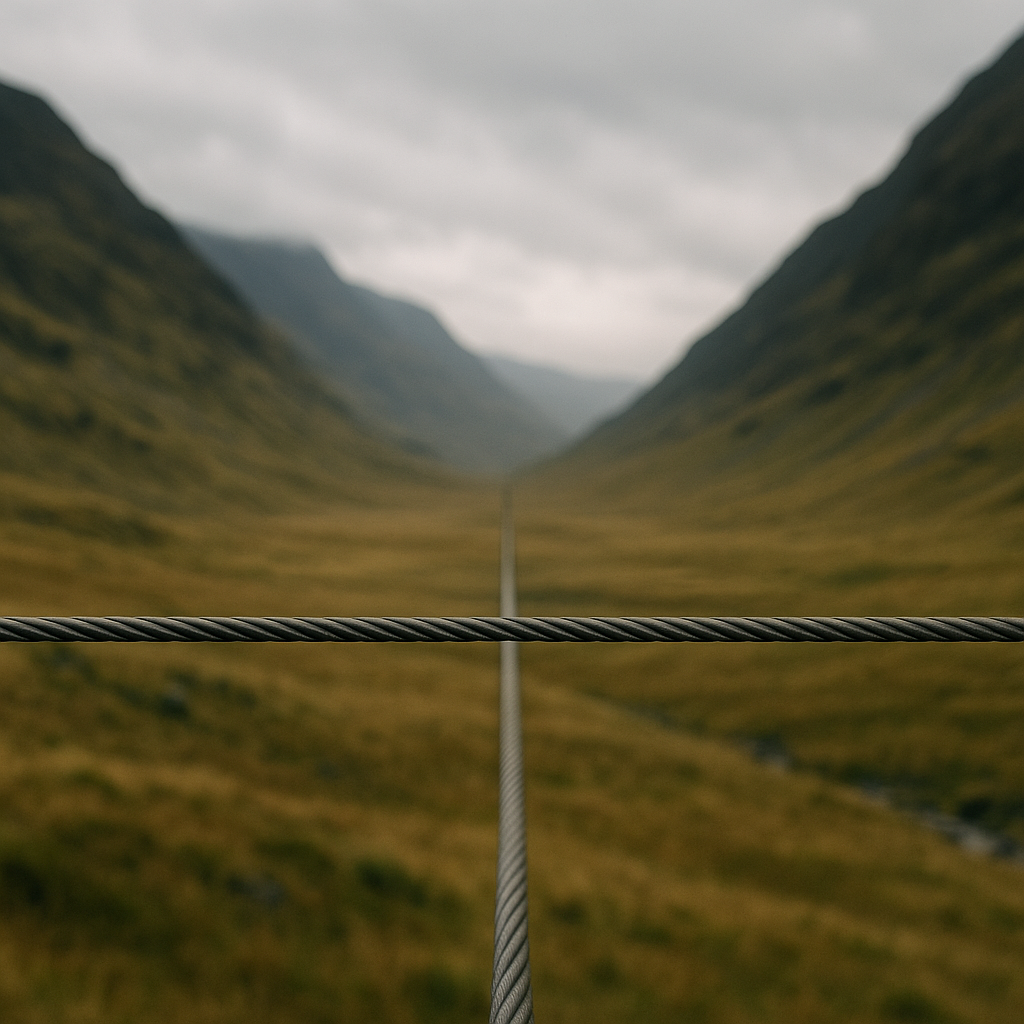
Experience K3, the world's longest single-span zipline. Soar 3.2km through the Western Cape, reaching speeds over 120km/h!
Imagine a super-long zip-line, called K3, in South Africa. It's like a silver thread, stretching 3.2 km, letting you fly really fast, over 140 km/h, above beautiful lands. You go up a mountain, get strapped in by "the Tailor," then WHOOSH! You're flying, feeling weightless, seeing amazing views. When you land, it's super smooth, and you get all your flight stats. At night, it glows and feels like flying through stars, making it an awesome adventure for everyone.
What is the K3 zip-wire?
The K3 is a 3,2 km single-span zip-wire in Caledon, Western Cape, made from a 38 mm Swedish-steel filament. It is currently the longest single-span zip-wire ever built, offering a thrilling descent at speeds potentially exceeding 140 km/h, traversing incredible landscapes and botanical kingdoms.
Get Cape Town news in your inbox
Stay updated with the latest stories from the Mother City.
- Caledon, Western Cape – a dawn-to-dusk gravity opera*
1. Dawn on the valley floor: where statistics turn into cinema
Stand on the main drag just after sunrise and the Swartberg spills a white river of mist that settles between the canola stripes like spilled cream. Forty-five minutes later the sun erases the haze and a hair-thin gleam appears, razor-straight, from skyline to valley. That glint is the K3 line: a 38 mm Swedish-steel filament, one unbroken 3 180 m coil massing 19 t and pulled to 18 t of breaking tension. The numbers make headlines - longest single-span zip-wire yet built, out-stretching the previous UAE title-holder by the length of four pitches - but figures evaporate once you leave the N2 base camp and start the mountain climb. What replaces them is a rewind through epochs, a slow-motion ascent that shrinks four-and-a-half centuries of geology into nine kilometres of gravel and quartzite switchbacks.
They nickname the uphill drive “the 4×4 cocktail”: 1 100 m of elevation, thirty-two hairpins, three stream crossings and a mandatory radio halt dubbed Guano Corner because rock kestrels repaint the boulders white. Custom Land-Cruisers crawl in crawler gears, but the real suspension is the commentary track. Between bars of Afrikaans pop you discover the shale under the tyres predates dinosaurs, that the yellow outside the window will be bottled in Tokyo as cholesterol-free oil, and that the black eagle you just flushed can pinpoint a dassie from a kilometre and a half away. You climb through three botanical kingdoms - Renosterveld, Fynbos, Afromontane - without ever shifting past second gear. By the time the tyres whine on bare quartz, the air smells of pine resin and diesel, and the valley looks like a crumpled green quilt stitched with chrome-yellow thread.
Suddenly the track ends. The vegetation shrinks into knee-high bonsai proteas and the wind arrives with a whistle. Ahead, a steel beak juts eight metres clear of the cliff: the launch deck locals call the Nest. Beneath its grill, four load-cells gossip with a programmable controller, tightening or loosening the cable to compensate for the eighteen-degree temperature swing that can happen between midday barbecue and sundowner. You step on a solar scale and learn that a two-kilogram difference can nudge landing speed by seven kilometres per hour; miss your band by half a kilo and you surrender your slot. Gravity, it turns out, is a perfectionist.
2. The Nest: tailoring humans for 140 km/h flight
On deck, a staff member known only as “the Tailor” wraps you into a dual-redundant harness: a climbing saddle overlaid by a paragliding cocoon stitched to 2,5 t spec. A German SpeedRunner T-1200 pulley - borrowed from wind-turbine technicians - is clicked on; fourteen ceramic bearings inside are sealed against Kalahari dust. While he tightens leg loops the Tailor recites a three-beat mantra - hips snug, shoulders square, chin up - that has already become a TikTok ear-worm. Then comes the thirty-second cliff tutorial: how to cross your ankles, where to park your thumbs, the exact second to exhale so your diaphragm doesn’t collapse on the initial three-storey drop. After that, language fails. Sunglasses fog, throats dry, someone always asks for the loo again. The abyss deletes small talk better than any therapist.
Release is deliciously analogue. A guide lifts a gate hook; nothing springs, nothing fires. Gravity simply swallows the slack and you snap forward. The first 0–60 km/h takes 4,8 seconds, yet the sensation lives in your temples, not your gut. Two hundred metres out you skim a knoll and the planet falls away four hundred vertical metres; canola becomes a yellow bitmap, farm dams turn into mercury coins. Newcomers invariably scream here - staff call the coordinate the “Oh-God Dot” and mark it with a cat-eye for night flights. For six seconds you are subsonic above fynbos, a human Doppler note that climbers on neighbouring Babylon’s Tower last Easter mistook for a swarm of bees.
Then the cable relaxes into a three-hundred-metre catenary dip engineered to bleed twelve km/h and gift you twelve seconds of engineered silence. Centrifugal force cancels weight; you hover. The only soundtrack is the purr of bearings at nine thousand rpm - audio geeks liken it to a Testarossa on a dyno. Glance left and the Riviersonderend range bruises purple; glance right and the ocean winks forty-five kilometres away. The air tastes of pine resin and tractor diesel, an accidental perfume that has inspired three Cape Town fragrance houses to chase a limited “Canola Thunder” cologne. In this lull you forgive every anxiety you carried uphill; the mountain has edited your story to a single, weightless page.
3. Terminal yellow: how to brake a falling star
Past the kilometre-and-a-half mark the gradient kicks to eighteen percent and velocity peaks. Two thousand four hundred GPS traces cluster between 124 km/h and 138 km/h; the record stands at 154,3 km/h, set by a sixty-two-kilogram Brazilian who torpedoed down folded like a bullet. At that speed the canola ceases to be blooms and becomes luminous surf. Adrenaline paints the scene with a violet overlay - photographers call the phenomenon “Cape Shift” and physics teachers borrow it to illustrate chromatic aberration in the human lens. You are a meteor wearing sunglasses, streaking above a yellow ocean.
The finale looks pastoral but hides a physics exam. The last two hundred metres carry an eddy-current brake: neodymium plates bolted beneath the cable induce reverse electromotive force as the steel pulley slices through the magnetic field. No friction, no smoke, no scream of metal - just a gentle tug, as if a giant hand straightens a tablecloth, followed by a thirty-metre free-roll into a rubber-padded saddle. A hydraulic ram waits in reserve; it activated once, in October 2023, when a freak head-wind gusted to seventy-two. The arrest is so quiet the ride ends on bird-call and the soft smack of a glove catching your pulley. Before your soles touch rubber, a QR code lands in your palm linking to a cloud dashboard: altitude trace, speed curve, air density, wind vector, plus a hundred-and-twenty-frames-per-second Nikon burst. Ninety seconds later an auto-edited clip waits on Vimeo ready for Instagram abstraction; last summer the hashtag #K3data outsold sunset selfies in the Western Cape.
Night flights rewrite the script. On full-moon weekends the line wears twelve hundred phosphorescent tags that charge at dusk and glow like a child’s sketch of a comet. Riders clip battery wing-lights pulsing at two hertz, becoming bioluminescent fireflies streaking across a dark-sky reserve where light pollution clocks a mere 0,3 millicandela per square metre - dark enough to spot the gergenschein. Astronomers from Caledon’s volunteer observatory narrate Magellanic clouds while guests wait; marriage-proposals time diamond drops for the twelve-hundred-metre mark, trusting magnets to safeguard both carat and couple. Slots sell out six months ahead, but even the moon can’t upstage the valley’s daytime cast: Cape leopards, caracal with mongoose in jaw, black eagles that surf the ridge-lift the cable accidentally invented - ornithologists now call the phenomenon the “K3 elevator” and are drafting a paper on infrastructure that doubles as raptor thermals.
4. Side-quests, logistics and the gravity economy
Every ticket chips forty-five rand into the Overberg Lowlands Conservation Trust. In eighteen months the micro-levy ripped out 2,3 kilometres of invasive pine, strung four kilometres of leopard-friendly fence and bought two Anatolian shepherd dogs that guard sheep without bullets. Cameras on the Nest have logged twenty-two leopard visits, one caracul courier and a pair of eagles that commute the ridge like Uber. Closure rules are simple: sustained wind above twenty-five or gust delta over twelve, figures delivered by a private weather station now licensed by three paragliding schools. Rain rarely cancels - the Swedish wire carries tungsten-disulphide nanoparticles that shrug off water and shave eighteen percent off friction. Only the annual December canola burn pauses daylight ops; staff pivot to night slots when inversion traps ash below six hundred metres.
Gear geeks treat the ride like a Skunk Works. Repeat speed freaks sew 1,5 m silk tails for steering drag; Swedish pilots once snapped 3-D printed winglets onto pulley cheeks before management impounded the prototypes - then uploaded the CAD files under Creative Commons. A Durban audiophile records every descent on binaural mics; his ninety-six-kilohertz cable-hum map has been sampled by electronic artists and a Netflix infrasound documentary. Recovery happens downstream at Caledon’s 1893 hot-spring complex: mineral soup at forty-two degrees and eighteen-hundred ppm sulphate neutralises lactic acid faster than ice, according to Stellenbosch sports scientists who poked forty flyers. Five kilometres away Blue Crane Route Brewery ferments “Canola Gold” ale over stalk-smoked malt; bottle-cap QR codes shave rand off night flights. Mountain-bike farmers have carved a twelve-kilometre flow trail that dumps 650 m back to base camp, letting adrenaline addicts double-dip gravity before lunch.
Cape Town lies 112 km east on the N2 - ninety minutes if the traffic gods smile. Ages seven to eighty-five are welcome provided they weigh between twenty-five and one-hundred-twenty kilos and lace closed shoes. Long hair must live inside the helmet, chest-mounted GoPros need a lanyard, wheelchair transfers demand forty-eight hours’ notice. Winter (May–August) knocks twenty percent off the tariff; cancellations due to wind are rebooked free. Pick-ups run every two hours from seven in the morning to seven at night, with bonus lunar slots that book out half a year ahead. On busy Saturdays the Nest becomes a mini-UN: Israelis swap protein bars with Overberg wheat farmers, Japanese newly-weds teach local kids to bow, Brazilian pilots diagram yaw angles for German engineers. Because everyone has just heard their weight announced aloud, vanity evaporates; conversations jump straight to “What’s the scariest thing you’ve ever done?” Guides run a sweepstake - closest speed guess wins a beer, loser belts the national anthem on landing. The Welsh rugby team still holds the anthem record: three minutes two seconds, identical to the ride itself, harmonic chords dopplering into the dark.
Plans already hover overhead. Engineers have drilled test cores for a twin cable twenty-five metres south; laser gates will synchronise drag races between friends. A Cape Town VR studio is prototyping headset overlays that let you slay digital dragons while the real valley blurs past at 130 km/h. SanParks has floated a five-kilometre extension landing on a floating deck above the river mouth - if approved, K3 would steal its own crown before rivals finish slide-rule sketches. Until then the single silver strand remains monarch of the sky, a 3,2 kilometre argument that gravity, choreographed with respect and a dash of Swedish steel, is just another tourism utility - one that builds no walls, leaves no scar, only the echo of a scream that travellers will trade across continents until the next frontier unzips the clouds.
[{"question": "
What is the K3 zip-wire?
", "answer": "The K3 is a 3.2 km single-span zip-wire located in Caledon, Western Cape, South Africa. It's constructed from a 38 mm Swedish-steel filament and is currently the longest single-span zip-wire ever built. It offers a thrilling descent at speeds potentially exceeding 140 km/h, traversing incredible landscapes and botanical kingdoms."}, {"question": "How long is the K3 zip-wire and how fast can you go?
", "answer": "The K3 zip-wire is 3.2 kilometers (3,180 meters) long. Riders can reach speeds exceeding 140 kilometers per hour, with the record currently standing at 154.3 km/h. The extreme length and speed offer a unique and exhilarating experience."}, {"question": "What is the experience like from start to finish?
", "answer": "The adventure begins with a scenic 9-kilometer, 4x4 drive up the mountain, ascending 1,100 meters through three botanical kingdoms. At the launch deck, known as 'the Nest,' \"the Tailor\" straps you into a specialized harness. After a brief tutorial, you're released, experiencing an initial fast drop before a mid-flight lull where you feel weightless. The ride culminates with a smooth, silent magnetic braking system, and you receive instant flight stats and a video of your descent. The entire ride is about three minutes two seconds."}, {"question": "Can I experience the K3 zip-wire at night?
", "answer": "Yes, night flights are available and offer a unique experience. On full-moon weekends, the line is adorned with 1,200 phosphorescent tags that glow like a comet. Riders wear battery-powered wing-lights, becoming bioluminescent streaks across a dark-sky reserve. These slots are highly popular and often book out six months in advance."}, {"question": "What are the age and weight requirements for riding the K3?
", "answer": "The K3 zip-wire welcomes riders from ages seven to eighty-five. Participants must weigh between 25 and 120 kilograms. It's also required to wear closed shoes, and long hair must be secured inside the helmet."}, {"question": "How does the K3 contribute to conservation efforts?
", "answer": "For every ticket sold, 45 ZAR is contributed to the Overberg Lowlands Conservation Trust. This micro-levy has funded the removal of invasive pine, the installation of leopard-friendly fencing, and the acquisition of Anatolian shepherd dogs for livestock protection. The K3 also inadvertently creates 'raptor thermals' for black eagles, a phenomenon that ornithologists are now studying."}]
Emma Botha is a Cape Town-based journalist who chronicles the city’s shifting social-justice landscape for the Mail & Guardian, tracing stories from Parliament floor to Khayelitsha kitchen tables. Born and raised on the slopes of Devil’s Peak, she still hikes Lion’s Head before deadline days to remind herself why the mountain and the Mother City will always be her compass.
View all articles →