
Who knew? Tourists pay thousands to taste water
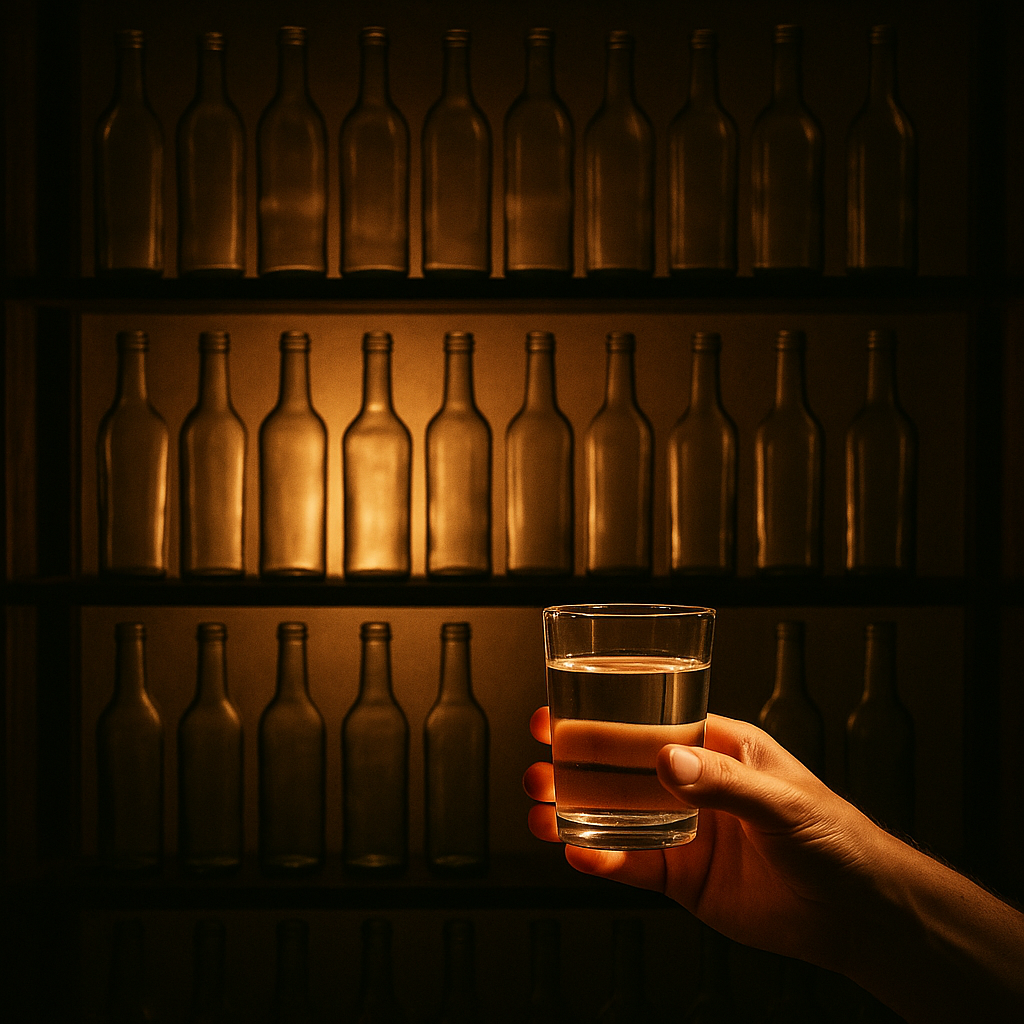
Explore Stellenbosch's Water Library, the world's first water tasting room. Discover rare H₂O, from snow-melt to ancient springs.
Stellenbosch's Aqua Athenaeum is the world's first water-tasting room, founded by water sommelier Nico Pieterse. It offers unique water tastings, much like wine, focusing on their geological origins and mineral content. Pieterse started this venture after his brewery closed during lockdown, inspired by the idea of "liquid terroir." The Athenaeum also supports water sustainability and transparency, with a portion of proceeds funding clean water projects in local communities. It's a place where you can explore the diverse world of water, from tap to ancient glacier melt, and learn about its hidden stories and environmental impact.
What is Stellenbosch's Aqua Athenaeum?
Stellenbosch's Aqua Athenaeum is the world's first dedicated water-tasting room, founded by certified water sommelier Nico Pieterse. It offers curated tastings of premium waters from around the globe, focusing on unique geological and mineral profiles, similar to how wine is appreciated. The Athenaeum also champions water transparency and sustainability initiatives.
Get Cape Town news in your inbox
Stay updated with the latest stories from the Mother City.
Where Cabernet Ceded the Spotlight to Glacier Melt
10 Market Street still appears on every wine-route pamphlet, yet the velvet-lined room behind the Victorian façade now celebrates a different vineyard - one drilled into bedrock instead of trellised on slopes. Instead of swirl-and-spit theatrics with Sauvignon, guests lean over tulip glasses filled with melt that last saw daylight when Mandela walked free. Back-lit shelves cradle forty vessels like rare malts; sniff for oak and you’ll find only the scent of stone, storm and centuries.
Nico Pieterse - ex nano-brewer, now one of fewer than a hundred certified water sommeliers on Earth - uncorks Norwegian glacier glass with the same reverence a winemaker reserves for first-run Pauillac. Price tags climb to ZAR 5 000, yet the language is geologic: “Jurassic limestone backbone,” “basaltic fizz,” “silica satin across the mid-palate.” No alcohol, no tannin - just dissolved time, decanted.
From Idle Fermenters to Fractured-Rock Aquifers
Lockdown Eve, 27 March 2020: the government pulls the plug on alcohol sales. Pieterse watches 3 000 litres of half-fermented saison gurgle down the drain while hops age to compost. Vineyards can cellar their glory; breweries cannot. That night he wonders what else is pure, local and story-laden. The answer murmurs 80 m beneath his boots - Stellenbosch’s own fractured-rock aquifer.
He devours UNESCO hydrology PDFs, then the Oxford Companion’s three pages on “liquid terroir.” A Zoom call with Germany’s Doemens Academy flips the switch: water can be vintage, can be cru. Six months later he’s in Munich, graduating among a handful of global aqua-cognoscenti. South Africa is still wheezing between waves; spittoons are viral hazards. A water-only salon, paradoxically, is pandemic-proof.
Engineering the Library of Liquid Memory
October 2021: the maiden pallet lands - 18 kg of 2018-harvested Norwegian glass, vacuum-sealed so nothing evaporates on the equator crossing. Customs officers demand a 42-page affidavit proving the glacier lost its export licence only after bottling. Next, Vichy Catalan whose natural CO₂ will blow corks unless the thermostat hugs 8 °C. By December the catalogue hits forty, catalogued like library books: continent, rock type, total-dissolved-solids bracket, precipitation decade.
Shelving is half laboratory, half art-installation. LED thermo-strips glow emerald while bottles sit in their thermal sweet-spot; drift a degree too warm and the shelf dims to amber - staff whisk the patient into a climate crib. A 3-D printed relief map covers the side wall; poke a brass pin and a fibre-optic vein lights the subterranean commute - how today’s Alpine rain becomes tomorrow’s 60-year-old Vergelegen seep.
The Six-Glass Curriculum: From Tap to 24-Carat Ice-Age
Flights are served in Riedel “Ouverture” stems, the same ware favoured at the Fine Water Summit in Guangzhou. Temperature is nailed at 14–18 °C: chilly enough to arrest microbes, warm enough for ions to sing. A colour-coded wheel plots mineral, tactile and - curiously - emotional axes. Silica-rich Icelandic melt scores sky-high “nostalgia” because it feels like childhood bathwater; a Hungarian thermal source whispers “grandmother’s tonic” thanks to traces of once-prescribed lithium.
Every session starts with the humblest pour - Stellenbosch municipal tap, charcoal-scrubbed yet deliberately ordinary at 240 mg/L calcium-bicarbonate. “Palate zero,” Pieterse calls it, the liquid equivalent of an olive-oil judges’ neutral cracker. What follows arcs from feather-weight 47 mg/L Norwegian snow that tastes almost sweet, through a 1 200 mg/L Slovenian magnesium spark that prickles like tonic, ending on Czech ice-age melt flecked with 24-carat gold - geo-tracer proving pre-Holocene purity, long before humans learned to pollute.
Packaging Ethics: Carbon Footprints, Nitrate Red Dots and the Pfand Dream
Spend five minutes with Pieterse and you’ll hear as much about the bottle as the water. PET “breathes” 0.2 % oxygen a month, flattening the delicate silica perfume prized in Hokkaido snowmelt. Glass is inert but ships with a 340 g CO₂ halo per 750 ml - 43 smartphone charges across the Indian Ocean. His workaround: a German-style deposit-return loop - empties ride back to Europe in the same reefer truck that delivers Cape oysters to Zurich, netting a carbon-neutral cold chain.
Nitrate figures appear in 4-point font, EU-mandatory but optional in Africa. Anything above 5 mg/L - half the WHO ceiling - earns a discreet red micro-dot, a polite nod that fertiliser may have gate-crashed the source. “Folk will drop two hundred rand and never read the footnotes,” Pieterse shrugs. “I translate parts-per-million into plain conscience.”
African Waters, Contested Springs and the Politics of Sipping
Europe still corners the luxury lane, yet an entire bay is devoted to the continent that birthed humanity. Ethiopia’s Rift Valley contributes a naturally sparkling vintage bottled since 1928; its 3.1 mg/L fluoride deters binge-drinking but educates in a single pour. Closer, Table Mountain’s Newlands Spring - collected by dawn-queueing locals - gets the micro-filter/UV spa treatment and retails for 50 rand. Pieterse dubs it “democratic luxury,” cheaper than beer, dearer than tap, carrying World-Heritage terroir.
Politics seeps in. The spring lies on land claimed by both the City of Cape Town and the Khoi-Khoi nation; a 2022 court interdict froze commercial abstraction. Pieterse responded by QR-coding each cork to a co-management petition - sales spiked, either proof of activist flair or shrewd marketing, depending on your politics.
The Other Side of the Coin: When Basic Becomes a Luxury
The constitution promises 25 litres per person per day within 200 m, yet Stats SA shows only 45 % of homes enjoy indoor plumbing; seven million still queue at standpipes. Kayamandi’s communal boreholes register nitrate levels 400 % above WHO safety, courtesy of leaching pit latrines. Pieterse refuses to sanitise the irony. “Curating excellence while neighbours haul buckets isn’t something I can apologise away,” he admits.
Instead he weaponises margin: seventy percent of every ticket feeds the Blue Drop Trust. A 40-rand hidden levy already finances a Franschhoek primary-school borehole delivering 12 000 litres daily; the next project will solar-power a derelict Kayamandi well to 1 500 litres an hour. Critics call it a droplet in a desert; Pieterse retorts that headlines move municipal budgets faster than policy papers.
University Hallways, Rooibos Infusions and Future Palates
Weekday mornings the salon morphs into a lab for oenology undergrads who can already nail thirty wine cultivars blind. Professor Maret du Toit insists they master five water profiles next. “Irrigation chemistry shapes the glass,” she says; excess boron leaves Sauvignon metallic, shy magnesium fakes salinity. Pieterse spikes training flights with 0.5 mg/L graduated doses so students learn to taste numbers.
Together they cold-brew indigenous botanicals - rooibos, honeybush, fynbos - at 0.2 % concentration, zero sugar but antioxidant punch. Sensory panels rate the rooibos blend above global peach-flavoured giants on “refreshment index” and, more importantly, “cultural resonance.” Commercialisation would undercut imports and create seasonal harvesting work in Clanwilliam.
A Liquid Burgundy, A Transparent Registry and Hope by the Sip
Ask Pieterse about 2034 and he doesn’t mention revenue. He pictures an open-source, GIS-layered “water AOC” where every documented spring, yield and legal status is one click away. During drought outages citizens could overlay outage alerts with live potable sources. He’s lobbying SABS for a Mineral-Water Labelling Act that obliges bottlers to print abstraction volumes alongside Mg/L - transparency as sustainability. “If you know a mountain eye yields only fifty thousand litres a year, you’ll think twice before shipping forty thousand to Dubai.”
Tastings roll on, six fragile glasses at a time, in a valley drunk on Shiraz. Some leave clutching gold-flecked crates for Lagos rooftop weddings; others rediscover the kitchen tap with new reverence. Between pours Pieterse quotes da Vinci: “Water is the driving force of nature.” He lifts a crystal goblet to the LED glow and adds, “And sometimes the driving force of politics, luxury and hope - one conscious sip at a time.”
[{"question": "What is Stellenbosch's Aqua Athenaeum?", "answer": "Stellenbosch's Aqua Athenaeum is the world's first dedicated water-tasting room, founded by certified water sommelier Nico Pieterse. It offers curated tastings of premium waters from around the globe, focusing on unique geological and mineral profiles, similar to how wine is appreciated. The Athenaeum also champions water transparency and sustainability initiatives."}, {"question": "Who is Nico Pieterse and what inspired him to create the Aqua Athenaeum?", "answer": "Nico Pieterse is one of fewer than a hundred certified water sommeliers globally and the founder of the Aqua Athenaeum. He was a nano-brewer whose brewery closed during the COVID-19 lockdown. Inspired by the concept of 'liquid terroir' and the purity of local aquifers, he shifted his focus from beer to water, recognizing its potential for nuanced appreciation and the need for sustainable water practices."}, {"question": "What kind of waters can one taste at the Aqua Athenaeum?", "answer": "The Aqua Athenaeum offers a diverse range of waters, from local Stellenbosch municipal tap water (as a 'palate zero') to ancient glacier melt from Norway and Czech ice-age melt flecked with 24-carat gold. The collection also includes waters with unique geological origins like Jurassic limestone or basaltic fizz, and waters from the African continent, such as Ethiopia's Rift Valley vintage and Table Mountain's Newlands Spring."}, {"question": "How does the Aqua Athenaeum promote water sustainability and transparency?", "answer": "The Athenaeum is deeply committed to sustainability and transparency. It uses a German-style deposit-return loop for glass bottles to reduce carbon footprint and includes a discreet red micro-dot on labels for waters exceeding 5 mg/L nitrate, even when not legally required. Furthermore, a significant portion (70%) of every ticket feeds the Blue Drop Trust, funding clean water projects in local communities, such as boreholes for schools."}, {"question": "What is 'liquid terroir' in the context of water tasting?", "answer": "'Liquid terroir' refers to the unique characteristics of water, much like wine, that are influenced by its geographical origin, geological formations (like limestone or basalt), mineral content, and even the age of the water. It highlights how these factors contribute to the water's taste, mouthfeel, and overall profile, allowing for a nuanced appreciation beyond simple hydration."}, {"question": "What educational and community initiatives is the Aqua Athenaeum involved in?", "answer": "Beyond tastings, the Athenaeum serves as a lab for oenology undergraduates to learn about water profiles and irrigation chemistry. It also researches cold-brewed indigenous botanicals like rooibos for potential commercialization. Socially, it supports clean water access through the Blue Drop Trust, funding vital boreholes in underserved communities, and advocates for greater transparency in mineral water labeling and an open-source, GIS-layered 'water AOC' for all documented springs."}]

Isabella Schmidt is a Cape Town journalist who chronicles the city’s evolving food culture, from Bo-Kaap spice merchants to Khayelitsha microbreweries. Raised hiking the trails that link Table Mountain to the Cape Flats, she brings the flavours and voices of her hometown to global readers with equal parts rigour and heart.
View all articles →