
WHY ARE MOSQUITOES STUDIED SO MUCH?
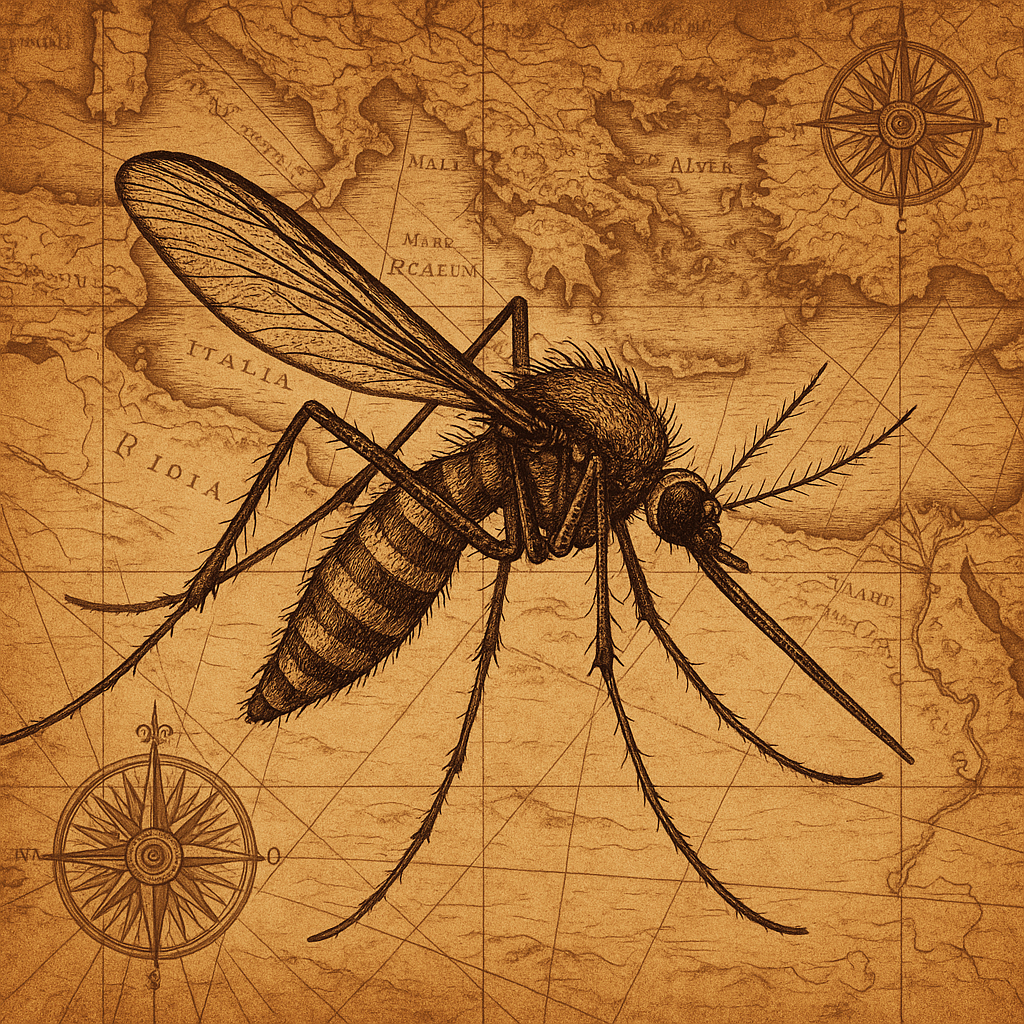
Mosquitoes, tiny architects of history, wield immense power. Explore malaria's science, control, and emerging tech in this deep dive.
Mosquitoes are super dangerous tiny insects that have caused more deaths than any war, spreading diseases like malaria. They are incredibly good at finding and biting humans, using special senses to sniff us out. Scientists are working hard to understand these ancient enemies, even looking into their DNA, to find new ways to stop them from making us sick.
Why are mosquitoes so dangerous?
Mosquitoes are dangerous because certain species act as essential intermediaries for infectious agents, like the Plasmodium parasites causing malaria. Their evolutionary adaptations, such as anthropophily (preference for human blood) and sophisticated sensory systems, make them extraordinarily efficient disease spreaders, leading to millions of deaths throughout history.
Get Cape Town news in your inbox
Stay updated with the latest stories from the Mother City.
An Ancient Adversary Shaping Modern Medicine
Mosquitoes occupy a peculiar position in humanity's story - creatures so diminutive they escape notice during daily life, yet so monumentally consequential that they have fundamentally altered the trajectory of human societies. The diversity of this insect family staggers comprehension: more than 3,500 distinct species have colonized virtually every habitable landmass on Earth, with only Antarctica remaining beyond their reach. Their evolutionary tenure stretches back roughly 100 million years, a span during which they have conquered environments ranging from frozen Arctic plains to steamy equatorial jungles.
Research laboratories worldwide devote extraordinary resources to understanding these insects, treating them as invaluable windows into biological complexity. Scientists investigate their sensory systems, mating behaviours, and developmental processes with an intensity that surpasses scrutiny applied to numerous mammal species. Genome sequencing projects have decoded their DNA with remarkable thoroughness, exposing the molecular machinery that drives their activities and equips them to carry disease-causing organisms. This scientific obsession stems not from abstract intellectual pursuit alone, but from pressing practical reality - a limited number of mosquito species act as essential intermediaries for infectious agents that have killed more humans than any war or natural disaster.
Africa's Dominant Vector: The Anopheles Gambiae Complex
Within the vast mosquito family, one particular group towers above others in terms of human health impact. The Anopheles gambiae species complex encompasses approximately eight closely allied species responsible for the majority of malaria transmission throughout sub-Saharan Africa. What renders these insects uniquely dangerous extends beyond their simple ability to carry Plasmodium parasites; their evolutionary refinement as human parasites makes them extraordinarily efficient disease spreaders.
These mosquitoes have developed in tandem with growing human settlements, honing behaviours that optimize their blood-feeding success. Their feeding preferences show striking specialization toward humans over other available animals - a trait scientists label anthropophily. This targeting relies on remarkably sophisticated sensory integration. Hunting females simultaneously track multiple stimuli: the carbon dioxide plumes rising from exhaled breath, the infrared radiation emanating from warm bodies, visual movement patterns, and intricate chemical blends released from human skin surfaces.
The molecular dialogue between mosquitoes and their human hosts reveals extraordinary evolutionary craftsmanship. Human epidermis releases hundreds of different airborne chemicals, and Anopheles gambiae possesses specialized receptor proteins calibrated to recognize specific combinations of these signals. Laboratory studies have pinpointed lactic acid, ammonia compounds, and particular fatty acids as especially powerful attractants. Variation in how strongly individuals draw mosquito attention traces partly to differences in skin microbial communities - distinct bacterial populations inhabiting our surfaces modify the chemical cocktails we emit, generating unique olfactory profiles that mosquitoes can distinguish and preferentially seek out.
Reproduction, Survival, and Population Resilience
The life-cycle characteristics of malaria-carrying mosquitoes substantially complicate attempts to suppress their numbers. Female Anopheles typically secure mates only once, yet this single encounter suffices for their entire reproductive careers through remarkable physiological adaptations. Specialized storage organs preserve sperm viability for extended periods, enabling females to produce successive batches of fertilized eggs across weeks of adult life.
Under favourable circumstances, one female might generate several hundred descendants before dying. This explosive reproductive potential generates immense demographic momentum that frustrates elimination campaigns. Mathematical modelling demonstrates how modest improvements in daily survival rates can enable populations to rebound within months following intensive suppression efforts. The age structure of mosquito communities - with extremely high death rates among aquatic immature forms and comparatively sheltered adult stages - makes grown mosquito longevity the decisive factor governing disease transmission intensity.
Environmental temperature shapes these processes through dual pathways, influencing both insect maturation and parasite development within their bodies. Plasmodium organisms undergo elaborate metamorphosis inside mosquito digestive tracts, transformations demanding precise thermal windows. This temperature sensitivity produces predictable geographic gradients and seasonal rhythms in transmission risk that health planners must anticipate and accommodate.
Adaptive Behaviour and the Arms Race of Resistance
Few mosquito attributes provoke more exasperation among control specialists than their chameleon-like capacity for behavioural adjustment. Populations facing intense selective pressure demonstrate remarkable speed in developing counter-strategies across multiple biological dimensions.
Feeding schedule modifications illustrate this adaptive agility. Where protective bed nets shield sleepers during conventional nighttime hours, certain populations have pivoted toward dawn or dusk feeding when human victims remain exposed. This temporal resistance operates alongside chemical resistance - inherited genetic changes that modify neural targets or boost enzyme systems that neutralize toxic compounds.
Resting preferences show similar flexibility. Established indoor spraying programs assume mosquitoes will alight on treated walls following blood meals. Under sustained pressure, however, populations increasingly adopt outdoor resting habits, circumventing contact with insecticidal residues. These behavioural shifts may reflect genetic alterations or simply plastic responses to environmental signals, rendering prediction and prevention extraordinarily difficult.
Contemporary genomic technologies have illuminated the molecular foundations of these adaptations. Population-level DNA sequencing identifies genomic regions displaying characteristic signatures of recent strong selection - areas harbouring variants associated with chemical resistance, daily rhythm modification, and sensory perception. Such mechanistic insights enable sophisticated surveillance for emerging resistance and potentially guide development of counteracting interventions.
Next-Generation Approaches to Vector Management
Current research increasingly concentrates on revolutionary technologies promising to transcend traditional control method limitations. Gene drive mechanisms attract particularly intense investigation. These engineered genetic elements propagate through populations through non-Mendelian inheritance patterns, potentially disseminating traits that crash reproductive output or re-engineer vector capacity.
Multiple gene drive architectures have been proposed for malaria applications. Suppression designs aim to drive mosquito numbers below disease-sustaining thresholds by spreading infertility-causing or sex-ratio-distorting genetic payloads. Alternatively, modification approaches seek to establish parasite-blocking traits throughout populations without necessarily reducing overall abundance.
The Target Malaria initiative exemplifies multinational coordination advancing these tools, maintaining field stations across Burkina Faso, Mali, and Uganda. Investigations at centres like the Uganda Virus Research Institute integrate technical refinement with community consultation and regulatory groundwork. Local specialists such as Rogers Atugonza provide indispensable knowledge of regional mosquito ecology while participating in global scientific exchange.
Gene drives represent merely one frontier. Wolbachia bacterial infections that hijack host reproduction and diminish pathogen susceptibility show promise in various settings. Precision sterile male releases using genetic rather than radiation-based sterilization offer improved efficiency over classical approaches. Each innovation carries distinctive ecological and governance implications requiring thorough assessment.
South Africa's Distinctive Malaria Challenge
For South Africa specifically, mosquito science carries immediate practical relevance extending beyond contributions to worldwide understanding. Malaria persists in focused geographic pockets - primarily Limpopo Province, Mpumalanga, and the northern reaches of KwaZulu-Natal - where ecological conditions support both vector survival and parasite transmission.
National malaria programming has accomplished dramatic reductions in transmission intensity throughout recent decades. These achievements reflect orchestrated implementation of complementary tools: interior wall spraying with appropriate insecticides, swift diagnostic confirmation, artemisinin-combination treatments, and strategically targeted vector interventions. Persisting difficulties include transboundary disease movement from neighbouring states, spreading insecticide resistance, and climatic fluctuations that expand vector-friendly territory.
South African malaria's pronounced seasonality creates distinctive surveillance requirements. Infection risk concentrates during summer months when warming temperatures simultaneously boost mosquito populations and accelerate parasite maturation. This cyclical pattern permits concentrated resource deployment during high-risk intervals but demands predictive capability to foresee transmission surges.
Domestic research infrastructure supports both national and regional programming. The National Institute for Communicable Diseases, various university departments, and the Medical Research Council sustain active research portfolios spanning entomology, parasitology, and disease tracking. This scientific capacity enables prompt response to novel threats and meaningful participation in international collaborative networks.
Why Mosquito Science Remains Indispensable
The extraordinary scientific resources directed toward these insects directly mirrors their disproportionate impact on human civilization. Historical scholarship indicates that malaria and allied mosquito-borne conditions have fundamentally influenced where humans settled, how agriculture expanded, and how economies developed across massive tropical swaths. The ongoing malaria burden continues impeding prosperity in numerous developing nations, generating annual economic costs measured in tens of billions of dollars.
Studying mosquitoes thus simultaneously serves immediate practical goals, advances foundational biological knowledge, and stimulates technological creativity. Successive researcher generations inherit accumulated wisdom while confronting fresh challenges arising from continuous evolutionary change. Mosquitoes' demonstrated capacity for adaptation guarantees this scientific undertaking will persist indefinitely, as stationary solutions inevitably confront dynamic biological opposition.
The physical insignificance of individual mosquitoes - mere milligrams of biological material - stands in complete contradiction to their historical and present-day importance. These organisms have shadowed human expansion across continents, thwarted our most ambitious control initiatives, and endured as formidable adversaries despite generations of organized opposition. Their investigation illuminates pathways toward disease reduction while revealing broader insights into evolutionary principles, ecosystem functioning, and the intricate relationships between our species and the living world we inhabit.
Why are mosquitoes considered so dangerous?
Mosquitoes are incredibly dangerous because certain species, like the Anopheles gambiae complex, act as vectors for infectious agents such as the Plasmodium parasites that cause malaria. Their ability to efficiently find and bite humans, combined with their sophisticated sensory systems and rapid reproductive cycles, has led to them causing more deaths throughout human history than any war or natural disaster.
How long have mosquitoes been around, and where can they be found?
Mosquitoes are an ancient adversary, with an evolutionary history stretching back roughly 100 million years. There are over 3,500 distinct species, and they have colonized virtually every habitable landmass on Earth, from frozen Arctic plains to steamy equatorial jungles. The only continent they haven't reached is Antarctica.
What makes the Anopheles gambiae complex particularly dangerous for malaria transmission?
The Anopheles gambiae complex, found predominantly in sub-Saharan Africa, is uniquely dangerous due to its specialized preference for human blood (anthropophily). These mosquitoes have evolved alongside human settlements, developing highly sophisticated sensory systems to track humans by detecting carbon dioxide, body heat, visual cues, and specific chemical blends from human skin, making them extraordinarily efficient at spreading malaria.
How do mosquitoes reproduce, and why is it difficult to control their populations?
Female Anopheles mosquitoes typically mate only once but can produce several hundred descendants over weeks due to specialized organs that store sperm. This explosive reproductive potential gives them immense demographic momentum, allowing populations to rebound quickly after suppression efforts. Their high survival rates in adult stages and specific environmental temperature requirements for parasite development also complicate control measures.
How do mosquitoes adapt to control efforts, and what are 'gene drives'?
Mosquitoes exhibit remarkable adaptive behavior, developing counter-strategies to control methods. This includes changing feeding schedules (e.g., feeding at dawn/dusk to avoid bed nets), evolving chemical resistance to insecticides, and altering resting preferences (e.g., resting outdoors to avoid treated walls). Gene drives are revolutionary genetic engineering techniques that aim to propagate specific traits through mosquito populations, either to suppress their numbers (e.g., by causing infertility) or to modify them to block parasite transmission.
What are the specific challenges and efforts in malaria control in South Africa?
South Africa faces a distinctive malaria challenge, with the disease persisting in specific geographic pockets like Limpopo and Mpumalanga. While national programs have significantly reduced transmission, challenges remain, including transboundary disease movement, insecticide resistance, and climatic fluctuations that expand vector-friendly territories. South Africa utilizes a combination of indoor wall spraying, rapid diagnostics, artemisinin-combination treatments, and targeted vector interventions, supported by a strong domestic research infrastructure.

Liam Fortuin is a Cape Town journalist whose reporting on the city’s evolving food culture—from township kitchens to wine-land farms—captures the flavours and stories of South Africa’s many kitchens. Raised in Bo-Kaap, he still starts Saturday mornings hunting koesisters at family stalls on Wale Street, a ritual that feeds both his palate and his notebook.
View all articles →