
WHY DID GOODMAN NKOSI GET BAIL?
A Kruger safari tragedy: A loaded rifle at a bush braai ends a life. Explore the incident's anatomy, legal fallout, and industry impact.
A fun safari night in Kruger National Park turned tragic when a guide's rifle accidentally fired, killing a tourist. The rifle discharged when the tourist asked if it was real, shocking everyone. This sad event sparked a big investigation and made people question safety rules for guns on safaris. Now, changes are being made to make sure such a thing never happens again, but the memory of that night still haunts everyone involved.
What caused the fatal shooting at Kruger National Park?
A tragic incident occurred when a retired pharmacist, Yat Wing Albert Lam, was fatally shot by a .375-calibre rifle at a Kruger National Park safari dinner. The rifle, held by guide Goodman Sithembiso Nkosi, discharged when Lam asked if it was real, resulting in a single, fatal shot.
Get Cape Town news in your inbox
Stay updated with the latest stories from the Mother City.
Section 1 – A Winter Evening That Lost Its Innocence
Tuesday, 17 June 2024, dawned under a porcelain-blue Lowveld sky and stayed that way until sunset. At 15:30 a convoy of canvas-sided game viewers slipped out of Phabeni Gate, heading for a three-hour drive that would climax with dinner in a clearing insiders simply call Site 14B. Among the twelve travellers was Yat Wing Albert Lam, a retired pharmacist from Toronto on what his WhatsApp group had nicknamed the “Big-Five Bucket-List” reunion. By 19:42 the first of the day’s real fireworks - a single 300-grain round from a .375-calibre rifle - cut through the lantern-lit evening and ended Lam’s story in eight violent seconds.
Radio chatter pinpoints the grim stopwatch: the concession radio stamped GPS coordinates at 19:43, Skukuza SAPS were rolling by 19:51, and at 20:07 medics logged the time of death. The scene sealed itself into every participant’s memory: stars overhead, mopane smoke drifting past hurricane lamps, a jackal’s distant howl swallowed by a woman’s scream. What should have been the curtain-call of a perfect winter safari became the opening act of an investigation that is still ticking through courtrooms, boardrooms and therapists’ offices.
Few places on earth stage the bush braai better than Kruger: lanterns swinging from leadwood branches, blesbok loin hissing over glowing coals, staff reciting safety briefings like campfire poems. That night, though, the theatre turned lethal. The clearing - normally a 90-metre triangle ring-fenced by a 6 000-volt trip-wire - became a crime scene taped in SAPS blue. Guests who moments earlier had been clinking gin-and-tonics were suddenly giving statements under floodlights powered by a generator that now sounded obscenely loud.
Section 2 – Portrait of the Guide and His Company
Goodman Sithembiso Nkosi, 36, grew up in Mkhuhlu township east of Hazyview, where the tar stops and dust begins. A provincial bursary carried him from high school corridors to a diploma in Game Ranch Management, topped up later with a BCom Tourism from Unisa. Friends remember him as the guy who wiped down his vehicle dash twice a day and kept a spreadsheet for tyre-rotation intervals. In 2016 he pooled R7 000 from stokvel savings and a KFW youth-start-up loan to register Inkosi Destination Management Company (IDMC). Five years later the firm employed 27 people - trackers, commis chefs, drivers, camp hands - most earning their first monthly payslips.
IDMC is Level 2 B-BBEE compliant, carries R10 million public-liability cover through Hollard and files its safety certificates on time. Nkosi’s paperwork is immaculate: Professional Hunter licence good until 2026, SAPS firearm competency renewed March 2023, advanced life-support first-aid credentials. The Howa 1500 rifle that fired the fatal shot is company property, licensed and inspected on schedule.
Reputation matters in this business, and until that Tuesday night Nkosi’s was golden. A framed certificate naming him “Emerging Tourism Champion 2022” still hangs in the Hazyview office, above a whiteboard now covered with red marker arrows mapping the incident. Drivers who once boasted of working for the fast-rising Inkosi brand now speak in low voices, worried that their CVs will be collateral damage.
Section 3 – The Mechanics of a Single Shot
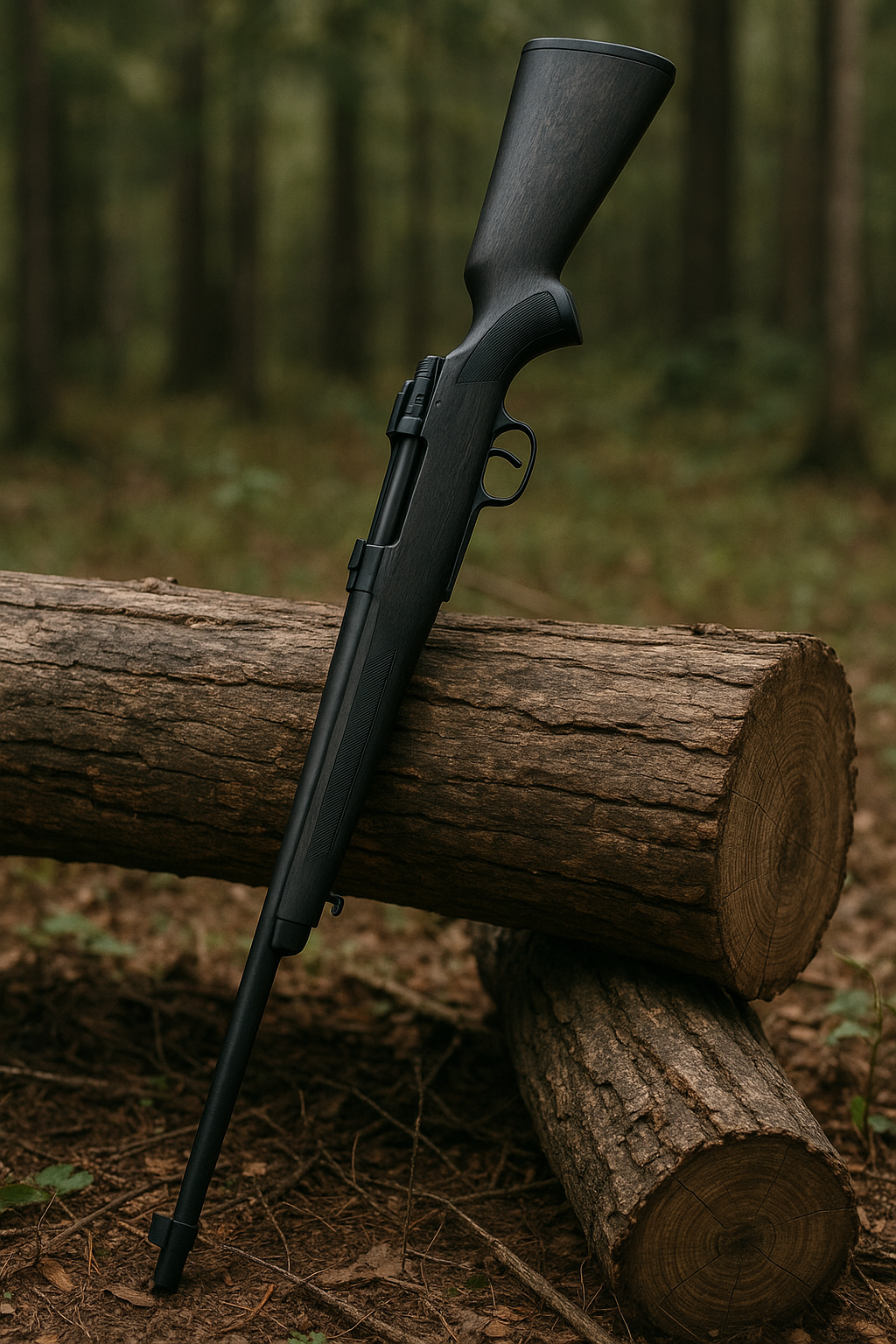
The stainless-steel Howa 1500, topped with a Leupold 2-7x scope, is Kruger’s workhorse for elephant back-up. That evening it held a single 300-grain soft-nose round marketed for “maximum stopping power.” Photos taken after the shot show the safety selector on “fire.” Witness statements line up with chilling neatness: starters had just been plated, glasses refilled; Lam strolled 11 metres from his table to where Nkosi rested against the vehicle fender, rifle upright. He asked, “Is that thing real?” Nkosi answered, “Yes, loaded,” tipping the barrel downward to reveal the bolt knob. The rifle roared.
The bullet entered beneath Lam’s left armpit, exited right-upper-back and embedded itself in a leadwood trunk 47 metres away. Crime-scene pegs now dot that line like morbid stepping-stones. Detectives still wait for the Pretoria forensics lab to rule on trigger pressure, but two Canadian eyewitnesses swear Nkosi’s finger was nowhere near the shoe when the discharge happened; they talk of a “stick or fold-up chair” snagging the guard. Whether intent or freak accident will decide if the docket graduates from culpable homicide to murder.
Preliminary tests show the rifle’s last recorded service was eight months earlier; trigger-pull sat just under 1.2 kg, well within spec but lighter than many PHs prefer. No colour-coded chamber flag was fitted, something photos from earlier dinners confirm was often the case. Ballistics, metallurgy, wood-splinter analysis and a 3-D laser scan of the clearing will form the forensic spine of the State’s case when the DPP receives the file.
Section 4 – Rules Written and Unwritten, Aftershocks and Futures
South African law spreads responsibility for a loaded rifle across four statutes and a 2019 SANParks policy document. The Firearms Control Act demands a safety catch except when a real threat appears; NEM:PAA backs guides inside parks but insists on constant vigilance; the Tourism Act obliges practitioners to act with “reasonable skill and diligence.” In practice, compliance has been a patchwork. A 2021 UP survey found 28 % of field guides have let clients “feel the weight” of a rifle, trusting memory and muscle tension to prevent tragedy. Until June 2024 it worked - fourteen negligent discharges in five years, none fatal.
The immediate backlash was swift. Dr Luthando Dlamini, SANParks CEO, froze all loaded firearms at concession dining sites overnight. IDMC refunded R1.3 million in cancelled bookings before the weekend was out. The Canadian High Commission arranged repatriation; ASATO convened an emergency Zoom attended by 106 operators who pledged fresh risk assessments within sixty days. Insurance underwriters warned of 12–18 % premium spikes - small change for luxury lodges, bankruptcy territory for shoestring startups.
Future fixes range from RFID-triggered holsters that unlock via biometric bracelets to blockchain-logged safety-catch apps. PHASA’s “Code for Social-Carry Firearms” due in December proposes colour-coded chamber flags, sidearms instead of rifles at fixed sites, annual psychometric tests. Smaller voices call for simpler solutions: ban all demonstration handling, move to bean-bag guns or pepper-ball launchers, accept that the romance of the campfire must never again outweigh the physics of a trigger. The next high season booking window will tell whether travellers reward that caution - or vote with cancelled transfers to Botswana and Namibia where rifles stay cased and distant.
Somewhere between a jackal’s cry and a son’s petition, the Kruger safari experience stands at a crossroads. The bush remains wild, but the conversation has shifted: animals are no longer the sole variable; the human heart, complacency and the quiet click of a safety moving from “safe” to “fire” now sit equally on the scales.
What caused the fatal shooting at Kruger National Park?
A safari guide's .375-calibre rifle accidentally discharged, fatally wounding tourist Yat Wing Albert Lam. The incident occurred when Lam inquired if the rifle was real, and the guide, Goodman Sithembiso Nkosi, demonstrated it while it was loaded and the safety was off.
Who was the victim and what was their background?
The victim was Yat Wing Albert Lam, a retired pharmacist from Toronto, Canada. He was on a safari trip with a group of friends, which they had nicknamed the “Big-Five Bucket-List” reunion.
Who was the guide involved in the incident?
The guide was Goodman Sithembiso Nkosi, 36, who owned Inkosi Destination Management Company (IDMC). He had a strong professional background, holding a Professional Hunter license, SAPS firearm competency, and advanced life-support first-aid credentials. His company was well-regarded and compliant with regulations.
What type of firearm was involved and how did it discharge?
The firearm was a Howa 1500 rifle, typically used in Kruger for elephant back-up, loaded with a single 300-grain soft-nose round. The safety selector was in the "fire" position. While the guide stated it was loaded and tipped the barrel, the rifle discharged. Eyewitnesses suggest Nkosi's finger was not on the trigger, speculating that a "stick or fold-up chair" might have snagged the trigger guard.
What immediate changes were made following the incident?
Immediately after the shooting, Dr. Luthando Dlamini, SANParks CEO, froze all loaded firearms at concession dining sites overnight. IDMC faced significant booking cancellations, and the Canadian High Commission arranged for the victim's repatriation. Various organizations, including the African Safari and Tour Operators (ASATO), convened to address safety protocols, and insurance underwriters warned of premium increases.
What long-term safety measures are being considered or implemented?
Future safety fixes under consideration include RFID-triggered holsters, blockchain-logged safety-catch apps, and revised codes for social-carry firearms. Proposals include using colour-coded chamber flags, employing sidearms instead of rifles at fixed sites, and annual psychometric tests for guides. There's also a call for simpler solutions like banning all demonstration handling or using non-lethal alternatives like bean-bag guns.

Kagiso Petersen is a Cape Town journalist who reports on the city’s evolving food culture—tracking everything from township braai innovators to Sea Point bistros signed up to the Ocean Wise pledge. Raised in Bo-Kaap and now cycling daily along the Atlantic Seaboard, he brings a palpable love for the city’s layered flavours and even more layered stories to every assignment.
View all articles →