
Why is Elon Musk clashing with South Africa?
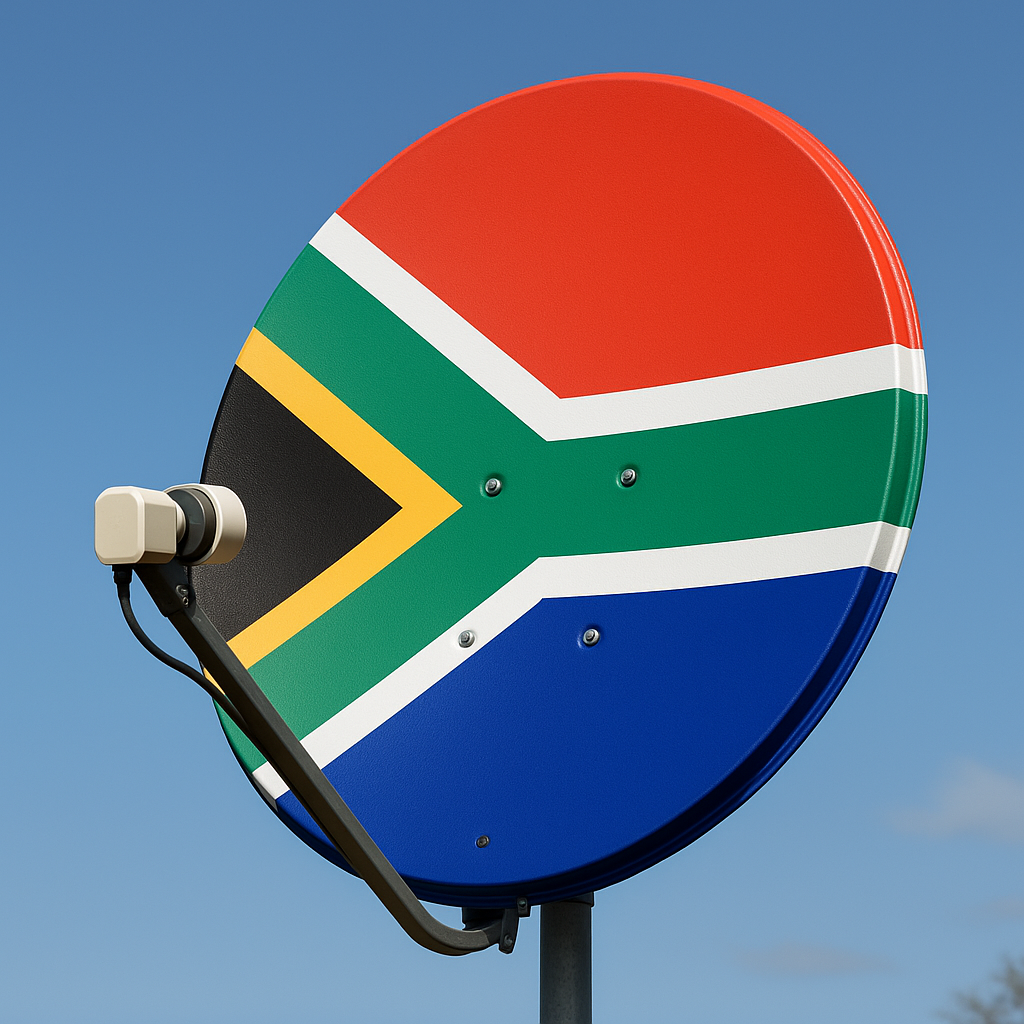
Elon Musk's Twitter rant ignites a diplomatic firestorm with South Africa over Starlink's 30% black ownership rule. A clash of policy and personality.
Elon Musk's Starlink and the South African government are in a tough fight. South Africa wants Starlink to give 30% ownership to black citizens, but Starlink says no. They believe satellite signals are for everyone, not just one country, and shouldn't be divided by race. This disagreement has stopped 38 other similar projects, leaving many people waiting for better internet.
What is the main conflict between Elon Musk's Starlink and the South African government?
The main conflict stems from South Africa's requirement for all telecom licensees to sell 30% equity to black citizens, with specific allocations for women, youth, veterans, or people with disabilities. Starlink refuses, arguing that satellite spectrum is planetary, not provincial, and cannot be racially redistributed. This stand-off has put 38 similar applications in bureaucratic limbo.
Get Cape Town news in your inbox
Stay updated with the latest stories from the Mother City.
1. Midnight Fireworks: One Tweet, Four Expletives, 14 Million Eyes
At 03:42 SAST on 12 April 6, while most of Pretoria slept, Elon Musk stubbed a diplomatic landmine. “Stop being such a fking racist, you ahole,” he typed, aiming the words at Clayson Monyela, South Africa’s soft-spoken envoy for public diplomacy. Monyela’s offence? A celebratory post that “600-plus U.S. firms thrive here by playing by our rules.” Within minutes the retweet avalanche hit 120 000; by sunrise every continent had an opinion on the brawl.
Three hours later Presidency spokesman Vincent Magwenya answered with the line now carved into South African meme lore: “There are 193 UN member states. Good money exists in the other 192. Feel free to move on.” The exchange felt like theatre, but it yanked the curtain off a decade-long chess match between the world’s wealthiest individual and the government that issued his first passport.
The real quarrel is colder than insults: South Africa demands that every telecom licensee sell 30% of its equity to black citizens, 20% of that to women, 10% to youth, veterans or people with disabilities. Starlink’s charter allows zero local carve-outs, insisting satellite spectrum is “planetary, not provincial.” Twitter merely gave the stand-off a spotlight.
2. Rocket Boy to Orbital Overlord: A Very Local Origin Story
Musk slipped out of Pretoria Boys’ High in 1989, clutching a Canadian passport and a loathing for apartheid conscription. Still, the suburbs that nurtured him also engineered him: weekend chemistry raids on Church Street hobby shops, late nights under the old Johannesburg Planetarium dome, the model-rockets he wired with kitchen-match propellant. Those backyard launches are the direct ancestor of the 5 200 Starlink satellites now circling overhead.
Irony tags along: the constellation beams data through a ground station Musk donated to the CSIR in 2021, a gift Pretoria can operate but not licence. South Africa therefore hosts the infrastructure, trains the engineers, yet remains locked out of the service.
Critics call it nostalgia; Musk calls it principle. Either way, the prodigy who dodged the draft now controls the orbital highway the democratic state cannot legally turn on for its citizens.
3. The Thirty-Percent Trap: How Redress Became a Gatekeeper
Parliament wrote the Electronic Communications Act in 2005, telling Icasa to promote “historically disadvantaged persons.” A decade later the regulator bolted numbers to the sentiment: 30% black equity, no wiggle room, no application fee refunded if you fail. Rain, Octotel and dozens of fibre start-ups met the grade by packaging union and pension money into special-purpose vehicles that own shares, not board seats.
Starlink refuses to dilute its Delaware-registered cap table, arguing that a radio beam 550 km up cannot be “racially redistributed.” Icasa chair Dr. Keabetswe Modimoeng counters that “spectrum is a finite, sovereign asset, not a Silicon Valley subscription.” The stand-off has frozen 38 similar files, from Amazon’s Project Kuiper to a Russian constellation named Startlink, all parked in the same bureaucric limbo.
Treasury quietly wins either way: travellers declared 2 100 Starlink dishes at OR Tambo airport in the first quarter of 2026, paying R28 million in VAT and customs on a product that, officially, does not exist inside South Africa.
4. Namibia Plays Harder, History Repeats, Ordinary People Wait
Windhoek raised the bar even higher. One day before Musk’s Twitter eruption, Namibia’s Cran published a two-page dismissal: Starlink failed the 51% Namibian-shareholder test. The ruling shocked safari operators who rely on roaming kits for lodges perched beyond the reach of terrestrial fibre; border officers have since started seizing glossy white dishes for the TikTok cameras.
The logic is regional. A forthcoming SADC spectrum treaty is expected to converge on 35% local ownership; by rejecting Musk early, Namibia strengthens its hand in those negotiations. Pretoria watches with interest, aware that a collective front makes individual lawsuits harder.
History offers footnotes. When the Eastern Telegraph Company landed in Mauritius in 1904, it demanded a half-century tax holiday. The colony refused; six years of stalemate followed. Eventually a local-trust compromise birthed the first black-held telecom shares in the British Empire. Today Mauritius hosts four cables and a GDP-per-capita four times Pretoria’s. Copper wires once, low-Earth orbit now - same script, new altitude.
5. Five Ways the Saga Can End - and Why the Poorest Still Pay
Lawyers see a courtroom: Starlink could argue Icasa overstepped its empowering Act, but dockets move slowly and Starlink’s first-generation craft will start de-orbiting by 2027. Financiers whisper about an Indian-style trustee shell where a black-run fund holds non-voting stock until some future “transformative” milestone is met.
Engineers talk of technical end-runs: pump more inter-satellite links over the Atlantic, drop latency below 50 ms and make a local gateway politically irrelevant - until regulators criminalise dishes themselves. Policy hawks dream of UbuntuSat, a SADC-owned constellation bank-rolled by pension funds and the BRICS bank; Cape Peninsula University already has the feasibility slides.
Stalemate is the most expensive option. Urban 5G rolls on for the wealthy, smuggled Starlink feeds the super-rich, and rural classrooms stay stuck on 3G priced like champagne. Between the unanswered question - “why must orbital spectrum bear the full weight of historical redress?” - and Musk’s counter-question - “why risk a R5 billion equity pool that could bank-roll 50 000 STEM bursaries?” - 60 million South Africans wait for affordable packets to fall from the sky.
{"faq": [{"question": "What is the main conflict between Elon Musk's Starlink and the South African government?", "answer": "The main conflict stems from South Africa's requirement for all telecom licensees to sell 30% equity to black citizens, with specific allocations for women, youth, veterans, or people with disabilities. Starlink refuses, arguing that satellite spectrum is planetary, not provincial, and cannot be racially redistributed. This stand-off has put 38 similar applications in bureaucratic limbo."}, {"question": "What sparked the public spat between Elon Musk and South African officials?", "answer": "The public spat began when Elon Musk tweeted a strong expletive-laden response to Clayson Monyela, South Africa’s envoy for public diplomacy, who had celebrated U.S. firms thriving in South Africa by 'playing by our rules'. Musk's tweet, seen by millions, criticized the equity demands as 'racist'."}, {"question": "What is South Africa's '30% ownership' rule for telecom licensees?", "answer": "South Africa's Electronic Communications Act, as interpreted by the regulator Icasa, requires all telecom licensees to sell 30% of their equity to black citizens. Within this 30%, specific percentages are allocated: 20% to women and 10% to youth, veterans, or people with disabilities. This rule aims to promote historically disadvantaged persons."}, {"question": "What is Starlink's stance on South Africa's equity requirements?", "answer": "Starlink refuses to dilute its Delaware-registered cap table, arguing that its satellite spectrum is 'planetary, not provincial' and therefore cannot be 'racially redistributed' or subjected to national equity requirements. They maintain that satellite signals are for everyone, not just one country."}, {"question": "How has Namibia reacted to Starlink's presence and similar ownership requirements?", "answer": "Namibia has taken an even stricter stance than South Africa. Its Communications Regulatory Authority of Namibia (CRAN) dismissed Starlink's application for failing a 51% Namibian shareholder test. This decision has impacted safari operators who rely on the service in remote areas, and border officers have reportedly begun seizing Starlink dishes. This move is seen as strengthening Namibia's position in forthcoming SADC spectrum treaty negotiations."}, {"question": "What are the potential outcomes of this stand-off, and who is most affected?", "answer": "The saga could end in several ways: Starlink pursuing legal action against Icasa, a financial compromise involving a black-run fund holding non-voting stock, or technical workarounds by Starlink. However, the most expensive outcome is a prolonged stalemate. While urban areas continue to develop 5G and wealthy individuals use smuggled Starlink dishes, the poorest citizens in rural areas remain without affordable and reliable internet access, paying the highest price for the ongoing dispute."}]}

Liam Fortuin is a Cape Town journalist whose reporting on the city’s evolving food culture—from township kitchens to wine-land farms—captures the flavours and stories of South Africa’s many kitchens. Raised in Bo-Kaap, he still starts Saturday mornings hunting koesisters at family stalls on Wale Street, a ritual that feeds both his palate and his notebook.
View all articles →