
Why is the Lenacapavir delay critical?
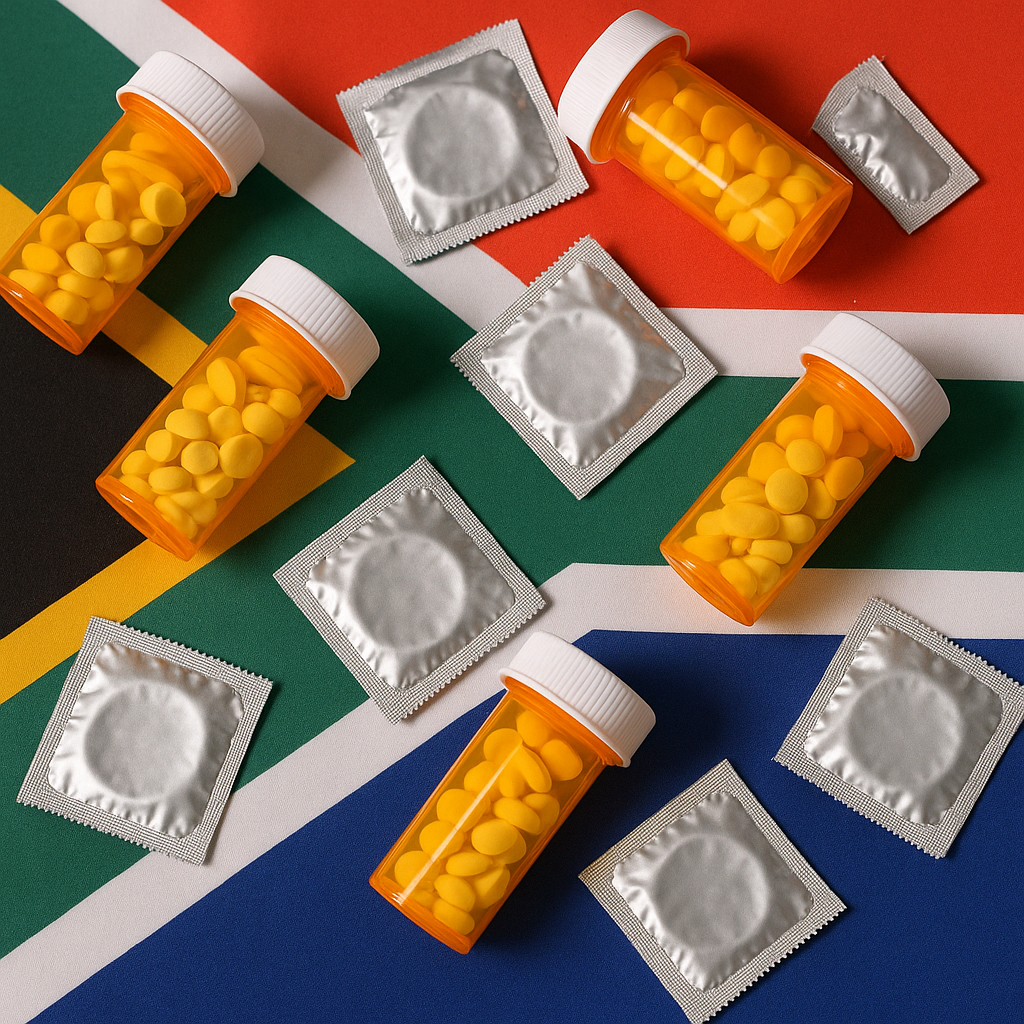
SA faces HIV crisis: rising costs, delayed drug rollout, & shrinking resources threaten prevention efforts. Solutions urgently needed.
South Africa's fight against HIV is in big trouble! Condoms are getting super expensive because of global problems and money woes. A cool new drug, Lenacapavir, is stuck in slow motion, not reaching people who need it. Plus, money for important programs is shrinking, leaving young girls and sex workers in danger. It's a tough situation, threatening to undo all the good work done so far.
What challenges is South Africa facing in its HIV response?
South Africa's HIV response is struggling with rising condom prices due to global supply chain issues and currency depreciation, delayed rollout of new prevention drugs like Lenacapavir, and budget cuts impacting crucial support programs. These factors threaten to undermine progress, particularly for vulnerable groups such as adolescent girls and sex workers.
Get Cape Town news in your inbox
Stay updated with the latest stories from the Mother City.
1. A Morning of Costly News
On 3 April 2025, South Africa’s prevention programme was hit twice before most people had swallowed their first cup of coffee. First, Karex – the Malaysian manufacturer that supplies the bulk of public-sector condoms – emailed distributors warning of a 25–30 % price jump. Hours later, the National Department of Health emailed provinces to move Lenacapavir’s launch from 1 April 2026 to 2 June 2026. Taken separately, either notice would have been inconvenient; together, they constitute the gravest threat to HIV prevention since the antiretroviral stock-outs of 2008–2009.
The twin shocks arrived without fanfare. No press statements, no parliamentary briefings, just bureaucratic notes that few journalists monitor. Yet the implications ripple outward: every extra cent spent keeping condoms in clinics shrinks the pot available for long-acting prevention, and every extra day Lenacapavir stays on a California shelf is another day a 19-year-old in Soweto believes “the shot will replace condoms anyway”.
April’s price hike and timeline push-back are not random misfortunes. They are the predictable outcome of frayed global supply chains, budget ceilings frozen by inflation, and a programme that has not kept pace with its own ambitions.
2. Why Lenacapavir Still Isn’t Here – A Bottleneck Map
2.1 Refrigerators, Chips, and 72 Hours of Fear
Lenacapavir is stable at fridge temperatures, but only just. Anything above 8 °C or below 2 °C for more than a moment risks loss of potency. South Africa owns 6,417 WHO-approved vaccine refrigerators, yet only 1,103 have data loggers tight enough for the California vials. Plugging the gap means buying 5,314 USB-enabled loggers at R 47 million, a tender that cannot even be advertised until the revised June 2026 date is gazetted.
The three-day journey from Los Angeles to Johannesburg International is itself a moving cold room. Tarmac heat in Doha, load-shedding at warehouses in Kempton Park, and the final ride in a non-insulated kombi to Soweto: each link can undo years of clinical science.
2.2 The 350 Sites That Still Aren’t Ready
The original rollout plan identified 180 primary clinics plus 170 pop-up youth hubs. Every site needs five non-negotiables: two nurses certified to deliver sub-cutaneous injections; a fingerprint-linked patient terminal; a generator that keeps the fridge cold for six hours; an internet link for real-time adverse-event reporting; and a SAPS-approved lockable cabinet for schedule-6 stock. By mid-March only 54 sites passed the checklist. Nearly four in ten clinics still rely on household fridges chilled with ice bricks – good enough for daily PrEP pills, lethal for six-monthly injectables.
Generators sit in procurement limbo, nurses wait for training slots, and biometric terminals gather dust in district storerooms because nobody has activated the SIM cards.
2.3 Vanishing Mentors
USAID’s biggest local partner, running the DREAMS programme, learnt on 3 March 2025 that Congress had trimmed PEPFAR by USD 1.38 billion. Overnight, 2,278 of 2,916 full-time peer mentors – mostly young women who escort taxi-rank queue jumpers to clinics – lost their stipends. In Chris Hani Baragwanath Hospital, girls who had a mentor were 2.7 times more likely to complete both Lenacapavir induction shots. Without that human bridge, default rates are expected to triple.
3. Supply-Chain Earthquakes and the Rand’s Slide
3.1 Condensed Milk, Ammonia, and Hormuz
Karex does not just import latex; it imports risk. Natural rubber comes from Thai plantations, but silicone oil and ammonia coagulants arrive via Singapore traders who pre-buy naphtha cargoes that must pass the Strait of Hormuz. After tanker attacks in January 2025, war-risk insurance surged from 0.75 % to 4.8 % of cargo value. Those premiums convert into rand at the worst possible moment: the currency has fallen 11 % against the dollar since December, amplifying the pain.
3.2 The Tender That Already Cannot Hold
South Africa buys 404 million male condoms and 11.4 million female condoms each year through tender HP26-2024HP. The April 2024 contract fixed male condoms at R 0.31 each, but clause 14.5 allows “extraordinary escalation events” to reopen prices. A 30 % increase pushes the male-unit cost to R 0.40 – an extra R 36 million a year. Female condoms, made from nitrile tied to butadiene price cycles, could leap 48 %.
Absorbing those numbers inside a prevention budget that Treasury lifted by a mere 1.5 % – below inflation – is impossible without cannibalising other interventions.
4. When Prevention Shrinks, Who Gets Hurt First?
4.1 Adolescent Girls and Young Women (15–24)
New infections in this cohort stubbornly sit at 1.7 % a year, four times the national average. National survey data show condom use in the last sexual act fell from 67 % (2017) to 52 % (2024), partly because social media influencers present Lenacapavir as “the condom killer”. Yet only 500 000 of 3.4 million highest-risk young women will receive the shot in its first year. The remaining three million will face a fifteen-month gap with fewer condoms and fading peer support.
4.2 Sex Workers
SANAC tallies roughly 223 000 sex workers; incidence here is 12.3 %. The Global Fund’s 2024–2026 grant currently funds 21 free condoms per worker per week. If prices rise and budgets stay flat, the weekly parcel falls to 14, pushing more clients toward unprotected transactions. Modellers predict a 1.5 % bump in incidence – an extra 3 300 infections over two years – unless emergency subsidies materialise.
4.3 Men Who Have Sex With Men
MSM make up 3.7 % of sexually active men yet represent 14 % of new male infections. Because they buy most condoms from pharmacies, they feel price hikes immediately. A 12-pack that cost R 54.99 in December now retails at R 69.99. In a population already stigmatised and economically precarious, even a rand or two per condom can push usage off a cliff.
5. Where Extra Rands Might Be Found
5.1 Treasury’s Piggy-Bank Rules
The Medium-Term Expenditure Framework allocates R 1.3 billion to HIV prevention – an anaemic 1.5 % increase. Every cent spent cushioning condom prices subtracts from medical male circumcision drives or PrEP advertising. HEARD calculates that fully absorbing condom inflation would divert R 120 million from MMC outreach, resulting in 47 000 fewer circumcisions and, paradoxically, 1 700 more infections.
5.2 The Gender-Responsive Budgeting Window
Treasury’s new IMPOWER index scored HIV prevention 0.64 out of 1.0 – strong on equity, weak on outreach. Officials hint an extra R 240 million could shift from social-development votes if the health department tables a convincing outreach rescue-plan by July 2025. That deadline now sits like a guillotine over programme managers.
5.3 Private-Sector Lifeboats
Mining giants Anglo American Platinum and Sibanye-Stillwater have agreed to buy one million female condoms beyond their normal quota for underground wellness clinics, neutralising the price rise at least for their own workforce. Retail chains Pick n Pay and Woolworths quietly joined the Global Fund’s “Buy-One-Give-One” API: every premium condom sold triggers a free one to the public sector. If uptake mirrors Kenyan experience, the scheme could offset 4 % of national demand without touching the fiscus.
6. Innovations That Don’t Make Headlines – Yet Matter
6.1 A Heat-Proof Implant from Cape Town
TiGen Biotech has started first-in-human trials of a 12-month tenofovir implant that survives 40 °C townships without cold-chain drama. Insertion takes four minutes using a trocar no thicker than the one deployed for contraceptive implants. SAHPRA’s new “progressive licensing” pathway could green-light the device by late 2026.
6.2 Solar Vending Machines
A Johannesburg pilot run by Praekelt.org deploys solar-powered dispensers that accept mobile-money tokens. Users request a USSD code via WhatsApp, redeem it for a three-pack, and walk away. Each machine costs R 14 000 – half the price of the old metal boxes – and can be restocked weekly by existing NGO motorbikes.
6.3 A Locally-Made Dapivirine Ring
IPM has licensed Aspen Pharmacare to manufacture the monthly dapivirine vaginal ring in Gqeberha. Efficacy is lower than Lenacapavir (36 % in the general population, 65 % in women over 25), but the ring needs no fridge and no nurse with a syringe. Regulatory sign-off is set for February 2026, and the plant is already running qualification batches using Belgian API.
7. Legal Hammers Still in the Toolbox
7.1 Section 21 Importation
Under the Medicines Act, twelve hospitals have filed Section 21 applications to import generic Lenacapavir for named patients – a move that would siphon 6 000 doses from the national allocation but guarantee continuity for pregnant teenagers at high risk.
7.2 Compulsory Licences
Section 34 of the Patents Act permits compulsory licensing during national emergencies. A legal brief prepared for the Treatment Action Campaign argues that a 30 % condom price hike plus fifteen-month PrEP delay satisfies the “reasonable requirement of the public” test. Treasury has not weighed in publicly, but the opinion is circulating in ministerial offices.
8. Decisions on the Horizon – A Calendar of Make-or-Break Moments
- 15 May 2025: Treasury must decide whether the condom price surge triggers the crisis-intervention clause.
- 30 June 2025: Deadline for reopening tender HP26-2024HP prices; once prices are locked, the clause becomes moot.
- 2 July 2025: SAHPRA meets to consider a manufacturing waiver for the dapivirine ring.
- 1 September 2025: Geneva donor conference – the last realistic venue to replace the USD 1.38 billion PEPFAR gap.
- 15 October 2025: Final California departure date for the first Lenacapavir shipment; miss it and the launch slips beyond the 2026 election cycle.
Between May and October, programme managers, activists, and Treasury officials will play a high-stakes game of musical chairs. The music is already slowing, and every day the clinic queue in Diepsloot grows longer.
What challenges is South Africa facing in its HIV response?
South Africa's HIV response is struggling with rising condom prices due to global supply chain issues and currency depreciation, delayed rollout of new prevention drugs like Lenacapavir, and budget cuts impacting crucial support programs. These factors threaten to undermine progress, particularly for vulnerable groups such as adolescent girls and sex workers.
Why is the new HIV drug Lenacapavir experiencing delays in South Africa?
Lenacapavir's rollout is delayed due to several logistical hurdles. These include the lack of sufficient specialized refrigerators and data loggers required to maintain its strict cold chain requirements, inadequate infrastructure at primary clinics and youth hubs (such as certified nurses, reliable power, and internet access), and a significant reduction in peer mentors who are crucial for patient adherence and support. These issues prevent the drug from reaching those who need it most.
How are rising condom prices impacting South Africa's HIV prevention efforts?
Condom prices are surging by 25-48% due to global supply chain disruptions, increased war-risk insurance for raw material shipments, and the weakening Rand against the dollar. This price hike is forcing the government to either spend significantly more, diverting funds from other vital HIV interventions like medical male circumcision, or reduce the number of condoms distributed. This directly affects vulnerable populations like adolescent girls and sex workers, leading to predictions of increased HIV incidence.
Which vulnerable groups are most affected by the current challenges in HIV prevention?
Adolescent girls and young women (15-24) are at high risk, with new infection rates four times the national average, exacerbated by declining condom use and limited access to new prevention methods like Lenacapavir. Sex workers face a reduction in free condom provision, potentially increasing unprotected transactions. Men who have sex with men (MSM) are also significantly impacted as pharmacy condom prices rise, pushing usage down in an already economically precarious group.
What financial solutions are being explored to address the budget shortfalls?
Several avenues are being considered: advocating for Treasury to activate crisis-intervention clauses for condom price surges, attempting to access an additional R240 million from social development funds if a convincing outreach plan is submitted, and leveraging private sector partnerships. Mining companies are buying extra condoms, and retail chains like Pick n Pay and Woolworths are participating in a "Buy-One-Give-One" scheme to supplement public sector supply.
Are there any innovative solutions or legal actions being pursued to mitigate the crisis?
Yes, several innovations are in development, including a heat-proof 12-month tenofovir implant, solar-powered condom vending machines, and local manufacturing of the dapivirine vaginal ring. Legally, some hospitals are filing Section 21 applications to import generic Lenacapavir, and a legal brief suggests that a compulsory license for essential medical supplies like condoms could be invoked under the Patents Act due to the national emergency posed by the price hikes and drug delays.

Tumi Makgale is a Cape Town-based journalist whose crisp reportage on the city’s booming green-tech scene is regularly featured in the Mail & Guardian and Daily Maverick. Born and raised in Gugulethu, she still spends Saturdays bargaining for snoek at the harbour with her gogo, a ritual that keeps her rooted in the rhythms of the Cape while she tracks the continent’s next clean-energy breakthroughs.
View all articles →