
Why is US tourism to South Africa falling behind?
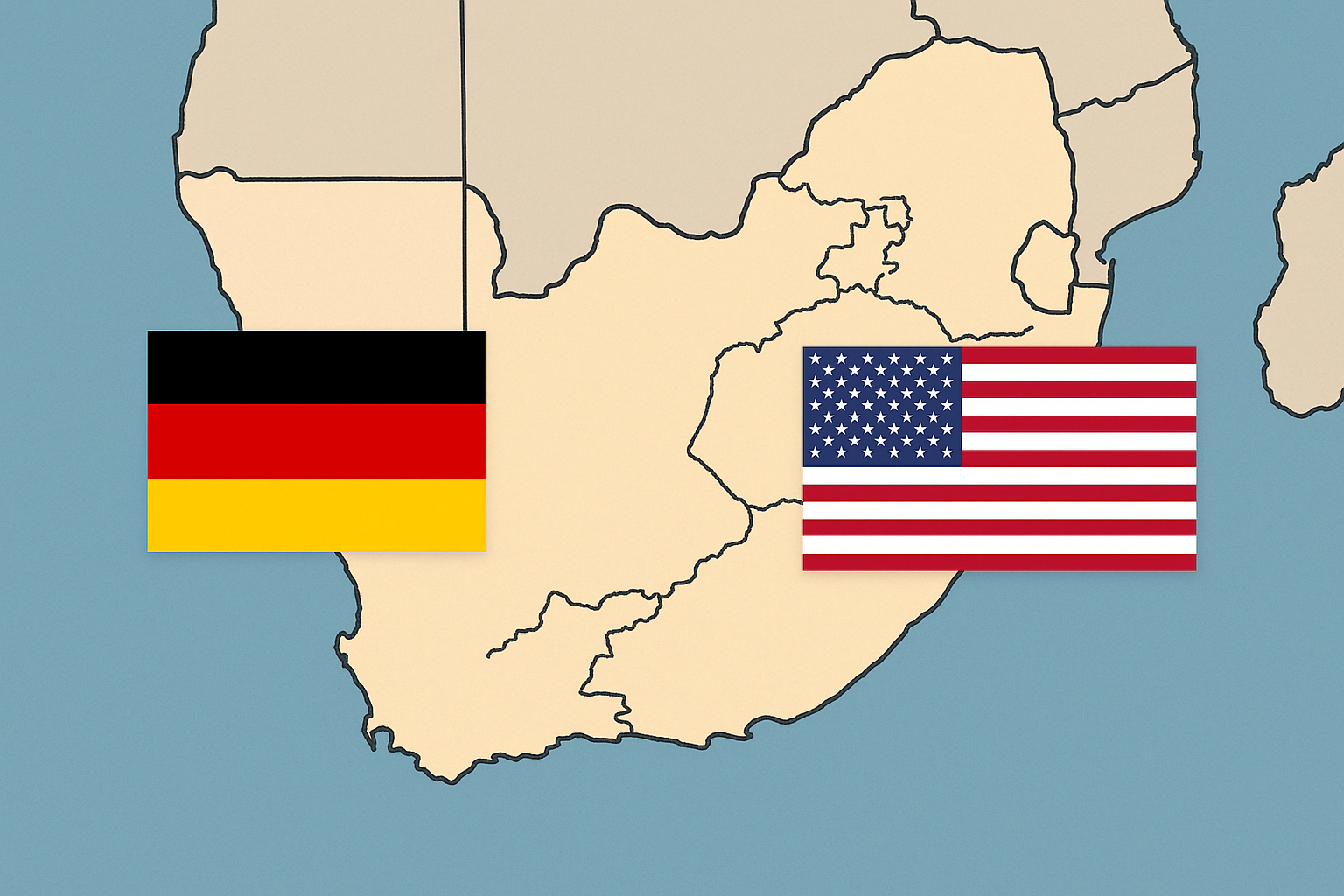
SA saw a 12.5% jump in March 2026 arrivals. Germany surpassed the US as top long-haul market due to economic shifts & airline strategies.
In March 2026, Germany dramatically surpassed the US in South African tourism for the first time ever! The strong euro made South Africa much cheaper for Germans, boosting their travel. Plus, more Lufthansa flights and a super-fast e-visa made it easy for them to visit. Meanwhile, a weaker dollar, fewer flights, and slow visas made it harder for Americans to come. So, South Africa saw a big jump in German visitors and a dip in American ones.
Why did German tourism to South Africa increase while US tourism decreased in March 2026?
Germany's tourism to South Africa surged due to a stronger euro making trips 25% cheaper, increased Lufthansa flights, and a faster e-visa process. In contrast, US tourism declined due to a weaker dollar, reduced Delta and United airline capacity, and a slower visa-on-arrival process, creating a significant cost and convenience disparity.
Get Cape Town news in your inbox
Stay updated with the latest stories from the Mother City.
Border-count bombshell: 911 962 arrivals rewrite the scoreboard
On 29 April 2026, Statistics South Africa dropped a one-page excel file that lit up every tourism WhatsApp group in the country. March border crossings hit 911 962 - up 12.5 % on the same dusty month last year. The leap itself grabbed headlines, yet the real earthquake hid in the fine print: Germany muscled the United States out of the long-haul silver-medal slot for the first time since anyone started counting. Brits still sit on the iron throne at 45 902 guests, virtually flat, but the Bundeslaender surged 21.8 % to 39 913 while Yankee numbers sagged 12.6 % to 31 268. Translation: 4 500 fewer Americans punched their passports at OR Tambo, Cape Town or King Shaka than twelve months earlier, interrupting an uninterrupted climb that had taken U.S. annual arrivals from 267 000 in 2015 to just under 392 000 last year.
Behind the single-month upset sit three live wires: a suddenly muscular euro, airline inventory chess-moves, and German wanderlust for wide-open spaces that now feel 25 % cheaper than they did last northern spring. Add fourteen extra Lufthansa-group frequencies, an e-visa that trims wait time to two days, and influencer reels of Namaqualand daisies blooming against a Milky Way backdrop, and you have the ingredients for a rankings shake-up that may outlive the current calendar year.
Currency markets turned into quiet tour-operators. In January 2026, one euro bought 20.40 rand, up from 18.90 a year earlier, while the dollar eased from 19.10 to 18.20. DER Touristik and TUI immediately repriced ten-night Kruger-plus-Garden-Route bundles at €2 499, down 8 % in euro terms. Across the Atlantic, American operators kept catalogues at US$3 200-3 500, widening the cost gap to roughly 25 % once exchange rates bite. Hedge desks added a second tail-wind: Lufthansa locked in jet fuel at 2024 contracts, while Delta and United only started hedging seriously in late 2025 - just before oil spiked. The result: return fares ex-Frankfurt undercut Atlanta or Newark by $180-220 on average for March departures.
Runway arithmetic: extra seats, fewer delays, smarter visas
Capacity tells the rest of the aviation story. The Department of Transport quietly gifted Lufthansa Group fourteen weekly winter-season frequencies, effective 1 March. Lufthansa mainline dialed Cape Town up from five to seven direct Frankfurt rotations; Eurowings Discover launched a four-weekly Munich–Windhoek–Cape Town triangle; Condor swapped A330-200s for -900neos, injecting 26 extra business and 210 economy chairs per departure. That is roughly 3 800 additional German-speaking seats every week, the equivalent of planting a brand-new narrow-body daily service without the political headache of a bilateral renegotiation.
Delta went the opposite direction, pruning Atlanta–Johannesburg to five weekly between mid-February and mid-April so it could redeploy a 777 to the new JFK–Tokyo Haneda prize slot. United kept Newark–Cape Town daily but axed the 2025 experiment that routed via Washington-Dulles and Accra, stripping out 800 seats a week during March. The net global figure still favours South Africa - foreign carriers added more capacity than they withdrew - but the German bloc gained critical mass at the exact moment price elasticity favoured the euro.
Visa mechanics sealed the deal. Germany joined South Africa’s ever-expanding e-visa pilot on 1 February. Average approval time fell from fourteen days to forty-eight hours, removing the friction that usually pushes late-winter bookers toward Canary Islands quick fixes. Americans still queue for a visa-on-arrival sticker and fork out US$50 cash at immigration; not a deal-breaker, yet enough to tip impulse long-weekend decisions toward Berlin departures instead of Boston.
On-the-ground spend: longer beds, darker skies, greener wheels
ForwardKeys data show that once Germans land, they linger 11.4 nights on average - almost three full days longer than their U.S. counterparts. The bed-night ledger splits 48 % to Kruger private reserves, 31 % to Garden Route self-drives, and the rest to Winelands boutique estates or Northern Cape astro-camps. Longer stays multiply the revenue impact: the Reserve Bank calculates each German visitor injects R27 500 into the local economy, almost double the R14 400 left by the average Zimbabwean day-tripper, helping overseas guests punch 53 % of March’s tourist-facing credit-card spend despite comprising only 24.5 % of arrivals.
Astro-tourism is the newest star in the product sky. Sutherland’s South African Astronomical Observatory logged a 70 % jump in German-language night-sky tours year-on-year, fed by specialist outfitters such as Astro Tours Namibia-South Africa and EclipseTours.de. Audi South Africa and Germany’s KfW bank bankroll the “E-Safari Green Route,” a fleet of 120 e-tron SUVs tethered to 150 kW chargers at eighteen lodges between Cape Town and Addo. March occupancy hit 96 %, with guests paying a 15 % premium to glide through Big-Five country on battery power alone.
Business events cushioned American softness. Cape Town’s CTICC hosted the Forbes 30 Under 30 Africa Summit, drawing 1 200 delegates. U.S. attendance slipped to 210 from 330 the previous year, but German delegate numbers climbed from 45 to 82. A week later, the World Rugby Women’s Sevens Series at DHL Stadium sold 7 000 outbound seats; Lufthansa and SuperSport ran a charter ex-Frankfurt that accounted for 40 % of them. These auxiliary channels ensured total arrival growth stayed double-digit even while the leisure core from the United States cooled.
Industry push-back: slot swaps, point campaigns, pipeline bricks
The Tourism Business Council did not wait for the spreadsheets to cool. Within ten days of the Stats SA release, an emergency long-haul task force floated three quick fixes: swap Delhi’s unused OR Tambo slot to restore Delta’s fifth Atlanta frequency, pair South African Tourism’s New York office with a US$200 Soweto jazz-and-cooking voucher, and open e-visa eligibility to Americans before northern-summer peak. None are guaranteed, yet the speed of deliberation signals how seriously Pretoria views a potential 4 % full-year shortfall in U.S. originations if present trends harden.
Hoteliers realign inventories at code-level. Marriott’s German-language SKU count for Protea and African Pride properties jumped 15 % for Q2 2026, while North-American PPC spend dropped 9 %. On the supply side, STR counts 38 new hotels (6 900 keys) scheduled to open this year; Union Investment Real Estate GmbH funds five, including the 240-room One&Only Safari Lodge Kapama set for September soft opening. Rail is also pivoting: Shongololo Express, majority-owned by Germany’s FTI Group since late 2025, has four 2026 departures sold out to German pensioners seeking panoramic luxury at sub-Rovos tariffs, while Rovos itself courts U.S. honeymooners with a new 15-day Dar-to-Cape “Southern Cross” voyage launching in July.
Looking beyond beds and runways, diplomats are reviving talk of an EU–SADC horizontal air-service agreement that could unleash unlimited fifth-freedom rights between any EU airport and South African secondary cities. Lufthansa has already filed placeholder slot requests for a 2027 Munich–Durban service aimed at scuba addicts who follow the sardine run along Aliwal Shoal. Cruise adds a wildcard: MSC Euribia’s first Cape Town summer season funnels 1 000 German passengers into city hotels every turnaround day, injecting an estimated R280 million across the 21-sailing calendar.
Whether March’s upset becomes the new normal will depend on exchange rates, fuel curves, and Pretoria’s bureaucratic agility. Forward ticketing data already lock in a 17 % German rise versus a 4 % U.S. decline for April–September. Product owners, from Stellenbosch wine farms translating tasting sheets to German, to Durban’s uShaka sleepover redeemable through Lufthansa’s Miles & More, are wagering that this is more than a seasonal blip. For South Africa’s balance-of-payments, that is a bet worth taking: every additional planeload from Frankfurt carries roughly twice the hard-currency kick of its Atlanta equivalent, and the Milky Way over Namaqualand has no exchange rate at all.
What was the significant shift in South African tourism observed in March 2026?
In March 2026, Germany, for the first time ever, surpassed the United States in the number of tourists visiting South Africa. Statistics South Africa reported that German arrivals surged by 21.8% to 39,913, while US numbers declined by 12.6% to 31,268. This marked a considerable shift, with Germany taking the long-haul silver-medal slot, traditionally held by the US.
What were the primary reasons for the increase in German tourism to South Africa?
The surge in German tourism was primarily driven by a stronger Euro, making South Africa approximately 25% cheaper for German travelers. Additionally, Lufthansa Group significantly increased its flight frequencies to South Africa, adding roughly 3,800 German-speaking seats weekly. The introduction of an e-visa pilot program for Germans also streamlined the visa process, reducing approval times from fourteen days to 48 hours.
Why did US tourism to South Africa decline in March 2026?
US tourism experienced a downturn due to a weaker dollar, which made travel to South Africa more expensive for Americans. Furthermore, US airlines like Delta and United reduced their flight capacities to South Africa, with Delta redeploying a 777 to a new JFK–Tokyo Haneda route and United axing a route via Washington-Dulles and Accra. The slower visa-on-arrival process for Americans, which requires a US$50 cash payment, also contributed to the decline in comparison to Germany's efficient e-visa system.
How did currency exchange rates impact the tourism trends?
Currency exchange rates played a crucial role. In January 2026, the Euro strengthened against the Rand (20.40 Rand per Euro from 18.90 a year prior), while the dollar weakened (18.20 Rand per dollar from 19.10). This made South Africa significantly more affordable for German tourists, with package deals becoming 8% cheaper in Euro terms. Conversely, American operators maintained higher price points in dollars, widening the cost gap and making South Africa less attractive for US travelers.
What measures are being considered to address the decline in US tourism?
The Tourism Business Council of South Africa formed an emergency task force to propose solutions. These include reallocating an unused OR Tambo slot for Delta to restore its Atlanta frequency, launching promotional campaigns in New York with incentives like a US$200 Soweto jazz-and-cooking voucher, and extending e-visa eligibility to American citizens before the northern summer peak. These efforts aim to mitigate a potential 4% full-year shortfall in US originations.
Beyond leisure travel, what other factors influenced overall arrival numbers in March 2026?
Business events and specialized tourism segments also played a role. Cape Town hosted the Forbes 30 Under 30 Africa Summit, drawing delegates, and the World Rugby Women’s Sevens Series saw significant outbound seat sales, including a Lufthansa charter from Frankfurt. Astro-tourism, particularly in Sutherland, and eco-friendly e-safaris with Audi South Africa and KfW bank also attracted visitors, with Germans showing a keen interest in these niche experiences.

Liam Fortuin is a Cape Town journalist whose reporting on the city’s evolving food culture—from township kitchens to wine-land farms—captures the flavours and stories of South Africa’s many kitchens. Raised in Bo-Kaap, he still starts Saturday mornings hunting koesisters at family stalls on Wale Street, a ritual that feeds both his palate and his notebook.
View all articles →