
Why Rooibos Day 2026 is about more that just tea
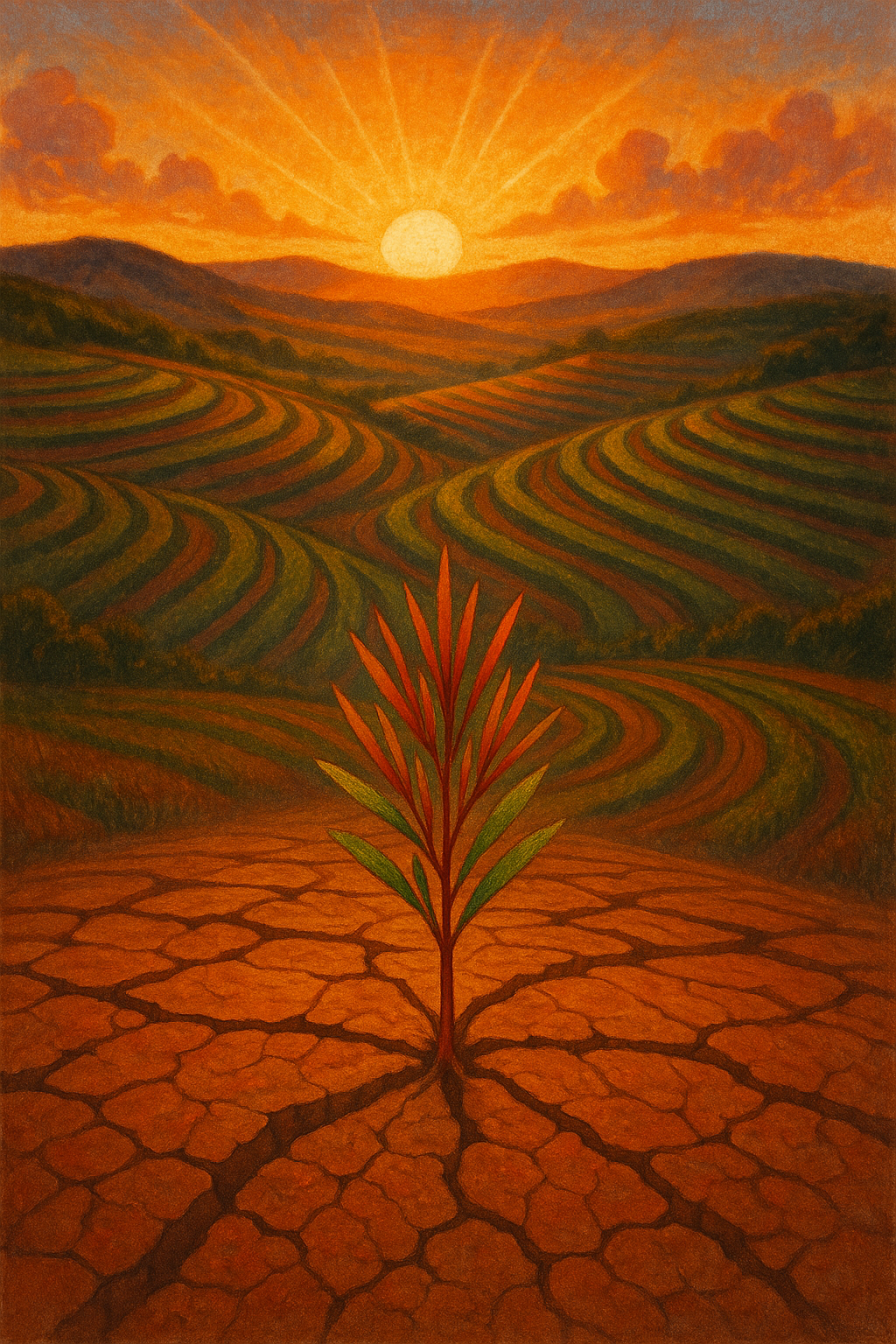
Discover Carmién Tea's rooibos revolution: from farm to cup, explore its unique terroir, ethical impact, and innovative future.
Rooibos tea, from South Africa's Cederberg region, is a true superstar. It grows without needing extra water, making it super sustainable. Farmers are paid fairly, use solar power, and even capture carbon. This special tea is changing African farming for the better, showing how ancient plants can lead to a bright future.
What makes Rooibos a unique and sustainable agricultural product?
Rooibos is unique due to its strict geographical origin in the Cederberg region and its ability to thrive without irrigation. Its sustainability is driven by an Indigenous Knowledge Levy, equitable worker ownership, and advanced eco-friendly practices such as solar refrigeration, heat-capture coils, and carbon sequestration, ensuring a future-proof farming model.
Get Cape Town news in your inbox
Stay updated with the latest stories from the Mother City.
- A sunrise-to-satellite chronicle of the Cederberg’s ruby leaf and the people who turned it into a global language of flavour, fairness and future-proof farming.*
Dawn on Brakfontein Ridge – Where Traceability Begins in Mist and Quartz
The mountain exhales at 05:07. A katabatic wind flips direction, skating down the scorched-orange cliffs of the Cederberg and fanning across Brakfontein’s saddle. Thermometers linger at 9 °C, yet the iron-rich sand still hugs yesterday’s warmth, a hidden ember beneath bare ankles. It was here, 320 m above sea level, that the first commercial seedlings of 1998 cracked lateritic crust flecked with rose quartz.
Today the same contours are photographed by buzzing quadcopters; every row carries a QR code that a Stockholm roaster or Kyoto tea-master can summon in seconds. The polygon pops up on-screen, complete with slope angle, rainfall and the day’s UV index. Traceability, however, is not an app but a flavour you can taste in the vapour: crushed buchu, wild rosemary, the mineral snap of sandstone that cooled the night before.
No irrigation pivots break the skyline. Rooibos survives on winter drizzle and the fog that drifts in at 03:00, dissolving directly through the needle-like leaves. By 06:00 the first harvesters appear, reflective suits flickering like low stars. Each cuff contains an RFID coil; the moment a 30 kg hopper crosses the weigh-bridge, yield data streams to Cape Town servers, accurate within 1.3 %. The crop is still wet with dew, yet its digital twin is already on a bill of lading bound for Berlin.
Stone, Clay and Micro-Nutrient Code – Why Rooibos Refuses to Leave Home
Move outside a 60 000 ha crescent of weathered Table Mountain sandstone and the plant sulks, then dies. Acidic pH (3.5–4.5) and the soil’s almost arrogant drainage create a natural drip-filter millions of years in the making. Granite domes - pink feldspar, black biotite - weather into kaolin, releasing pin-prick doses of selenium and cobalt that ride the xylem straight into the leaf’s polyphenol grid.
Carmién’s field scientists “read” outcrops the way sommeliers read terroir. A glint of salmon-coloured feldspar whispers manganese; a charcoal streak of biotite hints at cobalt. Assays show that leaves plucked above Dwyka tillite where it kisses Malmesbury shale deliver 8 % more Super-Oxide-Dismutase activity - catnip for functional-food formulators. Batch 2026-BF-17 carries a geological passport stating exactly that, stamped before the leaves even reach the fermentation court.
Protected Designation of Origin status, granted by the European Commission in 2021, turned geology into law. Parma ham and Darjeeling tea finally had a southern cousin. To earn the seal, every kilogram must be cultivated, oxidised, dried and sifted inside a polygon stretching from Nieuwoudtville down to Gifberg. Container doors close with NFC tamper-clips; Rotterdam customs officers tap a phone and the Cederberg sunrise appears, proof that the leaf never once slept outside the fynbos belt.
From Leaf to Ledger – How 1.5 % Changed a Nation’s Story
Since 2019 an extra line haunts every invoice: “Indigenous Knowledge Levy – 1.5 %.” Buyers pay it without fuss; the software adds it automatically. Money lands in a trust audited by the South African Rooibos Council, then flows to the National Khoi and San Councils for language classes, ethnobotanical GIS layers and PhD bursaries. By December 2025 the kitty stood at R 52 million, bank-rolling 140 doctoral projects - Karoo star-lore, Nama poetry, even drought-resistant seed libraries.
Carmién alone has chipped in R 7.3 million, enough to lay 38 km of water pipeline in Wupperthal, the Moravian mission village where commercial sun-drying first happened in 1904. Turn a tap in the Biedouw Valley and the levy is literally in your glass.
Equity also lives on paper share certificates. The Bergendal Worker Trust - 287 pickers, sorters and drum-fire operators - owns 50 % of the R 120 million processing hub that turns verdant green into ruby-amber. A 24-year-old forklift driver who began as a seasonal sweeper now holds R 1.8 million in unencumbered stock. Dividends arrive every July, yet the trust constitution caps cash withdrawals at 30 %; the rest funnels into university fees and retirement annuities, guaranteeing that tomorrow’s harvesters will not inherit debt.
Green Streams, Cold Brews and the Cup You Haven’t Tasted Yet
Dual production lines hum 24 hours a day from January to May, the only plant on earth that can swing between green and red in a single eight-hour shift. Green rooibos - flash-dried within 45 minutes - locks in jade colour and 80 % more aspalathin, the hero molecule. A functional powder launched in 2024 delivers 1 800 ORAC units per gram, toe-to-toe with açai yet gentler on the wallet.
Cold brew once baffled food techs: heat above 60 °C and tannins polymerise into cloudy snowflakes; stay cool and microbes throw a party. The fix arrived as hurdle technology - reverse-osmosis concentration, 0.2-micron micro-filtration and a lightning 28-second, 85 °C flash that never crosses the Maillard browning line. Shelf life: 14 months at 25 °C, no preservatives. ICA Maxi in Sweden can’t keep the stubbies in stock; they now outsell flavoured kombucha three to one.
Upstream, 450 ha of solar panels refrigerate ice-storage tanks, shifting 2.4 MW of cooling demand to off-peak hours. Fermentation drums wear heat-capture coils that pre-warm drying tunnels, trimming LPG use by 28 %. A legume cover-crop mix stitches 85 kg of nitrogen into every hectare, cancelling synthetic urea. Satellite imagery plus blockchain soil probes confirm that 56 000 t of CO₂ have been sequestered since 2015 - equal to parking 12 000 diesel cars for a year. The 2026 crop will wear Carbon Trust’s net-zero icon, refreshed every six months.
Hold the final liquor to the light: polished cedar glow, a halo of apricot and the ghost of granite after rain. Between the first Khoi infusion in 1770 and a 2050 hologram that lets you watch the leaf unfurl in zero gravity, stretches a story of rock, mist, code and conscience. Carmién’s promise is quietly radical: every future sip will still speak this place, these hands, this dawn.
What makes Rooibos a unique and sustainable agricultural product?
Rooibos is unique due to its strict geographical origin in the Cederberg region of South Africa and its ability to thrive without irrigation, relying solely on natural rainfall and fog. Its sustainability is driven by an Indigenous Knowledge Levy that benefits local communities, equitable worker ownership through trusts, and advanced eco-friendly practices such as solar refrigeration, heat-capture coils for drying, and significant carbon sequestration. This holistic approach ensures a future-proof farming model that respects both the environment and its people.
How does Rooibos ensure traceability and quality from farm to cup?
Rooibos production employs cutting-edge technology to ensure complete traceability. Quadcopters photograph fields, and each row of plants has a QR code providing real-time data on slope angle, rainfall, and UV index. Harvesters wear RFID coils to track yields accurately, with data streaming to central servers. This digital tracking, combined with geological passports for each batch that detail soil composition and micro-nutrient profiles, allows consumers to trace their tea back to its specific origin, ensuring authenticity and quality.
Why can Rooibos only be cultivated in a specific region?
Rooibos cultivation is restricted to a 60,000-hectare crescent of weathered Table Mountain sandstone in the Cederberg region. The plant requires a very specific acidic pH (3.5–4.5) and highly drained soil, conditions formed over millions of years. The unique mineral composition of the granite domes, which weather into kaolin and release vital micronutrients like selenium and cobalt, is crucial for the plant's growth and the development of its distinctive polyphenol grid. This geographical specificity was legally recognized with a Protected Designation of Origin status from the European Commission in 2021.
How does the Indigenous Knowledge Levy benefit local communities?
Since 2019, a 1.5% Indigenous Knowledge Levy is automatically added to every Rooibos invoice. This money is managed by a trust audited by the South African Rooibos Council and distributed to the National Khoi and San Councils. Funds are used for language classes, ethnobotanical GIS layers, and PhD bursaries, supporting over 140 doctoral projects by December 2025. This levy also finances critical infrastructure, such as water pipelines in communities like Wupperthal, directly improving the lives of the people who have historically cultivated Rooibos.
What are the innovative processing and production methods used for Rooibos?
Rooibos production features dual processing lines that can switch between green and red Rooibos production within a single eight-hour shift. Green Rooibos is flash-dried to preserve its jade color and high aspalathin content. For cold brew, innovative 'hurdle technology' is used, involving reverse-osmosis concentration, micro-filtration, and a brief flash-heating process to ensure shelf stability without preservatives. Environmentally, the operations utilize 450 hectares of solar panels for refrigeration, heat-capture coils to pre-warm drying tunnels (reducing LPG use by 28%), and nitrogen-fixing cover crops to eliminate synthetic urea. These methods highlight a commitment to both product innovation and ecological responsibility.
How does Rooibos farming contribute to carbon sequestration and combat climate change?
Rooibos farming actively contributes to combating climate change through significant carbon sequestration. Since 2015, 56,000 tons of CO₂ have been sequestered, equivalent to removing 12,000 diesel cars from the road for a year. This is achieved through practices like using legume cover crops that stitch 85 kg of nitrogen into every hectare, eliminating the need for synthetic urea, and the natural carbon absorption capabilities of the Rooibos plants and the unique Cederberg ecosystem. The 2026 crop is even expected to receive Carbon Trust's net-zero icon, refreshed bi-annually, showcasing its commitment to environmental stewardship.

Michael Jameson is a Cape Town-born journalist whose reporting on food culture traces the city’s flavours from Bo-Kaap kitchens to township braai spots. When he isn’t tracing spice routes for his weekly column, you’ll find him surfing the chilly Atlantic off Muizenberg with the same ease he navigates parliamentary press briefings.
View all articles →