
Why the high-risk delisting matters for your pocket
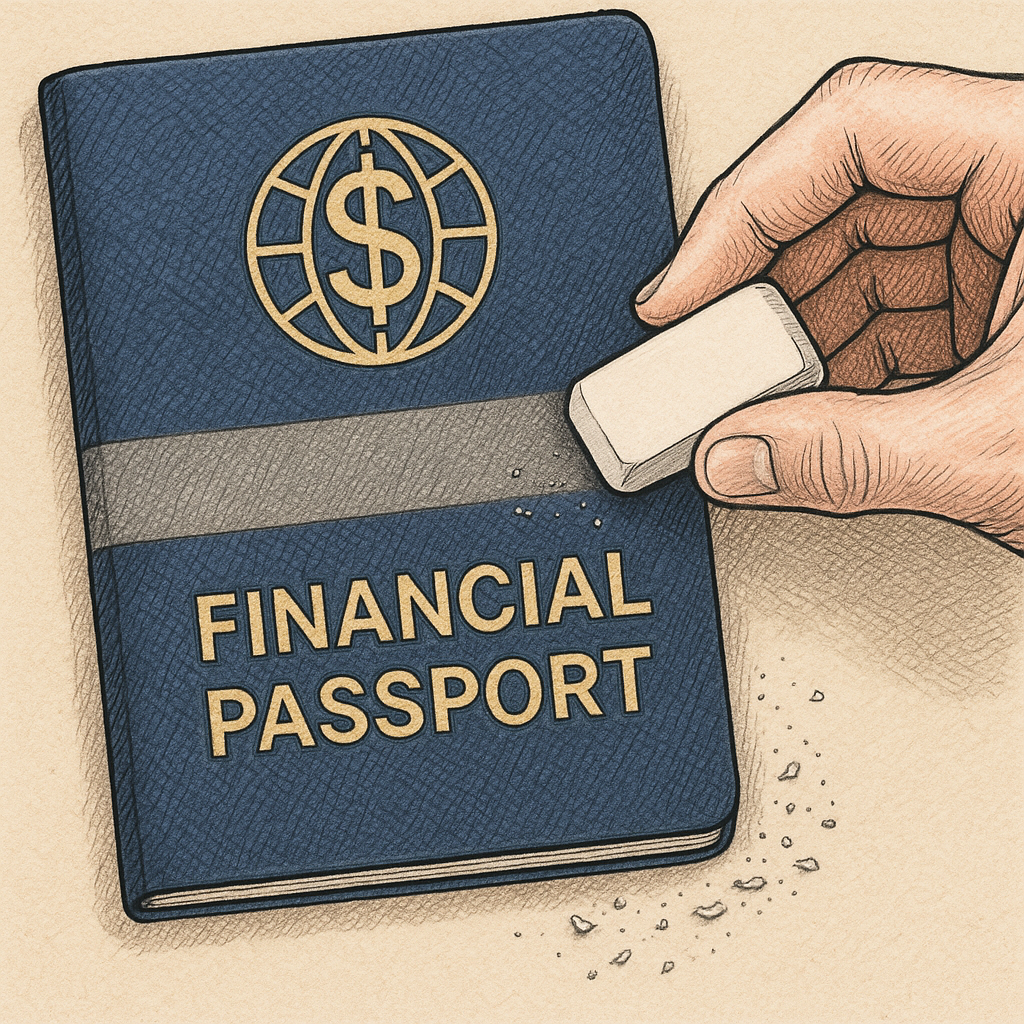
South Africa exits EU's high-risk list, ending its greylisting. This is due to legislative changes, reforms, and diplomacy, leading to economic benefits and improved global standing.
From Grey to Green: How South Africa Hacked Its Way Off the EU’s Blacklist
South Africa was stuck on the EU's grey-list, making financial dealings a headache and costing tons of money. But they fought back like champions! They changed laws fast, poured money into fighting financial crime, and used smart tech to track shady dealings. Now, they're off the list, saving billions and boosting their economy. However, they can't relax yet, as more challenges are coming in 2028.
What does it mean for a country to be grey-listed by the EU?
Being grey-listed by the EU signifies that a country's financial systems are deemed high-risk for money laundering and terrorism financing. This leads to increased scrutiny and compliance costs for financial transactions involving that country, impacting trade, investment, and the national currency's value. It essentially erodes international trust in the nation's financial integrity.
Get Cape Town news in your inbox
Stay updated with the latest stories from the Mother City.
The 1,460-Day Sprint That Began With a Four-Letter Word
On 29 January 2026 South Africa will quietly disappear from a Brussels spreadsheet that bankers whisper about in lift lobbies. The EU’s “High-Risk Third Countries” column will show one less flag, erasing a stigma that has added up to three days and 150 dollars to every wire that touched a rand account since February 2023. The story behind the deletion is not a ceremony; it is the payoff of 210 cabinet-level meetings, 78 overseas road-shows and a data-cleaning marathon that forced 2.3 million adults to confess who really owns their shelf companies.
Grey-listing, in plain language, meant the world no longer trusted South Africa’s paperwork. Within ten days of the FATF announcement correspondent banks in Manhattan, the City and Frankfurt began culling credit lines; the Bankers Association clocked an 18 % contraction in trade finance by mid-year and the rand dropped 47 cents before the weekend. The EU automatically mirrored the FATF label, so every container of citrus or crate of insulin paid a “shadow-tariff” of 3–5 % in extra fees, while pallets of catalytic converters sat in Dutch ports long enough for the fruit inside to rot.
Brussels does not ban trade; it simply makes the maths ugly. Directive AMLD6 forces bank boards to sign off on each high-risk client, to dig up source-of-funds papers and, if beneficial ownership stays murky for 15 days, to close the account. South African exporters learned the hard way: a 21-day compliance queue in Rotterdam turned tomatoes into compost and cancer drugs into missed chemotherapy cycles. The country had imposed sanctions on itself through a decade of sloppy company registries and underfunded detectives.
The Four-Front War Room That Rewired the State
Inside the National Treasury’s 15th-floor bunker officials borrowed the 2010 World Cup playbook, splitting the recovery into four daily tracked “work-streams”: law, capacity, data and diplomacy. Deputy President Mabuza chaired a fortnightly cabinet committee where late tasks turned red in public, a humiliation tactic copied from Singapore. No ministry could hide behind “outstanding legal opinion” when its slide went crimson on the big screen.
The first stream rammed 128 pages of amendments through Parliament in 90 days. A fresh chapter in the General Laws Act dropped the cash-reporting threshold from R25 000 to R5 000, while brand-new section 26B orders every firm to file beneficial ownership with the Companies Commission within five days of any share shuffle. Miss the deadline and the company vanishes from the registry; executives face ten years in jail or a R50 million ticket. Lawyers grumbled, but by January 2025 the CIPC sat on 2.3 million names, enough to populate a city the size of Johannesburg.
Money followed the law. The Financial Intelligence Centre collected a 40 % budget bump and the power to freeze wallets without waiting for the UN. Between March 2023 and September 2025 it locked R4.1 billion spread across 312 accounts, the biggest unilateral sanctions haul in Africa, convincing EU diplomats that Pretoria’s “neutral” foreign policy does not mean “soft on oligarchs.”
The Hawks, long mocked as toothless, doubled in size overnight when SARS lent them 216 forensic accountants. A new Cape Town Fusion Centre now marries tax, banking and telecoms data in one dashboard; algorithms spot circular scrap-metal export scams in 90 seconds, a chore that once swallowed 14 manual days. Early sorties clawed back R1.3 billion in stolen VAT, enough to finance 28 000 RDP houses.
The Digital Skeleton Key That Unlocked 4-Hour Bank Accounts
The sleekest weapon is invisible to the public. A start-up called Xineoh built “FIC One,” a blockchain engine that mints a 14-digit Financial Integrity Identifier for every company. The hash is forged from tax, registry and owner files; if the numbers diverge by a single digit the account never opens. Banks plugged the API into onboarding robots and watched average KYC time crater from 18 days to four hours. By December 2025, 94 % of new firms arrived at the bank branch pre-certified, a stat that made EU compliance officers spill their espresso.
Diplomats did not simply email PDFs. Pretoria flew 78 officials - half black women, a deliberate visual - to 42 cities carrying tablets that demoed live forfeiture orders. They handed out heat-maps of suspicious-transaction reports and let foreign bankers test the FIC portal themselves. The EU’s final write-up lists 31 “verified peer exchanges,” more than Turkey, Nigeria and Cambodia managed combined. In lobbying, showing beats telling.
The Thirty-Month Honeymoon That Could Still End in Tears
The rand’s 1.8 % spike on announcement morning priced in only the obvious wins: local firms will save R9–12 billion a year in waived EU surcharges, while MSCI-tracker funds can release USD 3.8 billion of quarantined cash. Treasury thinks cheaper trade finance alone could add 0.3 % to GDP by 2028, a free lunch worth twice the annual budget of the country’s rail agency.
Bond traders are already shaving 20 basis points off sovereign yields, saving the fiscus roughly R5 billion in interest that can be rerouted to potholes and policemen. Asset managers speak of a “psychological re-rating”: when the world stops pricing decay, the currency itself becomes a social grant, cheaper diesel and imported maize rolling straight into rural kitchens.
But the FATF clock never sleeps. A post-observation mission lands in November 2026 and the full 2028 evaluation looms like a final exam. Regulators have drawn red circles around three soft spots: lawyers still hide behind legal privilege, township stokvels move R50 billion a year outside the wire, and 59 locally licensed crypto exchanges fall short of the EU’s new €125 000 capital bar. Any one of these could snap the red flag back onto the mast.
Inside the Hawks’ headquarters a 180-page “Greylist 2.0” playbook sits in a fire-proof safe. It contains pre-signed preservation orders for serving politicians and a protocol to live-stream asset seizures, the ultimate insurance against another state-capture relapse. South Africa has learned that reputation is simply another currency - only the coupon is paid in lost jobs, not basis points. The EU just tore up the invoice; the next one will arrive in 2028, and the house always collects.
What does it mean for a country to be grey-listed by the EU?
Being grey-listed by the EU signifies that a country's financial systems are deemed high-risk for money laundering and terrorism financing. This leads to increased scrutiny and compliance costs for financial transactions involving that country, impacting trade, investment, and the national currency's value. It essentially erodes international trust in the nation's financial integrity. For South Africa, this meant an additional 3-5% in extra fees on trade and a significant drop in the rand's value.
How long was South Africa on the EU's grey-list and what were the immediate consequences?
South Africa was placed on the EU's grey-list in February 2023, mirroring the FATF's (Financial Action Task Force) grey-listing. The country will officially disappear from the EU's "High-Risk Third Countries" list on January 29, 2026, marking a 1,460-day period. Immediate consequences included correspondent banks culling credit lines, an 18% contraction in trade finance, a significant drop in the rand's value, and a "shadow-tariff" of 3-5% in extra fees on all trade.
What specific measures did South Africa implement to get off the grey-list?
South Africa implemented a multi-pronged approach: legislative changes (128 pages of amendments in 90 days, including dropping the cash-reporting threshold and requiring beneficial ownership filings), increased capacity and funding for financial crime-fighting institutions (40% budget bump for the Financial Intelligence Centre, Hawks doubling in size with forensic accountants from SARS), and the development of smart technology (FIC One blockchain engine for rapid KYC). They also conducted extensive diplomacy, showcasing their progress to international bodies.
What was the impact of the grey-listing on South African businesses, particularly exporters?
South African exporters faced significant challenges due to the grey-listing. Directive AMLD6 forced bank boards to sign off on high-risk clients, requiring extensive source-of-funds papers. If beneficial ownership remained unclear for 15 days, accounts were closed. This led to prolonged compliance queues, turning perishable goods into waste (e.g., tomatoes becoming compost) and delaying critical supplies like cancer drugs. The increased fees acted as a "shadow-tariff" on all goods.
What are the economic benefits of South Africa being removed from the grey-list?
South Africa's removal from the grey-list is expected to result in substantial economic benefits. Local firms are projected to save R9-12 billion annually in waived EU surcharges. MSCI-tracker funds can release USD 3.8 billion of quarantined cash. Cheaper trade finance could add 0.3% to GDP by 2028. Bond traders are shaving 20 basis points off sovereign yields, saving the fiscus roughly R5 billion in interest, which can be redirected to public services. There's also a psychological re-rating, leading to a stronger currency and lower import costs.
What future challenges or risks does South Africa face regarding financial integrity?
Despite its success, South Africa cannot relax. A post-observation mission from FATF is scheduled for November 2026, and a full evaluation looms in 2028. Key vulnerabilities identified include lawyers still hiding behind legal privilege, the large informal economy of township stokvels (moving R50 billion annually outside formal financial systems), and 59 locally licensed crypto exchanges not meeting the EU's new €125,000 capital bar. Any of these could lead to a re-listing, emphasizing the need for continued vigilance and reform.

Tumi Makgale is a Cape Town-based journalist whose crisp reportage on the city’s booming green-tech scene is regularly featured in the Mail & Guardian and Daily Maverick. Born and raised in Gugulethu, she still spends Saturdays bargaining for snoek at the harbour with her gogo, a ritual that keeps her rooted in the rhythms of the Cape while she tracks the continent’s next clean-energy breakthroughs.
View all articles →