
World stray animal day: Four paws calls for stray animal laws
South Africa grapples with 4M stray animals. Free sterilization, rabies jabs, and new tech offer hope for pet and human health.
This article talks about how South Africa is using a "One Health" idea, usually for big diseases, to help pets in townships. It shows that many "stray" animals actually have owners but are neglected, leading to problems like dog bites, especially for kids. Vets are working hard with sterilisation programs and new tech, but old laws and not enough money make it tough. The story highlights that helping these animals isn't just about them; it's about making everyone in the community healthier and safer.
What is the "One Health" concept being applied to companion animals in South Africa?
The "One Health" concept, traditionally used for diseases like Ebola, is being applied to companion animals in South Africa to address the interconnectedness of human and animal health. It highlights how factors like poor waste management increase dog bites, especially among children, and that many "stray" animals are actually neglected but owned, emphasizing a holistic approach to public health.
Get Cape Town news in your inbox
Stay updated with the latest stories from the Mother City.
1. Queues at First Light – A R2,4 Million Bet on Sterilisation
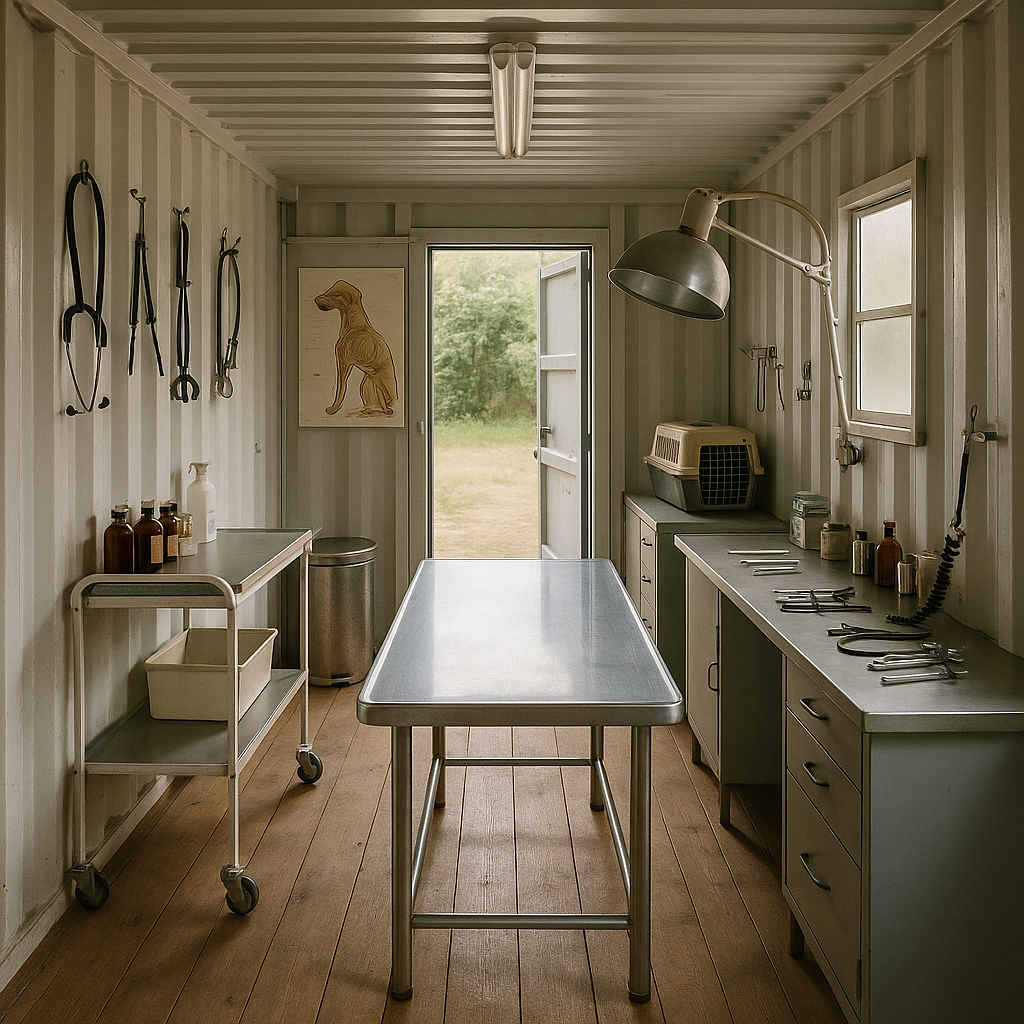
Cape Town’s Philippi township smells of wet soil, paraffin and antiseptic just before sunrise on 31 March 2026. Inside a painted shipping container, veterinary nurse Nosisa Booi lines up gleaming scalpels while the Methodist church next door still hums with last night’s hymns. By eight o’clock the human line bends around the corrugated-iron hall: 67 dogs tug on rope leashes, 23 cats complain in rice-sack carriers, three rabbits freeze in cardboard boxes and one unimpressed rooster answers – so his owner insists – to the name “Oupa”. Every creature is booked for free spay, neuter and rabies shots, courtesy of an emergency R2,4 million grant that global charity FOUR PAWS pried out of a Swiss philanthropy six weeks ahead of schedule.
The same morning unfolds in 42 other pop-up theatres. An old cinema in Umlazi screens cartoons so children do not watch their pets fall asleep under masks. A cricket ground in Upington is draped with mosquito nets to keep Kalahari dust off surgical tables. A former disco in Mdantsane still flashes its strobe, now used to time anaesthetic induction. Mobile vet teams are booked solid until November; the waiting list for township pets stretches 18 months in Johannesburg and 14 in Gqeberha. Veterinarians nicknamed the rush “the spring tide”: skip one heat cycle and you prevent up to twelve new lives, yet the arithmetic still feels like bailing the ocean with a spoon.
Back in Philippi, Nosisa lifts the last blade into the autoclave as dawn traffic thickens. Oupa the rooster is declared a “companion bird” by the pastor, spared the knife but vaccinated against Newcastle disease for goodwill. A child waves a paper flag scrawled “One Health = My Dog + Me” in the colours of the liberation banner – red, black, green – and today those hues look less like protest, more like a plan.
2. Palimpsest of Pain – Why South Africa Counts 4 Million “In-Between” Animals
South Africa’s dog and cat numbers read like a history textbook scarred by town-planning blueprints. Colonial layouts shunted black workers to the margins; Apartheid’s migrant system left wives raising pets on rations; post-1994 urbanisation galloped faster than any state vet service could trot. FOUR PAWS estimates 4,05 million homeless dogs and cats – the combined human head-count of Cape Town plus Durban. Unlike Latin-American or Asian megacities where strays form clever street packs, most South African animals are “semi-owned”: they sleep on coal sacks behind shebeens, guard scrap-yards or trot three kilometres to mate, yet someone claims them. This limbo skews census data and baffles policy writers.
Enter the One Health lens, born in 2004 at the Rockefeller Foundation’s Bellagio Centre and since adopted by WHO, WOAH and UNEP. Until now Africa invoked it for Ebola, Rift Valley fever and bird flu; applying it to companion animals feels novel. Wits University’s medical-anthropology unit mapped every dog-bite admission at Chris Hani Baragwanath Hospital in 2023 and found 2,4 times more bites in wards where rubbish is collected irregularly. Victims were 63 % children under nine; 41 % of implicated dogs had never seen a vaccine, yet 78 % had identifiable owners. Translation: “stray” is often bureaucratic code for “neglected but claimed”.
3. Statute Gaps and Sterilisation Science – From Chennai Lessons to Drone Head-Counts
South Africa’s animal-welfare laws creak like old floorboards. The Animals Protection Act of 1962 predates the microchip; the 1993 amendment still mentions “pounds” instead of shelters. Municipal rules are a patchwork. Cape Town’s 2021 by-law is the envy of activists: compulsory sterilisation unless you buy an income-scaled permit, a two-pets-per-small-erf cap and a “positive species” list (hedgehogs later struck off after Instagram exotic-pet crazes). Yet the city’s 16 animal-control officers share two vans and react only to complaints. Johannesburg still leans on a 1979 ordinance allowing euthanasia after seven days, but cash-strapped pounds offload 40 % of impounded animals to the SPCA, an unfunded mandate lawyers say breaches the Municipal Finance Management Act.
FOUR PAWS has drafted a Model Companion Animal Welfare Bill featuring an 8 % “breeders’ levy” on every commercially sold puppy or kitten, the cash hypothecated into a National Sterilisation Fund. Treasury pushes back, fearing ring-fenced revenue; the poultry lobby dreads precedent. A compromise floating on policy desks is a refundable R1 500 sterilisation deposit: buyers reclaim the money once the pet is neutered and micro-chipped, mimicking Germany’s plastic-bottle deposit nudge.
Science keeps moving. The Chennai-born “capture-castrate-vaccinate-release” (CCVR) protocol yields a 27 % annual drop in street-dog numbers when 65 % of females are spayed, but those Indian dogs are truly homeless and temple-fed. A University of Pretoria trial in Mamelodi compared CCVR with “sterilisation-plus-return-to-owner” (SRO). SRO hit 81 % female coverage in 18 months because residents ferried their own pets; CCVR stalled at 43 % as territorial dogs evaded second capture. Only SRO cut bite complaints by 38 %, proof that legislation should rope in owners instead of assuming feral dynamics.
Tech short-cuts abound. A R16 000 drone with a thermal sensor can map dog populations on pre-dawn tin roofs; machine-learning software trained on 14 000 images achieved 92 % accuracy, beating enumerators who double-counted restless tails. Suprelorin®, a sub-cutaneous GnRH implant, chemically sterilises male dogs for 12–24 months at R280, undercutting the R650 surgery bill. Regulators want assurance that implanted dogs can still receive rabies shots without immune interference; trials are running.
4. Paralegals, Stokvels and Export Planes – Community Cash Cows and EU Pushback
In Khayelitsha, NGO Justice for Animals trains “animal paralegals” – township volunteers who memorise every city by-law and print non-compliance notices that carry the same legal weight as traffic fines. Their WhatsApp hotline resolves 68 % of 400 monthly reports through mediation: a shebeen owner agrees to sterilise his car-guard mongrels in exchange for deworming tablets for patrons’ children. The template echoes Kenya’s 1990s “para-vets” who filled state vacuums during the rinderpest campaign.
Financial culture is being hacked. Stokvels and savings clubs that once pooled money only for funerals now collect R50 per member monthly to cover sterilisation, vaccinations and even pet coffins. Payouts hinge on attending two responsible-owner workshops where kids clicker-train shelter dogs, swapping punishment for positive reinforcement. Early numbers show surrender rates down 15 % among participants.
Stray dogs have become accidental apex predators inside 15 of 19 national parks. Loggerhead turtle hatchlings in iSimangaliso and Kruger lion cubs threatened by canine distemper attest to the problem. SANParks will spend R9 million in 2025/26 on 60 km of predator-proof camp fencing, yet wildlife vets say R11-per-dose rabies shots for buffer-zone domestic dogs is cheaper. An Acornhoek pilot reached 78 % canine coverage and zero distemper spill-over for three years, evidence that rabies campaigns can piggy-back on biodiversity budgets if Treasury allows cross-directorate finance.
Meanwhile, about 40 000 township dogs – already sterilised, vaccinated and snap-tested – fly annually to Canada, Germany and the Netherlands under “flight-parent” rescue schemes. European vet federations gripe about imported heart-worm and multi-drug resistant Staphylococcus pseudintermedius; the EU is debating a 14-day pre-export quarantine. Local shelters warn the move would choke the lifeline and nudge euthanasia rates back toward the dark 2010 figure of 250 000 dogs a year.
Circular thinking offers rare optimism. In Atlantis, start-up RuffCycle melts discarded fishing nets into UV-stable, chew-proof kennels; every unit sold funds four sterilisation vouchers. Last year’s export of 1 200 kennels to Australia paid for 14 township clinics. In Durban, a cooperative stitches rejected hospital linen into washable puppy bedding, creating 34 jobs for former shelter residents whose own pets are neutered as an employment perk.
On 4 April – World Stray Animal Day – the Council for Scientific and Industrial Research will flick the switch on a national “stray-animal data lake”. Cloud dashboards will amalgamate anonymised stats from 140 shelters, 65 private vets and 12 state clinics, releasing emergency rabies vaccines whenever the human-bite ratio tops 0,4 per 1 000 residents. The seed money comes from the same Swiss foundation that bankrolled Philippi’s dawn blitz, proving that yesterday’s grant can become tomorrow’s early-warning system.
And so the spring tide rolls on: scalpel, flag, data point, law book, stokvel ledger – all converging on a single red-black-green insight: the health of a child and the fate of a so-called stray dog are chapters of the same story, written in shared air, soil and wallet.
[
{
"question": "What is the \"One Health\" concept and how is it being applied to companion animals in South Africa?",
"answer": "The \"One Health\" concept, traditionally used for major diseases like Ebola, recognizes the interconnectedness of human and animal health. In South Africa, it's being applied to companion animals, particularly in townships, to highlight how neglected pets contribute to public health issues. For example, poor waste management can lead to an increase in dog bites, especially affecting children. Many animals perceived as \"strays\" are actually owned but neglected, making their health and welfare a critical part of overall community health and safety."
},
{
"question": "What are the main challenges in managing companion animal populations in South African townships?",
"answer": "South Africa faces significant challenges, including a large population of 'semi-owned' animals (estimated at 4.05 million homeless dogs and cats), outdated animal welfare laws (like the Animals Protection Act of 1962), and a lack of funding and resources for state vet services and animal control. The current legal framework struggles with the reality of 'neglected but claimed' animals, and there's often insufficient infrastructure and personnel to implement effective sterilization programs or enforce existing regulations."
},
{
"question": "What initiatives are being implemented to address the companion animal situation?",
"answer": "Various initiatives are underway, including large-scale sterilization programs funded by grants (like the R2.4 million grant from FOUR PAWS), mobile vet clinics, and community-led efforts. There's also a push for new legislation, such as a Model Companion Animal Welfare Bill proposing an 8% 'breeders' levy' for a National Sterilisation Fund. Technological advancements like drones for population mapping and chemical sterilization implants (Suprelorin®) are also being explored to improve efficiency and reach."
},
{
"question": "How are communities and technology playing a role in these efforts?",
"answer": "Communities are actively involved through initiatives like 'animal paralegals' in Khayelitsha, who use legal knowledge to mediate animal welfare issues. Financial innovations like 'stokvels' are pooling money for pet care and responsible ownership workshops. Technologically, drones with thermal sensors are being used for accurate animal head-counts, and machine learning helps in data analysis. A national 'stray-animal data lake' is also being developed to amalgamate data and provide early warnings for public health risks like rabies."
},
{
"question": "What are the broader impacts of neglected companion animals on public health and wildlife?",
"answer": "Neglected companion animals have significant public health implications, particularly contributing to dog bites, with children under nine being 63% of victims. Irregular rubbish collection is linked to higher bite rates. Furthermore, stray dogs pose a threat to wildlife within national parks, acting as apex predators and potentially transmitting diseases like canine distemper to vulnerable species such as lion cubs. Effective rabies vaccination campaigns in buffer zones are seen as a cost-effective solution to protect both human and wildlife health."
},
{
"question": "What are the future outlook and potential solutions being considered?",
"answer": "The outlook includes continued efforts in large-scale sterilization, legislative reform (e.g., compulsory sterilization with income-scaled permits), and innovative funding mechanisms. The 'sterilization-plus-return-to-owner' (SRO) protocol is proving more effective than 'capture-castrate-vaccinate-release' (CCVR) for owned township pets. There's also a growing export market for sterilized and vaccinated township dogs to countries like Canada and Germany, though this faces potential restrictions from the EU. Circular economy initiatives, like RuffCycle converting fishing nets into kennels, offer sustainable funding for sterilization. The overarching goal is to integrate animal welfare into broader public health and environmental strategies, recognizing that the health of animals, humans, and the environment are inextricably linked."
}
]

Sarah Kendricks is a Cape Town journalist who covers the city’s vibrant food scene, from township kitchens reinventing heritage dishes to sustainable fine-dining at the foot of Table Mountain. Raised between Bo-Kaap spice stalls and her grandmother’s kitchen in Khayelitsha, she brings a lived intimacy to every story, tracing how a plate of food carries the politics, migrations and memories of the Cape.
View all articles →