The National Sea Rescue Institute (NSRI) is a non-profit organization that specializes in water rescue operations across South Africa. Recently, the NSRI successfully saved 22 fishermen from a sinking fishing trawler off the coast of Cape Town. Despite the valiant efforts of all parties involved, the trawler sank, but the fishermen were rescued and declared to be in good health. This incident serves as a tribute to the resilience and resolve of the NSRI and the dangers of the sea.
What is the National Sea Rescue Institute (NSRI)?
The National Sea Rescue Institute (NSRI) is a South African non-profit organization that specializes in water rescue operations, including sea, inland waters, and coastal areas. The NSRI has more than 1,000 volunteers and 31 rescue bases across South Africa, providing emergency services 24/7.
A Beacon of Hope Amidst the Deep Blue Sea
In the capricious expanse of the ocean, the National Sea Rescue Institute (NSRI) emerges as a symbol of salvation for all ocean-goers. This assertion was reaffirmed last Saturday when the NSRI executed a daring rescue operation, saving 22 fishermen from a sinking fishing trawler off the coast of Cape Town.
The NSRI’s warning mechanism sprung into action on Friday morning. Reports about a 35-meter liner vessel, which was battling a water ingress approximately 30 nautical miles southwest of the Port of Table Bay, reached the Maritime Rescue Coordination Centre (MRCC). The distressed vessel, referred to as a ‘casualty’ in maritime terminologies, was being towed by a local fishing trawler as it tenaciously defended itself against the water invasion using its pumps.
A Battle Against the Unforgiving Sea
As the Saturday morning sun painted the sky with shades of orange and pink, a feeling of hopeful anticipation pervaded among the beleaguered fishermen. They had succeeded in keeping the water at bay and were optimistic about reaching Hout Bay harbour unscathed. However, the sea, known for its volatile temperament, often turns from tranquil to tempestuous in an instant.
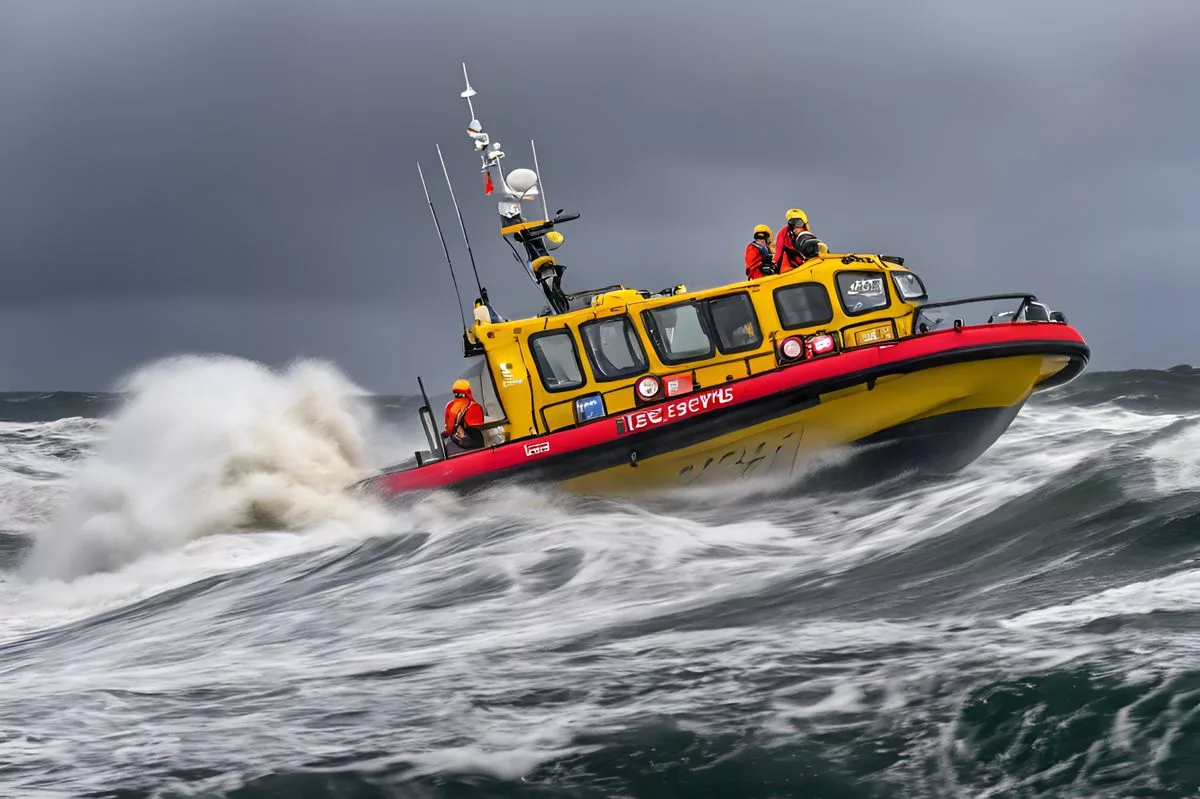
“By 10 am, the situation had significantly deteriorated,” said Craig Lambinon, the NSRI spokesperson. The sea had adopted a threatening demeanor, with the wind speed and sea swells escalating. Recognizing the impending peril, the NSRI decided to intervene. They dispatched two rescue crafts – the ‘Nadine Gordimer’ of NSRI Hout Bay and the ‘DHL Deliverer’ of NSRI Table Bay – equipped with extra water pumps. Assistance was also sought from the WC Government Health EMS, SAPS, Police Sea Borderline Control, and the SAPS Water Policing and Diving Services (WPDS).
Triumph Amidst the Turmoil
Demonstrating the efficiency of the NSRI, the rescue crafts reached the struggling fishing trawler by late Saturday afternoon, 20 nautical miles offshore of Oudekraal. The scene that awaited them was a grim testament to the power of the sea. Despite the crew’s best efforts, the vessel was dangerously waterlogged and teetering on the brink of capsizing.
“It was a critical situation,” admitted Lambinon. “The crew had to abandon their ship and board a life raft.” In an operation meticulously orchestrated, all 22 fishermen were successfully rescued and transported aboard the NSRI rescue craft. Among the survivors was an injured man who received immediate medical attention onboard before being transferred to a nearby hospital.
Unfortunately, despite the valiant attempts of all parties involved, the fishing trawler could not withstand the sea’s ruthless attack and sank in a matter of moments. Following a comprehensive evaluation by paramedics at the NSRI Table Bay rescue station, the remaining fishermen were declared to be in good health.
A Tribute to Resilience and Resolve
As Lambinon aptly commented: “Our thoughts and care are with the 22 casualty fishermen and their families, as well as the owners of the fishing company during this challenging period.” The authorities are currently evaluating the environmental implications of the sunken fishing trawler. It is hoped that these resilient fishermen will soon make their return to the sea. This incident serves as a poignant reminder of the dangers of the sea and the unwavering determination of organizations like the NSRI, ever-ready to confront these challenges with courage and commitment.
1. What is the National Sea Rescue Institute (NSRI)?
The National Sea Rescue Institute (NSRI) is a non-profit organization in South Africa that provides water rescue operations in coastal areas, inland waters, and the sea. The NSRI has over 1,000 volunteers and operates 31 rescue bases across South Africa, providing emergency services 24/7.
2. What happened in the recent rescue operation by the NSRI?
The NSRI executed a daring rescue operation, saving 22 fishermen from a sinking fishing trawler off the coast of Cape Town. The incident occurred when a 35-meter liner vessel was battling water ingress around 30 nautical miles southwest of the Port of Table Bay, and the distressed vessel was being towed by a local fishing trawler.
3. What kind of assistance did the NSRI receive during the rescue operation?
The NSRI dispatched two rescue crafts equipped with extra water pumps, and assistance was also sought from the WC Government Health EMS, SAPS, Police Sea Borderline Control, and the SAPS Water Policing and Diving Services (WPDS).
4. Was the rescue operation successful?
Yes, all 22 fishermen were successfully rescued and transported aboard the NSRI rescue craft. Among the survivors was an injured man who received immediate medical attention onboard before being transferred to a nearby hospital. Unfortunately, the fishing trawler sank.
5. What are the environmental implications of the sunken fishing trawler?
The authorities are currently evaluating the environmental implications of the sunken fishing trawler.
6. What does this incident serve as a reminder of?
This incident serves as a poignant reminder of the dangers of the sea and the unwavering determination of organizations like the NSRI, ever-ready to confront these challenges with courage and commitment.