
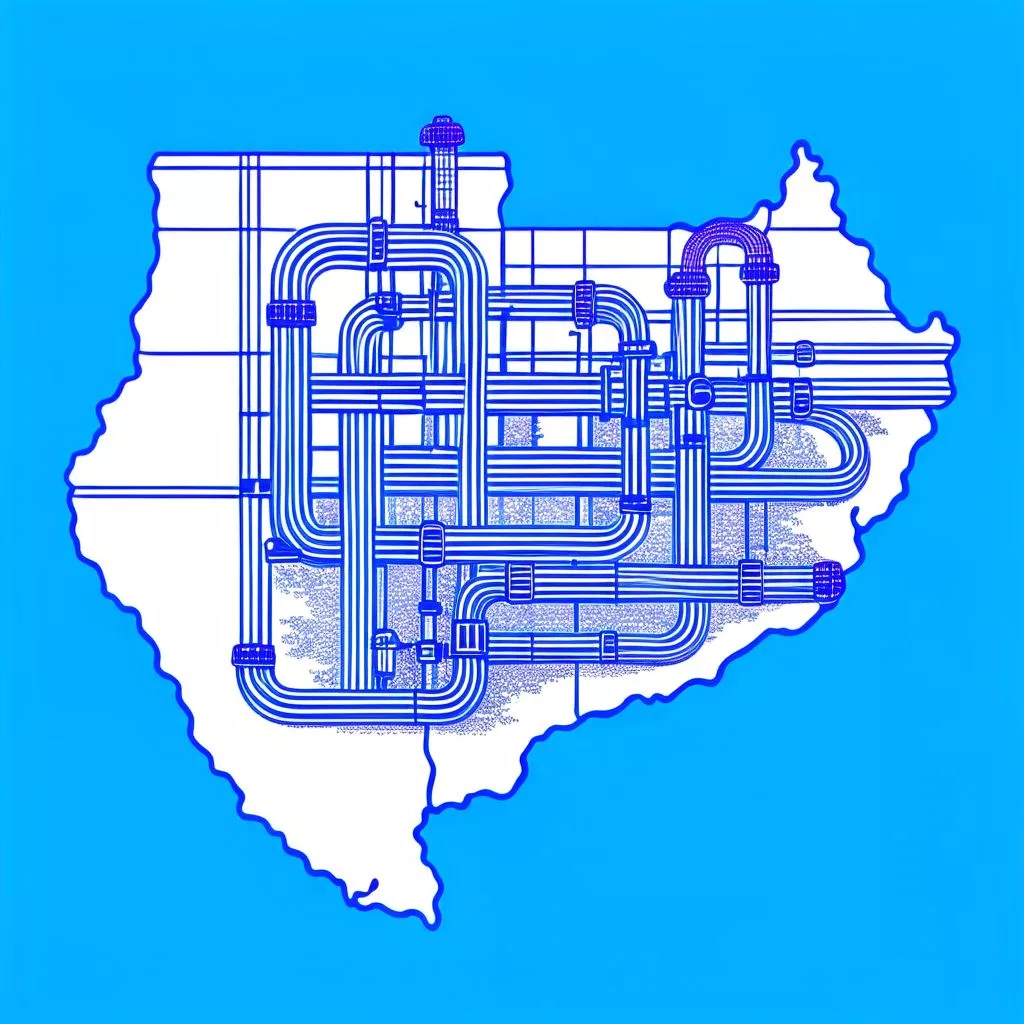
The National Water Resources Infrastructure Agency (NWRIA) is a new South African government agency created to bring order and strength to the country’s water management. By combining many separate bodies into one, it aims to protect water supplies, fix broken systems, and help communities grow. The agency will focus on smart planning, risk control, and teamwork with private partners to build a better water future. With skilled people and strong laws behind it, the NWRIA hopes to secure clean water for all and boost the nation’s economy for years to come.
What is the National Water Resources Infrastructure Agency (NWRIA) and its role in South Africa?
The NWRIA is a new government agency created to unify and streamline South Africa’s water infrastructure management. It aims to improve water security, enhance governance, mitigate risks, and foster socio-economic growth through efficient oversight of dams, pipelines, and reservoirs nationwide.
A New Dawn in Water Governance
South Africa stands at the threshold of a significant transformation in water resource management with the launch of the National Water Resources Infrastructure Agency (NWRIA). Parliament witnessed a momentous gathering on July 1, 2025, as the Portfolio Committee on Water and Sanitation convened, balancing hope with determination. Their mission was twofold: to recognize the Department of Water and Sanitation’s (DWS) accomplishments and to set a clear mandate for vigilance, integrity, and progress as the country reimagines its approach to water.
This agency’s creation embodies South Africa’s commitment to overcoming the hurdles that have historically hampered water governance. By introducing the NWRIA, lawmakers seek to address inefficiencies, unify fragmented entities, and lay the groundwork for consistent and sustainable oversight. The chairperson of the committee, Mr. Leon Basson, highlighted that success will require more than structural changes; it will depend on weaving risk management and sound governance into every level of the agency.
Establishing the NWRIA is not simply an administrative move—it is a strategic response to the pressing needs of a nation where water security directly affects economic stability and social well-being. The committee, aware of the stakes, emphasized the importance of purposeful action, collective accountability, and forward-thinking leadership as they welcomed this new chapter.
Consolidation and the Pursuit of Efficiency
For centuries, water has shaped civilizations and driven reform, from ancient riverbanks to modern cityscapes. South Africa’s decision to merge multiple water-related bodies into the NWRIA signals a bold step towards rationalization—an approach designed to replace disorder with coordinated stewardship. By uniting these entities, the government aims to create a streamlined institution capable of efficiently developing, maintaining, and overseeing vital water infrastructure throughout the nation.
This strategy draws inspiration from historical efforts to bring order to complex systems. Just as urban planners once sought to harmonize chaotic growth, the NWRIA’s architects envision a network where every dam, pipeline, and reservoir operates as part of a coherent whole. The agency’s purpose stretches beyond mere consolidation; it strives to ensure that each project, regardless of size or location, contributes meaningfully to the broader goal of water security.
However, the committee cautioned that rationalization alone cannot guarantee success. Real transformation hinges on a culture that actively anticipates and addresses risks. The NWRIA must integrate robust risk mitigation practices from the outset, learning from both local and international examples where lapses in governance led to costly setbacks. By prioritizing strong oversight and proactive management, the agency can avoid the traps that have ensnared other state-owned organizations.
Fragmentation has long undermined South Africa’s ability to respond to water challenges swiftly and effectively. The NWRIA offers a path to clarity, with the potential to transform a patchwork of responsibilities into a unified, high-performance agency. This move, if well executed, could serve as a model for other sectors seeking similar improvements.
Learning from the Past: Risks, Debt, and Sovereignty
South Africa’s recent history features several state-owned enterprises that fell short of expectations, often due to mismanagement and unchecked hazards. The portfolio committee drew attention to these examples, underscoring the necessity of vigilant governance within the NWRIA. Their warning was clear: without careful oversight, the new agency could repeat the mistakes that have plagued other institutions.
One area of particular concern revolves around the persistent issue of debt within the water sector. Non-payment for water services has burdened municipalities, leading to infrastructure decay and unreliable supply. The committee highlighted stories from rural communities where budget constraints leave pipelines in disrepair and residents waiting for limited water allocations. They argued that unless the NWRIA implements strong revenue collection systems, it risks undermining its own mission before it truly begins.
Another critical debate centered on the concept of water sovereignty. The committee voiced apprehensions that borrowing against key water assets for infrastructure expansion could put national control at risk. If NWRIA fails to meet its financial obligations, there exists a danger—however remote—that international creditors could influence or acquire interests in South Africa’s most precious resource.
Yet, there are precedents that inspire confidence. The Trans-Caledon Tunnel Authority (TCTA) has, over four decades, successfully honored its debt commitments while managing significant water infrastructure projects. The committee recognized the TCTA’s disciplined approach as a benchmark for the NWRIA to emulate, demonstrating that with careful planning and adherence to repayment schedules, the agency can expand its reach without sacrificing sovereignty or stability.
Building Socio-Economic Prosperity through Water
Water has always played a central role in shaping South Africa’s economy and society. From apartheid-era mega-projects, which often excluded marginalized communities, to more inclusive policies post-1994, the management of water reflects broader social ambitions. The committee sees the NWRIA as a catalyst for growth, aiming not only to fix pipes and dams but also to unlock water’s full economic and social potential.
One promising pathway involves embracing public-private partnerships. By leveraging private sector investment and expertise, South Africa can multiply its annual expenditure on water infrastructure, strengthening both resilience and reach. The committee drew parallels with post-war Europe, where collaboration between governments and industry rebuilt cities and economies devastated by conflict. They believe that the same spirit of partnership can transform South Africa’s water landscape, spurring agricultural productivity in arid regions, supporting manufacturers in urban centers, and enhancing living standards in communities still reliant on communal taps.
Such investment can generate a virtuous cycle. Improved infrastructure attracts business, creates jobs, and fuels further development. At the same time, reliable water supply restores dignity and opportunity to millions who have historically faced scarcity. The committee’s vision extends from large-scale engineering feats to everyday improvements that change lives and strengthen the social fabric.
While the NWRIA’s primary task is managing physical assets, its broader mandate is to foster a culture where water drives national development. By inviting private sector participation, the agency can overcome fiscal limitations and accelerate progress towards universal access.
People, Skills, and Institutional Strength
The journey to a world-class water agency depends not only on policies and budgets but also on the people who implement them. The committee placed strong emphasis on building a capable and experienced leadership team at the NWRIA. Effective governance, they argued, starts with a highly skilled board and a workforce that combines technical know-how with a deep sense of public duty.
To this end, the transition plan includes transferring employees from the TCTA and DWS to the NWRIA, preserving their existing employment conditions. This decision is more than a bureaucratic necessity. Institutional memory, accumulated over decades by dedicated professionals, represents a strategic asset. Engineers, administrators, and field workers bring with them invaluable experience—stories of troubleshooting in remote areas, innovative solutions to persistent problems, and a culture of perseverance. Their contributions will anchor the agency’s future.
Moreover, the committee understands that nurturing talent and fostering mentorship are essential for long-term sustainability. They compared this process to the Renaissance workshops of Florence, where skilled masters trained apprentices, driving progress across generations. By investing in capacity building and creating opportunities for growth, the NWRIA can establish itself as a center of excellence and a magnet for the country’s best minds.
Legislation as a Blueprint for Progress
No transformation is complete without a solid legal foundation. The committee’s push to finalize the NWRIA Amendment Bill underscores the importance of laws that are not only precise but also flexible enough to adapt to changing circumstances. The Bill, introduced in April 2025, serves as the agency’s blueprint—defining its structure, responsibilities, and processes.
Lawmakers view the legislative process as central to ensuring accountability and transparency. Public participation, debate, and revision give the Bill its legitimacy and endurance. As part of ongoing oversight, the committee has scheduled regular updates on the agency’s progress, encouraging a culture of reflection and continuous improvement.
This dynamic approach ensures that the NWRIA will not become trapped in rigid bureaucracy. Instead, it will remain responsive to feedback and capable of evolving along with the country’s needs. Legislative milestones mark moments of assessment, allowing stakeholders to recalibrate strategies and celebrate achievements, no matter how incremental.
Water’s Enduring Place in South Africa’s Story
The formation of the NWRIA invites a broader contemplation of water’s role in South Africa’s identity and aspirations. Water has always carried symbolic weight in the nation’s literature and art, acting as a metaphor for renewal and survival. The agency’s journey, therefore, is about more than technical reforms—it is a story of guardianship, resourcefulness, and the pursuit of a better future.
History teaches that infrastructure endures long after the policymakers who envisioned it. Roman aqueducts still stand as testaments to ancient ambition and ingenuity. The NWRIA, at its inception, holds similar promise. Its achievements—or failures—will shape the daily realities of farmers, urban planners, and children for decades to come.
As South Africa embarks on this ambitious project, the hope is that the NWRIA will rise to the challenge, forging a legacy of effective stewardship and lasting progress. The agency’s success will ripple outwards, inspiring confidence, fostering equity, and anchoring the nation’s resilience in the face of future uncertainties.
FAQ: National Water Resources Infrastructure Agency (NWRIA)
What is the National Water Resources Infrastructure Agency (NWRIA) and what is its primary role?
The NWRIA is a newly established South African government agency created to unify and streamline the management of the country’s water infrastructure. Its primary role is to improve water security, enhance governance, reduce risks, and foster socio-economic growth by efficiently overseeing dams, pipelines, reservoirs, and other water infrastructure across the nation. By consolidating multiple fragmented bodies into one agency, NWRIA aims to bring order, strength, and coordinated stewardship to South Africa’s water resources.
Why was the NWRIA created and how does it differ from previous water management bodies?
The NWRIA was created to address longstanding inefficiencies and fragmentation in South Africa’s water governance. Previously, multiple separate entities managed different aspects of water infrastructure, leading to disorder and slow responses to challenges. NWRIA consolidates these responsibilities into a single agency, promoting streamlined operations, risk management, and stronger oversight. Unlike its predecessors, NWRIA emphasizes teamwork with private partners, smart planning, and a culture of accountability to secure reliable and sustainable water supplies for all South Africans.
How will the NWRIA help ensure water security and protect South Africa’s water sovereignty?
The agency focuses on strong governance, risk control, and sustainable financial management to protect water resources. The NWRIA incorporates robust risk mitigation strategies to prevent infrastructure failures and financial mismanagement that have affected other state entities. It aims to implement effective revenue collection systems to reduce debt and avoid infrastructure decay. Importantly, the agency strives to maintain South Africa’s water sovereignty by carefully managing borrowing against water assets and learning from successful models like the Trans-Caledon Tunnel Authority (TCTA), which has maintained financial discipline while managing major infrastructure projects.
What role will partnerships and private sector involvement play in NWRIA’s strategy?
Public-private partnerships are a key part of NWRIA’s approach to overcoming fiscal constraints and accelerating infrastructure development. By leveraging private investment and expertise, the agency plans to expand and maintain water infrastructure more effectively. This collaboration is expected to boost agricultural productivity, support urban industry, create jobs, and improve living standards across communities—especially in historically underserved areas. Such partnerships mirror successful post-war reconstruction models that combined government oversight with private sector dynamism.
How will NWRIA ensure it has the right people and skills to succeed?
The agency’s success depends heavily on experienced and capable leadership and workforce. To this end, NWRIA will transfer personnel from existing bodies like the TCTA and the Department of Water and Sanitation (DWS), preserving their employment conditions and institutional knowledge. This experienced team brings decades of technical expertise and public service commitment. Furthermore, the agency emphasizes ongoing capacity building, mentorship, and talent development to create a sustainable and skilled workforce that can adapt to future challenges and innovations.
What legal framework supports the NWRIA, and how does it promote accountability and adaptability?
The NWRIA operates under the NWRIA Amendment Bill, introduced in April 2025, which defines the agency’s structure, responsibilities, and governance processes. This legislation provides a solid but flexible legal foundation, ensuring transparency, accountability, and public participation in oversight. Regular progress updates to Parliament and stakeholders help maintain continuous improvement. The law is designed to keep the agency responsive to changing needs and challenges, preventing bureaucratic stagnation and fostering an environment of innovation and effective management.
If you have any more questions or need further information about the NWRIA, feel free to ask!